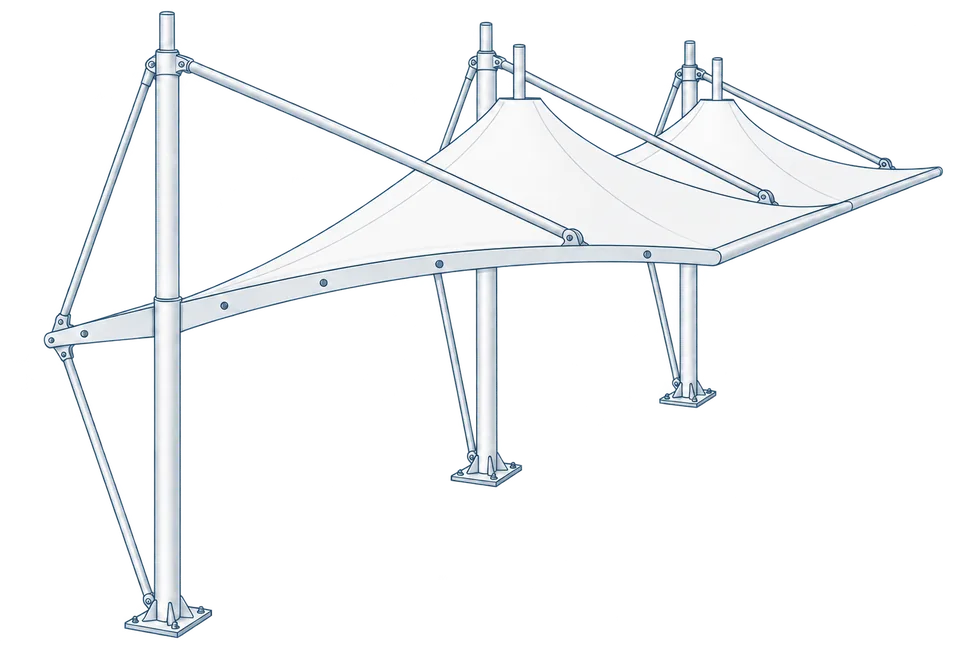
 Membrane carportsClassic membrane shelters→
 Solar carportsParking meets green energy→
 Landscape canopiesParks and leisure spaces→
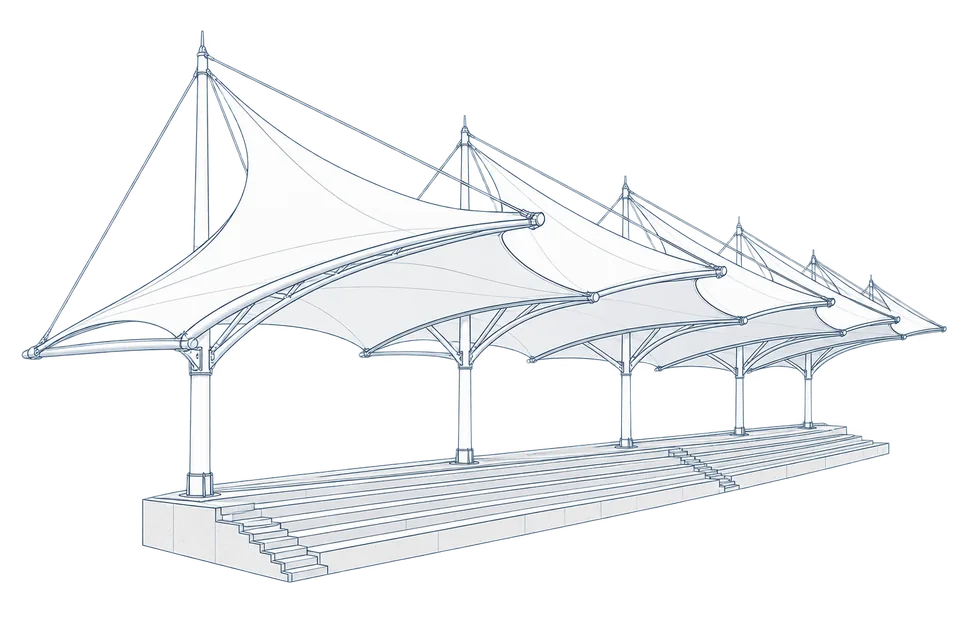 Grandstand canopiesSports venue shelters→
 Inflatable play cloudsFamily play areas→
 Wastewater coversEnvironmental infrastructure→
 Fuel station canopiesStation shelters→
 Entrance canopiesWalkways and entrances→
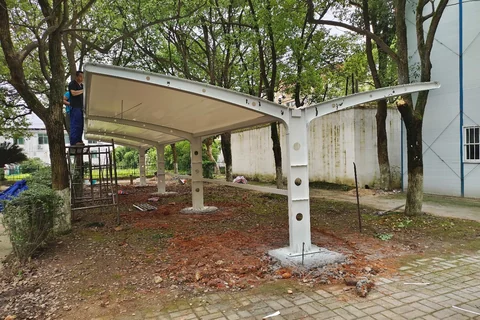 01
01Inspect and number
Record fabric, steel, fittings and existing damage; number parts as they come down for the new-site assembly.

DISMANTLE & REINSTALL
Assess both sites · Projects across China
Before moving a carport or walkway canopy, check what steel and fabric can be reused, then verify dimensions, column positions, foundations and local wind and snow conditions at the new site. We agree the scope before numbering, dismantling, transporting, adapting and re-installing parts.
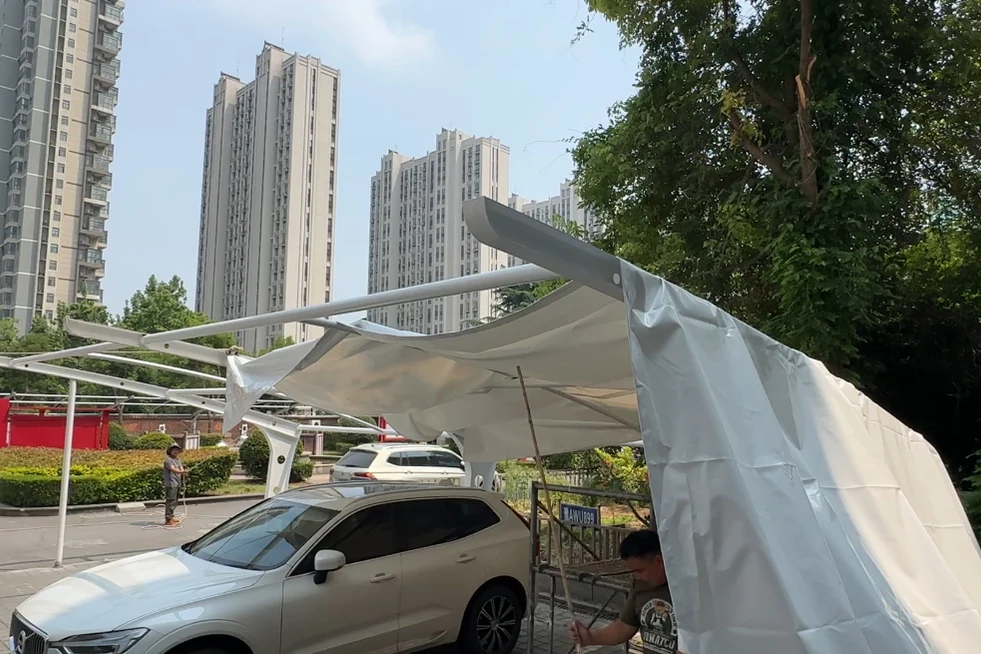
In short: A membrane structure relocation normally includes inspection at the original site, measurement at the new site, numbered dismantling, protected transport, repair or replacement of parts, and re-installation. Not every old canopy can be moved unchanged: aged fabric, bent steel, different anchors or different local loads may require new fabric, parts or design work. Reuse and price follow the site assessment and written scheme.
RELOCATION CHECKS
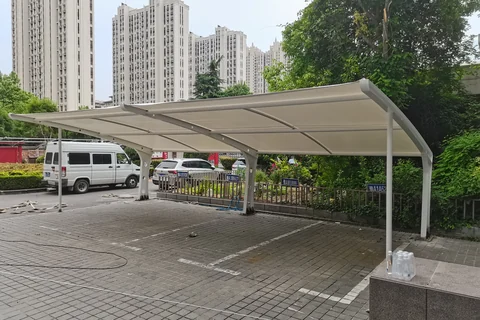
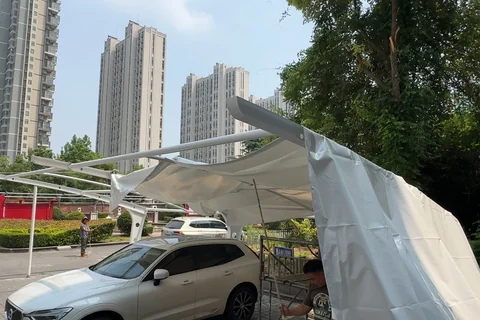
Photos illustrate related dismantling, fabrication and installation work. Reuse is decided after inspection.
01Record fabric, steel, fittings and existing damage; number parts as they come down for the new-site assembly.
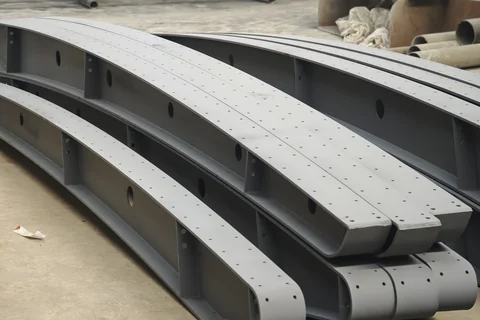 02
02Bent or corroded steel and fittings that do not suit the new dimensions are assessed for repair or replacement.
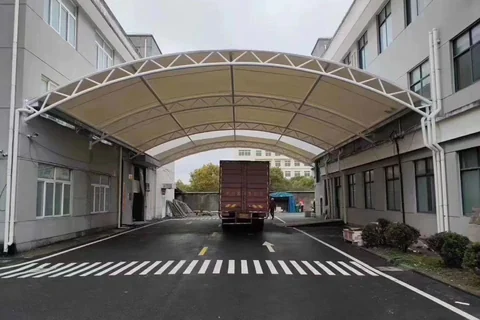 03
03Measure column positions, clearance, vehicle routes and lifting access before transport.
 04
04Install to the agreed drawings, then check connections, fabric tension, drainage and handover records.
Images illustrate related work and settings; they are not a continuous record of one relocation project.
PROCESS
Each step leaves a record both sides can check.
Send wide and detail photos, original drawings, new-site dimensions and location.
Output: Initial information listCheck old parts, foundations, buried services, local loads and access at the new site.
Output: Reuse and replacement adviceDefine dismantling, transport, adaptation, new fabric, foundation interfaces and re-installation.
Output: Written scope and quoteDismantle and pack numbered parts; transport and prepare agreed replacements.
Output: Parts recordCheck assembly, fabric tension, connections and drainage before handover.
Output: Inspection and handover recordSCOPE & DISCLAIMER
A move touches two sites. We agree the work boundary and site conditions before pricing and scheduling.
| Item | Qingsong provides | Owner provides / arranges |
|---|---|---|
| Original structure | Inspect visible steel and fabric and advise on reuse | Original drawings and maintenance records; clear the area below |
| New foundations | Provide column and anchor details and check installation interfaces | Locate buried services, arrange foundation work and provide acceptance records |
| Dismantling and transport | Number, dismantle, pack and transport within the agreed scope | Safe work area, vehicle access and site coordination |
| Re-installation | Reassemble to the agreed scheme and list parts needing replacement | Approve replacements and provide a ready work site |
Agree what can be reused and replaced before dismantling and transport.
RELATED
Membrane repair serviceImpact, wind damage, re-covering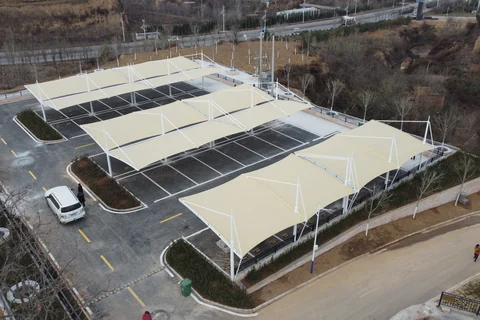 Membrane structure designSite-based schemes, form design and detailingConstruction and installationFactory fabrication, installation and acceptance
 Membrane replacementReplace aged fabric, upgrade gradeInstallation acceptance and handoverWhat to check before sign-off
PROJECT BRIEF
Send the original location, overall dimensions, wide and close-up photos, drawings or repair records; plus the new location, layout, column and foundation information, access roads and target moving date. Complete information helps assess reuse and pricing.
FAQ
Can’t find your answer? Send photos and a short description and we will get back to you.
Ask a question →No. We inspect steel, fabric and fittings and check the new site’s loads, columns and foundations. Incompatible parts may need replacement, new fabric or design changes.
Possibly, if its strength, seams and edges remain sound and the dimensions fit the new scheme. Fabric that is aged, damaged or cannot be tensioned reliably after removal should be replaced.
The owner usually arranges them. We can provide column and anchor information and check the installation interface and acceptance records before assembly; the contract confirms the division of work.
We can measure it and record its connections first. Missing key structural data may require additional checks or a revised design before moving.
Size, dismantling difficulty, transport distance, lifting access, part repairs, new fabric and re-installation all matter. The written quote follows the site assessment.
We can discuss a dismantle, number and pack scope. Storage, transport and any later re-installation responsibilities should be written into the order.