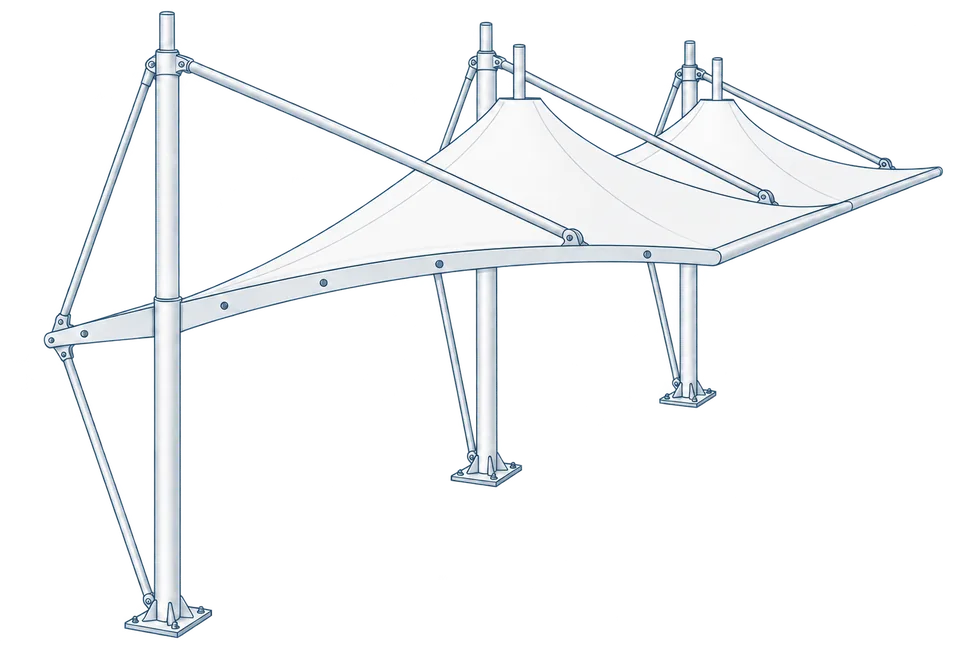
 Membrane carportsClassic membrane shelters→
 Solar carportsParking meets green energy→
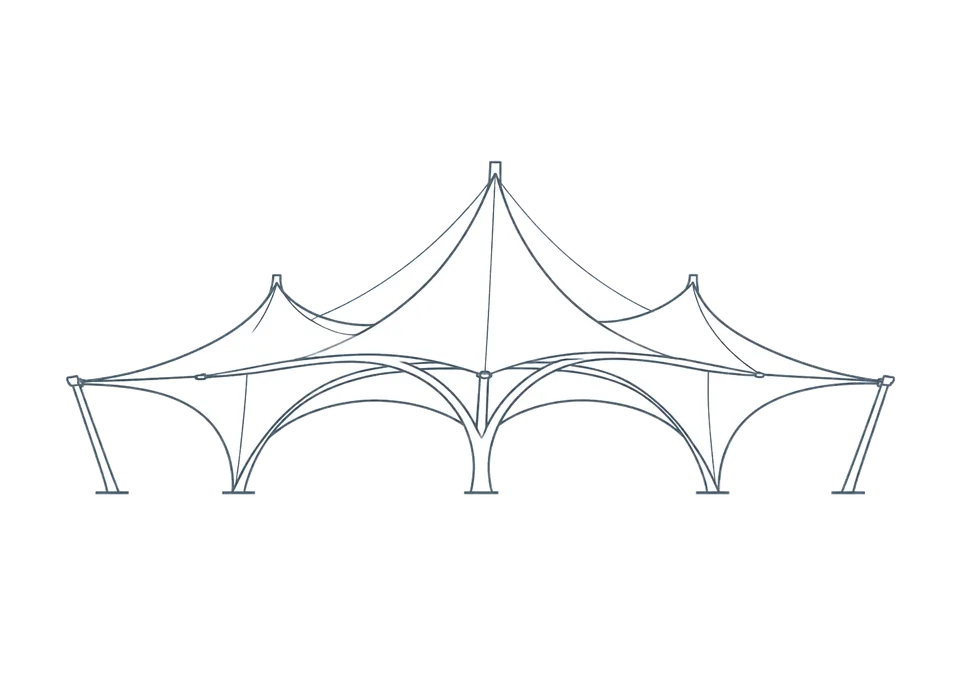 Landscape canopiesParks and leisure spaces→
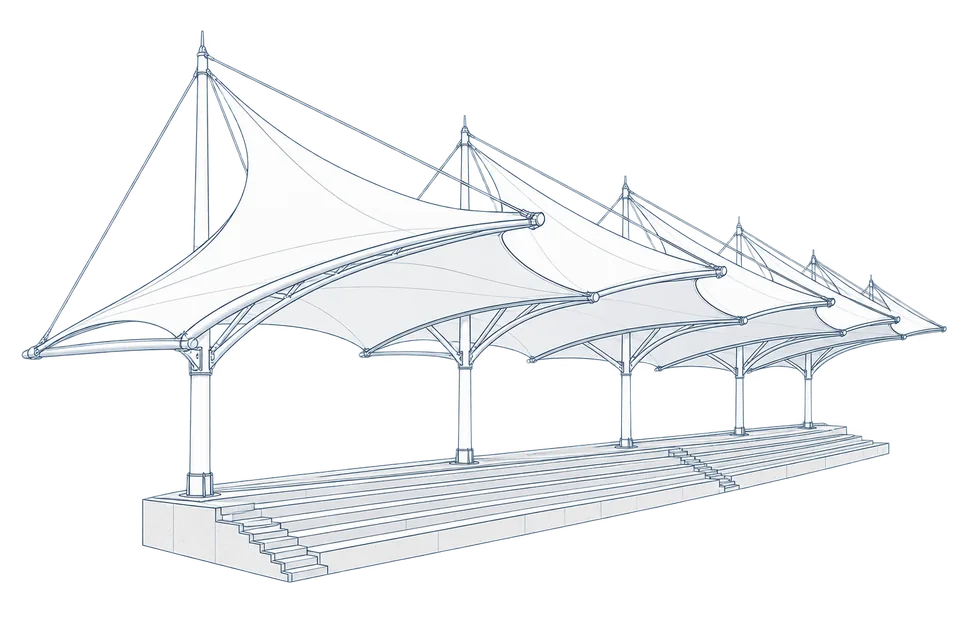 Grandstand canopiesSports venue shelters→
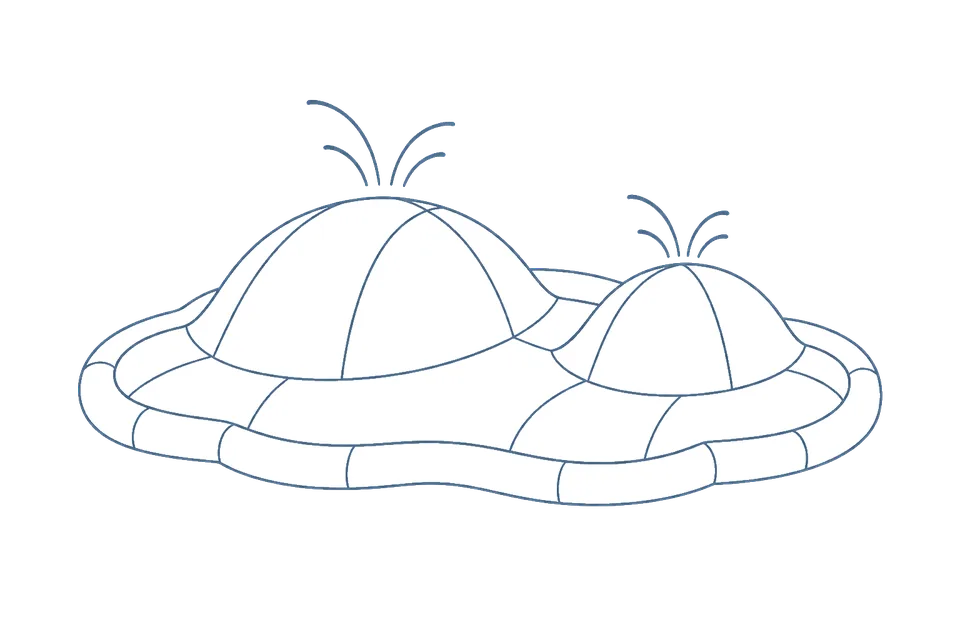 Inflatable play cloudsFamily play areas→
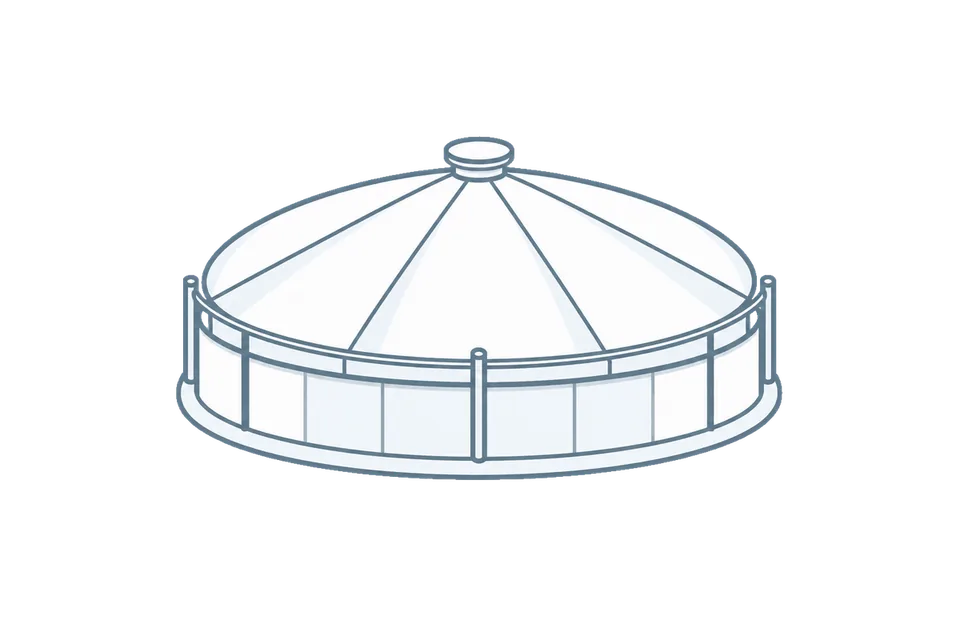 Wastewater coversEnvironmental infrastructure→
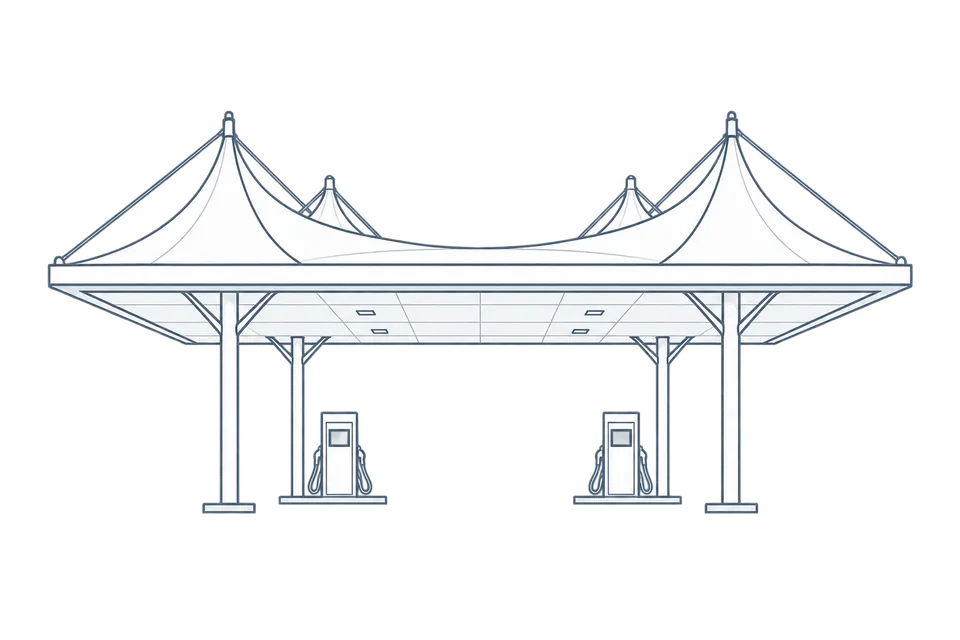 Fuel station canopiesStation shelters→
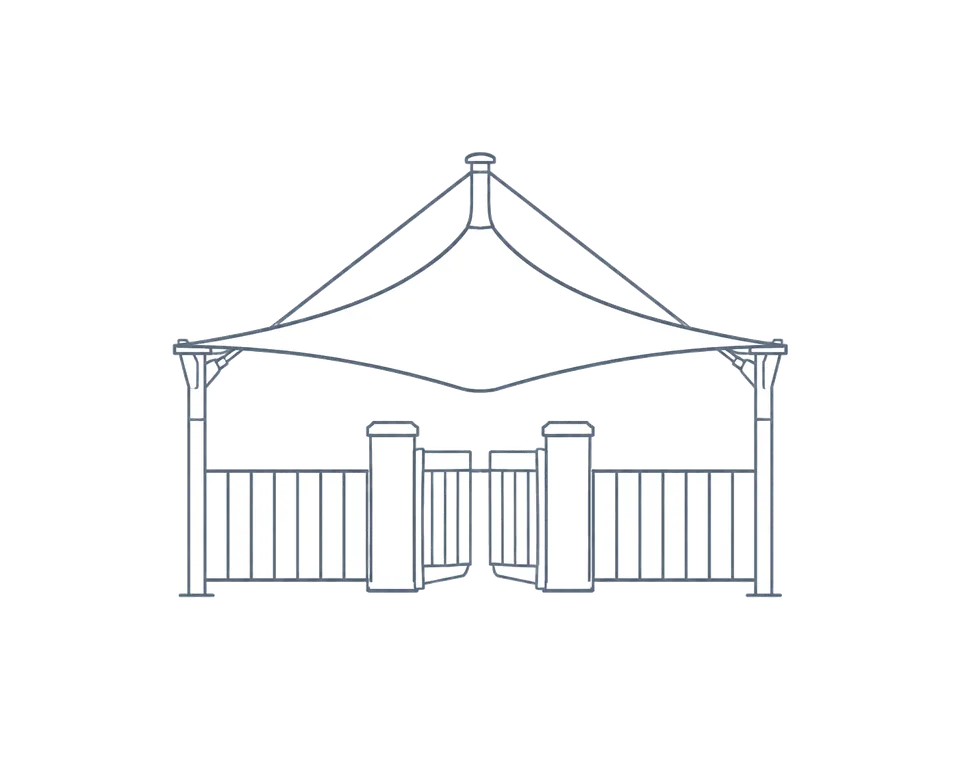 Entrance canopiesWalkways and entrances→
Custom colours
Choose from available fabric colours or provide a target colour code or sample for a project-specific request. We check colour, translucency and surface finish together before confirming the material.

MEMBRANE FABRIC · CHINA
Xingyang workshop · Projects across China
Based in Xingyang, Zhengzhou, our workshop serves projects across China. Our regular project range starts at 1050 g/m² while the full specification comparison remains available. High-strength PVDF B1, colours, graphics, ETFE and PTFE can be discussed for a specific project.
MATERIAL BASICS
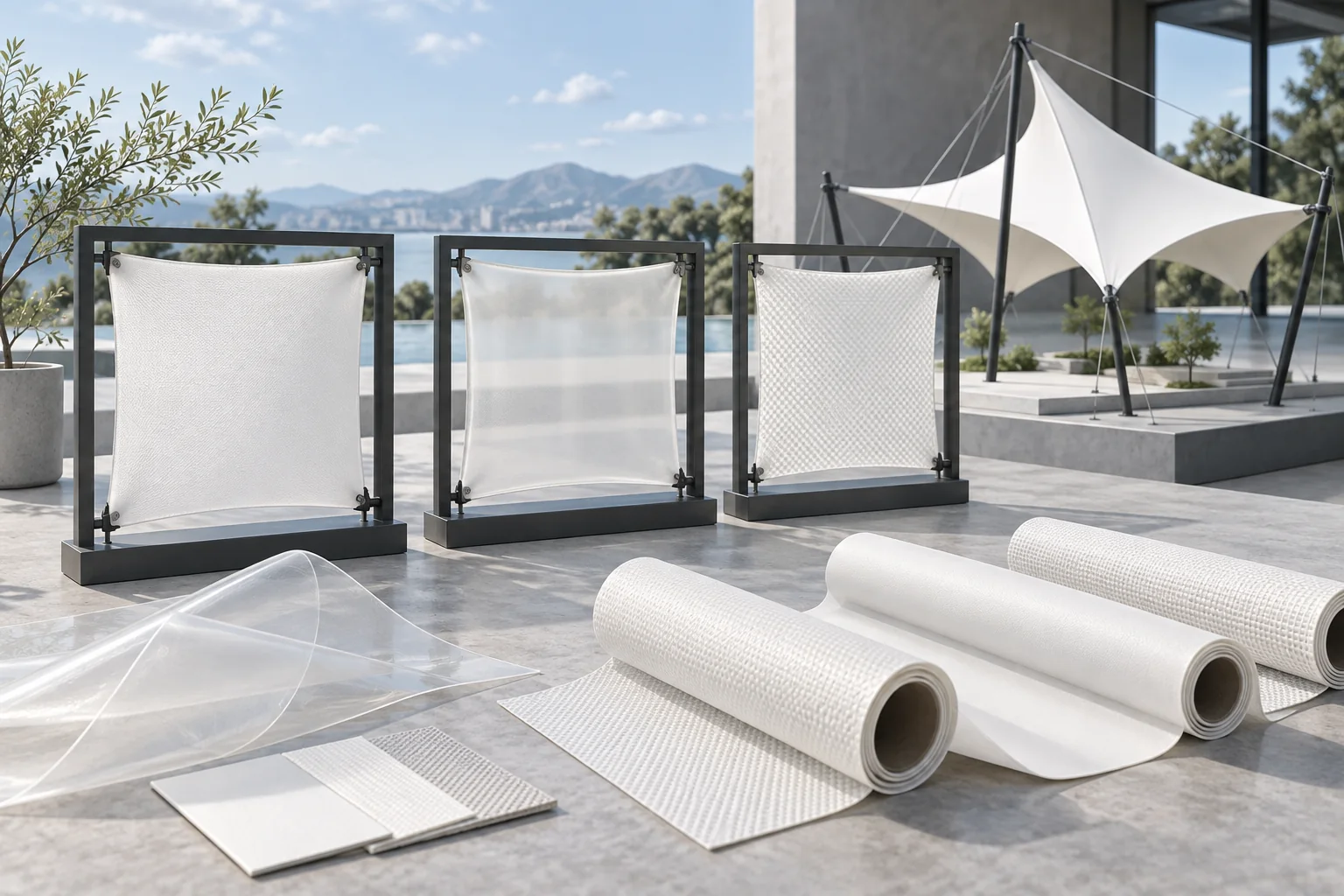
Start with fabric weight, then check the base cloth, coating, tensile strength, surface finish and seam method. Thickness is supplementary information, not a grade on its own.
COLOUR & GRAPHICS
Share your colour reference or artwork. We can discuss the appearance together with the fabric specification and intended use.
Choose from available fabric colours or provide a target colour code or sample for a project-specific request. We check colour, translucency and surface finish together before confirming the material.
Artwork, lettering, logos or decorative patterns can be planned for the fabric surface. Send the design file, size and placement so we can check panel seams and a suitable printing method.
Final colour and printed appearance follow the approved sample. Where B1 fire performance or a PVDF finish is required, we also check the selected product and production method before confirming the order.
Discuss colour and graphic options →PVC / PVDF
PVDF commonly describes a surface finish over PVC-coated polyester. We specify the full fabric construction and model for each order.
Architectural fabric often combines a polyester base cloth with a PVC coating for flexibility, waterproofing and fabrication. Strength, translucency, colour and weathering depend on the exact product.
Read the selection guide →In architectural fabric, “PVDF membrane” usually refers to PVC-coated polyester with a PVDF surface finish. The finish can help resist soiling and ease cleaning. Specific performance depends on the selected product.
Service life and selection →FABRIC SPECIFICATIONS
All nine rows are retained for comparison. Our regular project range starts at 1050 g/m²; lighter grades require a separate suitability review. Compare weight and tensile strength first, with thickness as supplementary information.
| Surface type | Weight | Tensile strength | Colour | Thickness | Life reference | Fire notation |
|---|---|---|---|---|---|---|
| PVC | 1050 g/m² | 4800 N/5cm | Colours | 0.8 mm | 10 years | Flame-retardant additive |
| PVDF | 1100 g/m² | 5500 N/5cm | White | 0.8 mm | 15 years | Flame-retardant additive |
| PVDF | 1100 g/m² | 5500 N/5cm | White | 0.8 mm | 15 years | B2 class |
| PVDF | 1200 g/m² | 6000 N/5cm | White | 0.9 mm | 15 years | B2 class |
| High-strength PVDF | 1100 g/m² | 6500 N/5cm | White | 0.85 mm | 15 years | B1 class |
| High-strength PVDF | 1250 g/m² | 6500 N/5cm | White | 1.0 mm | 18 years | B1 class |
| Additional grades · comparison only; assess separately | ||||||
| PVC | 750 g/m²Review separately | 3500 N/5cm | White / grey | 0.6 mm | 6 years | Flame-retardant additive |
| PVC | 1000 g/m²Review separately | 4500 N/5cm | White | 0.7 mm | 10 years | Flame-retardant additive |
| PVDF | 950 g/m²Review separately | 4500 N/5cm | White | 0.67 mm | 10 years | Flame-retardant additive |
For carports, walkways and landscape canopies, we normally start at 1050 g/m². The 750, 950 and 1000 g/m² rows remain for comparison and are not regular project starting grades. Check site loads, fabric condition and the exact product before any separate selection.
“Flame-retardant additive” is not a B1 or B2 classification. Table values and service-life figures support early model selection under normal installation, use and maintenance; confirm final performance against the chosen product documents.
PROJECT-SPECIFIC FABRICATION
Send the drawings and intended use. We can discuss ETFE film or cushion systems and PTFE-coated glass fabric, then confirm panel layout, connections, material documents and the fabrication or installation scope for the project.
For daylight roofs, atria and façades, we can plan panel divisions, light transmission, form and connection details from your drawings. Inflated cushions also need an agreed air-supply, sealing and maintenance plan; supply and installation scope are confirmed for each project.
Discuss ETFE customisation →For stands, transport hubs and other long-span roofs, we can discuss fabric model, panel geometry, seams and edge connections against the design. Fire and weathering performance must be checked against the selected product documents before confirming the fabrication scope.
Discuss PTFE customisation →CUSTOM FABRICATION
Our Xingyang workshop works from your project requirements, drawings and material specifications for orders across China.
Carports, landscape roofs, grandstands and walkway canopies have different daylight, drainage, structural and maintenance requirements.
Discuss colours, graphics, weight, roll width, translucency, surface finish and fire requirements; confirm the selected material and samples.
Check panel layout, cutting direction, seams and edge connections. Drawings, samples and dimensions need version control.
Record model, batch, test documents, fabrication scope, packing, transport and installation interfaces.
FIRE PERFORMANCE
Under GB 8624, B1 denotes a difficult-to-burn building material. The listed high-strength PVDF 1100 and 1250 g/m² options carry a B1 notation. For approval, match the actual product with its applicable classification report.
B1 alone does not promise non-combustibility, no toxic smoke, no flaming droplets or instant self-extinguishing. Review the smoke (s), flaming-droplet (d), toxicity (t) and any additional tests requested by the project.
The exact tests and numerical results depend on the selected product and the project specification.
Ignition depends on the heat source, exposure time and fabric build-up. A single “ignition temperature” cannot replace test results for ignition, flame spread and heat release.
Review the s class for smoke production and the t class for smoke toxicity. B1 does not mean smoke-free or non-toxic combustion.
The d class describes flaming droplets or particles. Where vehicles, equipment or goods sit below the roof, check the risk of secondary ignition.
The d class does not establish that molten droplets are non-toxic. Review material data or additional testing if the project calls for this.
The period of flaming after the heat source is removed belongs to the applicable test method. An on-site lighter demonstration cannot replace a B1 classification report.
This is the lowest oxygen concentration that sustains burning in a specified oxygen–nitrogen test mixture. It is not ambient “oxygen saturation” and does not by itself establish B1.
SERVICE LIFE
Short answer: The 6 listed PVC/PVDF grades offer indicative 10–18-year selection figures: about 10 years for PVC 1050 g/m²; about 15 years for PVDF 1100 g/m², PVDF 1200 g/m², High-strength PVDF 1100 g/m²; about 18 years for High-strength PVDF 1250 g/m². These assume design-compliant installation, normal use and regular maintenance. Actual performance varies with sunlight, climate, structural design and site conditions.
All 6 listed grades, shown on a 0–20 year scale.
| Grade | Fire notation | Reference service life |
|---|---|---|
| PVC 1050 g/m² | Flame-retardant additive | |
| PVDF 1100 g/m² | Flame-retardant additive | |
| PVDF 1100 g/m² | B2 class | |
| PVDF 1200 g/m² | B2 class | |
| High-strength PVDF 1100 g/m² | B1 class | |
| High-strength PVDF 1250 g/m² | B1 class |
These are model-selection figures under design-compliant installation, normal use and recommended maintenance. Project conditions affect actual performance. See conditions →
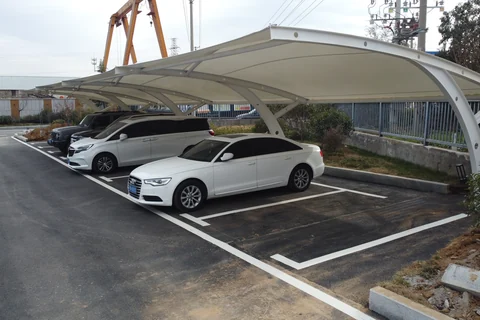
1050 g/m² PVC is a starting point for everyday carports and walkways, subject to the site and structural requirements.
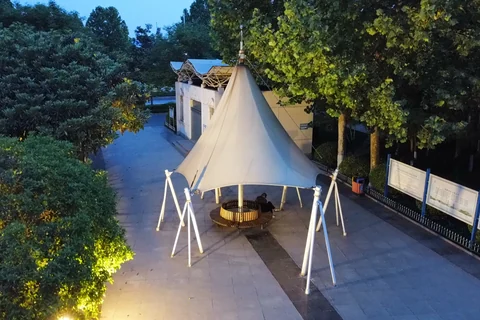
For landscape roofs, grandstands and other projects with greater weathering and cleaning needs.
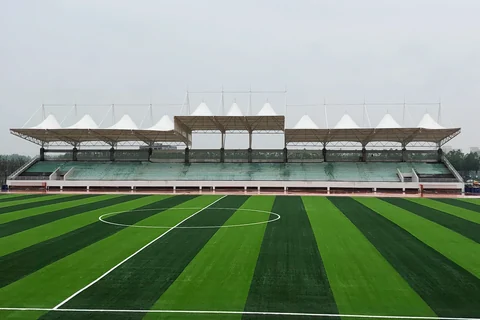
For comparison where strength, weathering and B1 fire performance are higher priorities.
Suggested applications are general guidance. Final selection follows the structure, site conditions and confirmed product documents.
The same fabric can age very differently from one site to another. Each factor comes with how we address it.
Prolonged UV exposure gradually ages the coating, especially at high-altitude and low-latitude sites.
Our approachIn strong sunlight, compare PVDF finishes and higher grades first.
Heat, severe cold, freeze–thaw cycles, coastal salt spray and humid heat all affect the coating and base cloth over time.
Our approachCheck weathering data and steel corrosion protection against the local climate.
Low pretension or concentrated stresses lead to wrinkles, ponding and fatigue.
Our approachVerify the structure for local wind and snow loads; check tension after installation.
Shallow slopes or blocked drainage create water pockets that add load and collect dirt and stains.
Our approachDesign adequate slopes and drainage paths; avoid large flat areas.
Industrial dust, cooking fumes, acid rain and bird droppings dull the surface, reduce light transmission and speed up ageing.
Our approachIn polluted settings, choose a PVDF finish and clean more often.
Welded-seam quality, cutting direction, edge cables, clamps and steel corrosion protection all shape durability.
Our approachCheck seams, cutting and details against drawings; inspect on delivery.
Suggested intervals; adjust for dust, sunlight and use on site.
| Task | When | What to do |
|---|---|---|
| Routine checks | Ongoing | Look for damage, ponding and debris on the fabric; keep drains and gutters clear of leaves. |
| Cleaning | Every 3–6 months suggested | Use water or a neutral detergent with a soft brush or cloth. Avoid strong acids or alkalis, sharp tools and close-range pressure washing. |
| Annual inspection | Once a year suggested | Check seams, edge cables, clamp plates, bolt tightness and steel corrosion protection; re-tension slack fabric and touch up rust. |
| After severe weather | After strong wind, heavy rain or snow | Clear snow and ponding promptly and check for tears or loose fittings. Keep the area below out of use until issues are fixed. |
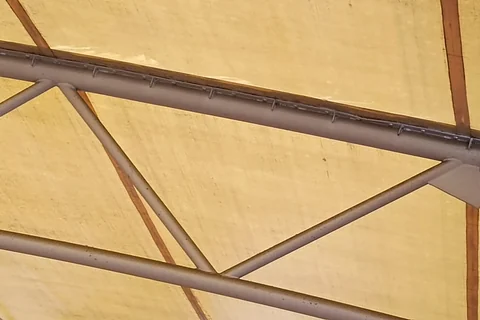
Judge by how widespread the damage is and the overall condition of the fabric.
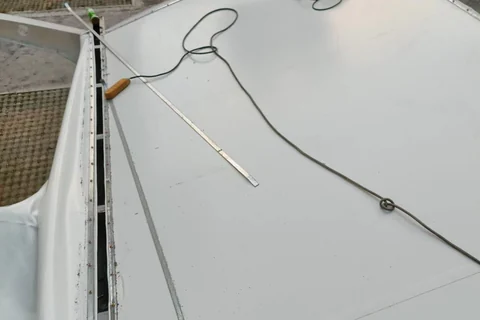
When problems are local and the rest of the fabric is sound, a repair restores it to service.
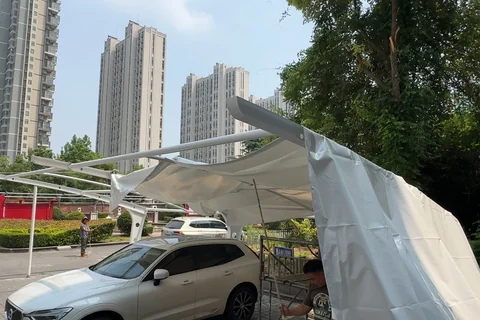
These signs show the fabric has aged overall; repeated repairs are neither economical nor safe.
REFERENCE CONDITIONS
The 10, 15 and 18-year figures compare fabric models under the installation, use and maintenance conditions above. They do not mean a project will necessarily last that long. Actual performance also depends on local sunlight, climate, structural design, installation quality and upkeep.
Tell us the project location, use, expected service needs and maintenance conditions. We will compare suitable PVC/PVDF grades and specify the chosen model in the proposal.
PROJECT BRIEF
Share the site and use, drawings or dimensions, preferred material and weight, target service life, colour reference, graphic artwork, light transmission, required fire class and any s/d/t limits, quantity and delivery location. Samples help confirm the appearance and fabrication scope.
FAQ
PVC generally describes the coating over a polyester base cloth. In this context PVDF commonly describes an additional surface finish. Compare the complete composition and exact product documents.
The comparison retains nine rows: PVC 750, 1000 and 1050 g/m²; PVDF 950, 1100 and 1200 g/m²; and high-strength PVDF 1100 and 1250 g/m², including a second PVDF 1100 fire configuration. Our regular project range starts at 1050 g/m². Lighter grades are retained for comparison and need a separate suitability assessment. Check the exact model and report for B1.
Yes. Send a target colour code, colour card or physical sample for colour matching, and artwork, logo dimensions and placement for graphics. The final colour, printing method and appearance are confirmed against the selected fabric and approved sample.
B1 is the difficult-to-burn building-material class. It does not by itself establish afterflame time, smoke toxicity or flaming-droplet performance. Check the selected model’s applicable fire report, including s (smoke), d (flaming droplets) and t (smoke toxicity) classifications. An added flame retardant is not itself a B1 or B2 rating.
ETFE is a film used in single-layer and inflated-cushion systems for roofs and façades. PVC/PVDF architectural membrane is typically coated woven fabric. Their connections, support systems and maintenance requirements differ.
The listed models give an indicative 10–18 year selection range: about 10 years for PVC 1050 g/m², 15 years for PVDF 1100/1200 and high-strength PVDF 1100 g/m², and 18 years for high-strength PVDF 1250 g/m². These figures assume design-compliant installation, normal use and regular maintenance. Local exposure and site conditions affect actual performance.
It is a model-based comparison figure under the installation, use and maintenance conditions listed here. Local climate, structural design and upkeep affect how a specific project performs in service.
Local scratches, small holes or an opened seam can usually be patched. Widespread chalking, cracking or coating loss exposing the base cloth, leaks in several places or repeated repairs, slack that cannot be re-tensioned, or tearing under light pulling are signs to assess full replacement.
Clean the surface regularly with water or a neutral detergent and a soft brush, avoiding strong solvents and sharp tools. Inspect after strong wind, heavy rain or snow, clear snow and ponding, check tension, fittings and seams, and repair minor damage early.
Send drawings, dimensions, quantity and material requirements to discuss a fabric-only order. Engineering, fittings, transport and installation scope are agreed for each order.