 Membrane carportsClassic membrane shelters→
 Solar carportsParking meets green energy→
 Landscape canopiesParks and leisure spaces→
 Grandstand canopiesSports venue shelters→
 Inflatable play cloudsFamily play areas→
 Wastewater coversEnvironmental infrastructure→
 Fuel station canopiesStation shelters→
 Entrance canopiesWalkways and entrances→
Identify the water source
Record drips, overflow and ground backflow separately by location.

DRAINAGE REVIEW
Repair & maintenance
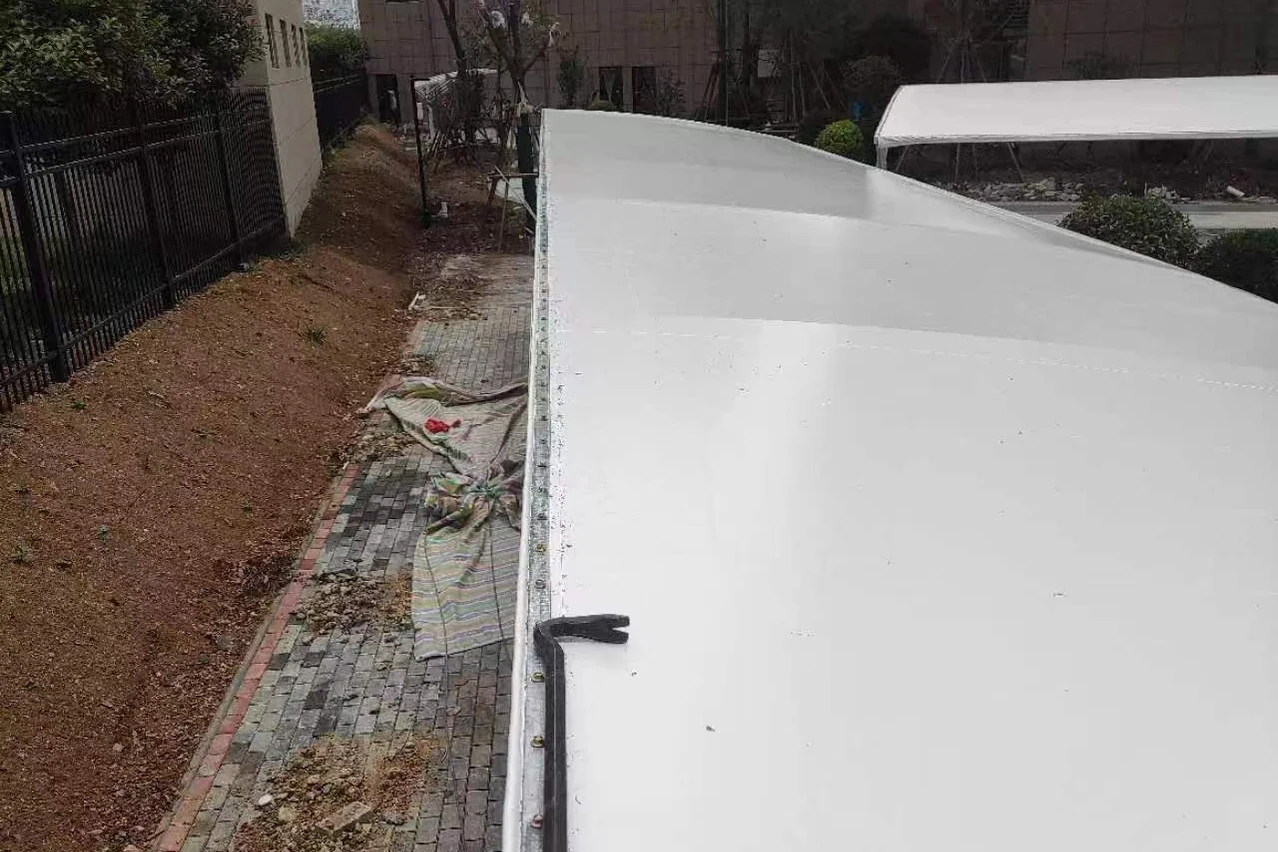
Trace rainwater from the canopy to the ground before choosing repairs and drainage changes.
PROJECT OVERVIEW
Water below a canopy does not necessarily mean a membrane leak, and ponding is not always solved by another outlet. Examine membrane shape, seams, collection edges, downpipes and ground discharge together. Qingsong discusses inspection, clearing, repair or adjustment using wet-weather records and site conditions.
Record drips, overflow and ground backflow separately by location.
Follow membrane collection, edges, downpipes and ground discharge, defining responsibility for each stage.
Recheck the same problem locations after work, considering weather and inspection conditions.
From a safe ground position, record water direction, first wet locations, duration and surroundings. Wider views help identify wind-driven rain.
Significant ponding or abnormal membrane shape needs professional inspection and management of the area below. Do not puncture the membrane or climb up to push pooled water away.
Assess membrane patching for damage; establish clearing and discharge conditions for blocked collectors or pipes; check junctions and the complete route for edge or collection problems.
Changes in membrane form, supports or connections may need specialist inspection and design revision. Temporarily sealing one water mark does not establish the cause.
Check pipes, ground levels and connection responsibilities before connecting new outlets. Moving runoff from the roof to an aisle or equipment area may create new problems.
Specify membrane, collectors, downpipes and ground connections individually, with observation or testing records and remaining conditions to monitor.
SCOPE & COORDINATION
Use the same scope for proposals, quotations and handover.
| Work item | Discussion and delivery | Conditions to confirm |
|---|---|---|
| Water-source inspection | Leak and collection sources | Weather records and inspection access |
| Membrane repairs | Damage, seams and edge treatment | Material condition and design review needs |
| Drainage facilities | Collectors and downpipe repairs | Clearing, replacement and connection scope |
| Ground discharge | Water destination and circulation effects | Pipe records and civil-work responsibilities |
PROJECT JOURNEY
Gather weather, drip locations and ponding changes.
Review membrane, collectors, outlets and ground systems together.
Separate patching, clearing, detail changes and connections.
Record results at the original problem locations.
START YOUR PROJECT
Share the location and current requirement so we can review conditions and scope together.
QUESTIONS & ANSWERS
No. Seams, edge details, overflow or wind-driven rain can also cause them. Match locations to the water route first.
It depends on collection and downstream capacity. Membrane shape, collection edges or ground conditions may need other remedies.
Existing condition can be checked. Rain photographs and water-mark records aid location; further testing is agreed on site.
Not automatically. Define underground services and ground connections separately, including records, contractors and scope.
RELATED SOLUTIONS