 Membrane carportsClassic membrane shelters→
 Solar carportsParking meets green energy→
 Landscape canopiesParks and leisure spaces→
 Grandstand canopiesSports venue shelters→
 Inflatable play cloudsFamily play areas→
 Wastewater coversEnvironmental infrastructure→
 Fuel station canopiesStation shelters→
 Entrance canopiesWalkways and entrances→
What Should a Membrane Panel Fabrication Confirmation Sheet Cover: Panels, Seams, Orientation and Numbering
A membrane fabrication confirmation sheet is the buyer's last opportunity to put appearance and panel layout decisions in writing before the factory cuts the membrane. Once the fabric is cut, there is no rework. For a tensile membrane structure project, reviewing and approving this sheet is how the buyer protects their own interests: once signed, the panels delivered to site are final.
Which Drawings Confirm Appearance and Panel Layout
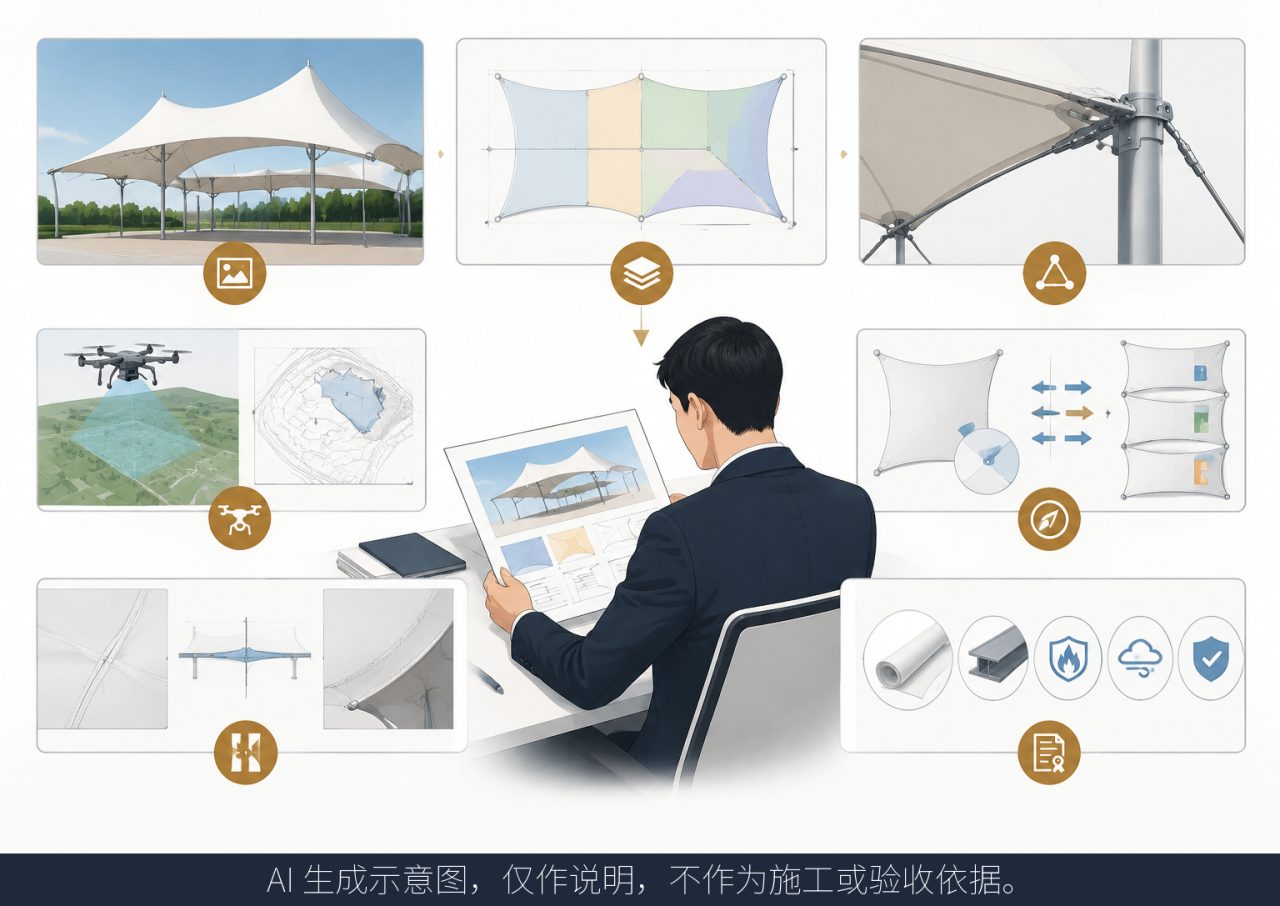
To confirm appearance and panel layout, check three types of documents:
- Overall rendering or concept drawings – to review the membrane canopy shape and overall visual effect;
- Panel layout drawings – to see how the membrane surface is divided into panels, where each sits and how panels join;
- Detail drawings – to review how the membrane connects to the steel structure at nodes.
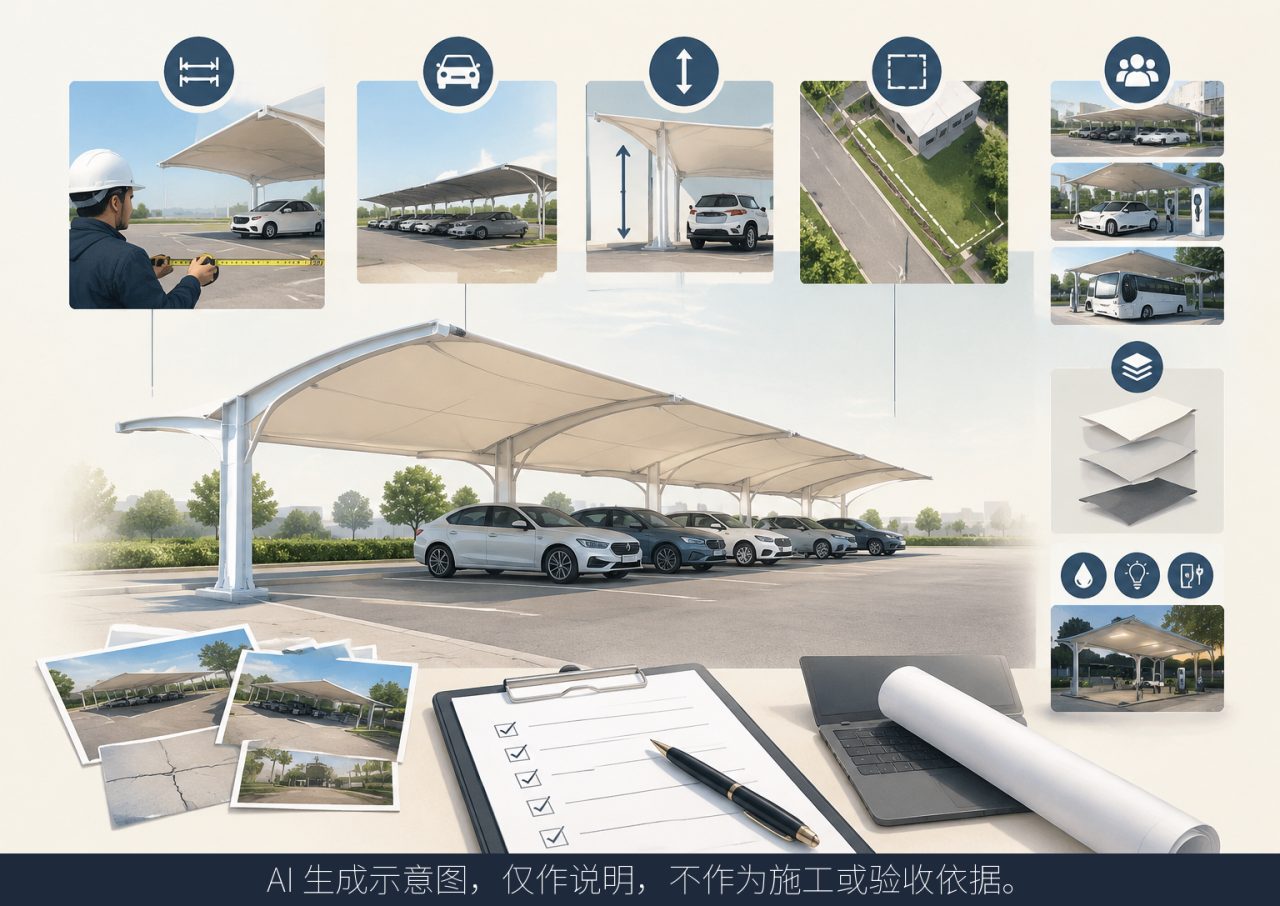
For large sites, the fabricator can — after communication and agreement at design stage — use drone surveying to capture actual site dimensions as design input; for small sites, on-site measurement is usually sufficient. When approving, verify that the panel layout drawings are based on the same survey or measurement issue as the rest of the documents, so drawings and site conditions do not diverge.
How Panel Orientation and Numbering Map to Site Installation
Every membrane panel should carry an independent number on the confirmation sheet. The numbering scheme must reconcile across three documents: the panel layout drawing, the packing list and the site installation position. The panel shown on the drawing, the panel in the crate, and the panel installed at a given position should correspond one to one.
Installation orientation must also be stated. Membrane fabric has warp and weft directions, load direction and drainage direction; a panel installed reversed or rotated can compromise both appearance and structural behavior. The confirmation sheet should state where each panel's orientation marks sit — which edge, which corner — so site crews unfold each panel correctly.
Components leave the factory as finished products with no fabrication on site, so panel numbering and orientation marks are the primary safeguard against installation errors. Buyer and supplier should agree in advance whether and how the fabricator's technical personnel attend site for critical nodes — this is a supply scope matter to settle contractually, not an assumed service.
What Seam Information Must Be Stated Clearly
Seams affect both appearance and sealing. The confirmation sheet should state:
- Where each seam is located and which direction it runs;
- Whether the seam faces the visible side or is concealed;
- The overlap or butt-joint relationship between adjacent panels;
- The position of seams relative to the membrane's tensioning boundaries.
If you have concerns about seams appearing on a main visible face, raise them at approval stage — not after the panels arrive.
Which Technical Values Need Design or Material Documentation
Technical values in the confirmation sheet — loads, membrane type, flame-retardant rating, fabric warranty period — must rest on design review conclusions and material documentation, not verbal agreements. For example, flame-retardant ratings can be configured to project requirements; fire-sensitive applications such as EV charging canopies are determined at design stage per local fire requirements; wind and snow resistance are calculated against local site conditions.
Itemized warranties for membrane fabric, steelwork and other components should be written into the contract rather than given as verbal commitments. Alignment on these points should happen at confirmation-sheet approval, not after installation.
Checklist Before Signing
Work through this list before approving:
- Drawing revision numbers match the survey/measurement issue used;
- Panel numbers on the layout drawing correspond to packing list numbers and site positions;
- Orientation marks for every panel are clearly indicated;
- Seam locations, directions and visible/concealed arrangement are confirmed;
- Membrane type, flame-retardant rating and similar values are supported by design or material documents;
- Itemized warranty terms are written into the contract text.
Next Steps for Overseas Buyers
Qingsong Membrane Structures operates a manufacturing base at its Henan headquarters, prefabricates components in the factory and ships directly by logistics. Project responsibilities, design boundaries, documentation handover and the division between factory supply and local installation are matters to agree with the buyer and their project engineer before order confirmation.
When preparing a Request for Quotation (RFQ), please share: project location, intended use (for example, a carport for vehicle parking or a bicycle shelter — confirm the exact application from drawings), overall dimensions or available drawings, and which design coordination, custom fabrication and supply scope services you need. Send your enquiry through our contact page so we can review the scope with you.