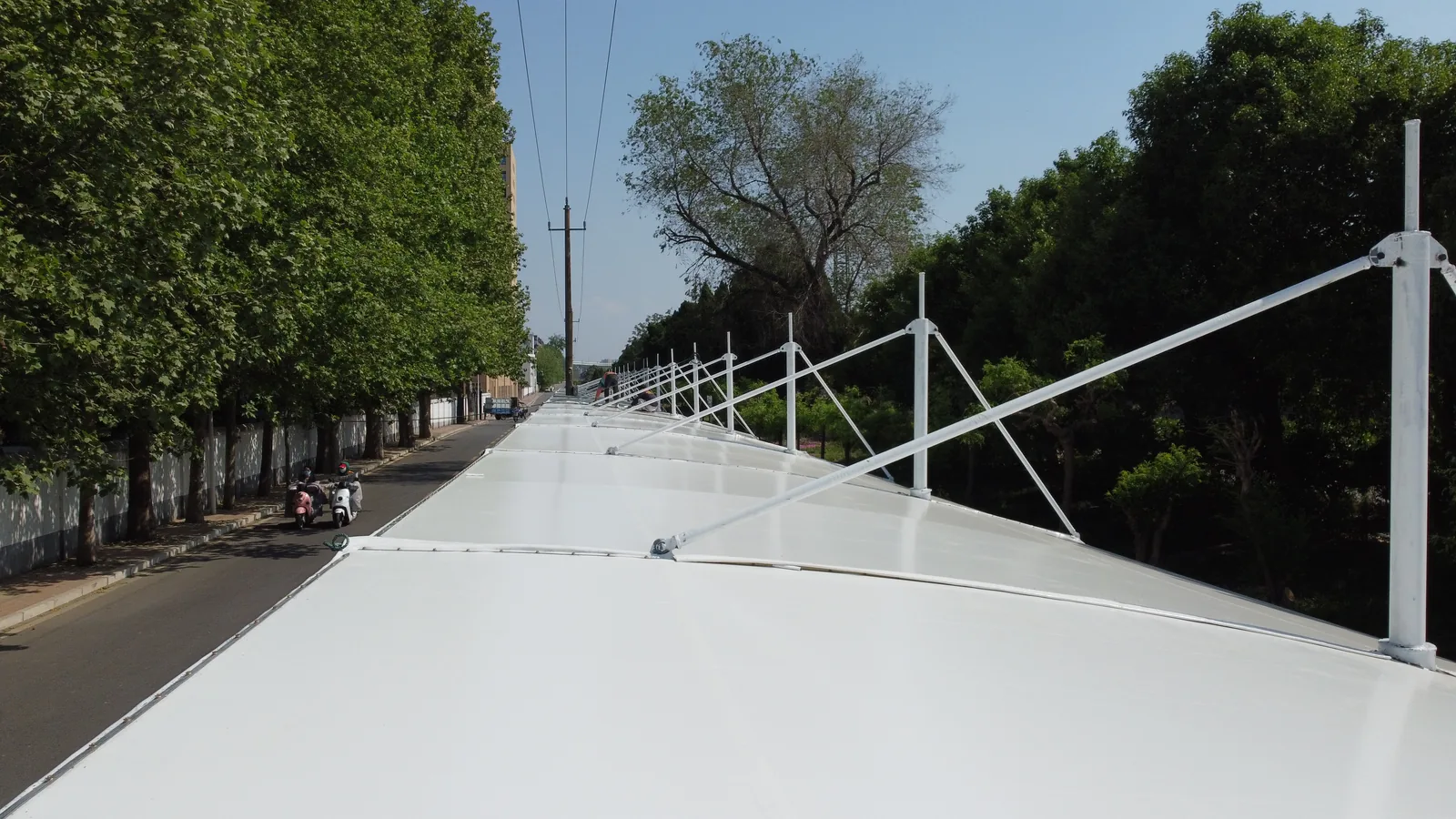
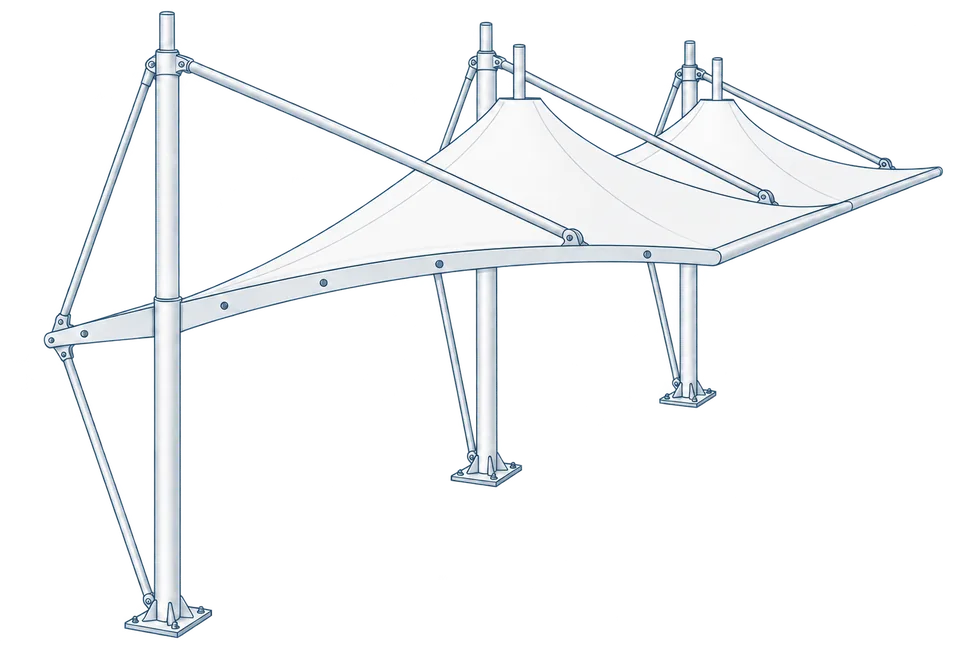
 Membrane carportsClassic membrane shelters→
 Solar carportsParking meets green energy→
 Landscape canopiesParks and leisure spaces→
 Grandstand canopiesSports venue shelters→
 Inflatable play cloudsFamily play areas→
 Wastewater coversEnvironmental infrastructure→
 Fuel station canopiesStation shelters→
 Entrance canopiesWalkways and entrances→
Rust Spots on Carport Steel Components: How to Record Location and Coating Condition for Inspection Communication
When you find rust on the steel components of a tensile membrane structure carport or bicycle shelter, do not start repairing it yourself. The first task is to document the location, extent and coating condition clearly, so the records can be handed directly to the original supplier or an inspection contractor. The more specific your documentation, the faster the other party can judge whether surface rust removal and recoating is enough, whether an upgraded anti-corrosion solution is needed, and the smoother any warranty discussion will be.
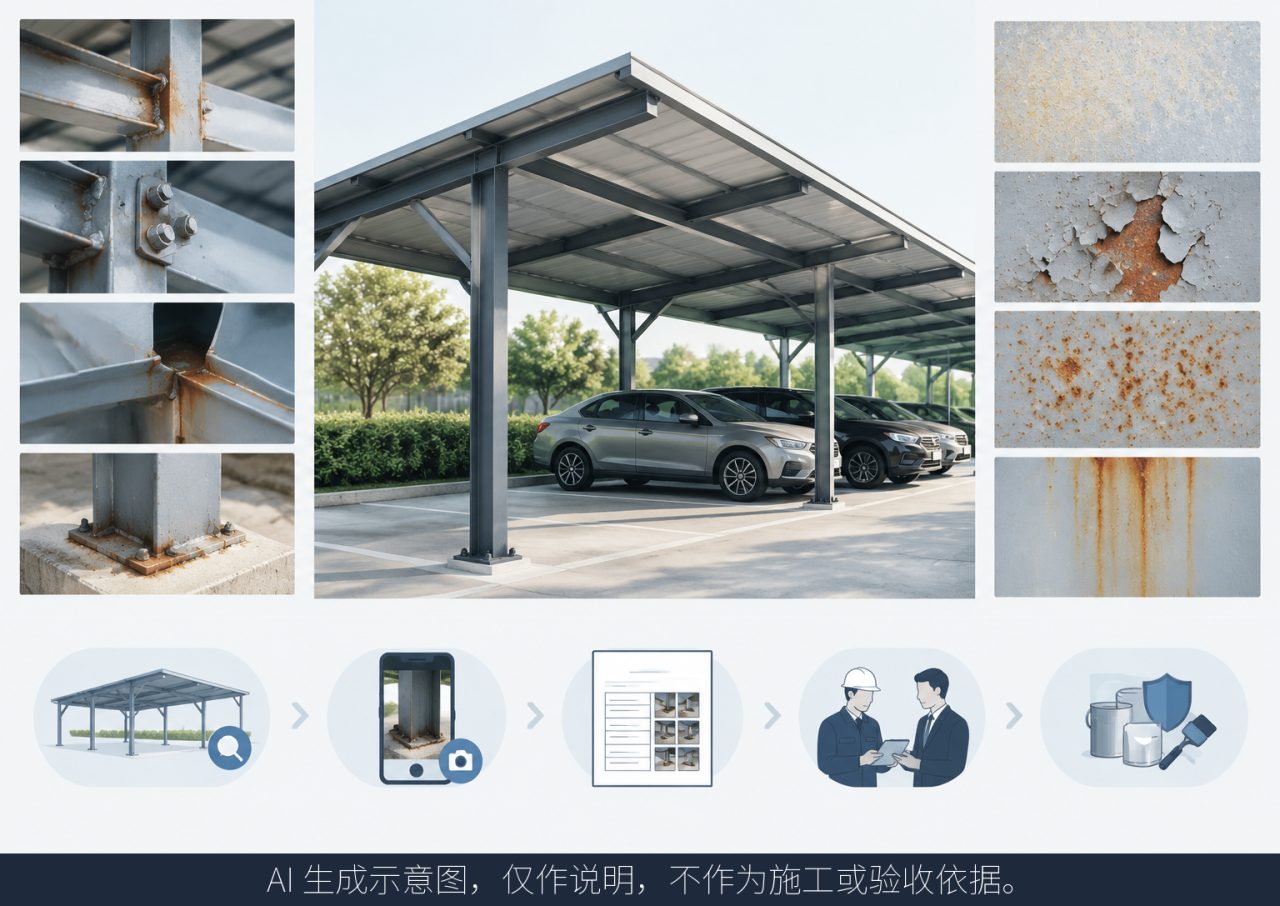
Where do rust spots usually appear first?
The standard anti-corrosion process is piece-by-piece rust removal by grinding, cleaning of weld slag and oil, inspection, then coating. This covers most surfaces, but several positions are inherently vulnerable and should be checked first during inspection:
- Welds and their surroundings: Localized heat during welding can affect coating adhesion, and spots where weld slag was not fully removed tend to rust first.
- Node connections: Gaps where members overlap or are bolted are difficult to coat completely.
- Drainage cut-outs and areas near outlets: Where rainwater ponds or flows regularly, coatings age faster.
- Column bases: Close to the ground, exposed to both moisture and accidental impact.
Which coating conditions should you record?
Seeing rust is only the first step. The stage of the coating matters even more. Common visual signs, roughly in order of severity:
- Chalking and yellowing: The surface fades and leaves powder on your hand. The coating is aging but the substrate is usually still intact.
- Peeling and flaking: The coating lifts or falls off in patches, exposing the base metal. Arrange treatment promptly.
- Pitting corrosion: Pinpoint rust spots indicate corrosion is penetrating locally. Mark the extent carefully.
- Rust streaks: Rust water running down a member leaves stains. The source may be a coating breach higher up, so do not only photograph the streak.
If the structure is in a humid or corrosive environment, you can discuss upgrades such as hot-dip galvanizing with the supplier; for custom fabrication projects with high color-retention requirements, powder-coating options may also be available. Whether an upgrade is worthwhile should be judged from your site records and agreed with the supplier and your project engineer.
How should location and photos be recorded?
We recommend building an inspection log as follows:
- Zone numbering: Divide the carport or bicycle shelter into zones by column, e.g. "Zone A, Column 3", and label the base, shaft and beams separately.
- Location description: For each rust spot, note the member, the height position and approximate size (e.g. coin-sized, or a patch about 30 cm across).
- Photo requirements: One wide shot (showing which member it is on), one close-up (showing the coating condition), and where useful a reference object (a hand or tape measure) to show scale.
- Fill in the log: One row per point, with columns for the number, location description, coating condition, photo reference and date found.
Photographing the same point on different dates also shows whether the rust is spreading or stable, which helps the reviewer judge urgency.
Who should review the records?
Start with the contract. Warranty scope and duration are typically defined per supply scope item — membrane, steel structure and so on. First confirm whether the rusted component falls within the warranty period, then send the inspection log and photos to the original supplier for review. Working with the original supplier has two advantages: they know the original anti-corrosion process and coating materials, so recoating materials will match; and if membrane removal and refitting is involved, the team familiar with the project is the safer choice. If the original supplier cannot be reached, pass the records to a qualified inspection and refurbishment contractor instead.
When must a professional assess on site?
Visual records only solve the question of "what to report". Do not draw conclusions from photos in these situations:
- Extensive corrosion, visible thinning or deformation of members;
- Suspected effects on load-bearing at nodes or welds;
- Questions of whether a member must be replaced or loads recalculated.
These require on-site assessment by qualified professionals against the project's original design conditions. This article covers documentation and communication methods only — it is not a repair specification.
If you need help preparing inspection records for a membrane canopy or steel component review, prepare the intended use, dimensions or drawings of the structure, and the service scope you wish to commission (inspection and assessment, rust removal and recoating, or an anti-corrosion upgrade). Share your project location, intended use, dimensions and available drawings with us via our contact page (/en/contact/), and tell us which design coordination, custom fabrication and supply services you need so we can review the scope.