 Membrane carportsClassic membrane shelters→
 Solar carportsParking meets green energy→
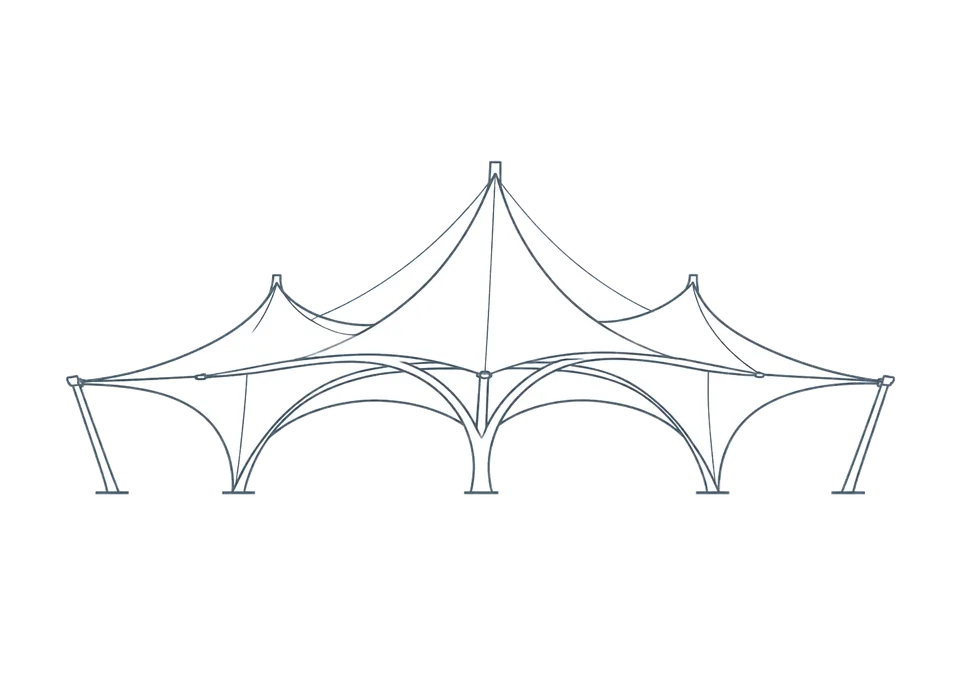 Landscape canopiesParks and leisure spaces→
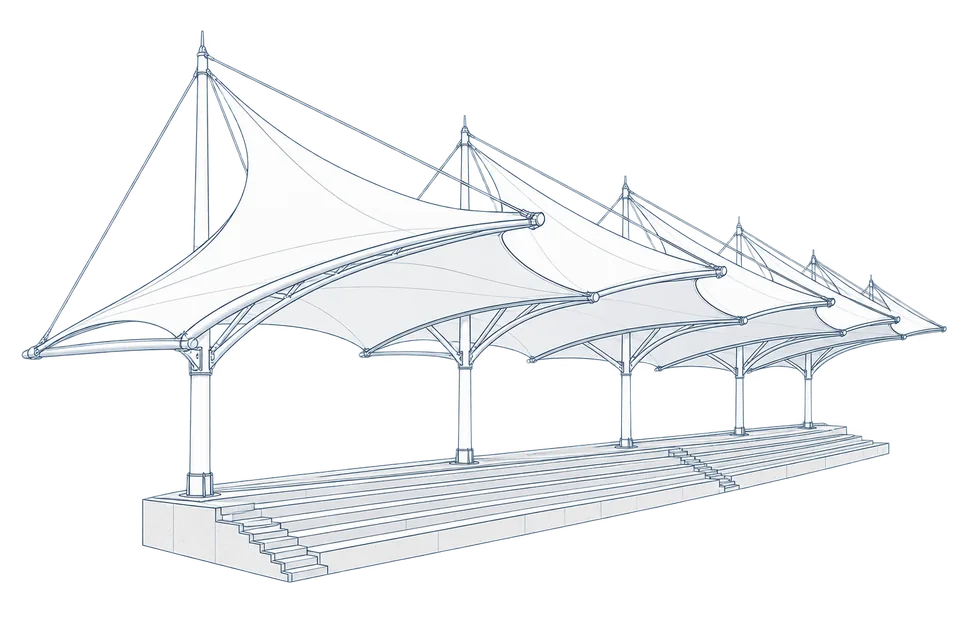 Grandstand canopiesSports venue shelters→
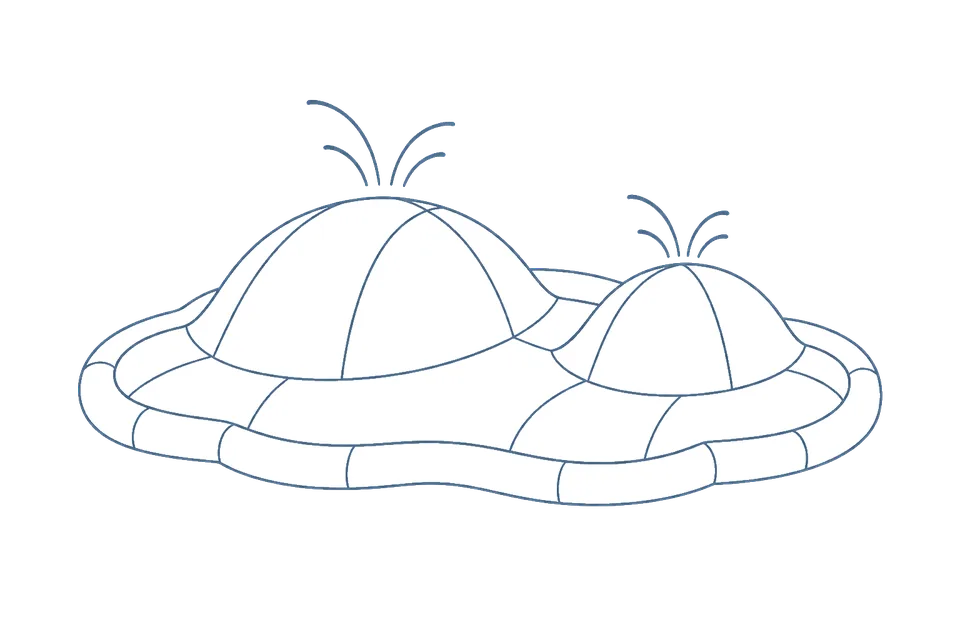 Inflatable play cloudsFamily play areas→
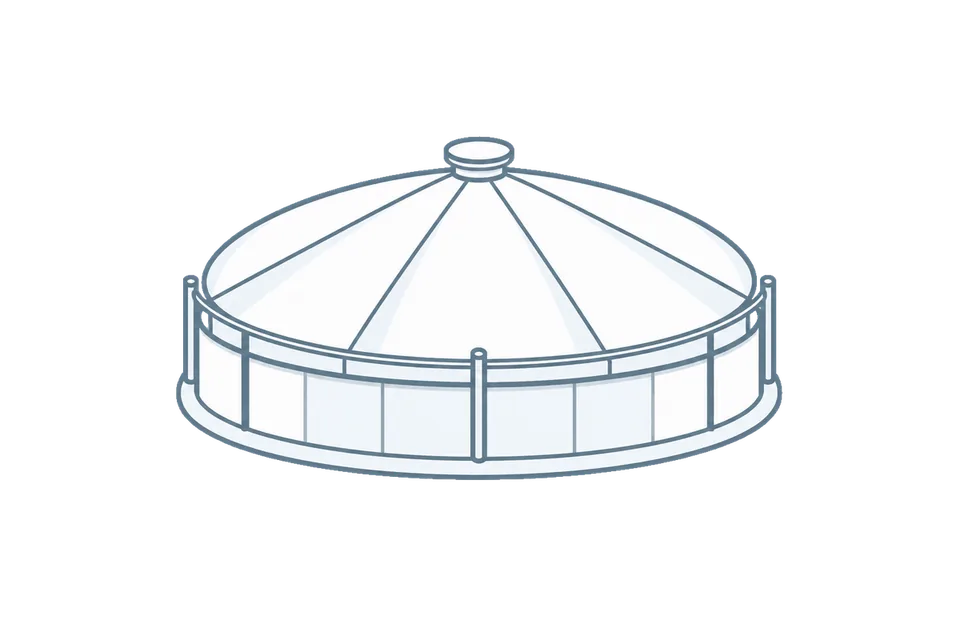 Wastewater coversEnvironmental infrastructure→
 Fuel station canopiesStation shelters→
 Entrance canopiesWalkways and entrances→
Replacing Only the Membrane on an Existing Steel Frame: What to Confirm Before Requesting a Quote
Whether a replacement membrane can simply be copied from the old one — keeping the existing steel frame — depends on three things being verified first: the current condition of the steel structure, the actual as-built dimensions, and the boundary conditions. Until these are confirmed, any quote based on copying the old membrane is only a rough estimate, and turning it into an order risks costly deviations. Before issuing an RFQ (Request for Quotation), work through the following points in order.
Who Inspects the Existing Steel Structure?
A practical division of work is for the buyer (owner) to carry out an initial self-check, followed by remote review of the findings by the membrane structure supplier.
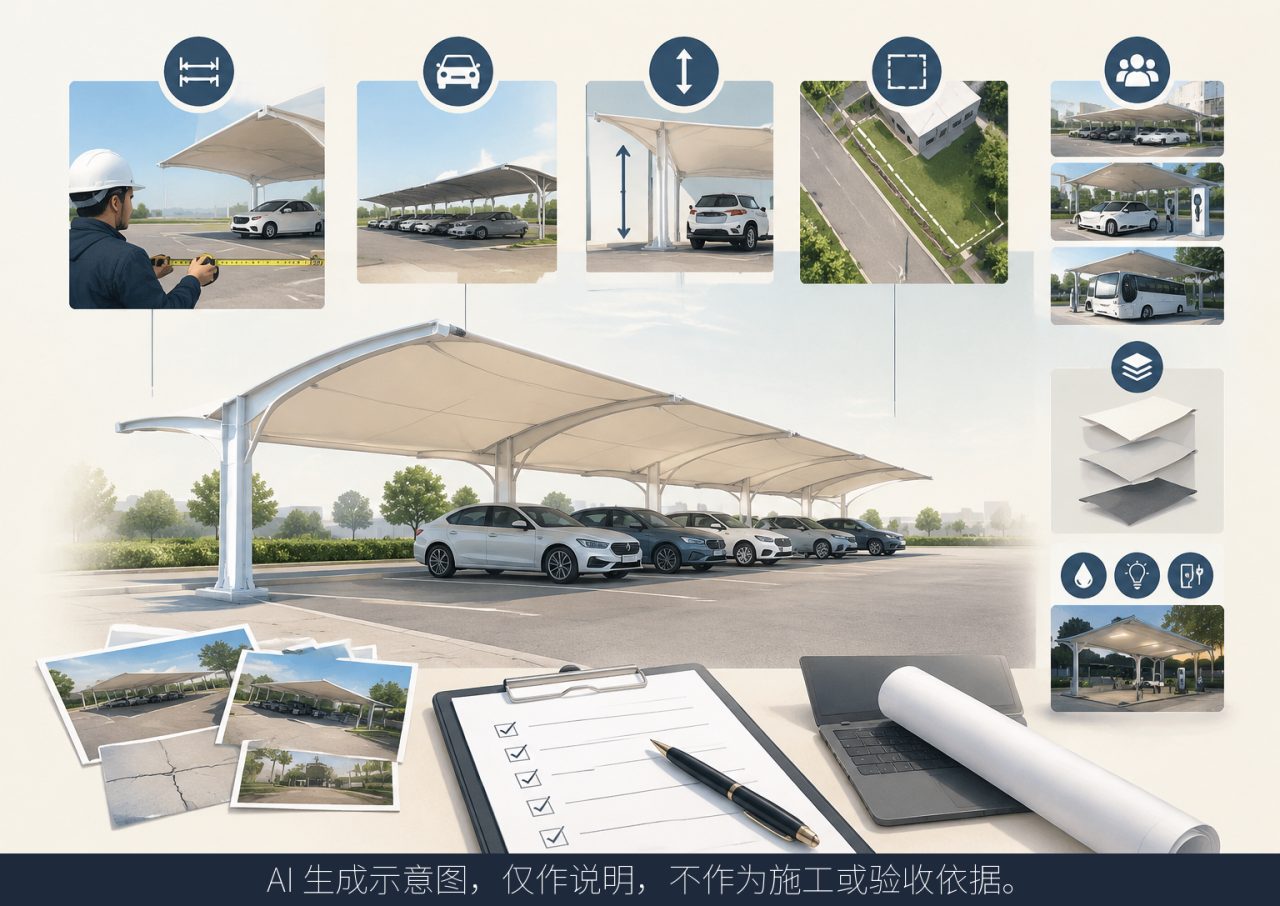
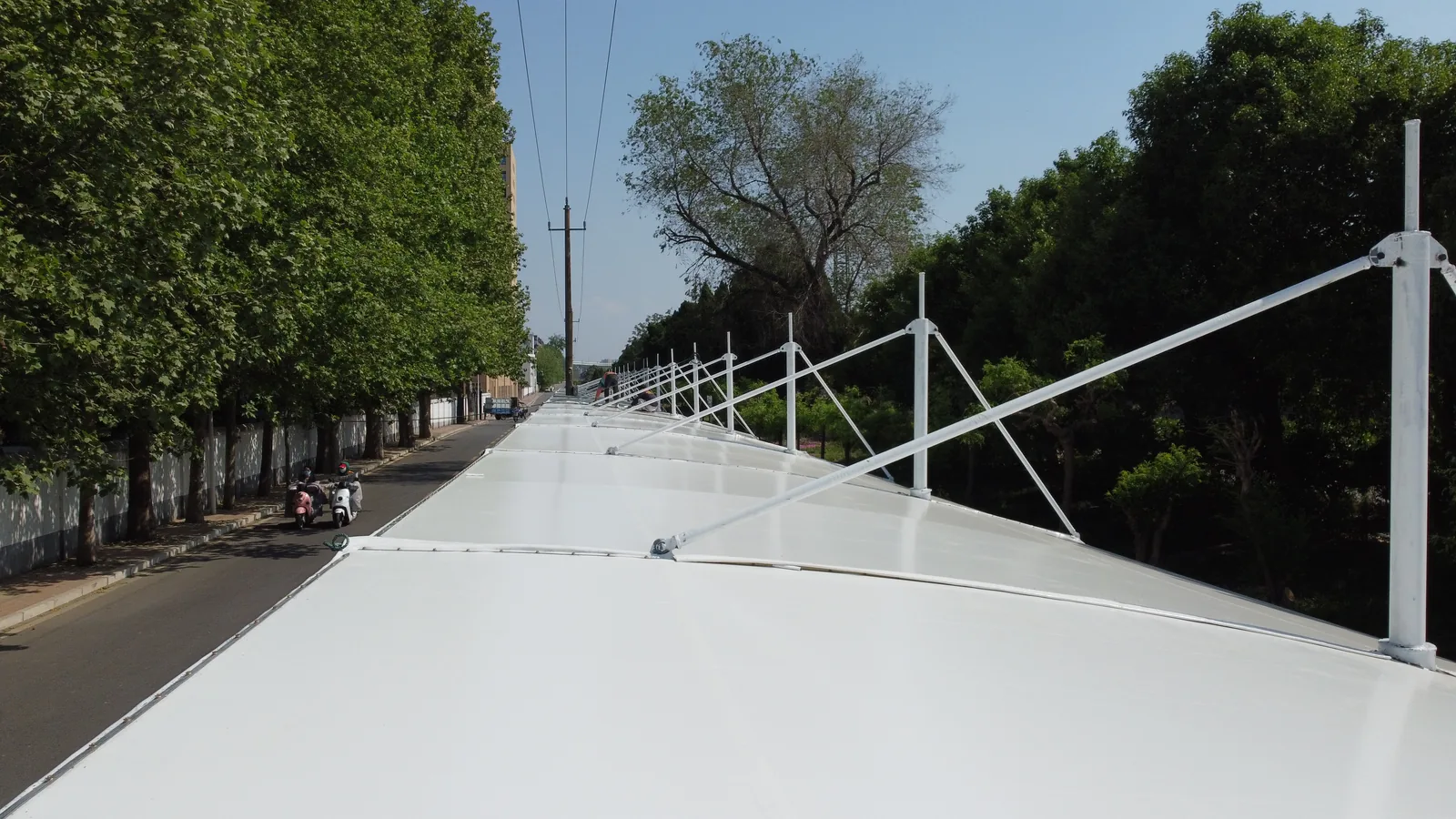
The owner's self-check should cover: surface corrosion on steel members, visible deformation at welds and connections, whether columns are plumb, and whether the original membrane tension points are intact. Photograph connections, column bases and corroded areas separately and clearly.
The supplier then assesses, based on photos and descriptions, whether the frame can still carry a new membrane. For overseas and out-of-region projects, however, on-site inspection and installation are not offered as a standard commitment — the scope of any site verification must be clearly assigned between buyer and supplier at the RFQ stage, often with support from the buyer's local engineer or installer.
If the self-check reveals obvious corrosion, deformation or loose connections, the frame should first be reviewed by a qualified local inspector or design engineer. Confirm the steel structure is sound before discussing membrane replacement — not the other way round.
When Old Drawings Are Missing, How Are Dimensions Verified?
Having the original drawings is ideal, but with existing structures such as a carport or bicycle shelter, drawings are often long gone. In that case, dimensions cannot be estimated by eye — field measurement is needed.
For smaller sites, conventional measurement usually suffices: span, column spacing, clear height, membrane curvature and tension point positions. For larger sites, and subject to confirmation and agreement, drone-based survey may be possible to record the overall geometry and height relationships as the basis for re-modelling and producing cutting patterns.
Three points to note during verification:
- Measure the steel structure's current actual position — not the slack shape of the old membrane.
- Confirm the exact form of the tension connections, since they determine the new membrane's edge detailing.
- Document the results in a measurement record confirmed by both parties. The cutting drawings for the new membrane should be based on this record, never on verbal dimensions.
Conditions That Must Be Confirmed Before Copying the Old Membrane
Copying the old membrane sounds simple, but a set of preconditions applies. Do not place an order before the following are settled:
- Steel frame condition not verified — a new membrane applies tension comparable to the old one; if the frame is weakened by corrosion, direct replication carries safety risks.
- Actual dimensions not surveyed — a removed membrane is already slack and deformed; cutting a new one from its dimensions accumulates errors into the tensioning stage.
- Membrane type not confirmed — whether the original is standard PVC or upgraded PVDF or PTFE affects self-cleaning and lifespan. Replacement is a chance to adjust, but the choice must be made first.
- Fire performance requirements not confirmed — standard PVC membrane generally does not meet B1 flame-retardant class; if local fire rules apply, the membrane specification must be fixed at the design stage. Compliance with local building and fire regulations is the buyer's responsibility to verify with their own project engineer.
- Tension connections and edge detailing not confirmed — if the connection form changes, the cutting drawings must be reissued; old versions cannot be reused.
- Demolition and installation responsibilities not divided — who removes the old membrane, provides scaffolding and provides site assistance affects both price and schedule. This is especially important for overseas projects, where installation is typically handled by the buyer's local team and the supplier's role is limited to design coordination, custom fabrication and supply of components.
What Documents Should the Buyer Prepare Before an RFQ?
The more complete the information, the closer the quote to reality. Prepare:
- Project use and location (relevant to wind and snow loading conditions);
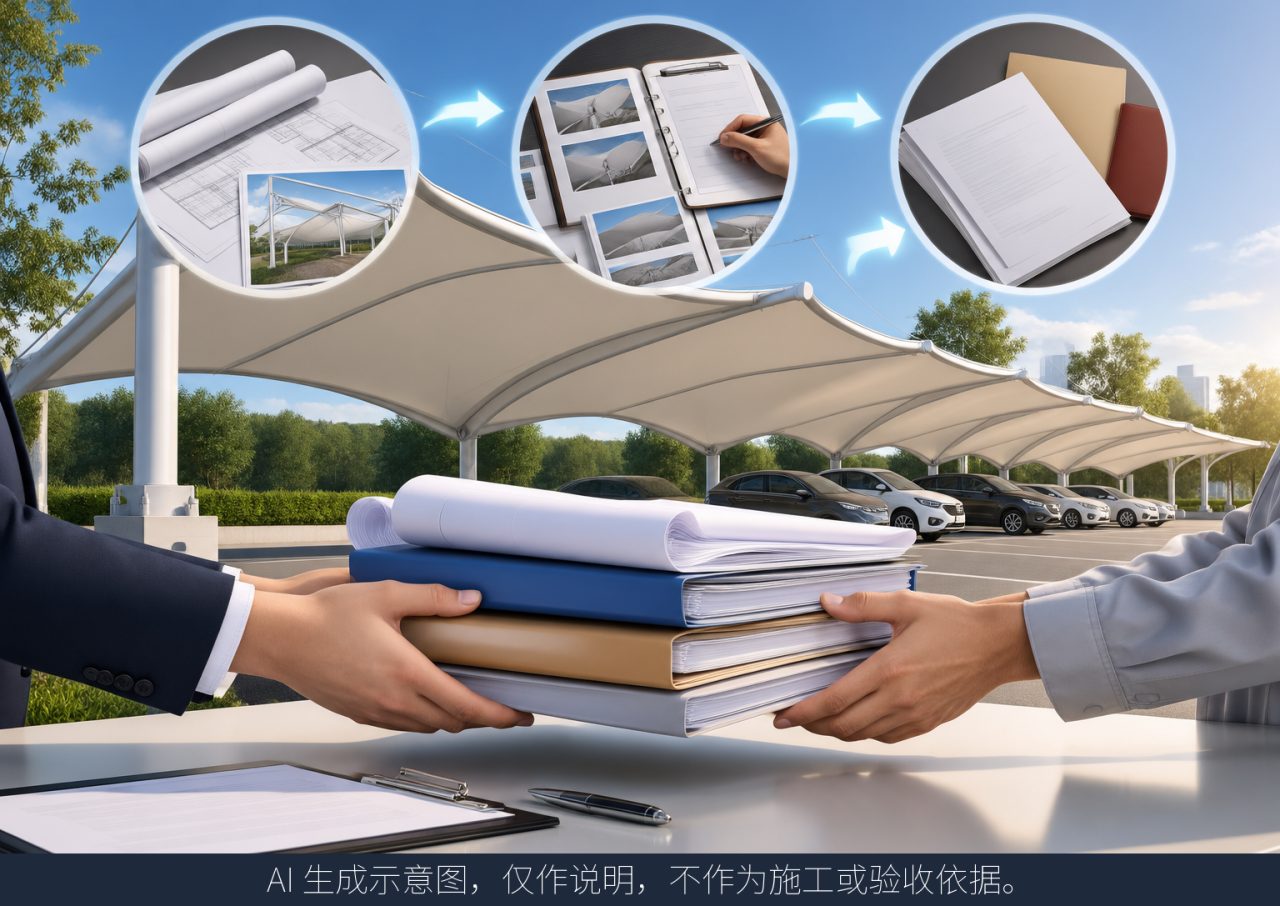
- Old drawings, or dimensions and site photos if drawings are missing;
- Photos from the steel structure self-check, focusing on connections and corroded areas;
- Any available information on the original membrane (brand or type markings);
- The service scope you wish to commission: membrane supply only, supply with fabrication documentation, or inclusion of demolition coordination.
Warranty and Interface with Local Installers
Even as a sub-project, membrane replacement should have its warranty written into the contract item by item: separate warranty terms and periods for the membrane fabric and any steel-related parts — no verbal promises. This keeps responsibility boundaries clear if issues arise later.
For installation quality, clarify with the supplier how control is exercised: for example, whether steel components are delivered as finished products requiring no on-site fabrication, what fabrication and installation standards apply, and who reviews critical connections. For overseas projects, agree in the contract exactly how the supplier's supply scope interfaces with your local installer, and confirm that the handover package — cutting drawings, material documentation, packing lists and installation guidance — covers what your team needs. On-site maintenance performed in China should not be assumed to be available as overseas field service.
Next Step
To discuss a membrane-only replacement, share your project location, intended use, dimensions or available drawings, and the service scope you need — whether design coordination, custom fabrication or component supply — so we can review the scope with you. You can reach us via our contact page at /en/contact/.