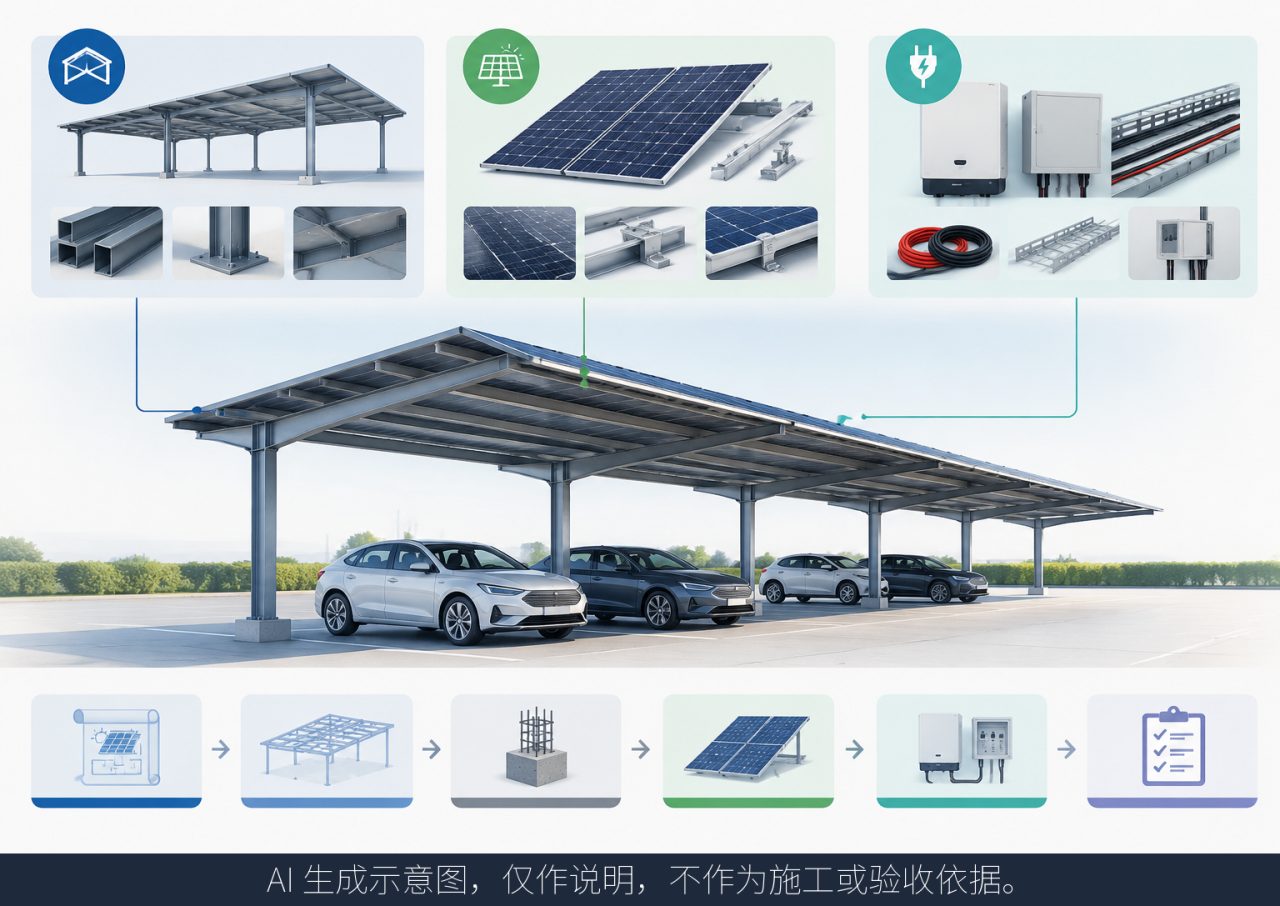
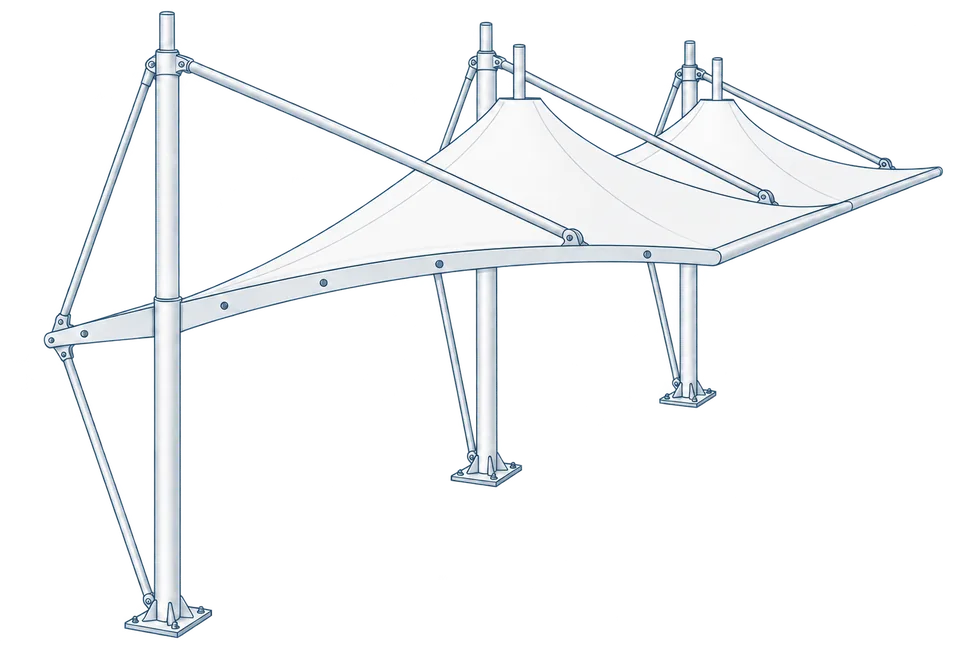
 Membrane carportsClassic membrane shelters→
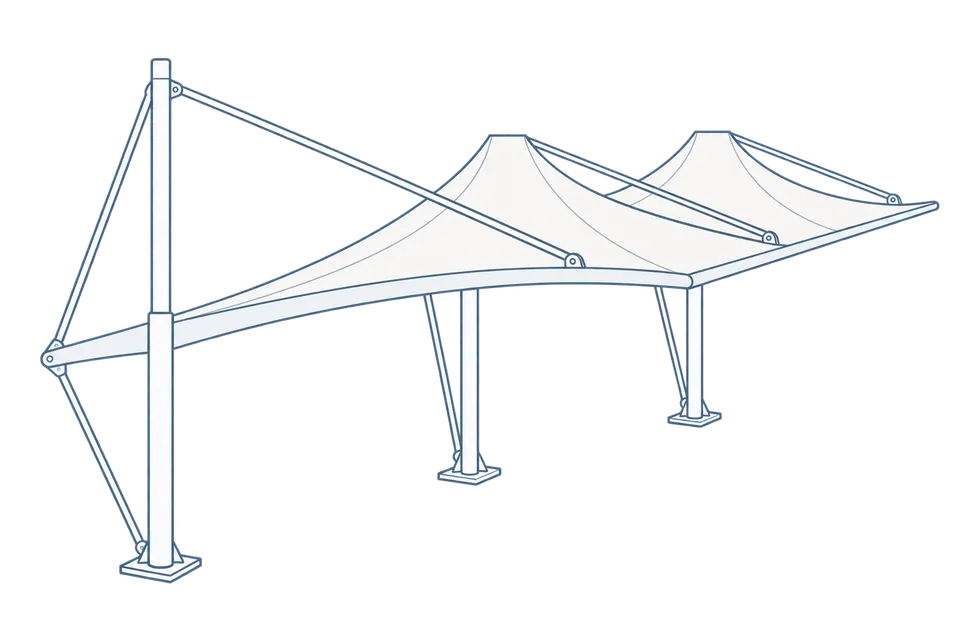 Solar carportsParking meets green energy→
 Landscape canopiesParks and leisure spaces→
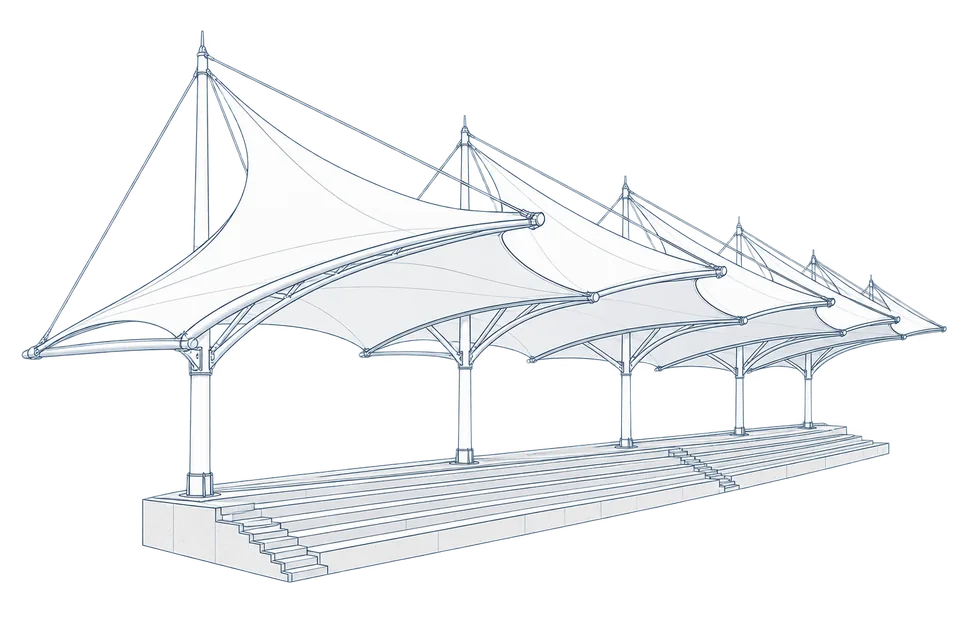 Grandstand canopiesSports venue shelters→
 Inflatable play cloudsFamily play areas→
 Wastewater coversEnvironmental infrastructure→
 Fuel station canopiesStation shelters→
 Entrance canopiesWalkways and entrances→
RFQ Checklist for Tensile Membrane Structure Projects: What to Send When You Only Have Site Photos
Submitting a Request for Quotation (RFQ) with only a few site photos limits any fabricator to a rough budget range, because three categories of information are missing: span dimensions, intended use, and site conditions. This checklist explains which data buyers should provide, which items can only be handled as provisional allowances, and where quotation assumptions should be recorded so they can later be converted into a formal quotation.
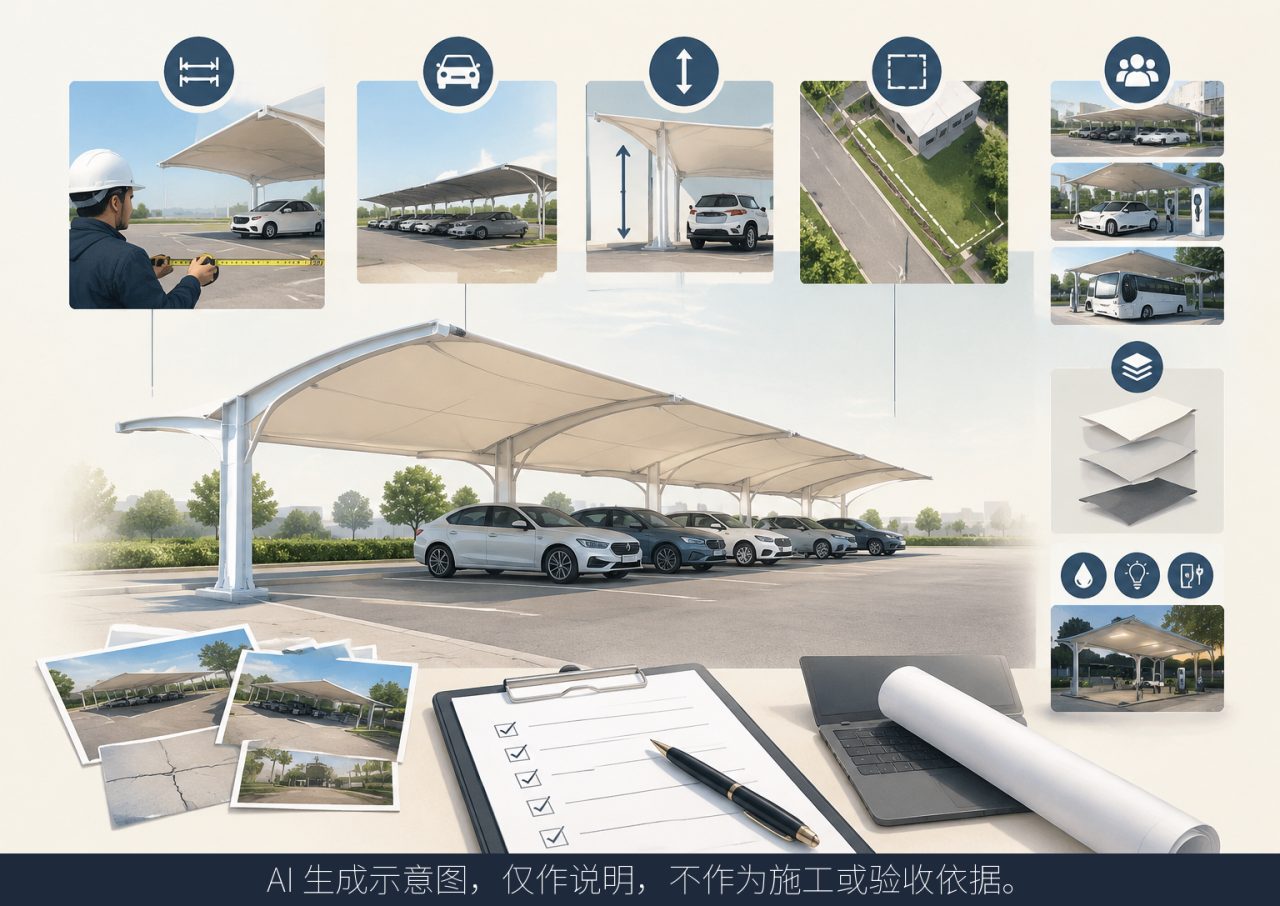
What to Provide When Dimensional Data Is Incomplete
Drawings are not required at the RFQ stage, but the following data points are needed. Missing any one of them can shift the estimate significantly:
- Span dimensions: the width between columns of a carport or canopy directly determines steel tonnage and membrane specification.
- Length or number of parking bays: this determines how many bays or modules are required and the total quantity.
- Clearance height: requirements differ for sedans, vans, buses, or fire access routes beneath the membrane canopy.
- Available site envelope: distances from the canopy edge to boundary walls, landscaping, and utility lines.
A tape measure and a photo with a visible reference object are usually enough to capture these figures. If the site location is not yet fixed, you may still request an estimate, but state clearly that it is based on provisional dimensions.
How Intended Use Affects Quotation Conditions
The same dimensions can carry very different configurations and costs depending on use. State three things in your RFQ:
- What the structure shelters and who uses it: a residential carport, an EV-charging carport, or a service-area carport each has different requirements. EV-charging carports involve fire-safety considerations; membrane flame-retardancy classification should be confirmed against local fire requirements during the design stage with your project engineer.
- Membrane grade: standard PVC is economical and suits most carport needs; PVDF or PTFE upgrades offer higher self-cleaning performance and longevity. Treat these as options to raise at RFQ stage, otherwise quotations will assume standard configuration.
- Ancillary requirements: drainage, lighting, or charging equipment affect foundation and steel provisions.
Which Site Photos to Take
Good photos partially replace a site visit. Recommended shots:
- Overviews: one from each diagonal of the site, showing overall extent and neighbouring buildings.
- Ground conditions: existing surface (concrete, soil, green area), any visible cracking or settlement.
- Obstructions: trees, power lines, or signage above and around the proposed position.
- Access: gate widths and turning space, which affect component transport and lifting methods by your local team.
- Close-ups of the proposed position: include a person, tape measure, or vehicle for scale.
For small sites these categories are usually sufficient. For large or complex sites where dimensions are hard to confirm, survey options should be discussed case by case with the fabricator and your local representatives.
Which Gaps Become Provisional Allowances
When information is incomplete, some items cannot be priced against real conditions and are entered as provisional allowances in the quotation. Common examples:
- Foundation conditions: without geotechnical or paving information, foundations are estimated on conventional assumptions.
- Wind and snow load verification: calculations require the specific conditions at the project location; confirm local requirements with your project engineer.
- Membrane grade: if use is unspecified, standard PVC is assumed and upgrades listed separately.
- Drainage and services: where photos do not show drainage routes, conventional practice is assumed.
When you receive a quotation, check exactly which items are provisional and on what basis. Quotations with unclear line items are difficult to adjust later without dispute.
Where to Record Quotation Assumptions and How to Revise
Ask the supplier to present quotation assumptions as a written list, noting the basis of each item (dimensions, use, site judgement) and which figures are provisional. Revisions then become a matter of substituting real values item by item: measured dimensions replace estimates, confirmed use updates the configuration, and provisional items are repriced once real conditions are known.
Equally important: whether provisional or formal, warranty terms for membrane fabric and steel components should be written into the contract in full, not agreed verbally. Keep the quotation assumption list and the contract clause list as separate archived documents.
On fabrication and installation quality, three points are worth confirming with any supplier: whether components arrive as finished prefabricated items with no on-site fabrication, whether the installation team follows a unified workmanship standard, and whether manufacturer technical staff control key joints. Design responsibility and supply scope — which of design coordination, custom fabrication, supply, and installation sit with the supplier and which with your local installer — should be agreed in writing with your project engineer before contract.
Next Steps
If you only have photos today, complete the checklist above: intended use, approximate dimensions, the photo categories listed, and the services you wish to delegate (design coordination, custom fabrication, supply scope, installation — each separately confirmed). Share your project location, intended use, dimensions and available drawings, and tell us which services you need so we can review the scope. Costs vary widely by span, membrane material, and configuration, and must be assessed against a specific scheme.
To start a conversation about design coordination, custom fabrication and component supply, visit our contact page.