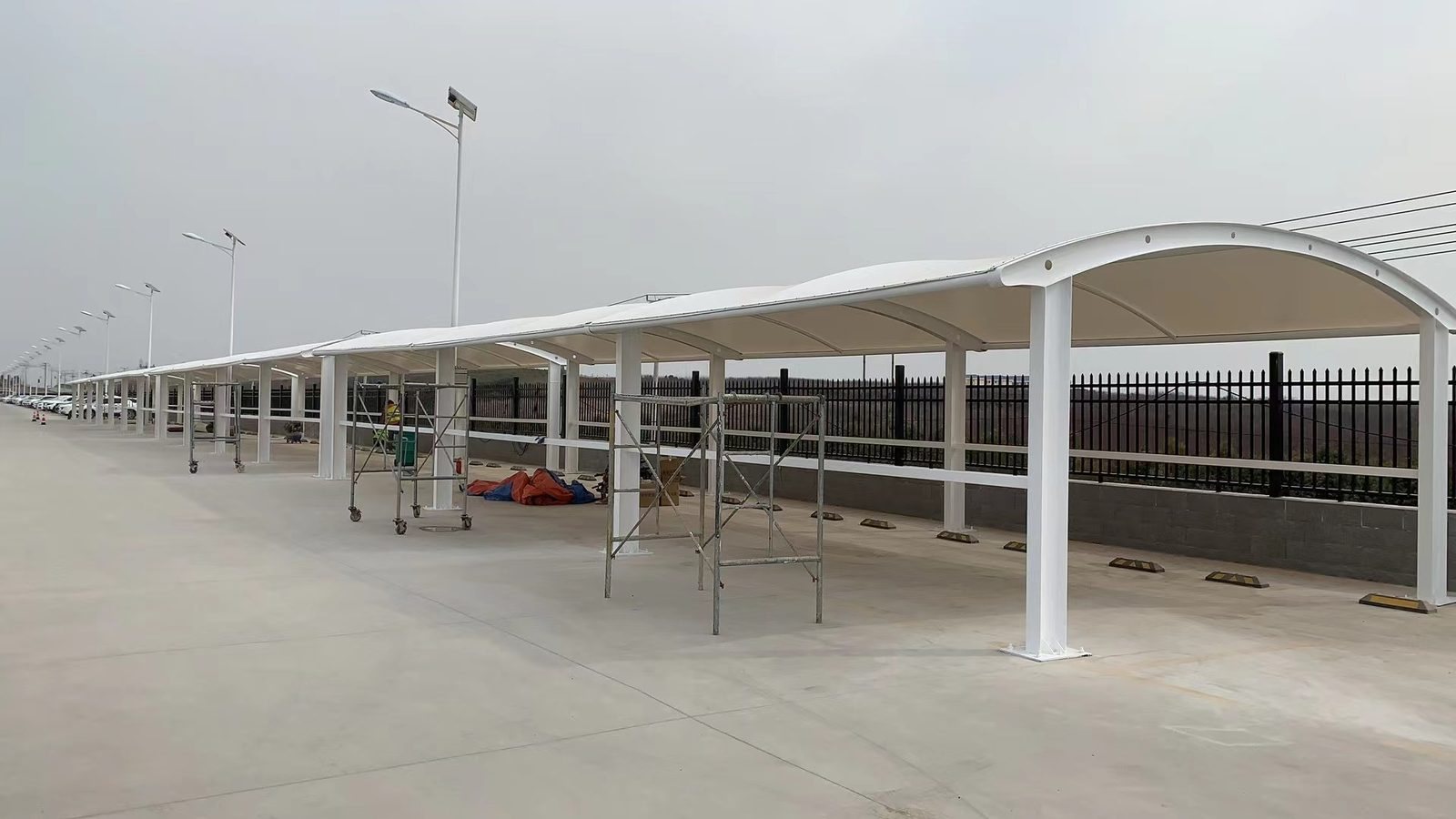
 Membrane carportsClassic membrane shelters→
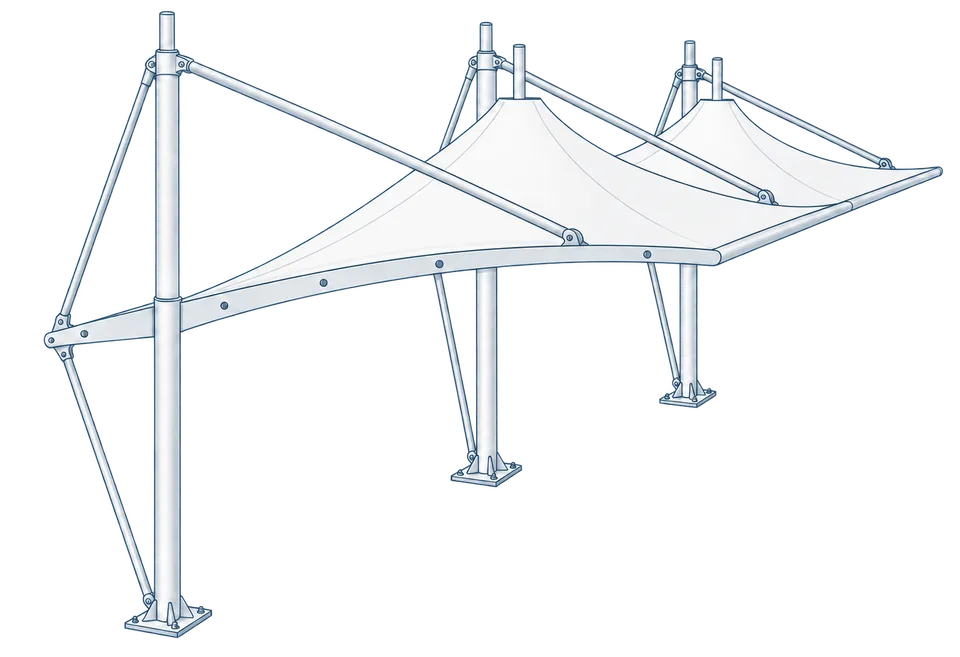
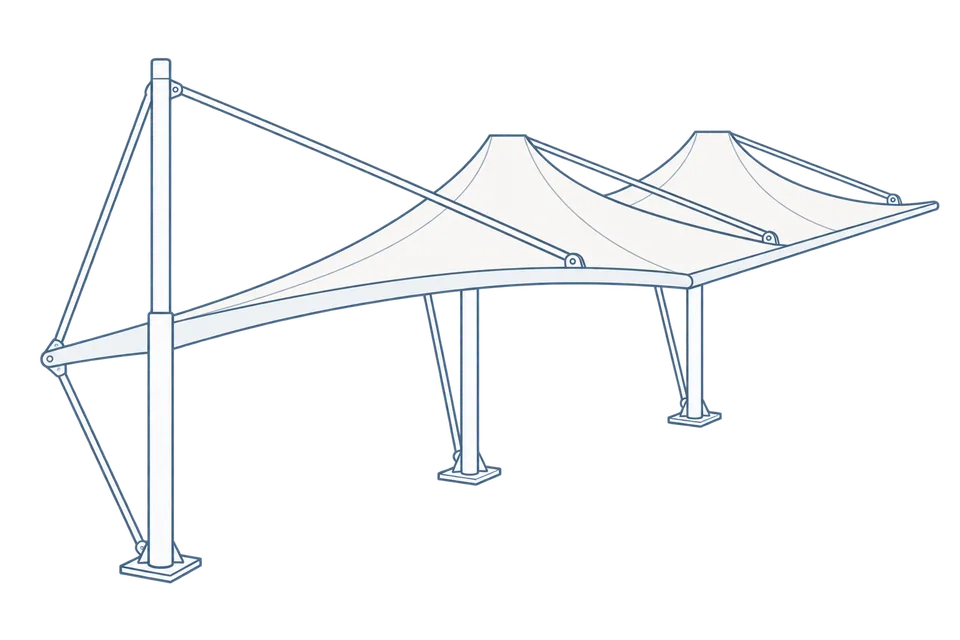 Solar carportsParking meets green energy→
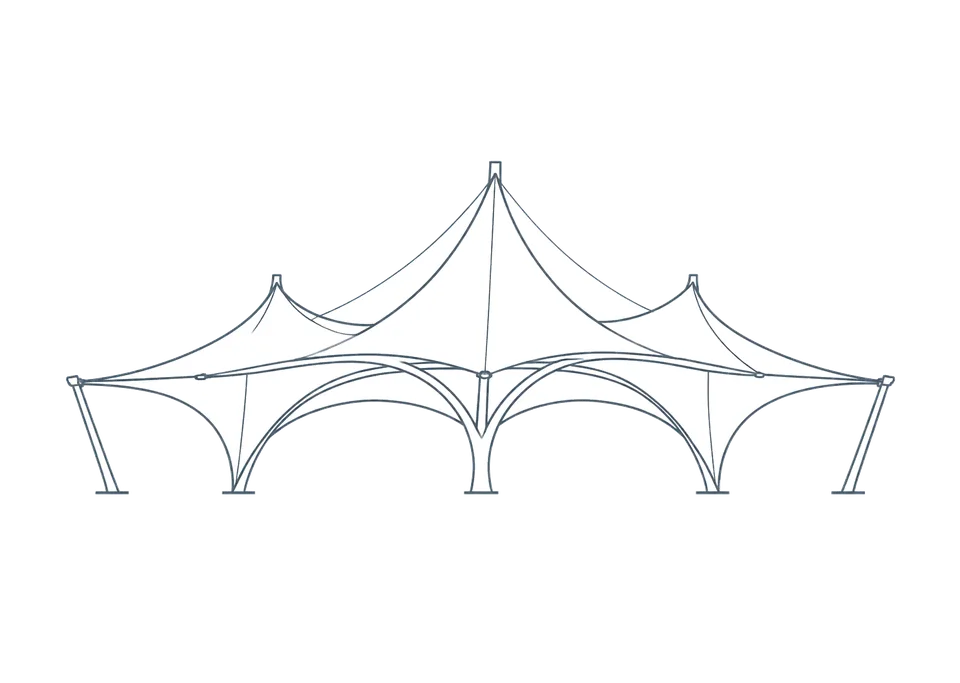 Landscape canopiesParks and leisure spaces→
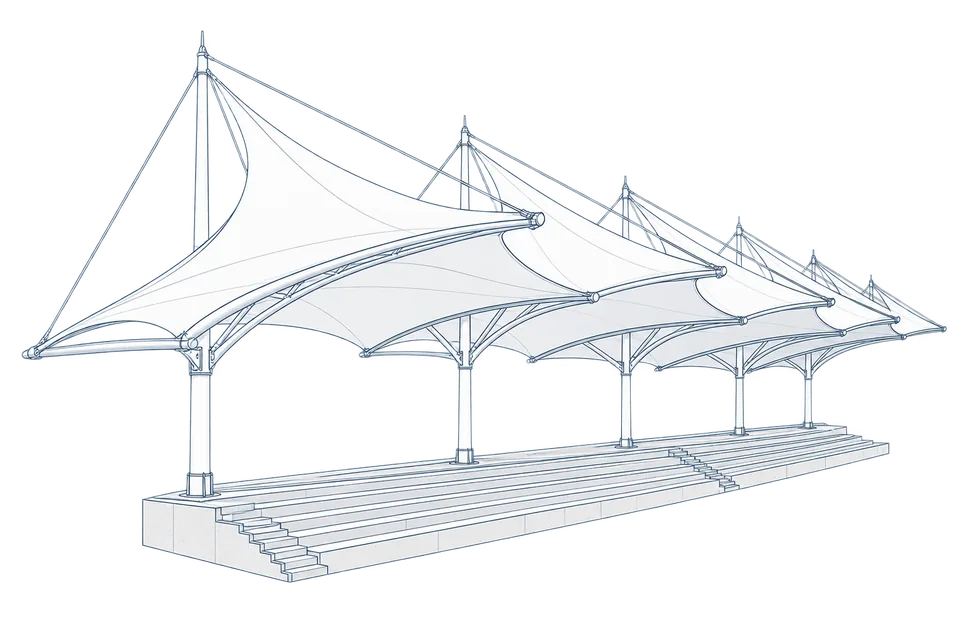 Grandstand canopiesSports venue shelters→
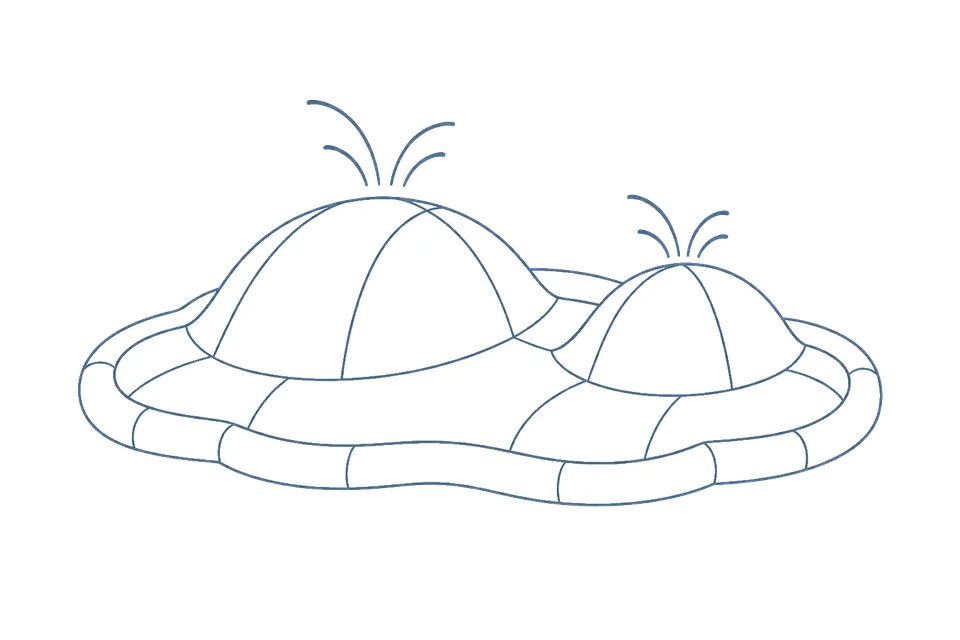 Inflatable play cloudsFamily play areas→
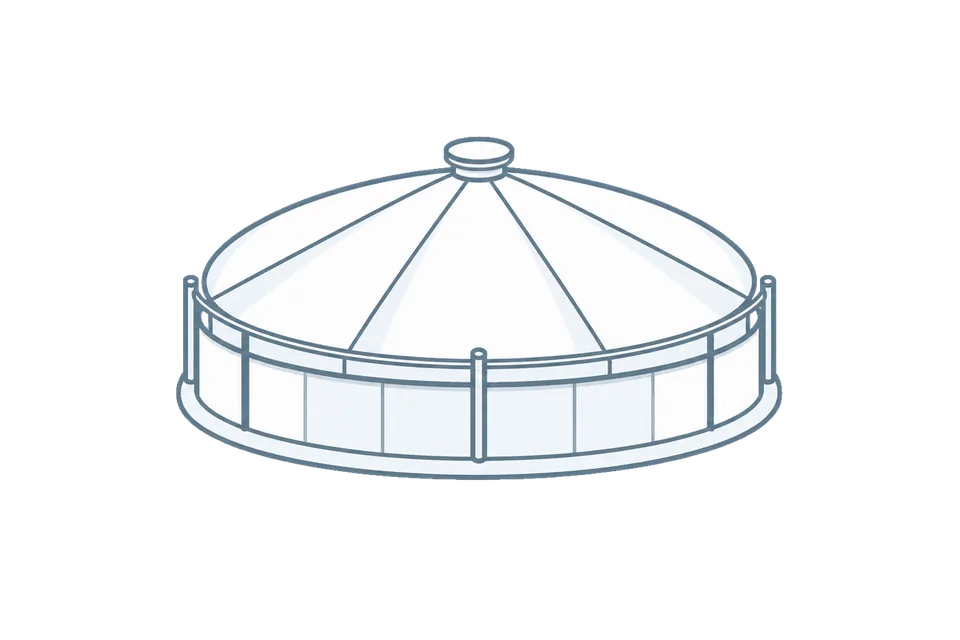 Wastewater coversEnvironmental infrastructure→
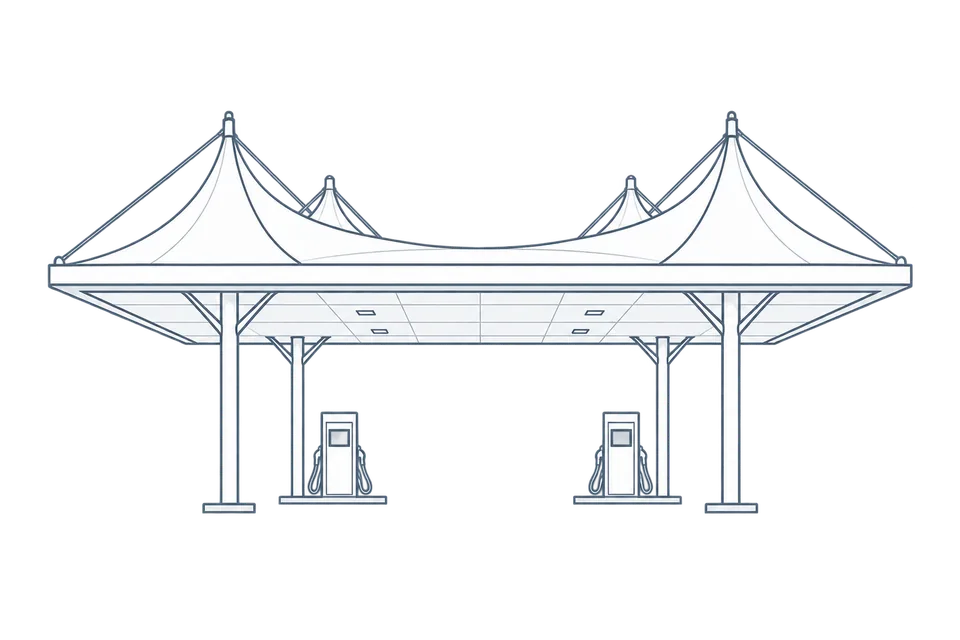 Fuel station canopiesStation shelters→
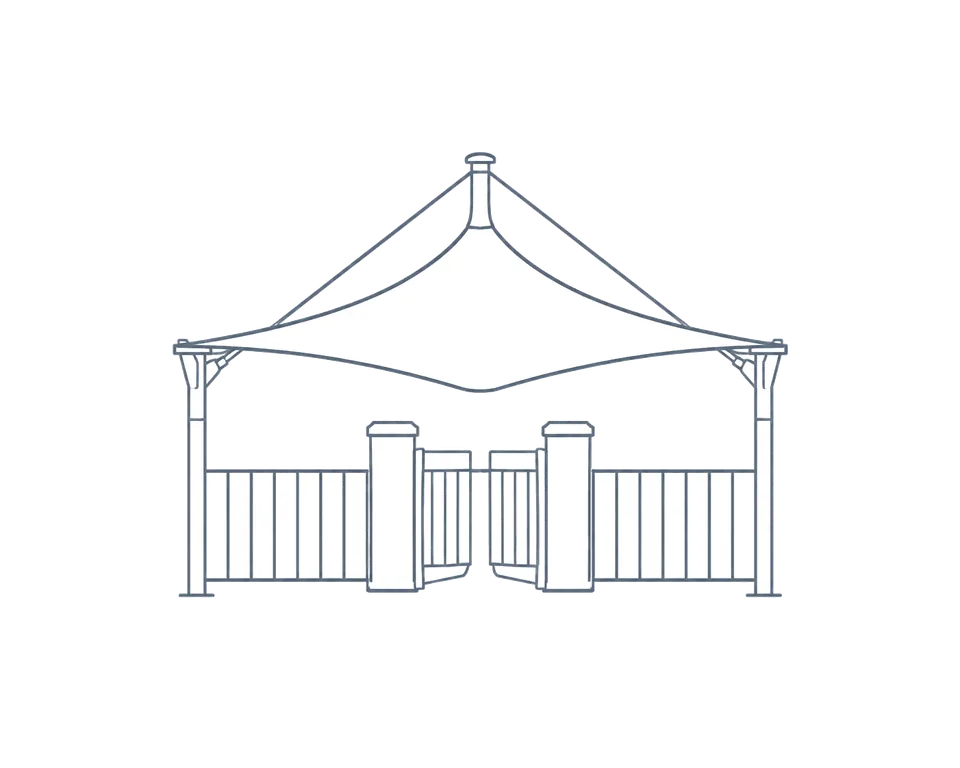 Entrance canopiesWalkways and entrances→
Why Quoting Just “PVC Membrane” Can Cost You: Specifying Top Coatings and Warranty Documents on RFQs and Orders
Two PVC membrane structures of the same size can age very differently: one stays clean for years, another yellows and collects dirt within a few seasons. The difference usually lies not in the letters “PVC” but in the top coating. If you are sourcing a tensile membrane carport or canopy and you negotiate price on “PVC membrane” alone, the membrane fabric line item is where you are most likely to lose out. This article explains what the top coating is, the common types, and what material information your RFQ (request for quotation), order and quotation should state.
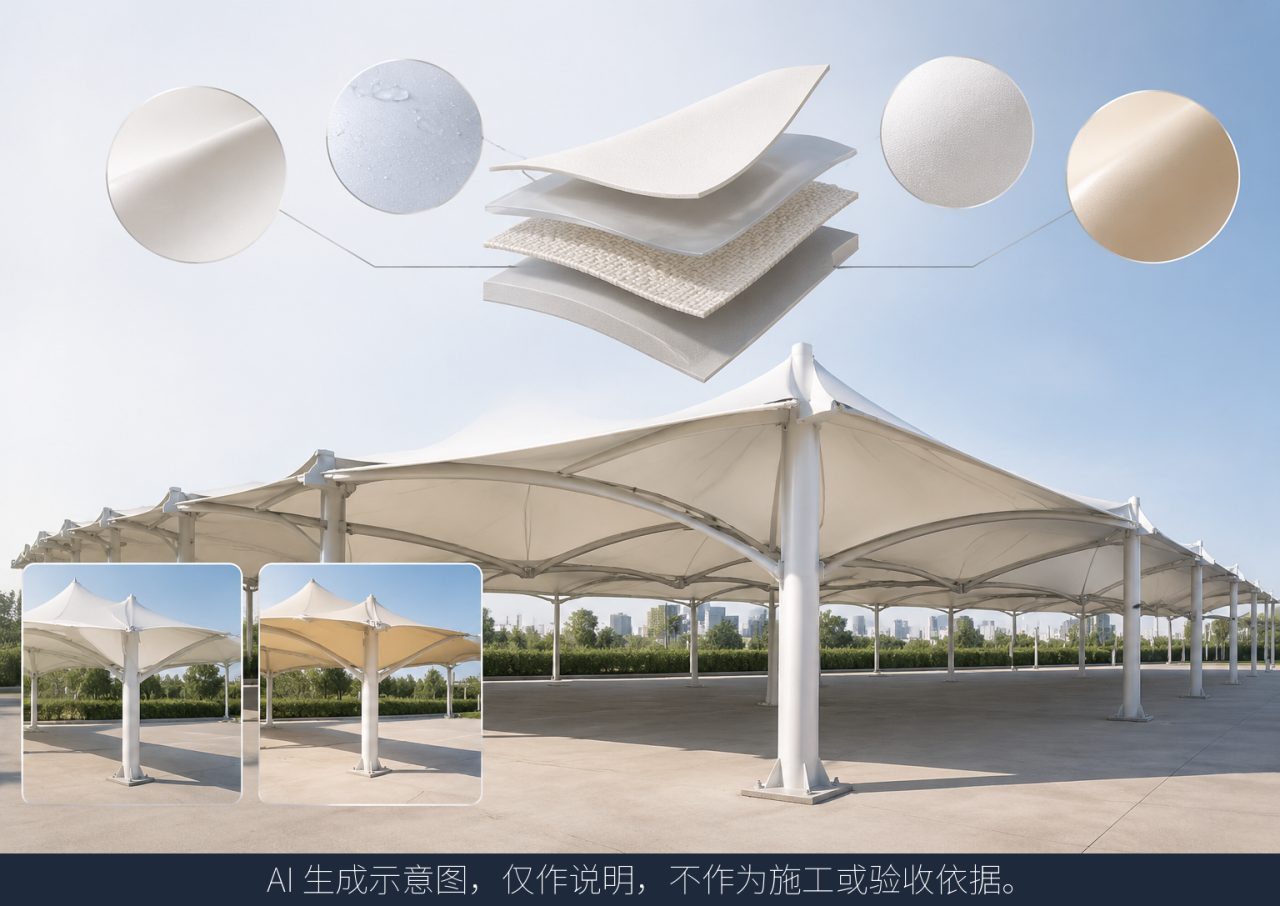
What is the top coating on PVC membrane, and what types exist?
A PVC-coated membrane typically consists of a polyester or glass-fibre base fabric, a PVC coating, and — on the outermost surface — a protective top coating. Because the top coating faces sunlight, rain and dust directly, it is the layer that largely determines how well the fabric resists ageing.
Common options include a base condition plus three coating types:
- No top coating: PVC coating only. Lower cost, suited to temporary or tightly budgeted projects, but with comparatively weaker resistance to ageing.
- PVDF top coating: improves self-cleaning and ageing resistance; a common upgrade for projects with higher expectations on surface cleanliness and service life.
- TiO₂ (titanium dioxide) top coating: uses photocatalysis to break down surface contaminants; strong self-cleaning, often chosen where appearance matters most.
- PVF top coating: a PVF film with good chemical stability; ageing resistance among the higher tier of these options.
Why the top coating drives the difference in service life
Ageing of PVC membrane shows up mainly as yellowing, loss of surface sheen, and a roughening of the surface that makes it hold dust — more pronounced in high-UV locations. The top coating sits between the fabric and UV and rain, slowing that process.
A better coating generally means longer-lasting fabric; this is the main reason outcomes differ so widely under the same product name. That said, uncoated PVC membrane is not inherently “inferior” — it has its own cost position and suitable applications. The real problem arises when buyer and supplier never clarify “which one”, and the delivered fabric is not what the buyer expected.
Why “PVC membrane” alone is not a sufficient specification
“PVC membrane” is a generic term. Uncoated, PVDF, TiO₂ and PVF products can all carry that name, with large gaps in price and durability. If a contract or quotation only says “PVC membrane”, a supplier who delivers a lower-cost uncoated product has not breached the order — but the owner may receive fabric well below expectations.
Stated service years should not rest on verbal claims either. How long a given fabric lasts depends on the membrane manufacturer's warranty documentation — the manufacturer's own stated warranty terms for its product. Ask for this document to be attached to the contract rather than relying on a sales conversation.
What to require on the membrane line of your order or quotation
At minimum, the membrane item should list:
- Membrane brand and specific type designation (not just “PVC membrane”);
- Base fabric and coating type, plus the top coating named explicitly — uncoated, PVDF, TiO₂ or PVF;
- Fire/flame-retardant classification, where the project has fire requirements — confirm with your local fire regulations at design stage;
- The warranty document number or a copy, attached;
- Unit price and the basis on which area is calculated.
The same logic applies to the steel frame: anti-corrosion treatment (for example, item-by-item surface preparation and protective coating, and whether hot-dip galvanizing is upgraded for humid environments) should be itemised in the quotation so acceptance is judged against an agreed standard.
A pre-order checklist
When you receive a quotation, check:
- Membrane specified by brand and type designation
- Top coating type explicitly named
- Membrane manufacturer's warranty document attached
- Flame-retardant classification stated per project requirements
If any item is missing, ask the supplier to complete it before you confirm. Note that the standards your project must satisfy under local building and fire rules are for you and your project engineer to verify.
Next step
Share your project location, intended use, dimensions and any available drawings, and tell us which design coordination, custom fabrication and supply scope services you need, so we can review the scope together. For material selection and configuration details, see our membrane material solutions page.