 Membrane carportsClassic membrane shelters→
 Solar carportsParking meets green energy→
 Landscape canopiesParks and leisure spaces→
 Grandstand canopiesSports venue shelters→
 Inflatable play cloudsFamily play areas→
 Wastewater coversEnvironmental infrastructure→
 Fuel station canopiesStation shelters→
 Entrance canopiesWalkways and entrances→
Membrane Wrinkles on a Tensile Membrane Structure Carport: What Changes to Document Before Professional Review
When wrinkles appear on a membrane canopy such as a carport, what matters most is documenting the changes themselves: where the wrinkles appear, which direction they run, how far they extend, and whether they are accompanied by ponding water, sagging or unusual noise. These records are what a qualified reviewer needs to judge whether the membrane surface is showing normal relaxation or a condition that needs intervention. The more complete your records, the faster the review.
Normal Relaxation vs. Wrinkles That Need Attention
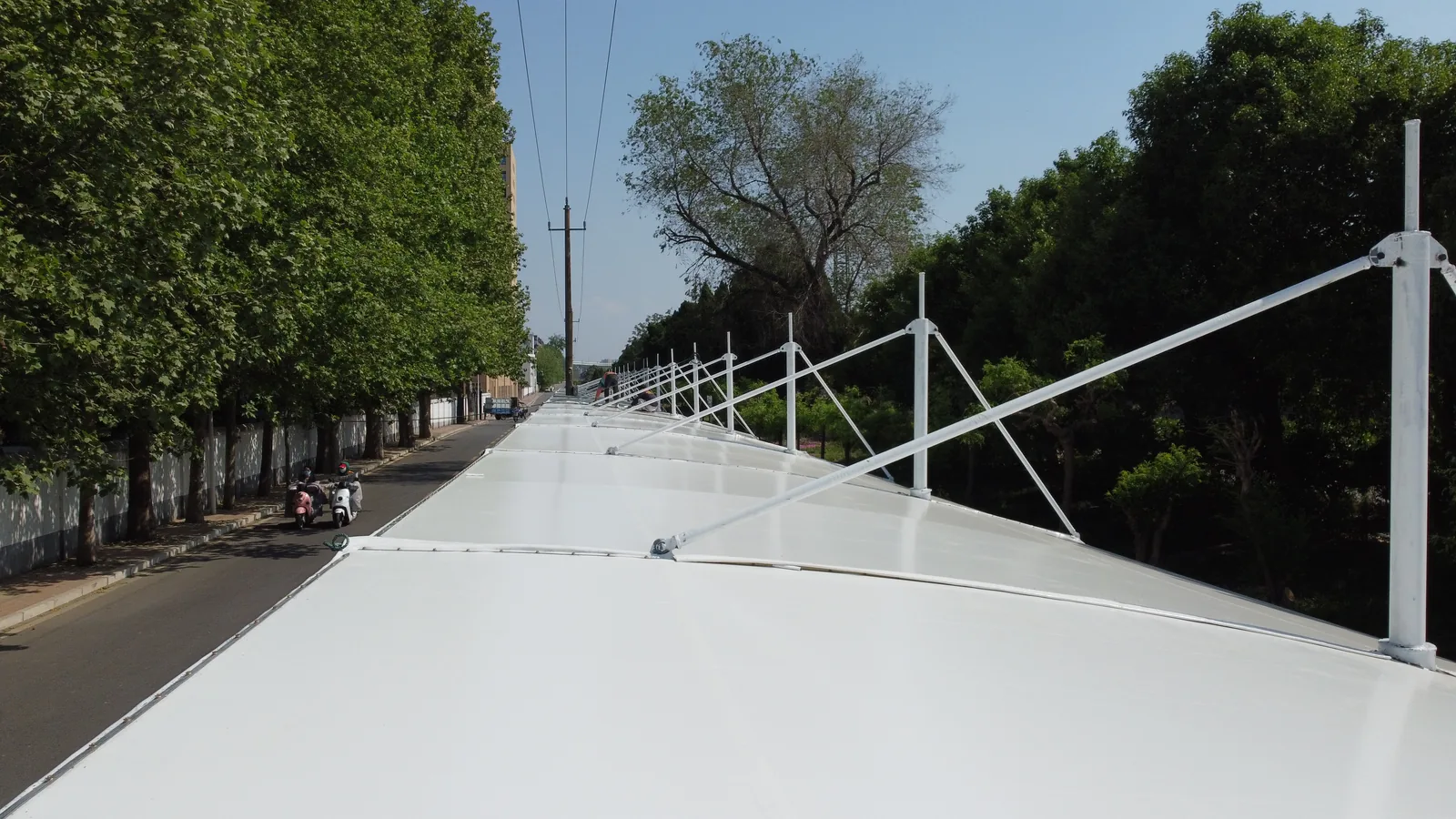
Tensile membrane structures are shaped by tension. For a period after installation, a small number of fine, stable wrinkles distributed along the direction of tension are usually normal relaxation and generally do not affect use. These wrinkles are characterised by: a fixed position, no increase in width over time, and an overall membrane surface that remains taut.
The following changes deserve attention:
- Wrinkles widening, lengthening or multiplying noticeably within a short period;
- A clear change in wrinkle direction, for example diagonal wrinkles becoming large horizontal folds or bunching;
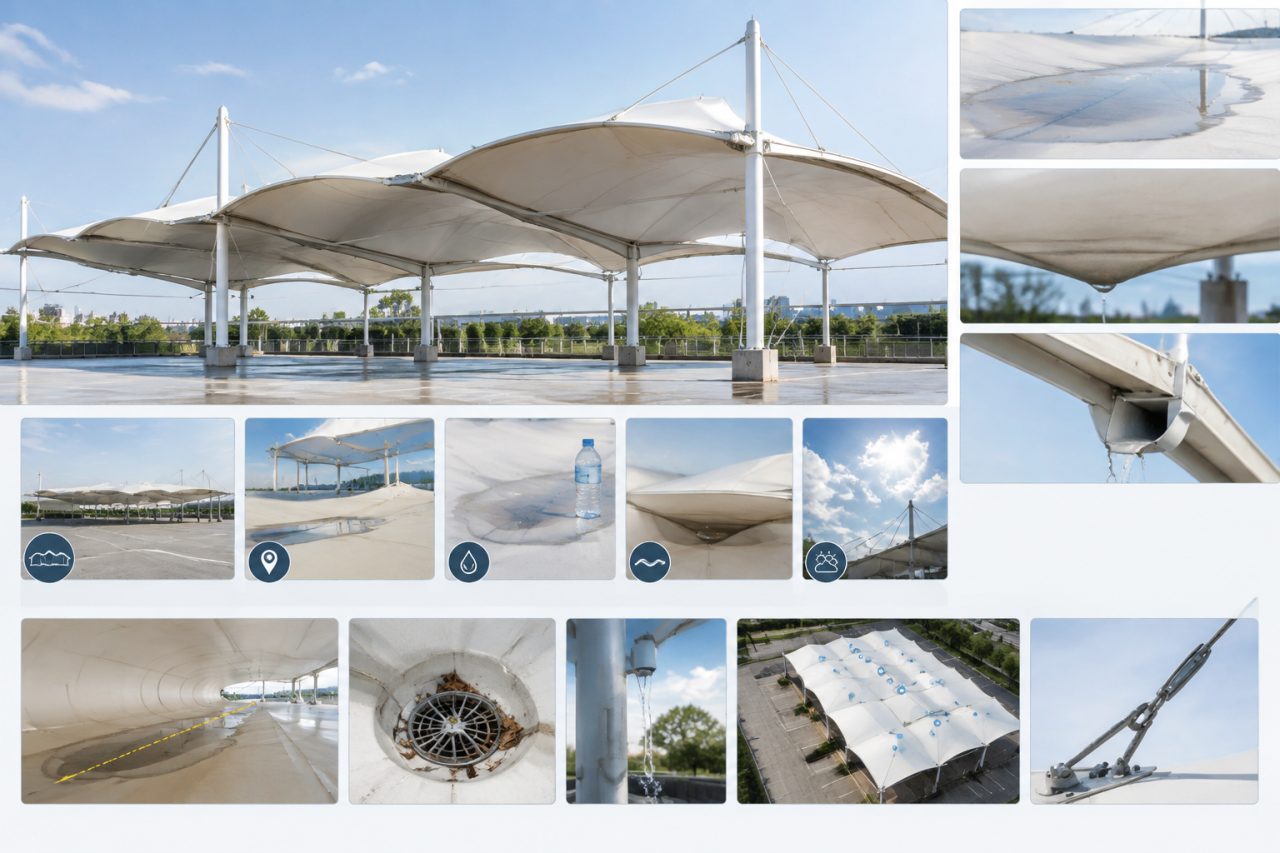
- Local loss of tension with visible sagging, and water collecting in low areas after rain;
- Wrinkles concentrated at membrane seams, edge cables or corner details, accompanied by local deformation.
A simple rule of thumb: wrinkles that are stable in shape and not spreading can be kept under observation; wrinkles that keep changing or affect drainage should be documented and submitted for review as soon as possible.
Photo and Written Record Checklist
The purpose of the record is to let a reviewer who has never visited the site reconstruct the actual condition. Collect the following items:
| Record item | How to do it |
|---|---|
| Overall photos | From a position that captures the whole canopy, take 2–3 angles showing the general area of the wrinkles |
| Close-up photos | From 1–2 metres away, photograph the width and shape of the wrinkles clearly; place a tape measure or another object of known length beside them as a reference |
| Location notes | Note which unit and which corner the wrinkles are in; reference a number or orientation (e.g. south-east corner, second bay) where possible |
| Wrinkle direction | State which way the wrinkles run and whether they are parallel to membrane edges or seams |
| Date and weather | Record the date and weather at the time of shooting, especially whether it was after rain, after strong wind or after a sudden temperature change |
| Change comparison | If earlier photos exist, attach them and note how the shape has changed between the two sets |
Archive photos together and name files by date. A phone camera is sufficient; clarity, a size reference and time information matter more than image quality.
Accompanying Conditions to Include in the Record
Wrinkles are only a symptom. Reviewers are equally concerned with whether they come with other changes. Submit the following together with your wrinkle records:
- Ponding: whether water collects in low areas after rain, over what area, and how quickly it drains;
- Loss of tension: obvious slack or drooping near edge cables, clamping plates or corner details;
- Unusual noise: increased flapping or vibration of the membrane on windy days;
- Connection condition: signs of loosening or slippage where the membrane connects to the steel structure;
- Structural changes: visible tilting or loosening of columns or cables.
Ponding and unusual noise are more directly related to safety. If you notice either, do not wait for the next routine inspection; prioritise recording and reporting them.
Who Should Review the Records
Once compiled, the records should go to the original contractor or the warranty party named in your contract. Do not diagnose or adjust the membrane yourself. Warranty coverage follows the contract, and warranty terms for the membrane and steelwork should already be written into it. Before submitting, locate the warranty clauses and confirm which items are covered, so the discussion is more direct.
Please note: membrane repair involves tension adjustment and load verification. Remedies suggested without the project conditions are unreliable. Having the original contractor assess the situation against the design and site conditions is the safer path. Your own project engineer should also be involved where structural safety is concerned.
What Owners Can Check While Awaiting Review
While waiting for the review, you can carry out these basic checks — but do not adjust the membrane or re-tension it yourself:
- Watch whether ponding keeps deepening or fails to drain for a long time after rain;
- Consider temporary avoidance: if ponding or sagting clearly affects certain parking spaces, suspend their use;
- Confirm that no connection detail shows visible loosening;
- Keep all inspection photos and records to support the contractor's review.
On matters of structural safety, the on-site review conclusion prevails.
When to Invoke the Warranty
Under normal use and maintenance, a carport tensile membrane structure generally has a service life of about 10–15 years, with a 5-year warranty on the membrane from the membrane supplier. If wrinkles occur within the warranty period, submitting records promptly and requesting a warranty-period review avoids unclear responsibility from self-directed handling. Even after the warranty has expired, complete records still help the contractor judge a treatment plan quickly.
Contact
If you have a project where wrinkles have already appeared, prepare the following when reaching out: the intended use, approximate dimensions or available drawings, installation date, and which supply or review scope you wish to commission (review only, local remediation, or a full inspection). Share your project location, intended use, dimensions and drawings, and tell us which design coordination, custom fabrication or supply services you need, so we can review the scope. Please visit our contact page to get in touch.