 Membrane carportsClassic membrane shelters→
 Solar carportsParking meets green energy→
 Landscape canopiesParks and leisure spaces→
 Grandstand canopiesSports venue shelters→
 Inflatable play cloudsFamily play areas→
 Wastewater coversEnvironmental infrastructure→
 Fuel station canopiesStation shelters→
 Entrance canopiesWalkways and entrances→
After Approving a Membrane Sample: What Material Information Should Stay in the Order?
Signing off on a membrane sample is only half of material selection. What actually prevents disputes is transferring the full set of material information behind that sample into the order confirmation, so that the approved sample, the ordered specification and the delivered batch can all be matched against each other. This article sets out four things a buyer should confirm item by item when placing an order for a tensile membrane structure such as a carport or canopy.
How to Match the Sample to the Order Specification
Membrane fabric is a combination of base fabric, coating and surface treatment. Under the same sample name there may be different weight and thickness grades (refer to the manufacturer's data for exact models). When confirming a sample, fix the following items in the order confirmation:
- Membrane type: standard PVC, or an upgrade to PVDF or PTFE. State exactly which grade is to be supplied—do not use vague wording such as "the same type".
- Base fabric and coating structure: state the base fabric category and coating method, consistent with the sample documentation.
- Condition of supply: whether the membrane is supplied in original rolls, and any agreement on membrane face orientation after fabrication.
- Upgrades: for projects with higher requirements on self-cleaning or service life, explicitly note "upgrade to PVDF or PTFE confirmed" so the shipment is not filled with standard PVC. Standard PVC is economical and practical and meets the needs of most carports—it is the standard delivery configuration, and not every project needs an upgrade.
Each item should correspond to a specific document in the sample pack. On delivery, check the goods against the manufacturer's documents listed in the order confirmation, not just by eye against the sample.
Recording Color, Surface Treatment and Batch Numbers
Color must not be written as just "grey" or "white". Record: the color card number + the color name + the surface treatment (for example, PVDF-coated face outward). Each party keeps a corresponding color card on file.
The batch number is the key to traceability. Membrane fabric is a purchased material, and different batches of the same model may show slight differences in shade and coating condition. Agree in the order confirmation that delivered membrane must be marked with the manufacturer's original batch number, and archive the retained sample together with its batch number.
Keep the sample, the color card and the batch number in the same project file. If any one of the three is missing, responsibility for a later color-difference dispute becomes very hard to assign.
What Warranty Information Must Stay in the Order
Warranties must be written into contract terms—not given as verbal assurances. The membrane fabric manufacturer provides a 5-year warranty; note that this is the membrane manufacturer's warranty, not an overall warranty from the fabricator or installer. The order should state separately:
- Membrane fabric: the original manufacturer's warranty period, with the warranty certificate delivered with the goods;
- Steel structure: the warranty method and period for that item;
- Other items: each agreed separately and all written into the contract.
The advantage of itemized warranties is clear responsibility when something goes wrong: membrane surface issues are handled against the membrane manufacturer's warranty certificate, and steel issues against the steel clause. A single vague "X-year overall warranty" is often where disputes begin.
The Approval Process for Substitute Materials
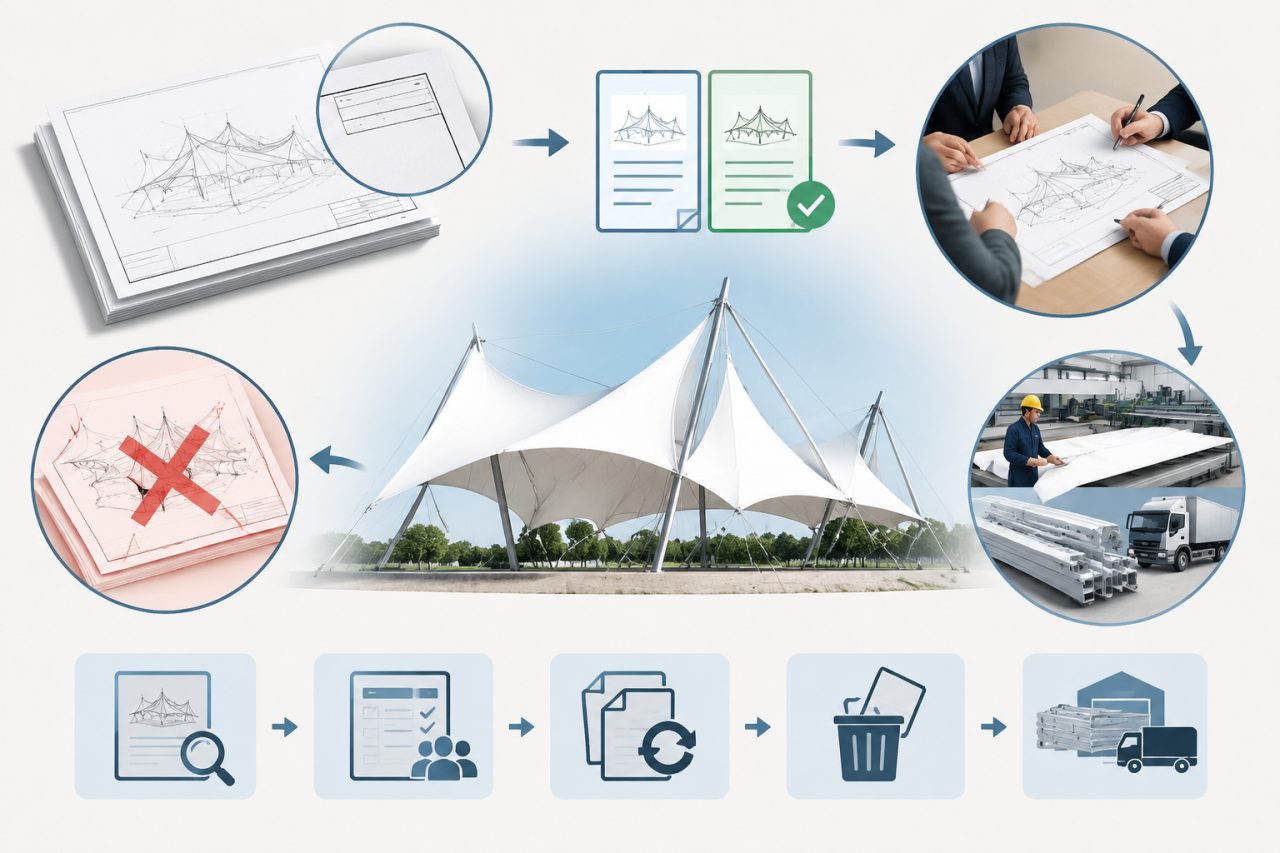
If a shortage, discontinuation or batch problem makes a substitute material necessary during supply, do not accept it verbally. Follow these steps:
- The supplier submits complete written documentation for the substitute: model, base fabric and coating structure, color card, and warranty conditions.
- The buyer compares it item by item against the original order confirmation and flags each difference separately.
- Both parties sign a revised order confirmation, and the substitute's warranty certificate is replaced at the same time.
- When the substitute material arrives, a new sample is retained and archived under the new batch number.
Pay particular attention to fire-retardant requirements. Standard PVC generally does not reach B1 fire-retardant classification. If the original order specified B1-rated membrane, the substitute must maintain the same fire-retardant level, and the requirement should be determined at the design stage in line with local fire regulations—this must never be quietly downgraded during a substitution.
Summary
Handing over from sample to order means translating "a sample you can see" into "terms you can read": membrane type and coating structure, color card and batch number, itemized warranty clauses, and a substitution approval process. With all four fixed in the order confirmation, the supply stage has a traceable basis for verification.
To discuss a specific project, please prepare the intended use, dimensions or drawings, and the scope of services you wish to commission, so that material configuration advice can be given against your project conditions. You can reach us through our contact page at /en/contact/.