
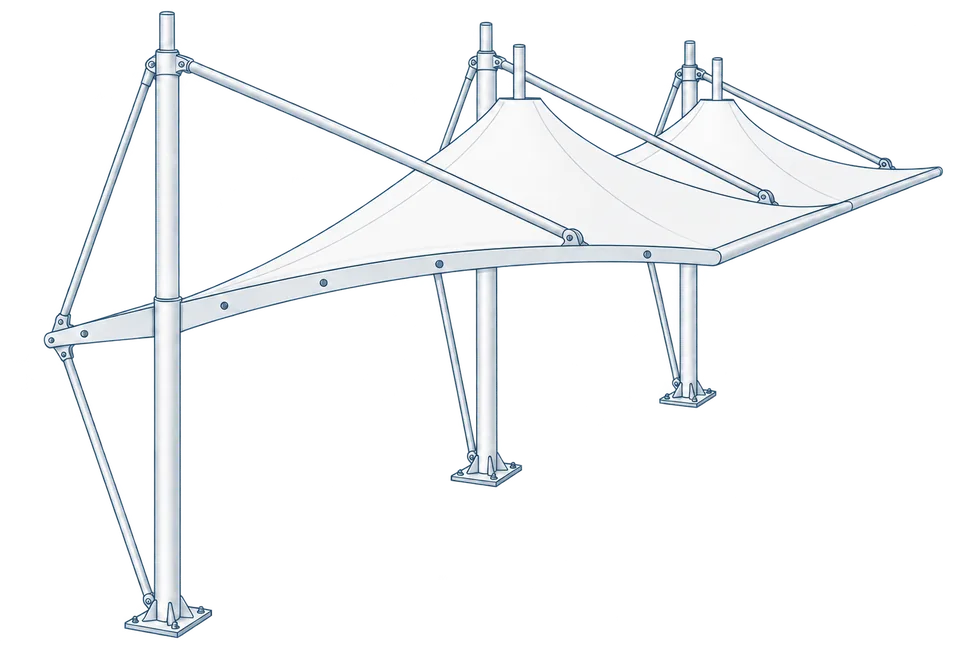
 Membrane carportsClassic membrane shelters→
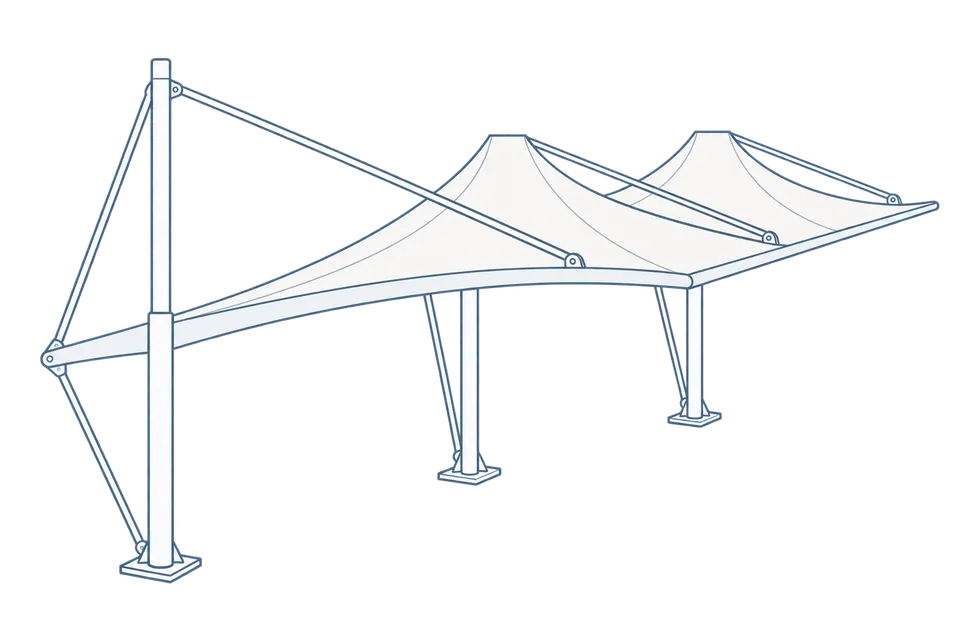 Solar carportsParking meets green energy→
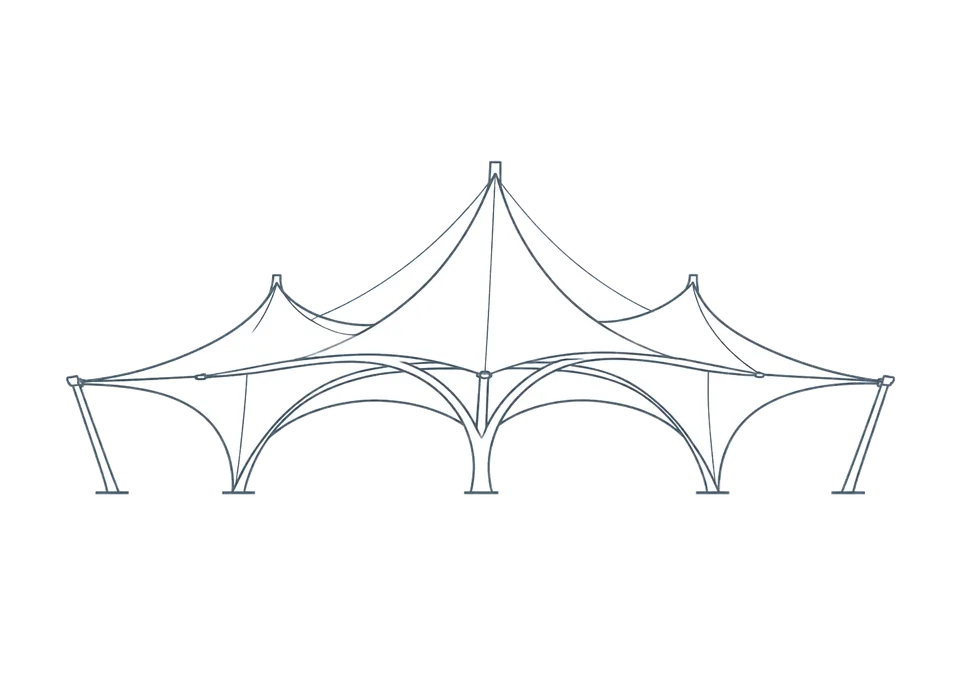 Landscape canopiesParks and leisure spaces→
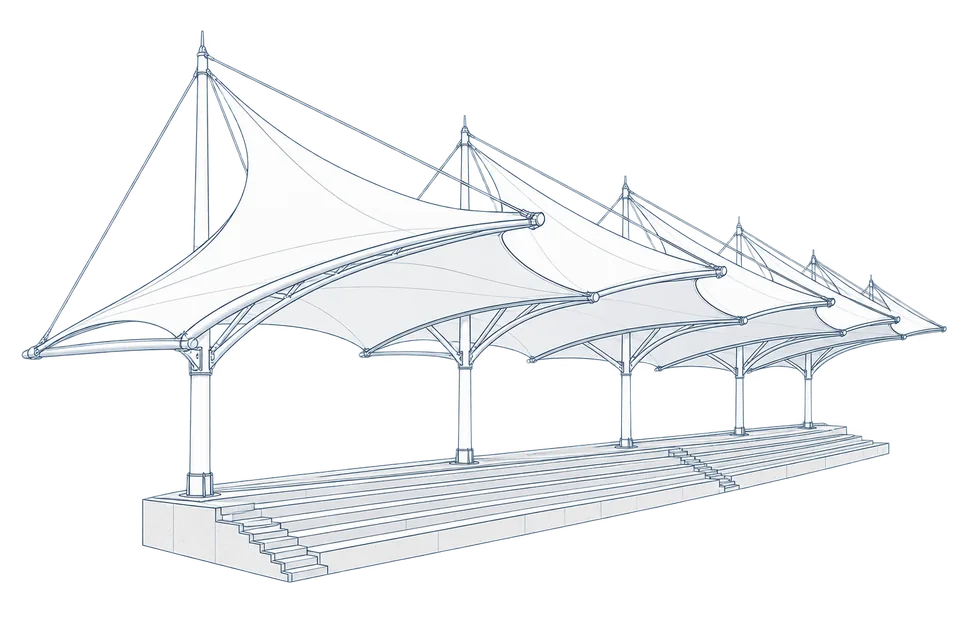 Grandstand canopiesSports venue shelters→
 Inflatable play cloudsFamily play areas→
 Wastewater coversEnvironmental infrastructure→
 Fuel station canopiesStation shelters→
 Entrance canopiesWalkways and entrances→
Custom Fabrication of Tensile Membrane Structures: How to Confirm You and the Fabricator Are Working From the Same Drawing Revision
Short description: In build-to-print (custom fabrication from buyer drawings), the biggest risk is not capability — it is the fabricator holding a different drawing revision than the one the buyer approved. Here is a practical checklist for version control before fabrication starts.
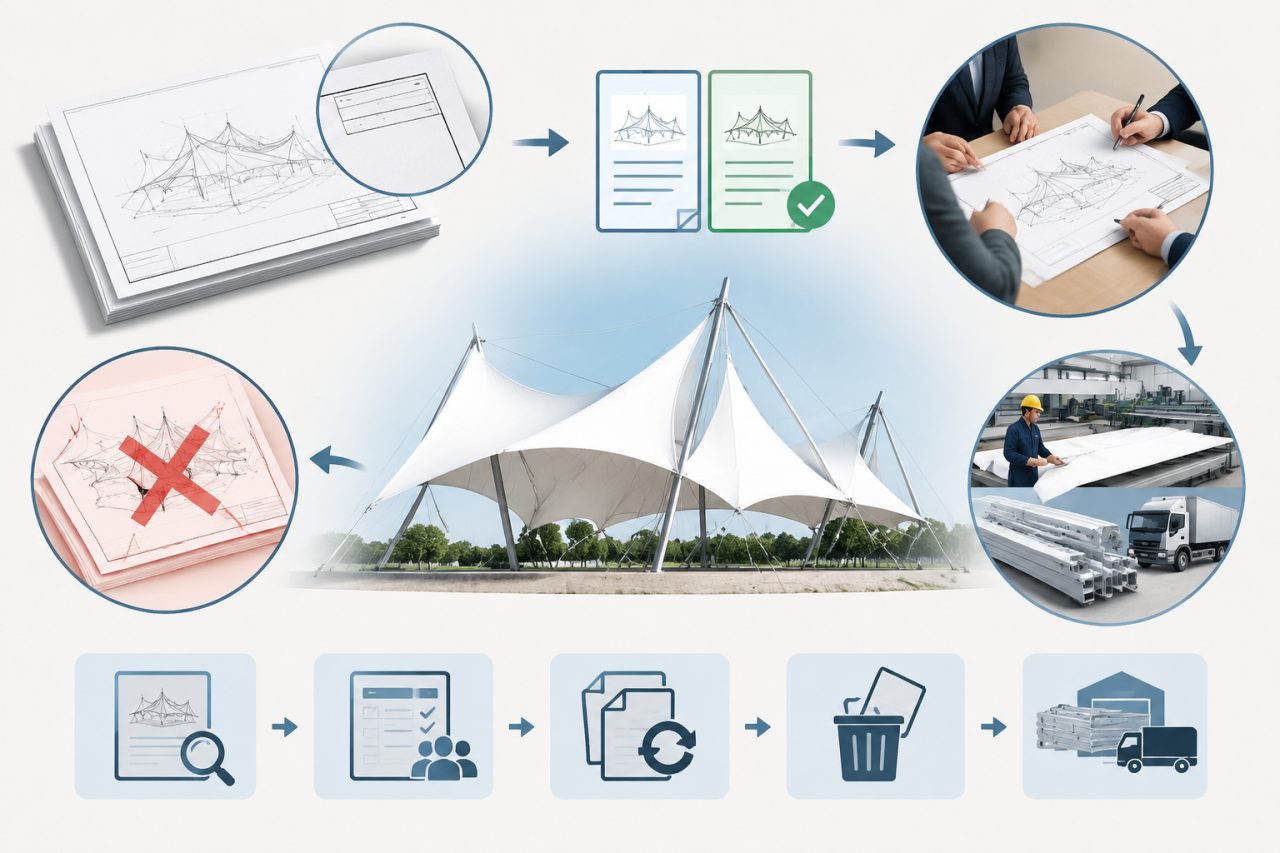
In build-to-print fabrication of a tensile membrane structure, the most expensive failure is not workmanship — it is the fabricator cutting membrane panels or steel components to a drawing revision the buyer never approved. One missing revision number, or one change confirmed only by phone, can make every cutting dimension wrong. The rework and schedule loss are then disputed between both parties. The fix is to agree, before fabrication starts, on drawing numbers, revision levels, change approval and the exact handover point of each revision.
Recording drawing numbers and revision numbers
Every drawing needs a unique drawing number and a revision number. The drawing number identifies which drawing it is (site plan, component fabrication drawing, membrane cutting pattern, node detail — each has its own number); the revision number identifies which round of modification it is. Saying "use the version we sent last week" is not enough. Written communication must state both: for example, "component drawing A-03, Rev. 2".
Before work starts, both parties should jointly compile a drawing register listing each drawing number, revision number and issue date, each holding a signed or written copy. In our build-to-print workflow, design, fabrication, surface treatment and installation are coordinated as one process, and the drawing register is checked sheet by sheet against revision numbers as it passes between design and fabrication. Components are prefabricated in the factory and shipped direct, with no on-site fabrication step, so which revision a shipped component corresponds to is locked in before it leaves the works.
Who must approve a change before it enters fabrication
Any design change must be confirmed in writing by the buyer before it is released to fabrication. On receiving a change, the fabricator should reply in writing, stating: which drawing numbers are affected, what the new revision number is, and how already-scheduled or already-fabricated items are affected. Until the buyer confirms, the fabricator continues on the current revision — not on a phone call or a chat message.
For large site projects, once both parties have aligned, a drone site survey can be arranged to compare actual site conditions against the current drawing revision before fabrication is finalised. The purpose is to reconcile "dimensions on paper" with "conditions on site" before work starts, rather than discovering a mismatch mid-fabrication.
Withdrawing and marking superseded drawings
When a revision is superseded, the old version must be marked void immediately:
- Stamp or mark "VOID / SUPERSEDED" with the date on every page of the old revision;
- Remove old drawings from the drawing racks at the workshop, cutting and patterning stations, leaving only the current revision;
- Superseded drawings may be archived for reference, but stored separately from current documents so the wrong sheet cannot be picked up;
- Move old electronic files out of the "current documents" folder in any shared workspace into a separate "superseded" folder.
A common mistake to avoid: writing "this revision replaces the previous one" on the first sheet only is not enough. The worker on the floor sees the sheet in their hand — if the old sheet is still there, it can still be used.
Checking fabricated items against drawing revisions
Fabricated items must be traceable to the drawing revision they were made to. Because components leave the factory as finished goods with no on-site fabrication, this check must be completed before shipment. Buyers may require the fabricator to state the drawing number and revision number for each batch on the packing list, and to check item by item before packing and dispatch. A component that cannot be matched to the correct revision should not be loaded — do not take it to site and deal with it there.
Agreeing the revision handover point
Revision handover needs a defined point in time, not continuous ad-hoc changes. We recommend stating in the contract or technical agreement that: changes received after a given cut-off point enter the next fabrication batch; the current batch proceeds on the revision confirmed at the current handover. Each batch of fabricated items then maps to a specific revision both parties have recorded, so any later disagreement can be settled from documents rather than guesswork.
To be clear, the above is general good practice. Our own practice is: a drawing register signed by both parties, written replies to every change, superseded drawings removed from the floor, shipped components checked against revision numbers on the packing list — with warranty items written into the contract, not given as verbal promises. Fabrication is based at our factory in Henan, China; components are prefabricated and shipped direct. Projects are handed over to the buyer's local installers, and warranty terms are agreed with you in the contract.
FAQ
Q: The drawing is electronic only and has no revision number. Can fabrication start? We do not recommend it. First have both parties complete the drawing numbers and revision numbers and sign a drawing register. Without revision numbers, every later change becomes a dispute about its basis.
Q: Does a verbally notified change count? No. A change takes effect only after the buyer confirms it in writing and the fabricator replies in writing. Verbal messages are reminders only, not instructions.
Q: We found an old revision still in use on the floor. What now? Stop that batch immediately, remove and mark the old drawings as void, then check the batch against the current revision to determine what needs rework or re-fabrication.
Next step
If you are preparing an RFQ (request for quotation) for a tensile membrane structure, membrane canopy, carport or bicycle shelter, please have ready: the intended use, dimensions or drawings, the project location, and which design coordination, fabrication and supply services you need — so we can review the scope with you. You can reach us through our contact page (/en/contact/).