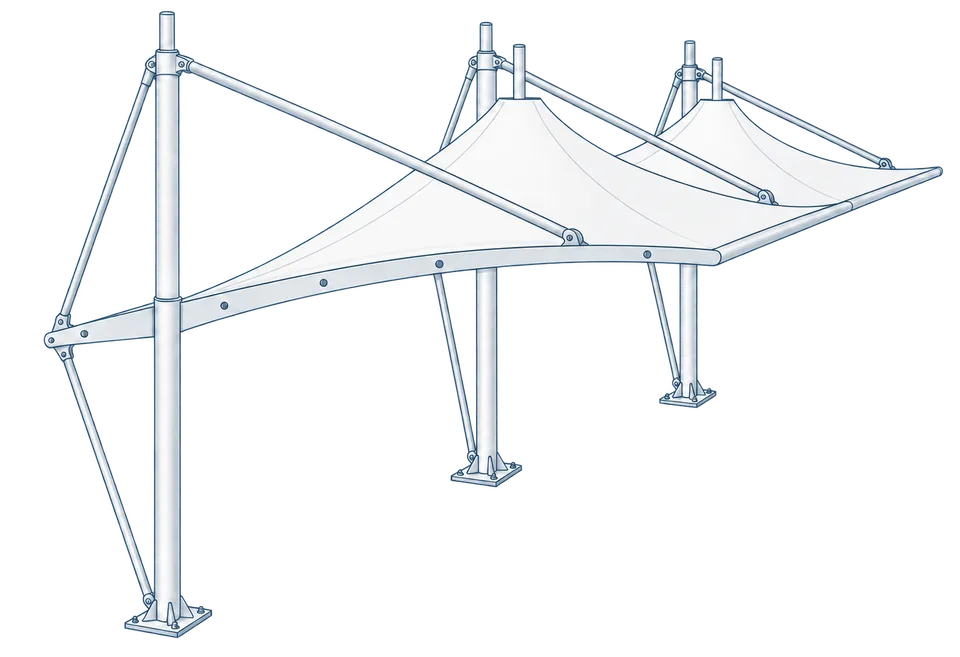
 Membrane carportsClassic membrane shelters→
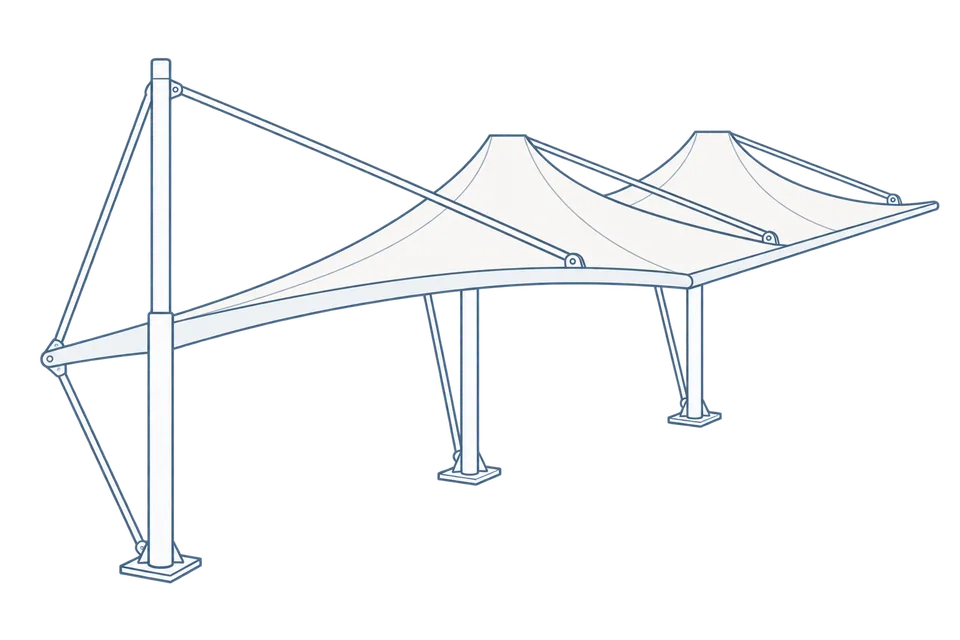 Solar carportsParking meets green energy→
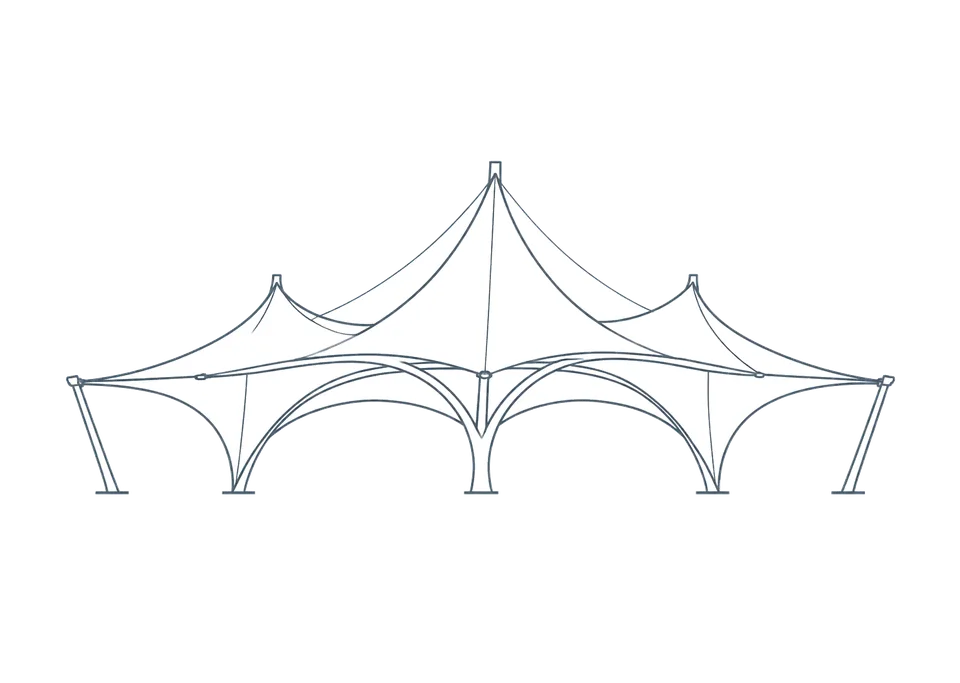 Landscape canopiesParks and leisure spaces→
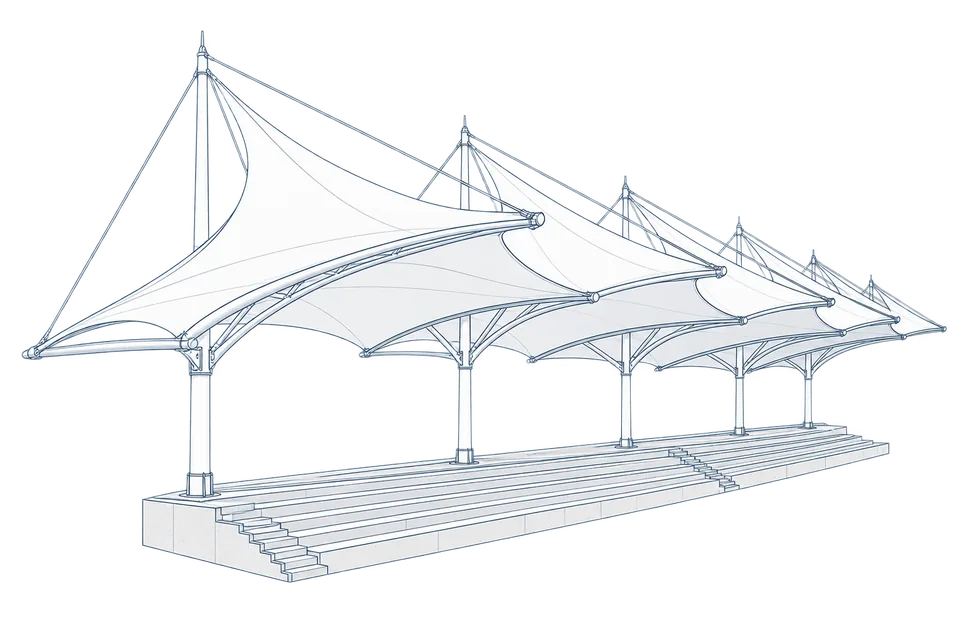 Grandstand canopiesSports venue shelters→
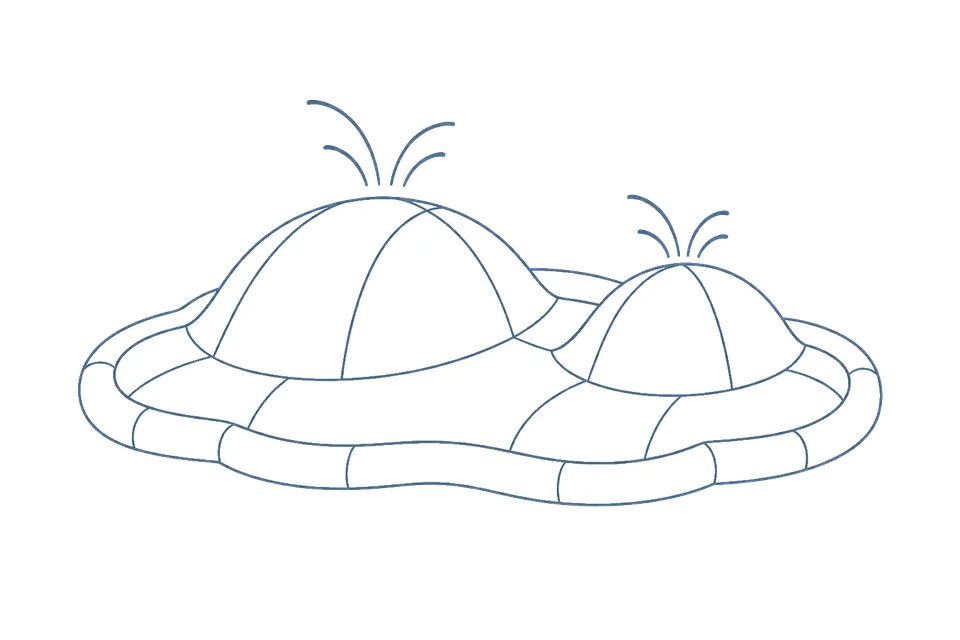 Inflatable play cloudsFamily play areas→
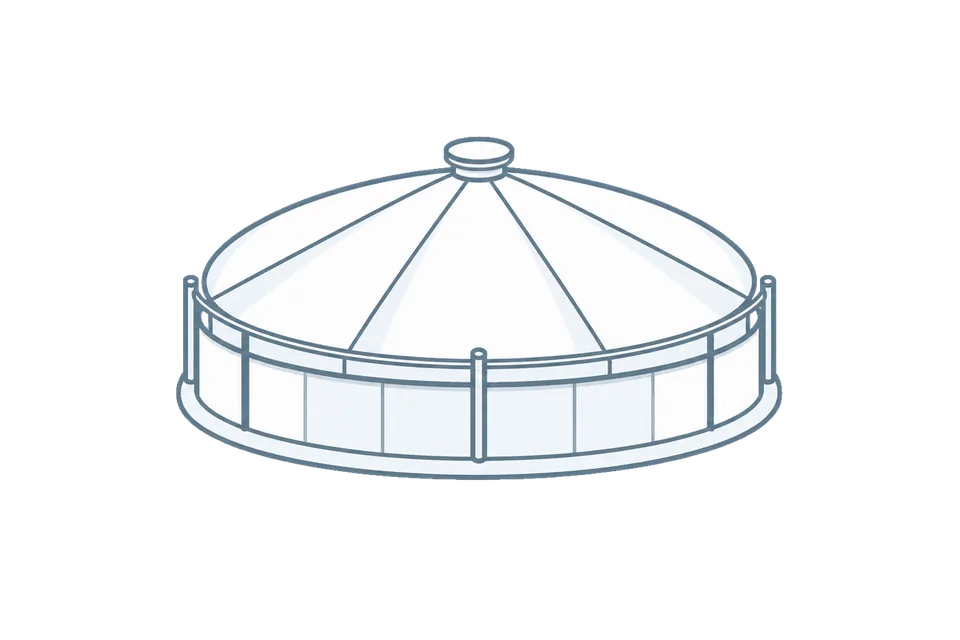 Wastewater coversEnvironmental infrastructure→
 Fuel station canopiesStation shelters→
 Entrance canopiesWalkways and entrances→
Projected Area, Developed Area and Material Area in Tensile Membrane Structure Quotations: What Is the Difference?
When you receive a quotation for a tensile membrane structure — for example a carport canopy — the first thing to check is which area basis the price is calculated on. Projected area is the horizontal footprint the canopy covers, developed area is the actual surface area of the stretched membrane, and material area adds cutting wastage on top of the developed area. For the same structure these three figures can differ substantially, so quotations using different bases cannot be compared price-to-price.
What Each Area Basis Means
Projected area: the area obtained by projecting the membrane structure vertically onto the ground — in other words, how much ground the canopy actually covers. This basis is easy to relate to a site plan and is often used to describe coverage for carports and parking areas, but it does not represent how much membrane material is used.
Developed area: the membrane surface is a curved form. Flattening that surface out gives its true surface area. Membrane fabric is purchased and fabricated by the square metre, so the material and fabrication cost of the membrane portion follows the developed area directly — which is why fabricators frequently quote on this basis.
Material area: when cutting patterns are produced, membrane panels are taken from full rolls according to the cutting drawings. Panel seams, pattern orientation and edge allowances mean the fabric actually consumed exceeds the developed area; the difference is the cutting wastage. Material area = developed area + cutting wastage. This is the basis relevant to membrane material procurement.
How Curved Geometry Widens the Gap
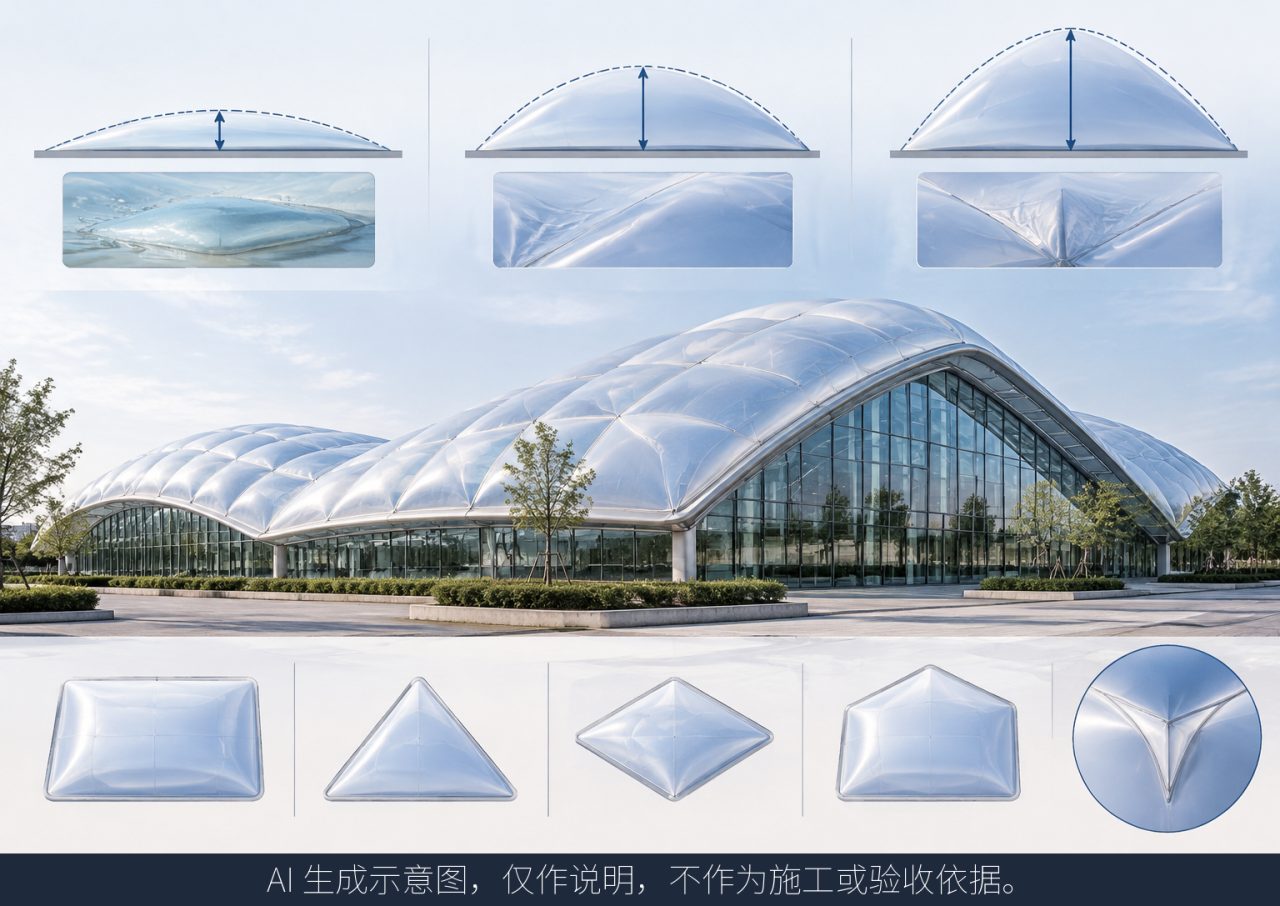
Tensile membrane structures gain their strength through double-curvature form. The greater the curvature, the larger the developed surface relative to the horizontal projection. The more irregular the geometry, the harder the cutting pattern and the higher the wastage.
For the same parking footprint, a conical or mushroom-shaped canopy with pronounced crown has strong surface undulation, so its developed and material areas typically rise more relative to projected area than a saddle form or a simple arch. A saddle shape with curvature in both directions falls in between; a gentle single-curvature arch shows the smallest difference. Until the shape scheme is fixed, the ratios between the three areas are rough estimates only and should not be used to back-calculate.
Why the Pricing Basis Matters
Quotations are commonly calculated on developed area, sometimes on projected area. Neither is wrong, but they mean different things:
- Quoting on developed area: the membrane material and membrane fabrication portion ties directly to this figure and reflects actual membrane consumption. However, the total price also includes steelwork and hardware, transport, site installation and overhead and margin — none of which scale linearly with membrane area.
- Quoting on projected area: the figure is intuitive and easy to map to the site, but for the same projection, more complex geometry with higher curvature consumes more membrane and fabrication effort, so the composite unit rate rises. Comparing unit rates per projected area between two different shapes is not meaningful.
Checklist: Align the Basis Before Comparing Quotations
Before placing several quotations side by side, verify item by item:
- Area basis: confirm whether each quotation states projected area, developed area or material area, and the values for each.
- Same geometry: suppliers may propose different shapes — confirm you are comparing the same form and rise height.
- Membrane specification: fabric type, coating and weight per unit area should be at the same grade; upgrades (e.g. better self-cleaning or lifespan) should be listed separately.
- Scope boundary: which items are included — steel structure, hardware, foundation embedments, transport, installation, gutters? A quotation with missing items cannot be judged on area unit rate alone.
- Wastage and cutting method: does the material area include cutting wastage, and is the wastage basis stated?
Once the basis is aligned, compare total price and scope rather than unit rates alone. This article deals with the area hierarchy of the membrane surface itself; coverage area versus site area is a separate site-level check worth verifying in the same way.
How to Get a Quotation with a Clearly Stated Basis
The safer route is to have the site measured first, then obtain a scheme and quotation. In our usual process, once we receive an enquiry we first understand the intended use, approximate dimensions and site conditions; for large sites, drone surveying can be arranged after discussion. The scheme is then prepared on the agreed geometry and membrane configuration, and the quotation states the area basis and included scope explicitly, so several area figures are never mixed.
To start, share your project location, intended use, dimensions or available drawings, and which design, fabrication, supply or installation scope you wish to entrust, so we can prepare a proposal on a consistent basis. The exact division of design responsibility and supply scope is a matter to agree with you and your project engineer. For our project pricing service, see the project pricing page.