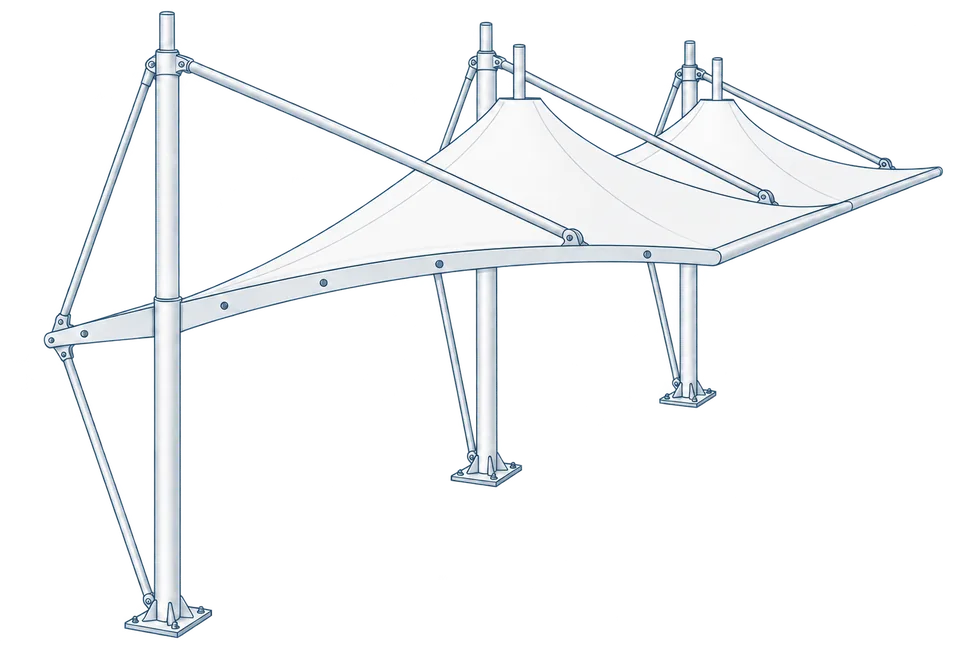
 Membrane carportsClassic membrane shelters→
 Solar carportsParking meets green energy→
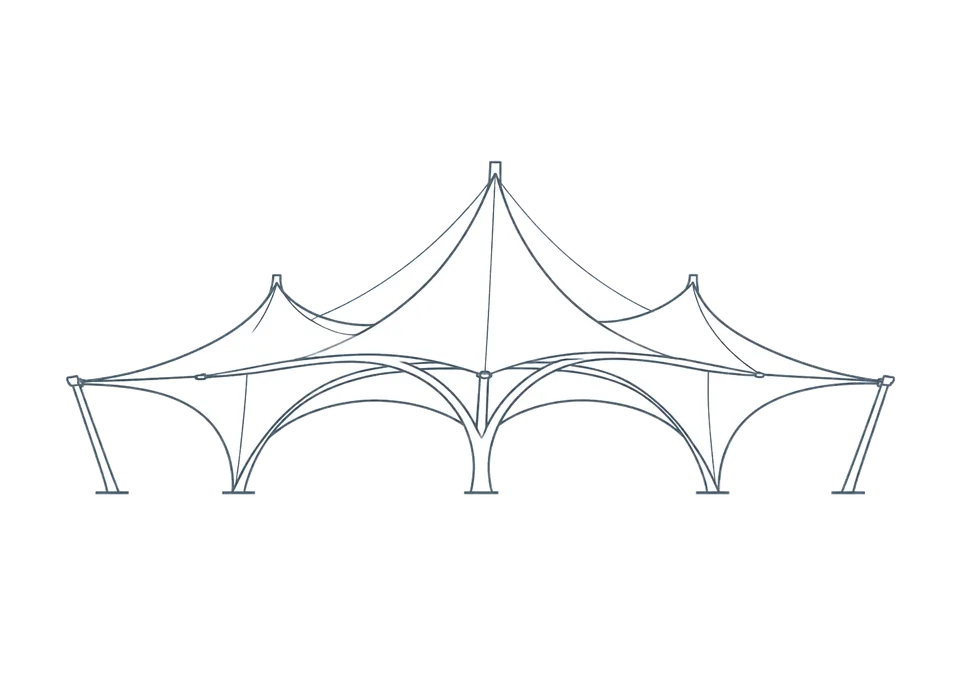 Landscape canopiesParks and leisure spaces→
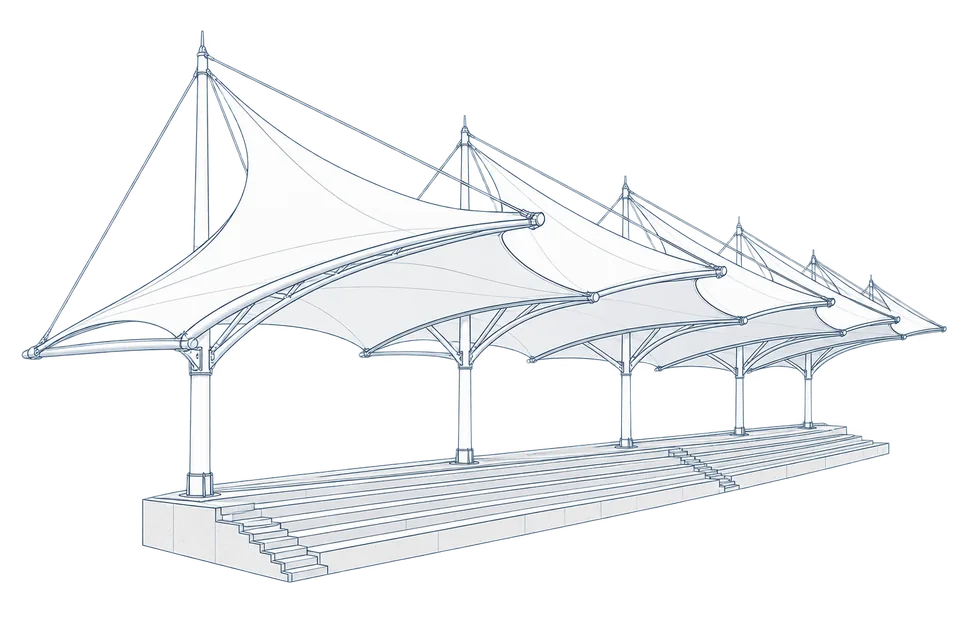 Grandstand canopiesSports venue shelters→
 Inflatable play cloudsFamily play areas→
 Wastewater coversEnvironmental infrastructure→
 Fuel station canopiesStation shelters→
 Entrance canopiesWalkways and entrances→
Air-supported membrane spaces: features and operating conditions
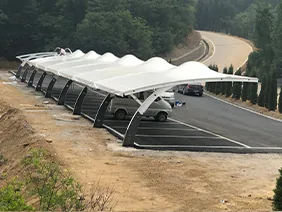
Inflatable membrane structures are not one product type. Air-supported spaces, air ribs and cushions operate differently. For venues maintained by indoor-outdoor pressure differences, equipment, entrances and management are part of the structural operating conditions, not merely accessories.
Open interior space relies on an operating system
Air-supported venues can reduce internal supports but need air supply, monitoring and suitable entrances. Design this equipment together with building use, airtightness and circulation rather than treating it as optional.
Consider total operating cost, not construction price alone
Include equipment, energy, inspection, maintenance and backup measures in the budget, with clear staff responsibilities. Do not claim a universal fraction of conventional building cost or assume that one automated project means every venue can operate unattended.
Wind, snow, faults and foundations have defined limits
Design wind and snow resistance, foundations and anchorage for the location and use, with plans for abnormal weather and equipment failure. Do not claim freedom from ground constraints, suitability for any rooftop or resistance to all extreme weather.
Do not interchange cushion and air-supported-venue data
ETFE cushion equipment and pressure concern individual roof units; an air-supported venue concerns the entire enclosed space. Materials and configurations differ. Obtain pricing, energy and maintenance data for the actual proposed system.