 Membrane carportsClassic membrane shelters→
 Solar carportsParking meets green energy→
 Landscape canopiesParks and leisure spaces→
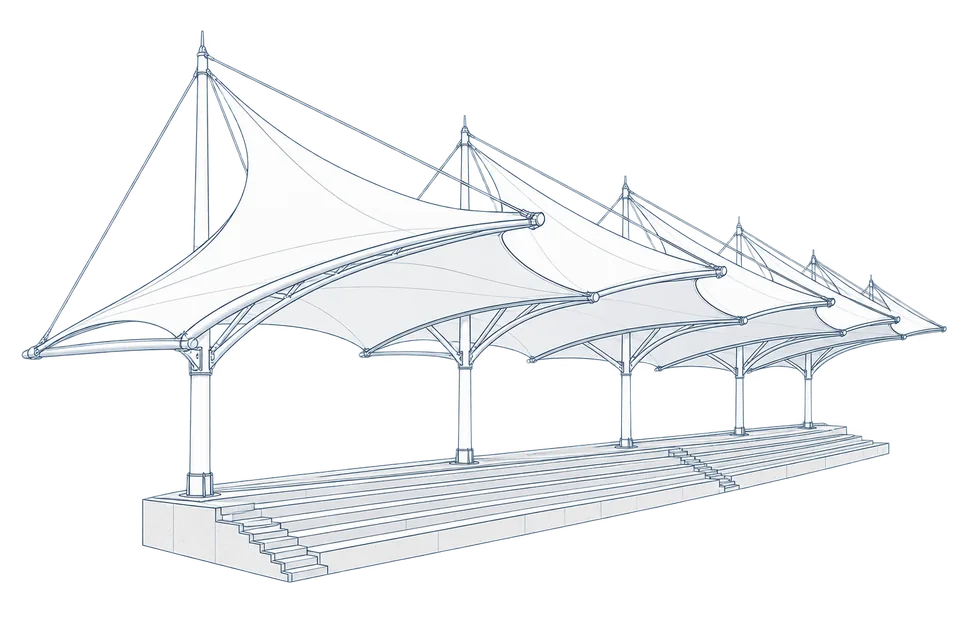 Grandstand canopiesSports venue shelters→
 Inflatable play cloudsFamily play areas→
 Wastewater coversEnvironmental infrastructure→
 Fuel station canopiesStation shelters→
 Entrance canopiesWalkways and entrances→
Why Confirm Stage and Audience-Coverage Areas Separately for an Outdoor Membrane Canopy?
Why Confirm Stage and Audience-Coverage Areas Separately for an Outdoor Membrane Canopy?
For an outdoor event venue, the stage area and the audience area should be confirmed as separate coverage zones when discussing a tensile membrane structure. These areas serve different purposes. If the requirement is stated only as “cover the entire venue”, it becomes difficult to determine the exact membrane canopy boundary and which areas belong to the requested scope.
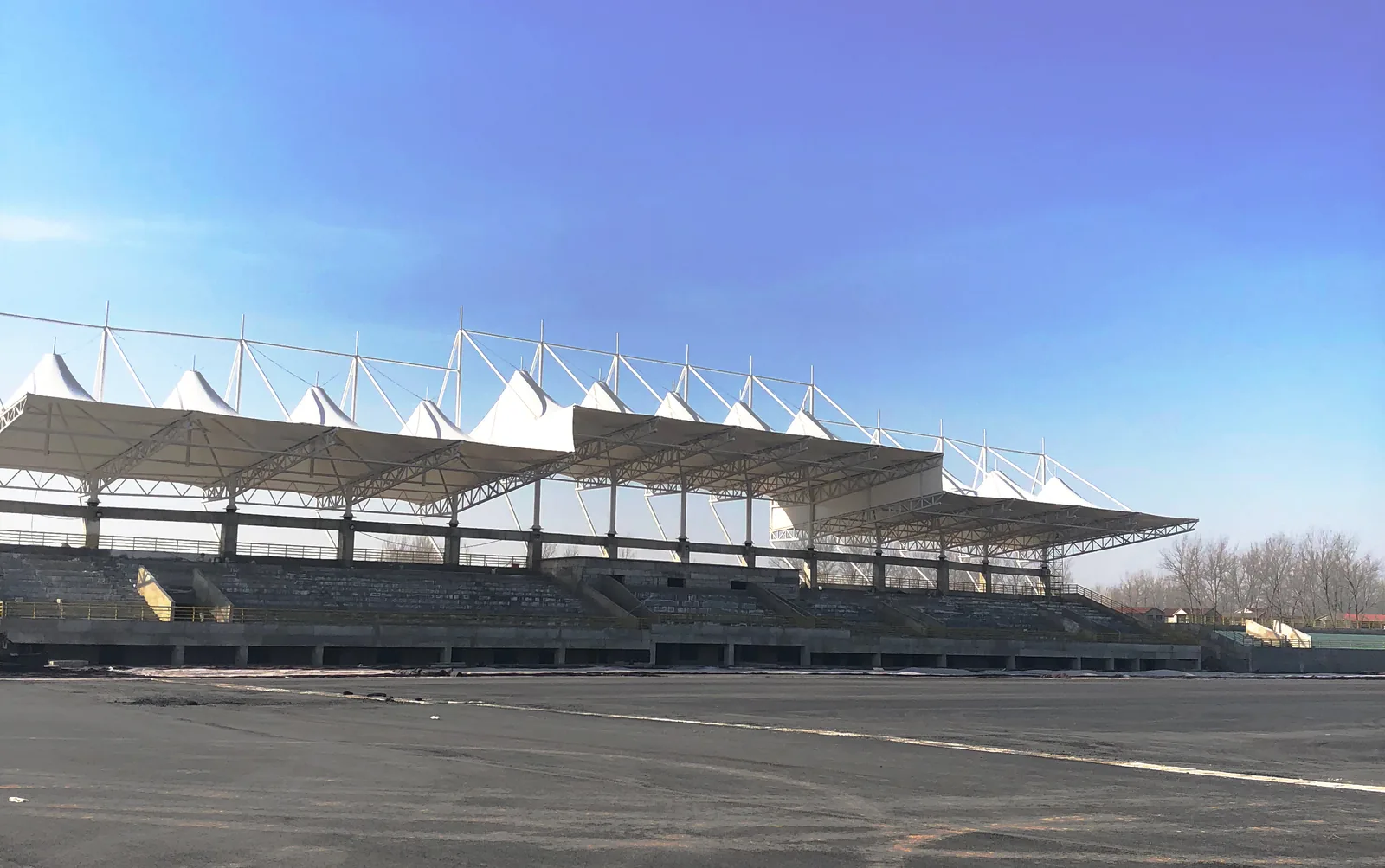
Separating the zones helps the project team relate venue use, coverage limits and procurement requirements before design coordination, custom fabrication or component supply is discussed.
Mrągowo outdoor amphitheatre example
The official Serge Ferrari project information for the Mrągowo amphitheatre describes the stage and audience areas as being covered by steel arches, with the membrane arranged in layers. This shows how an outdoor amphitheatre roof requirement can be organised around different functional areas within the same project.
The example is used only to illustrate the value of expressing coverage by function. It does not indicate that Qingsong Membrane Structures participated in the project, and it does not mean that the reported arrangement can be applied directly to another venue. The public project summary should not be treated as a complete design brief, material specification or performance basis.
What to confirm for each area
Stage area
First confirm whether the membrane canopy is intended to cover the complete stage. Then mark whether the coverage boundary extends to the front edge of the stage, the sides or any related backstage area.
The project team should identify the actual stage-use area on the drawings or site information. The stage itself should be distinguished from adjacent circulation routes, equipment zones and service areas. This gives the design and procurement teams a clearer basis for reviewing interfaces and the proposed supply scope.
Where a quotation or RFQ (request for quotation) is required, the documents should state which stage-related areas are included and which remain outside the requested coverage. Design responsibility, connection details and the boundary between supplied components and other packages should be agreed with the buyer and the project engineer.
Audience area
Confirm which stands, seats or standing-viewing areas are intended to be covered. The coverage review should also state whether audience entrances, exits and areas directly related to the event are included.
If the audience zone contains different functional sections, mark them separately. This allows the parties to discuss the membrane canopy boundary more precisely and reduces the risk of different interpretations during drawing review or revision approval.
These are project-communication recommendations, not a complete design checklist disclosed by the Mrągowo project information. The actual requirements must be checked against the venue use, dimensions and drawings.
Documents to prepare for procurement discussion
Prepare a venue plan or dimensioned site information showing:
- The stage coverage zone
- The audience coverage zone
- Other areas proposed for coverage
- Areas expressly excluded from the membrane canopy scope
- Relevant circulation, equipment and service interfaces
Mark the intended coverage boundary directly on the drawing where possible. Written notes should state where the stage coverage ends, where the audience coverage ends and which areas are not included.
For design coordination or custom fabrication, the buyer should also identify the available drawing status and revision. Any later change to the stage, seating arrangement, access route or coverage boundary should be recorded and approved by the relevant project parties before the supply scope is finalised.
Material descriptions and project-specific terminology should be confirmed against the drawings and material documents. A packing list and handover information should match the agreed supply scope if components are procured for installation by a local contractor. The supplier’s design responsibility, fabrication responsibility, component boundary and installation interface should remain matters for agreement with the buyer and project engineer.
The cost of an outdoor membrane canopy may vary according to span, membrane material and configuration. The actual scope should therefore be reviewed before a proposal is prepared. This article does not establish a price, delivery period, certification or local regulatory approval.
Source note
The source publisher is Serge Ferrari, and the referenced project is the Mrągowo outdoor amphitheatre roof information. The Chinese source states that it was checked on 26 September 2026; this is a source-check date, not the project date. The public summary does not separately provide a project inspection report, so no conclusion is made here about performance, certification or compliance.
Share your project location, intended use, dimensions and available drawings. Tell us which design coordination, fabrication and supply services you need so the scope can be reviewed.