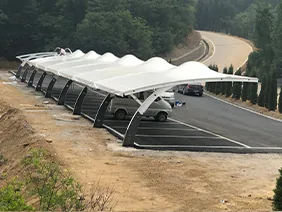
 Membrane carportsClassic membrane shelters→
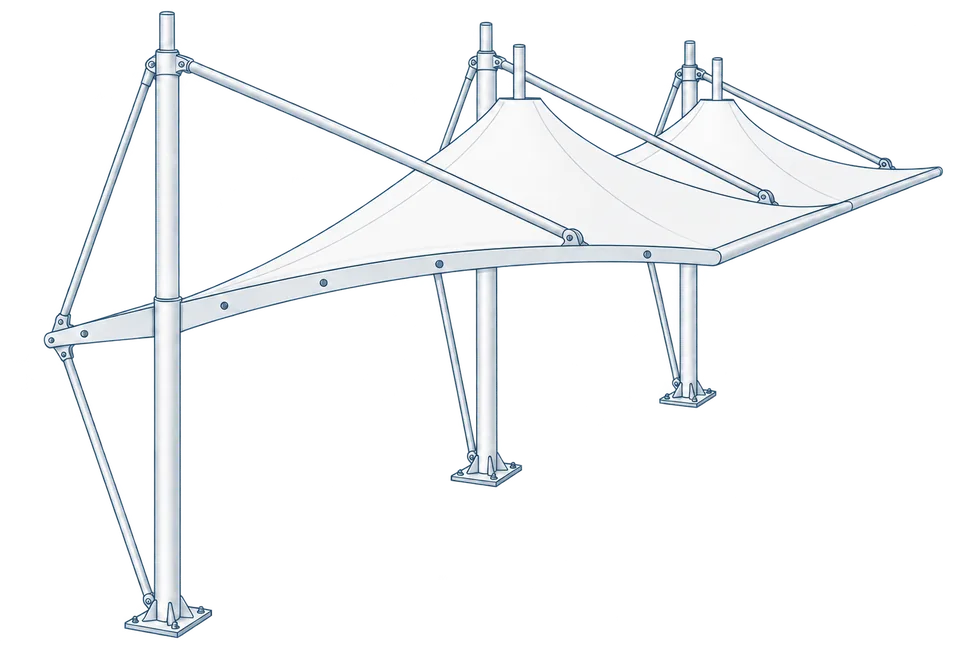
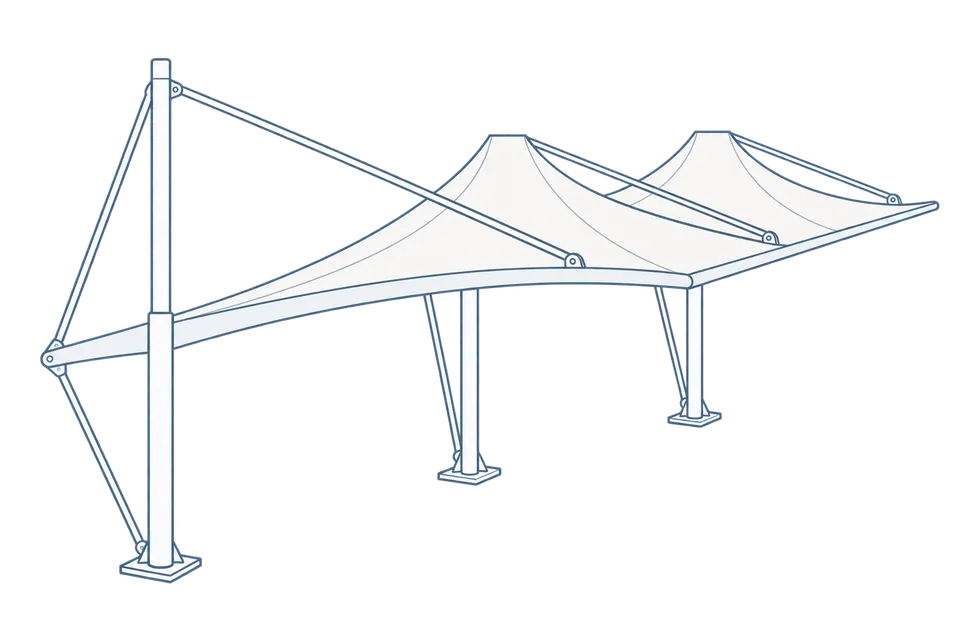 Solar carportsParking meets green energy→
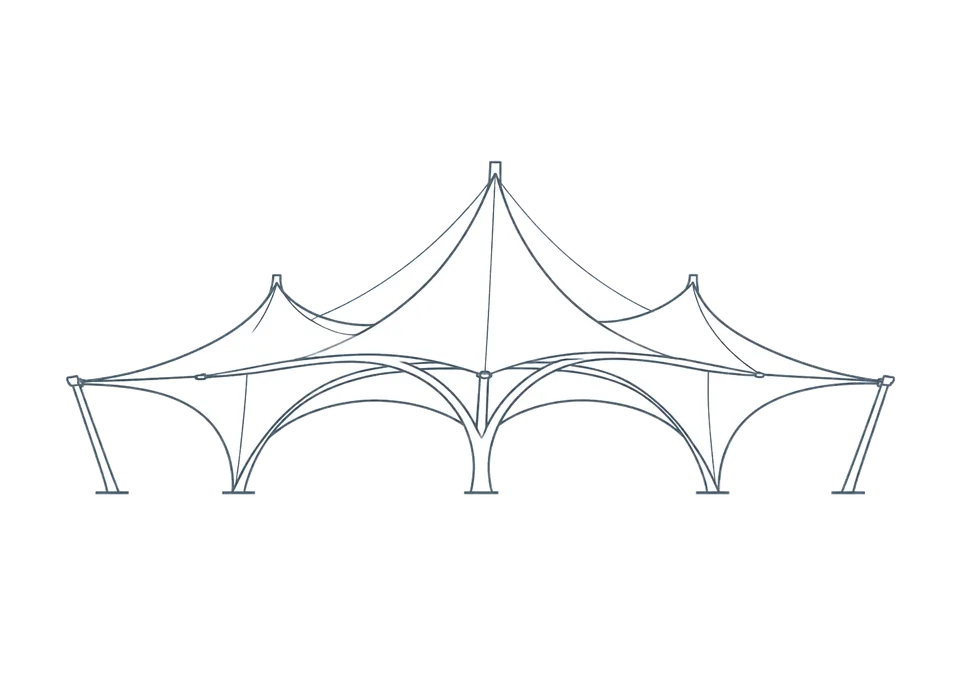 Landscape canopiesParks and leisure spaces→
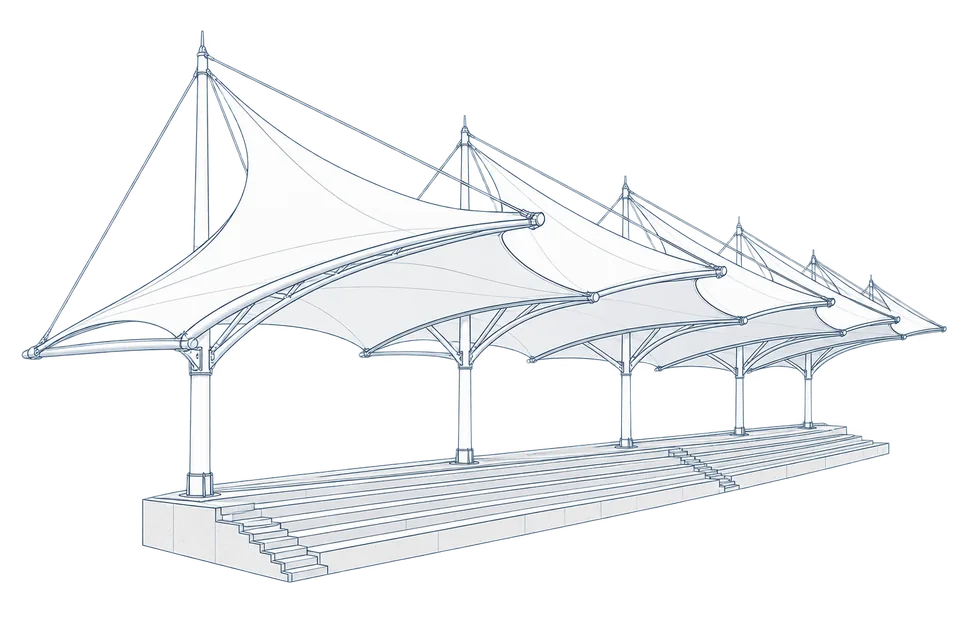 Grandstand canopiesSports venue shelters→
 Inflatable play cloudsFamily play areas→
 Wastewater coversEnvironmental infrastructure→
 Fuel station canopiesStation shelters→
 Entrance canopiesWalkways and entrances→
How Should a Tensile Membrane Structure Materials List Distinguish Roof and Façade Membrane Models?
List roof and façade membrane models separately by their actual location. Different parts of one tensile membrane structure may use different models, and a single model name on a materials list does not establish where it belongs. If the roof and façade are intended to share a model, the project documents should say so explicitly.
What the Miramas example shows
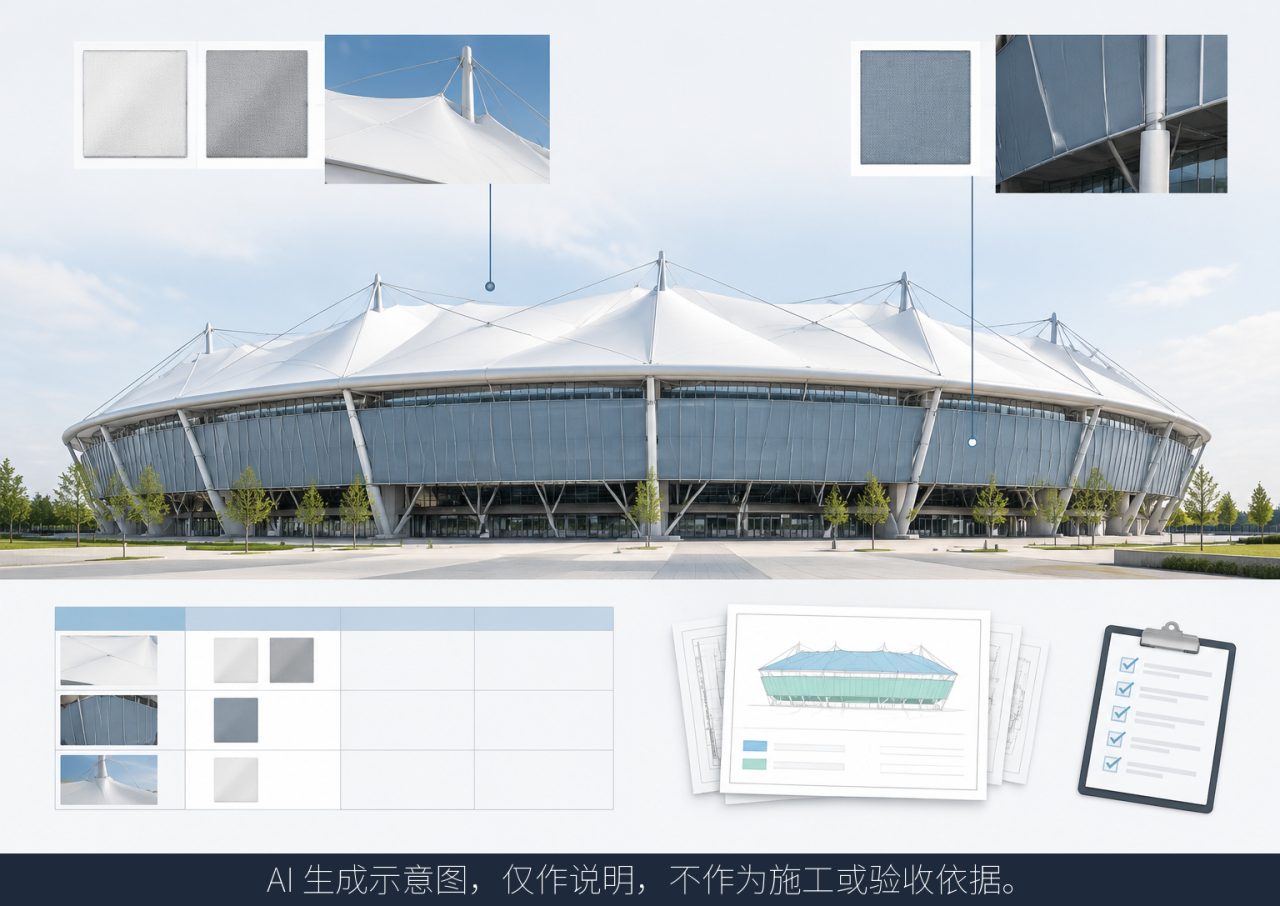
According to Serge Ferrari’s Miramas stadium project page, the roof uses Flexlight 402 HT and TX30-2, while the façade uses TX30-1. The example shows both that the roof and façade have distinct model assignments and that one roof area can list more than one model.
The public page does not provide the complete supply quantities, zoning drawings or test reports needed for this purchasing check. It therefore cannot establish where each roof model is used, support performance conclusions or justify selecting those models for another project.
How to check the materials list
For a request for quotation (RFQ), review each entry against its location, membrane model and supply scope:
- Identify each location. List the roof, façade and any other documented membrane areas separately. Avoid an entry that says only “membrane” or “roof material.”
- Match every model to an area. If one location uses multiple models, identify the area assigned to each. Do not assume the Miramas roof models cover interchangeable areas; that requires project-specific drawings or material documents.
- Compare document revisions. Check model names and area labels against the applicable drawings, material confirmation documents and agreed supply scope. Ask for written clarification before purchasing if the documents disagree.
- Check quantities and boundaries. Confirm that quantities and area descriptions correspond to the locations included in the intended supply scope. A model name alone does not confirm what will be supplied.
- Agree on handover information. Where fabricated membrane components are to be handed over to local installers, ask the supplier and project engineer to agree which approved drawing revisions, area identifiers and packing-list references are needed to match delivered items to installation locations. Agree design responsibility and supply boundaries with them rather than inferring either from the materials list.
A roof and façade may share one model if the project documents explicitly assign it to both and the quantities, areas and supply scope can be reconciled. Conversely, the Miramas example does not mean every project must use different models for those locations.
The three Miramas model names are case-study facts, not a material recommendation from Qingsong Membrane Structures or a purchasing specification for another project. For your own project, share the location, intended use, dimensions and available drawings, and identify the design coordination, custom fabrication and component supply you need reviewed. Confirm project terminology and material models from the applicable drawings and material documents before approving the list.
Source note: This article draws on Serge Ferrari’s published Miramas stadium project page. The Chinese source records a check date of 26 September 2026. That page is not evidence that Qingsong Membrane Structures built, supplied or collaborated on the project, or that the project’s test reports were independently checked for this article.