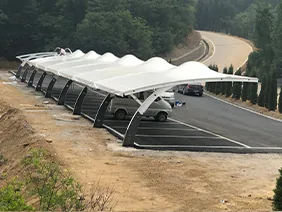
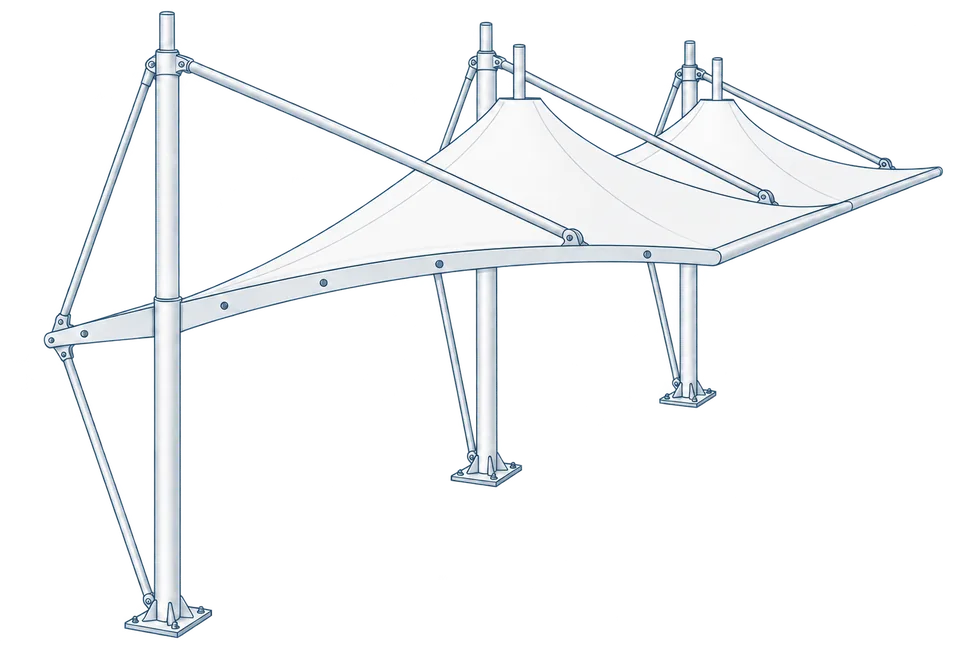
 Membrane carportsClassic membrane shelters→
 Solar carportsParking meets green energy→
 Landscape canopiesParks and leisure spaces→
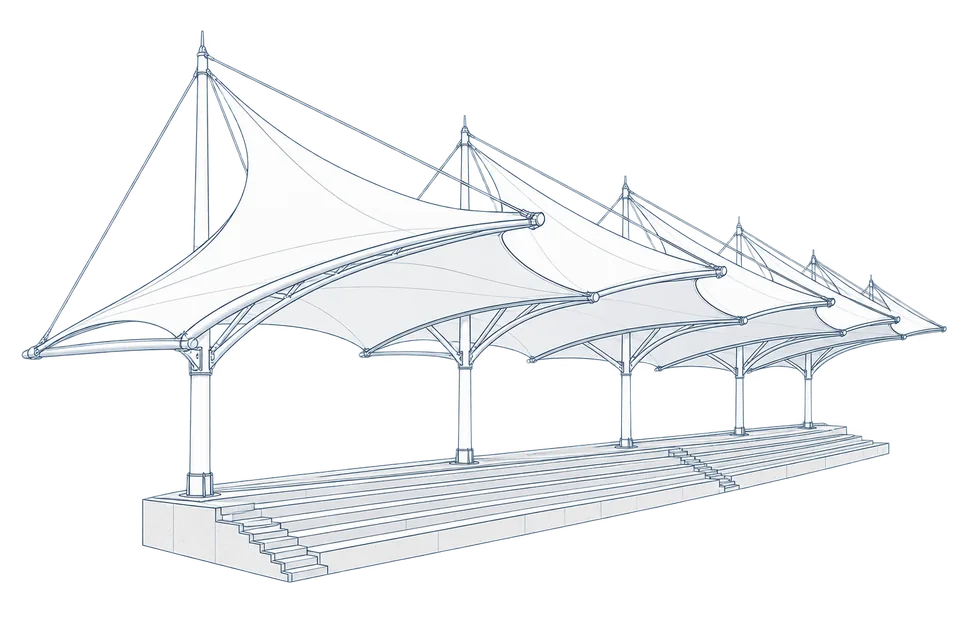 Grandstand canopiesSports venue shelters→
 Inflatable play cloudsFamily play areas→
 Wastewater coversEnvironmental infrastructure→
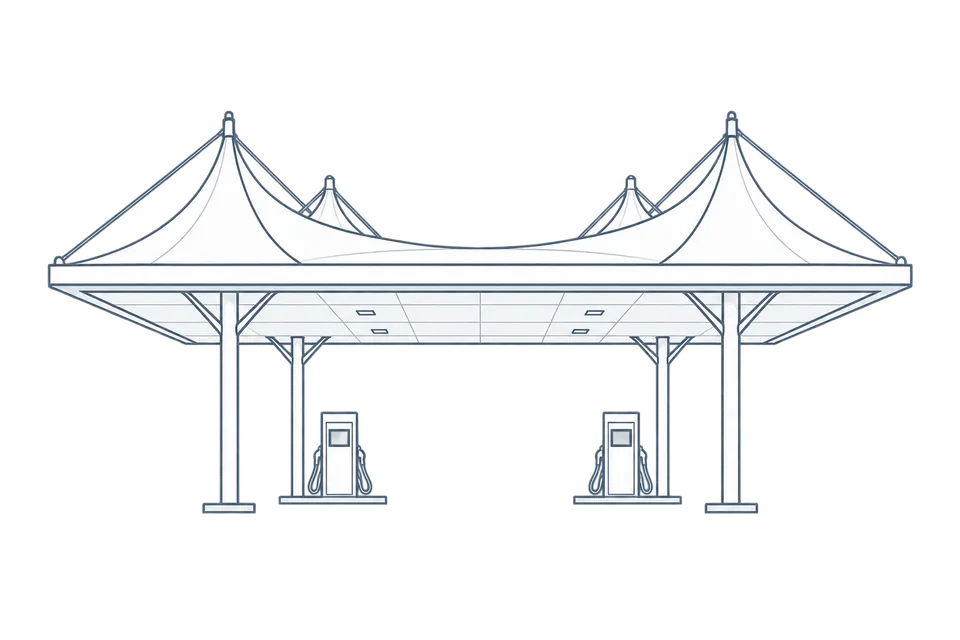 Fuel station canopiesStation shelters→
 Entrance canopiesWalkways and entrances→
How to Read an Industry Survey Notice: Data Collection Is Not a Statistical Conclusion
Short answer first
The document in question, the Notice on Conducting the 2025 Development Survey of the Spatial Structures Industry, issued by the Spatial Structures Branch of the China Steel Construction Association, is a notice inviting member organisations to submit data. It is not a finished survey report. It contains no statistical conclusions you can cite for an industry growth rate, a company ranking, or a market share figure. If you come across this material while doing procurement or facilities work and want to use it to back a number, first be clear about what it actually is.
The rest of this article works through the questions people usually ask.
Is this a survey result or a data-collection request?
It is a data-collection request, not a result.
The body of the notice invites member organisations to report on the development of the spatial structures industry for 2025, and states that the data is intended for a later report. The notice is dated 6 March 2026.
In other words, the document sits at the start of the process: collect first, tabulate later, write up afterwards. It carries no aggregated or calculated industry figures of its own. Citing a collection notice as if it were a survey report points in the wrong direction.
The primary source can be checked directly (both pages are in Chinese):
- Web page: https://www.cnass.cn/site/content/401.html
- Original PDF: https://www.cnass.cn/upload/gjgfenhui/file/20260310/1773108544105696.pdf
What do the different dates mean?
The material carries several dates that are easy to confuse. Keeping them apart prevents misreading.
| Date | Meaning |
|---|---|
| 2025 | The year being surveyed, i.e. the year the reported "development situation" belongs to |
| 2026-03-06 | Date on the notice itself |
| 2026-03-10 | Date the notice was published on the association's web page |
| 31 March | Deadline for member organisations to submit data |
Seen separately, one point becomes clear: the subject of the survey is the year 2025, while the document itself was issued in 2026. The publication date is not the date the data relates to, and the submission deadline is not the date a report is completed. The three should not be merged.
Can it be used to claim industry growth or rankings?
No.
The reason is direct: the notice only states that the collected data is intended for the spatial structures industry survey section of the 2025 Steel Structure Development Blue Book. It gives no growth rate, no market share, and no ranking figures.
So the following claims all lack support:
- "The spatial structures industry grew by X in 2025" — the notice contains no such number.
- "Company Y ranks Nth in the industry" — the notice contains no ranking.
- "Product type Z holds X% market share" — the notice contains no share statistics.
A collection notice states how the data is intended to be used, not what the data turned out to be. Using it as evidence of growth or rank is like using an invitation to prove what was served at the meal.
Has the 2025 Steel Structure Development Blue Book been published?
The notice only states that the collected data is intended for the industry section of the Blue Book. The material itself does not establish whether the Blue Book has been published, or when. Whether and when it appears should be confirmed from the Blue Book's own official information, not inferred from this collection notice.
When you see wording like "intended for a report," read it as "planned for that use," not as "the report is already out."
Can data still be submitted after the deadline?
The submission deadline stated in the notice is 31 March. Measured against this article's verification date of 26 September 2026, that point has passed.
The notice therefore can no longer serve as a current basis for registering or submitting data. Whether any further collection is arranged, and through what channel, should follow the association's later official announcements, not be guessed from this expired notice.
Reading industry material: separate "collection" from "conclusion"
The key to reading this kind of material comes down to one thing: see which stage of the process it sits at.
- Collection notice: asks organisations for data, sits at the start, carries no conclusions itself.
- Survey report: the product of aggregating and calculating that data, and only then may it contain growth, share, or ranking figures.
Mixing the two easily produces judgements that do not hold up. For procurement and facilities teams, the first step in deciding whether a number can be trusted is to go back to its primary source and check whether it is a collection-stage document or a finished statistical conclusion.
About Qingsong Membrane Structures
Qingsong manufactures at its Henan headquarters factory, prefabricates components in the plant, and ships directly. Within China it works through a national network of cooperative installers under a unified domestic warranty. These Chinese on-site service arrangements do not extend automatically to overseas projects: for cross-border work, supply scope, installation responsibility, and handover to your local installers are matters to agree with you and your project engineer in the contract.
The company welcomes factory inspections and visits to completed projects. Warranties for individual items such as membrane fabric and steelwork are written into the contract rather than given verbally. The registered entity is Henan Qingsong Membrane Structure Engineering Co., Ltd., active in the industry since its 2016 registration.
For tensile membrane structure work, membrane canopy design coordination, custom fabrication, and component supply, share your project location, intended use, dimensions, and available drawings, and tell us which services you need so we can review the supply scope. To send a request for quotation (RFQ, a formal request for pricing against a defined scope), please get in touch.
FAQ
Q: Can this notice prove the 2025 growth of the spatial structures industry? A: No. It is a data-collection notice and contains no growth rate, market share, or ranking conclusions. It only states that the data is intended for a later Blue Book report.
Q: Are the notice date and the web publication date the same day? A: No. The notice is dated 6 March 2026 and the web page was published on 10 March 2026, a few days apart, with different meanings.
Q: Can data still be submitted under this notice now? A: The stated deadline is 31 March, which has passed as of this article's verification date. It can no longer serve as a current basis for submission; follow the association's later official information.
Q: How do I quickly tell whether an industry document is a survey result? A: Check whether it is "asking for data" or "giving conclusions." The former is a collection notice; only the latter may contain statistics. Going back to the primary source to verify is the safest step.