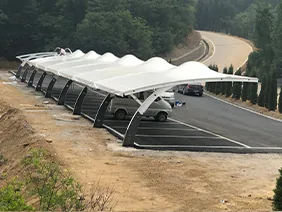
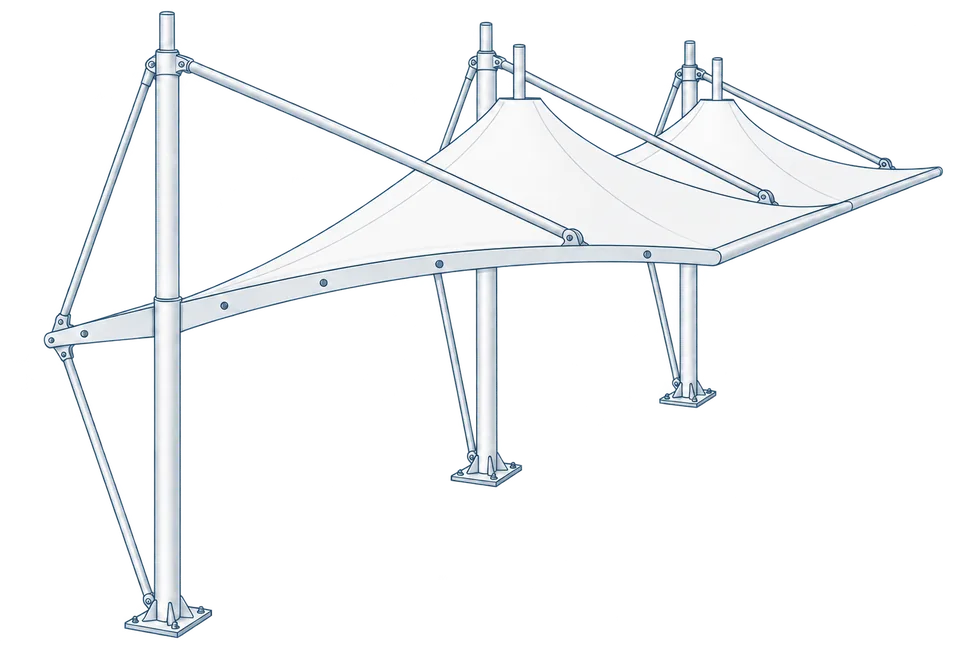
 Membrane carportsClassic membrane shelters→
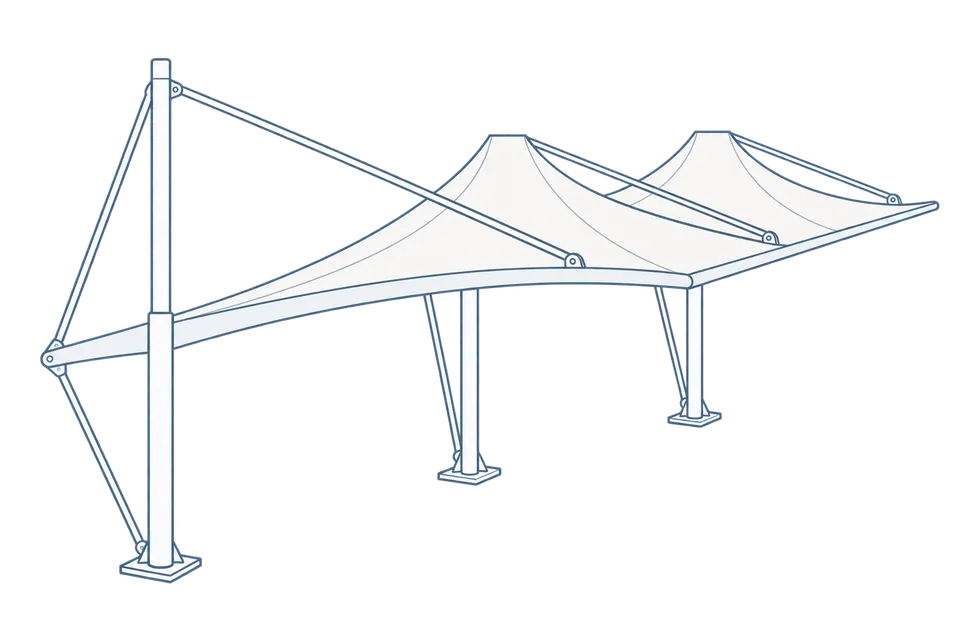 Solar carportsParking meets green energy→
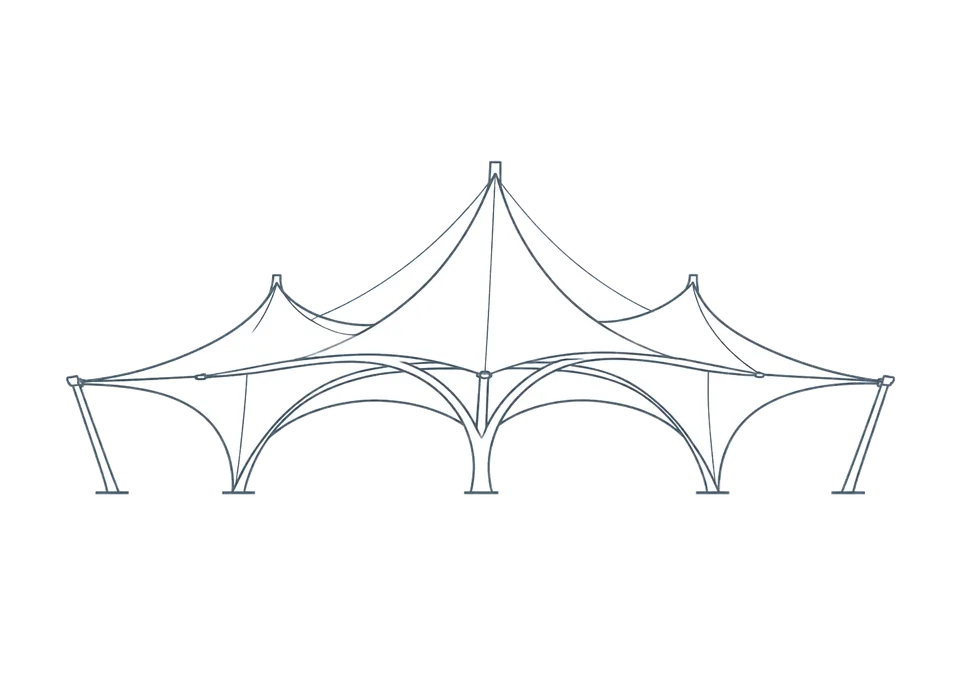 Landscape canopiesParks and leisure spaces→
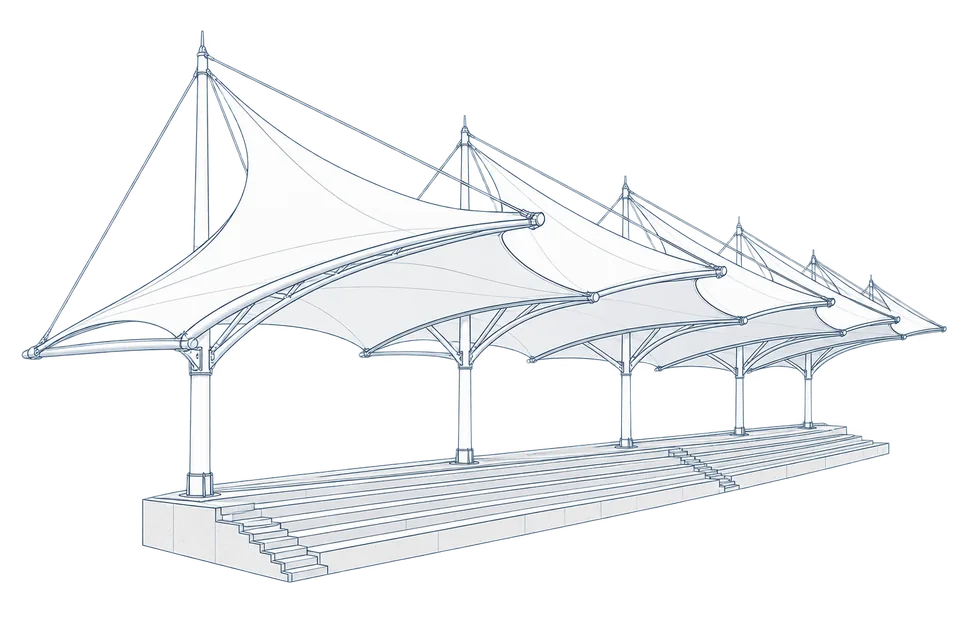 Grandstand canopiesSports venue shelters→
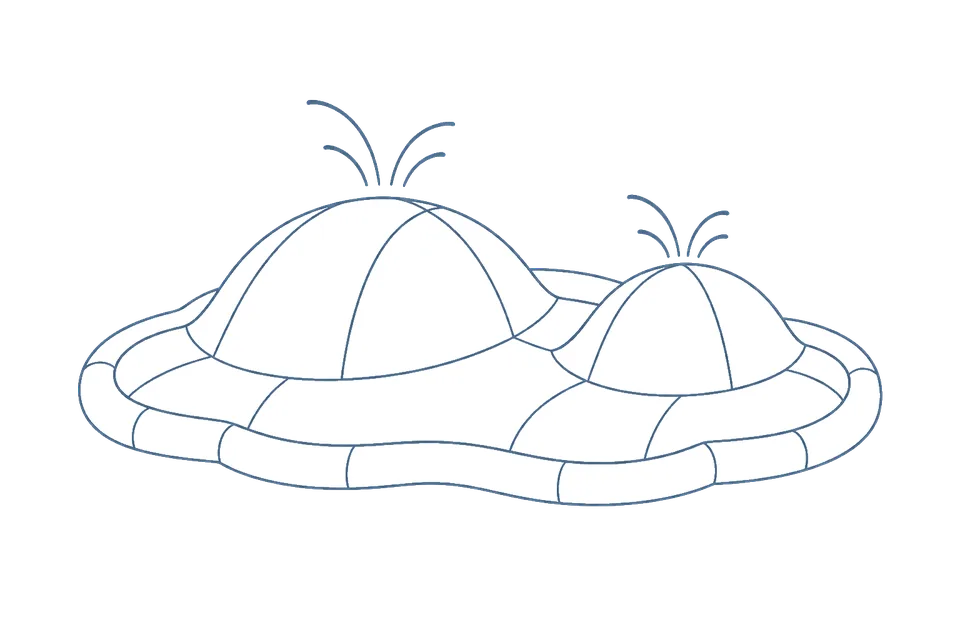 Inflatable play cloudsFamily play areas→
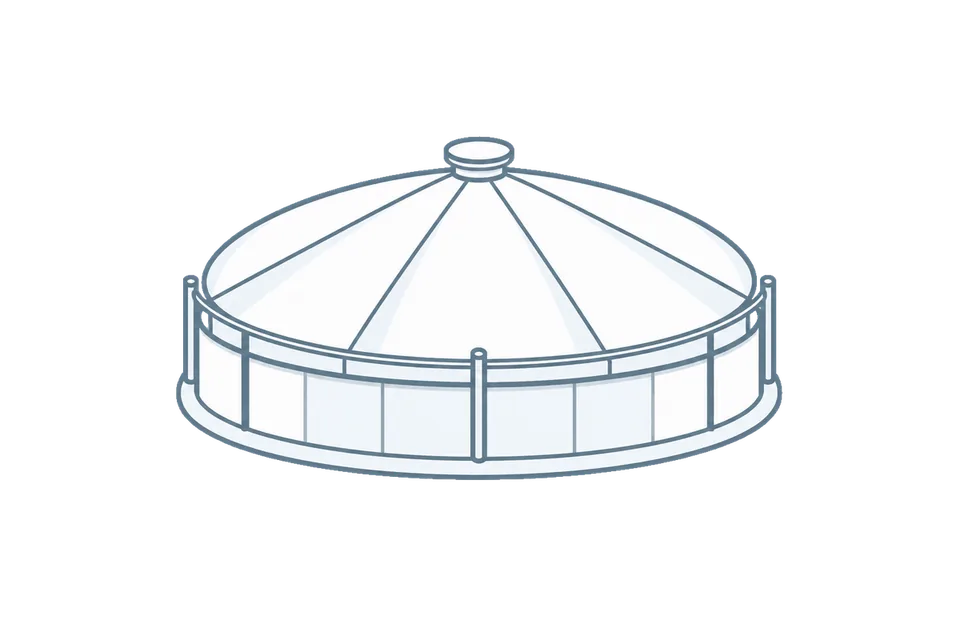 Wastewater coversEnvironmental infrastructure→
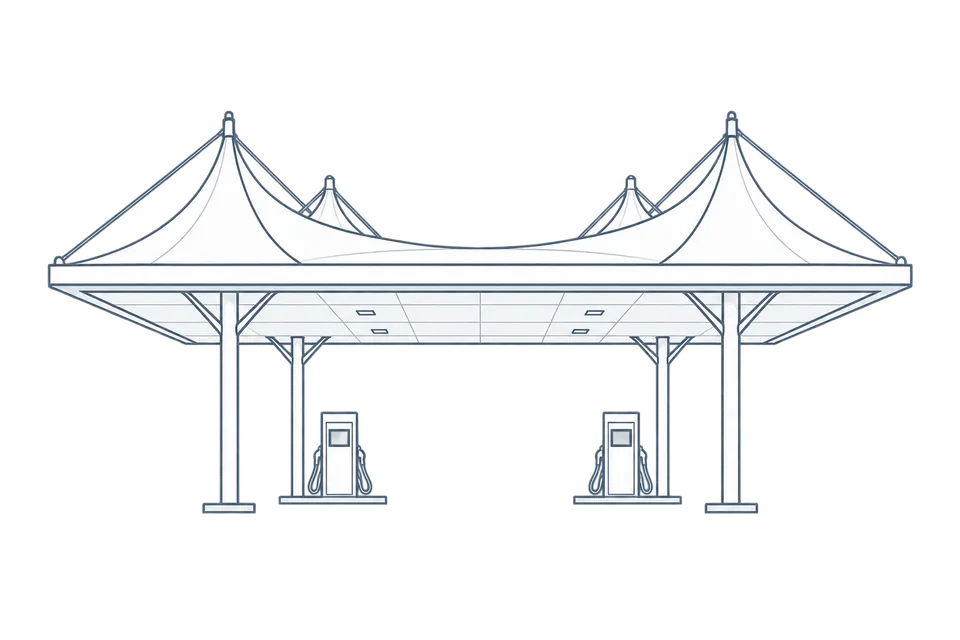 Fuel station canopiesStation shelters→
 Entrance canopiesWalkways and entrances→
The main types of membrane structures
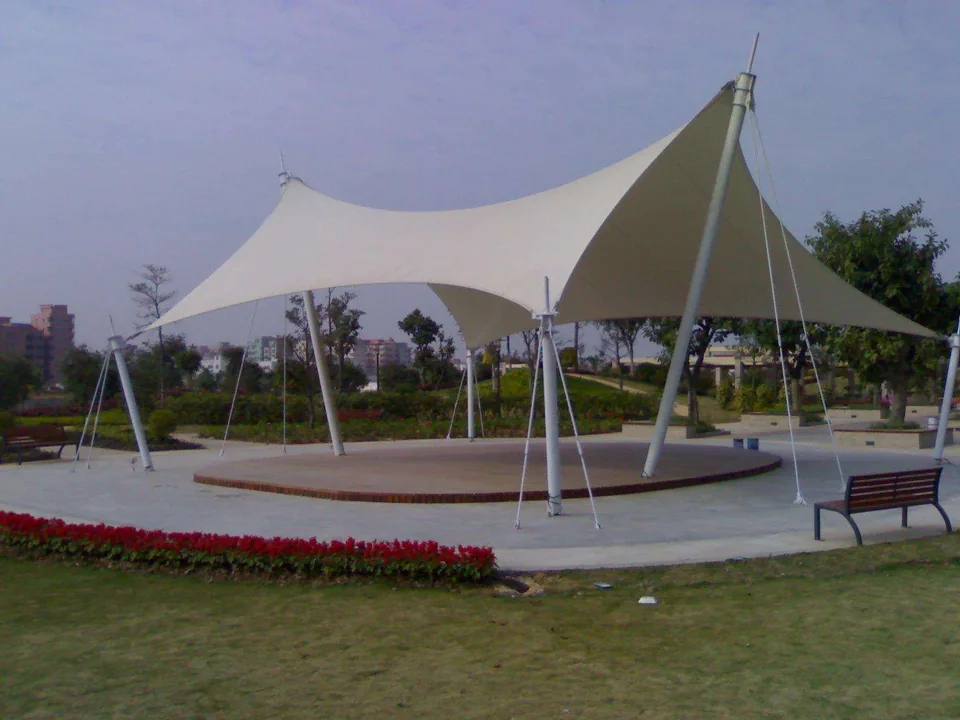
Classify membrane structures by how they create and maintain their form. Tensioned, frame-supported, cable-supported, air-supported and hybrid systems have different boundaries and maintenance requirements; roof shape alone is not a useful classification.
Frames and cables provide different supports
Frame-supported systems combine members such as steel framing with tensioned membranes. Cable-supported systems rely on a cable network as a principal support. Compare effects on usable space, foundations and installation rather than only which uses less steel.
Tensioned and air-supported systems have different conditions
Tensioned systems combine membranes, supports and anchorage boundaries. Air-supported forms need the relevant pressure and enclosure conditions. Air-supported spaces, air ribs and cushions work differently; an inflatable event arch does not represent every air-supported building.
One building may combine systems
Real projects may combine support methods. Compare clearance, support locations, spans, drainage, equipment operation and maintenance costs rather than general claims that inflated forms are cheaper or frames are always more stable.