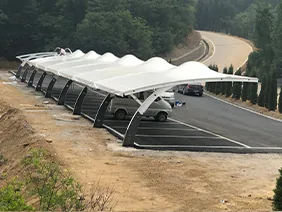
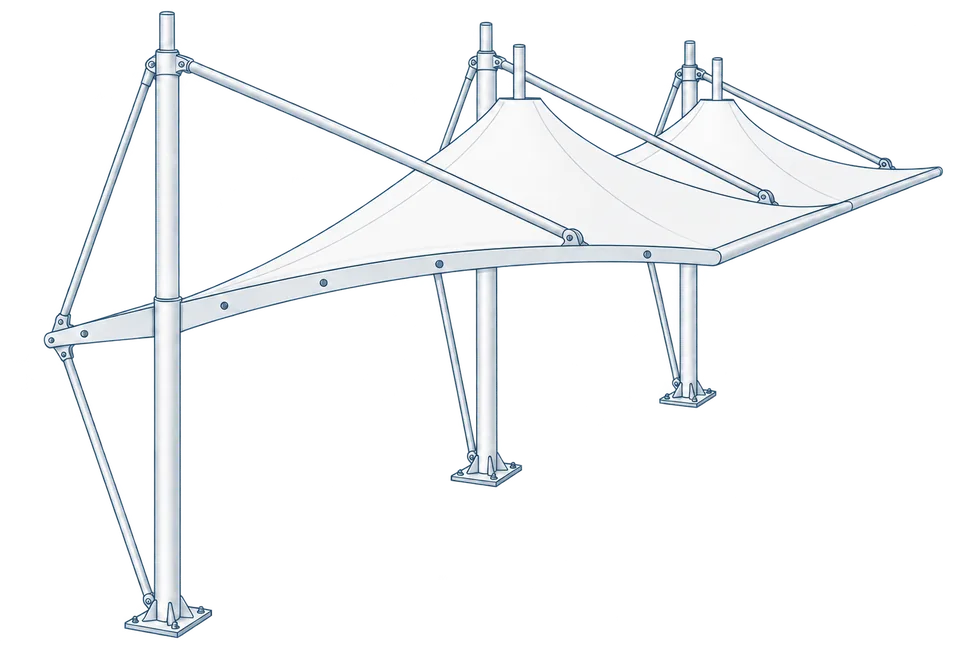
 Membrane carportsClassic membrane shelters→
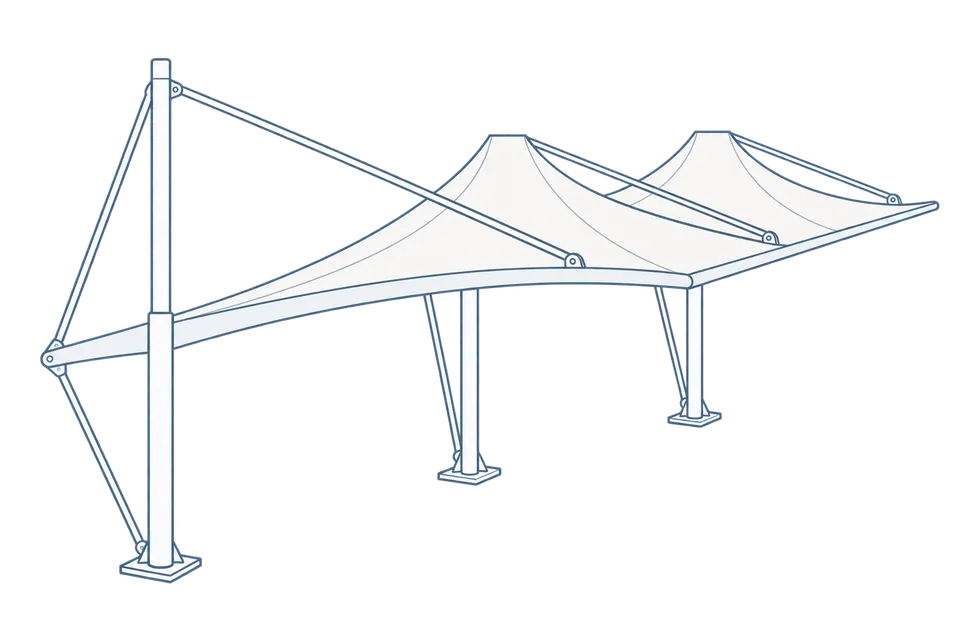 Solar carportsParking meets green energy→
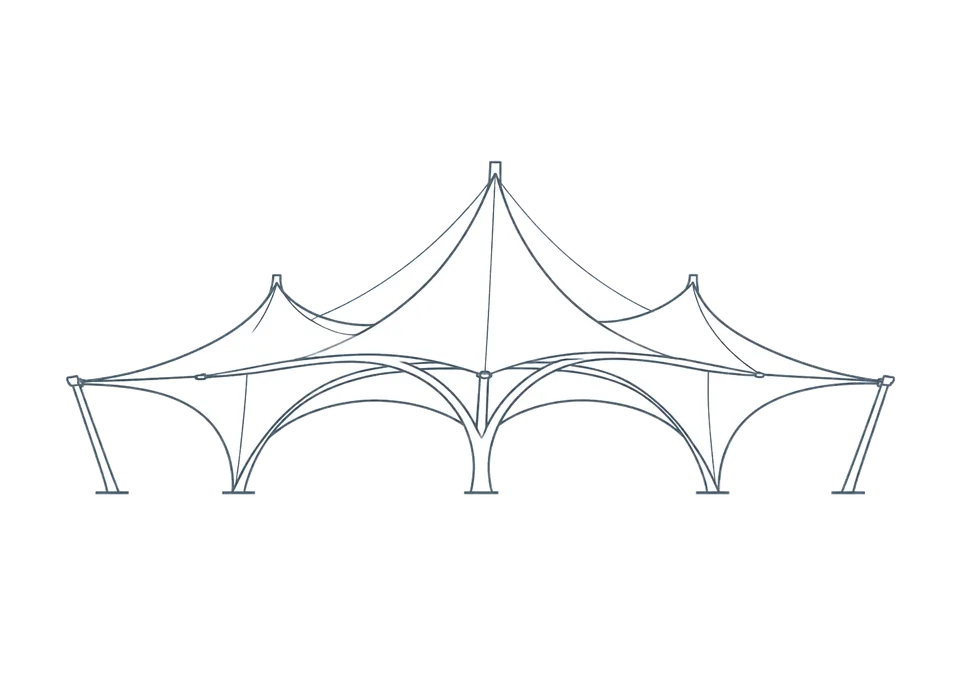 Landscape canopiesParks and leisure spaces→
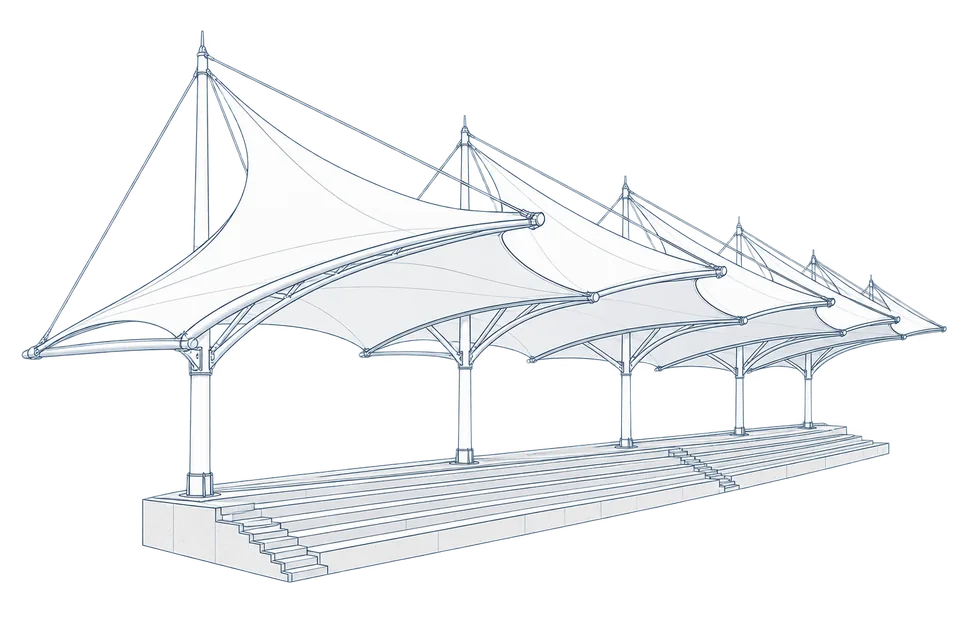 Grandstand canopiesSports venue shelters→
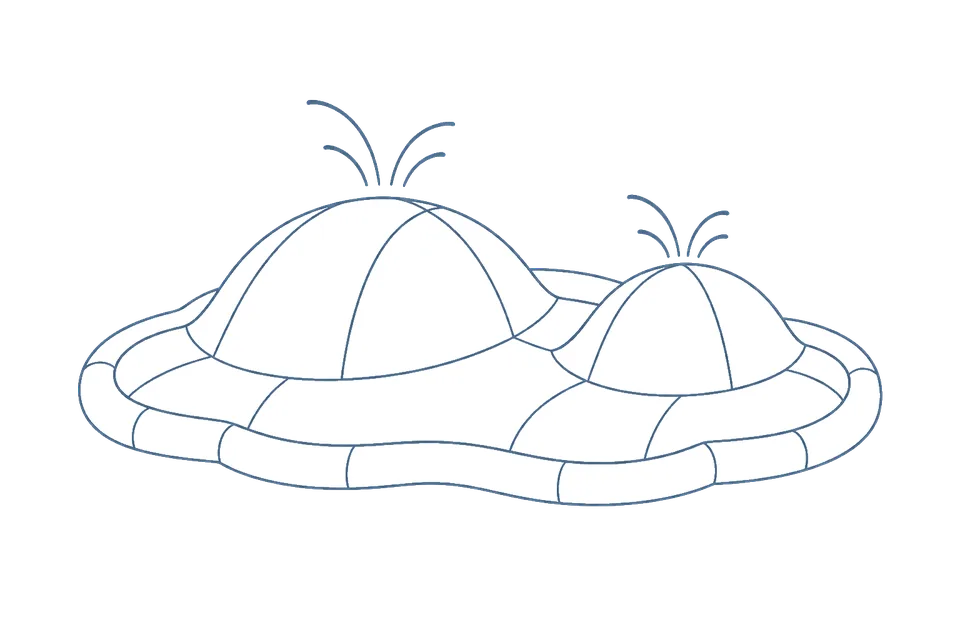 Inflatable play cloudsFamily play areas→
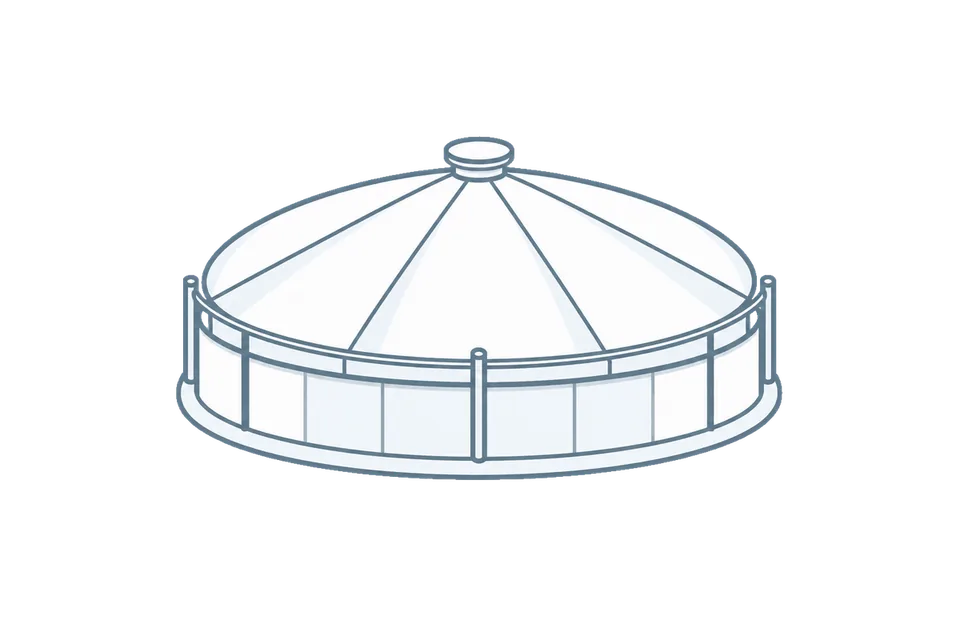 Wastewater coversEnvironmental infrastructure→
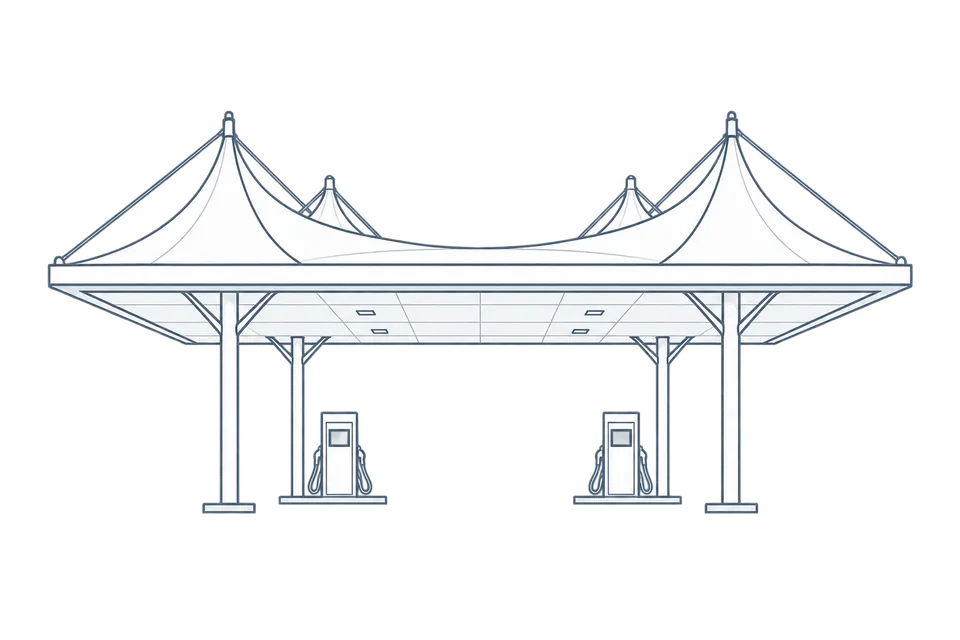 Fuel station canopiesStation shelters→
 Entrance canopiesWalkways and entrances→
Tensile membrane structures: features and applications
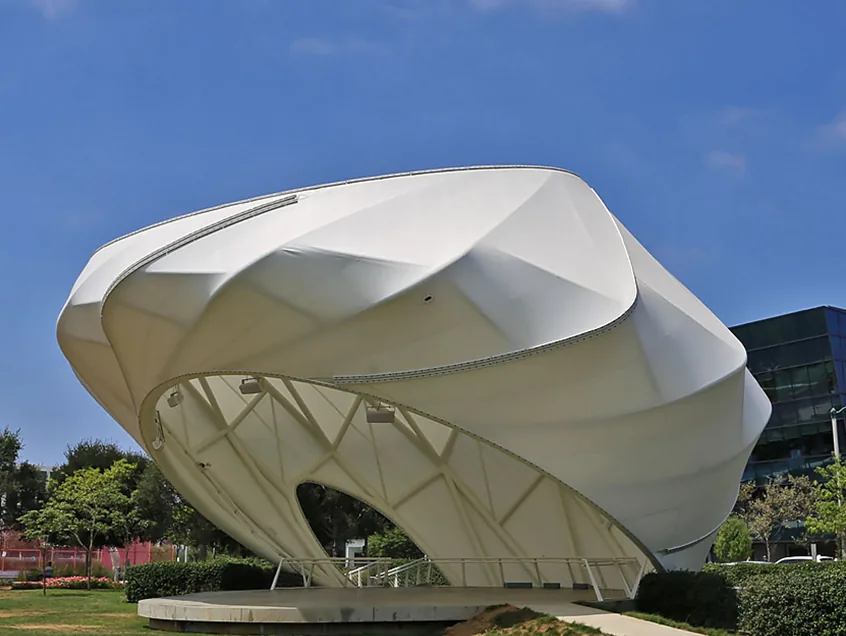
Tensile membranes combine surface form, pretension and boundary support to create varied curved roofs. Suitability depends on use, site and maintenance; an unusual appearance does not make them a replacement for every roof.
Applications for curved and open shelter
Landscape rest areas, entrances, parking and grandstands can all use membrane proposals, with different priorities: pedestrian coverage at entrances, columns and circulation in parking, and seating and sightlines in stands.
Engineering conditions still constrain form
Coordinate roof heights, supports, anchorages and drainage edges with analysis. Fewer columns may increase demands on other members or foundations, so open space does not automatically mean lower cost.
Clarify enclosure and temperature-control needs
Open shelters and enclosed buildings differ in envelope, insulation, acoustic and equipment requirements. Stable year-round temperatures or reduced outdoor noise require a complete building-system discussion. A single tensioned membrane is not a full insulated acoustic enclosure.