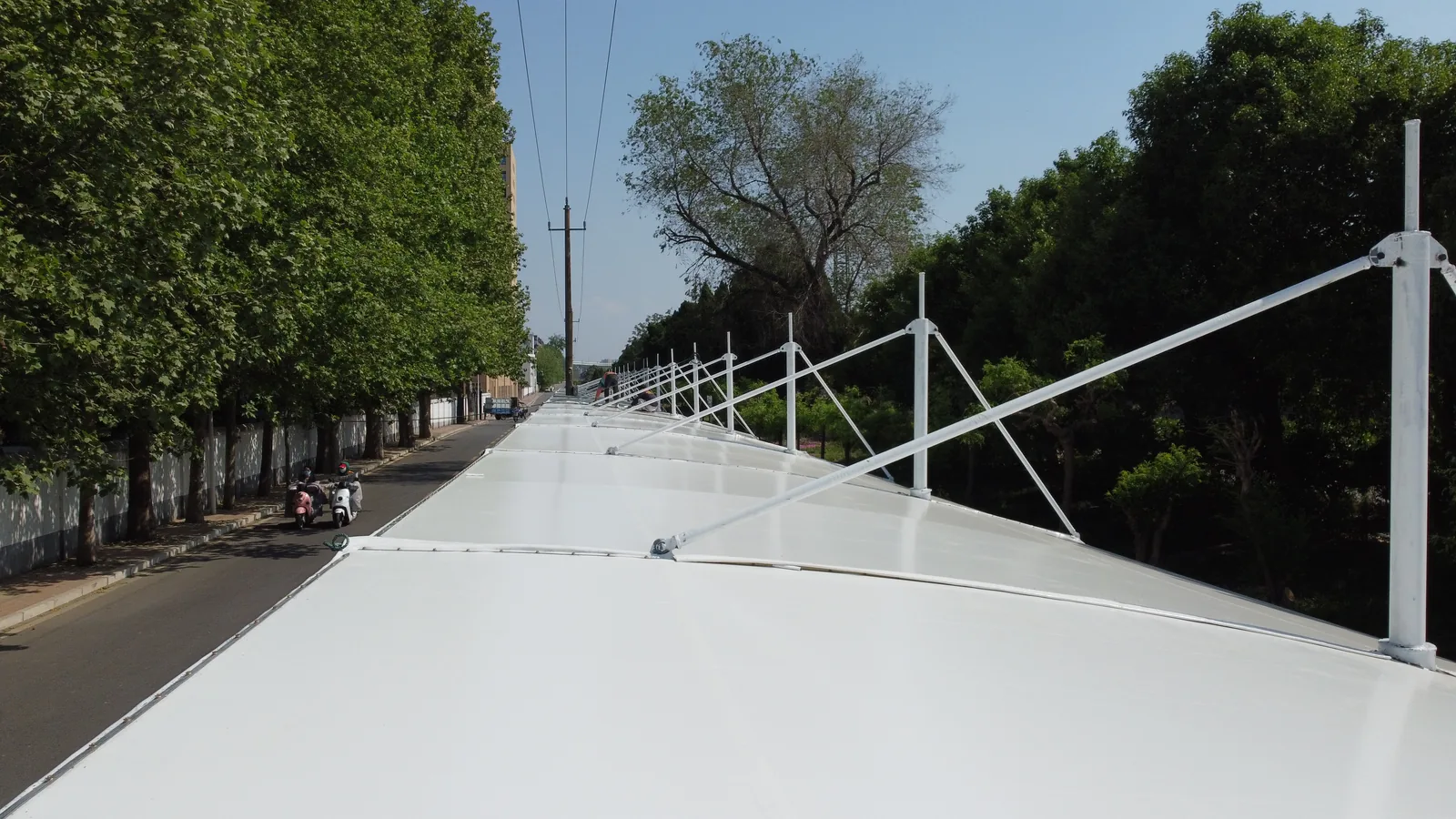
 Membrane carportsClassic membrane shelters→
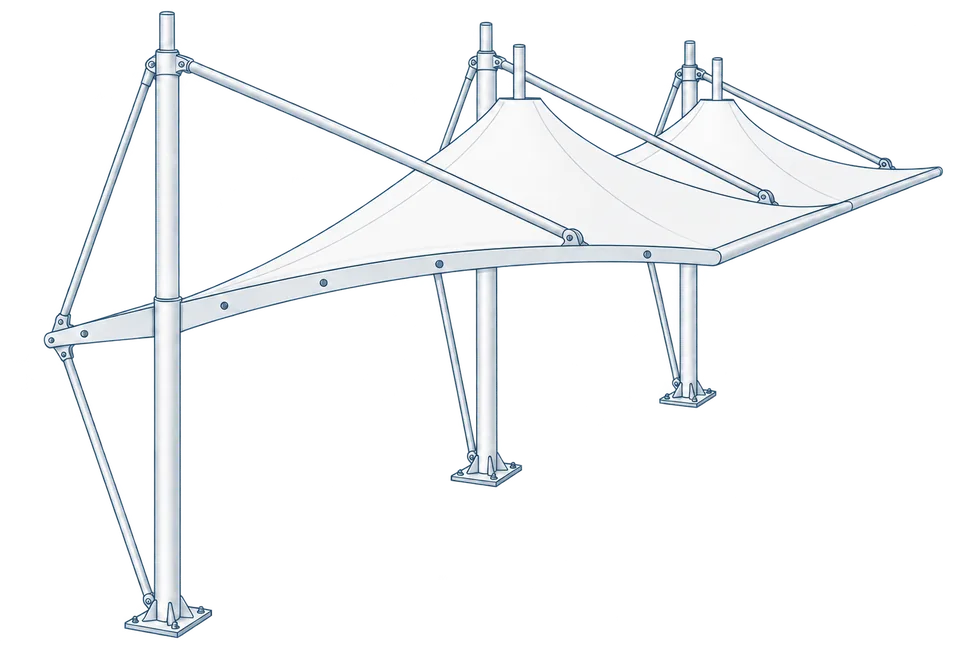
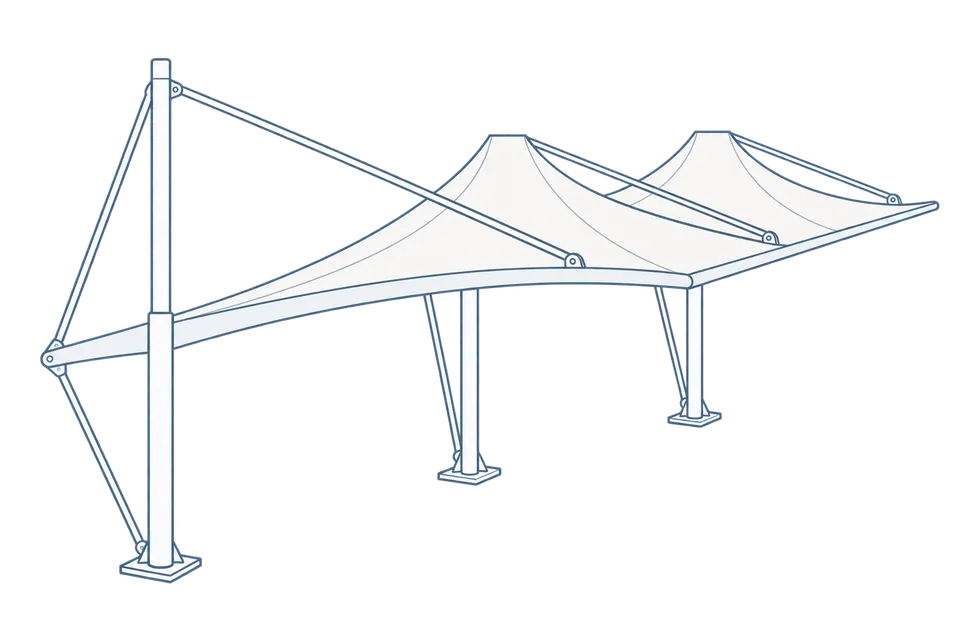 Solar carportsParking meets green energy→
 Landscape canopiesParks and leisure spaces→
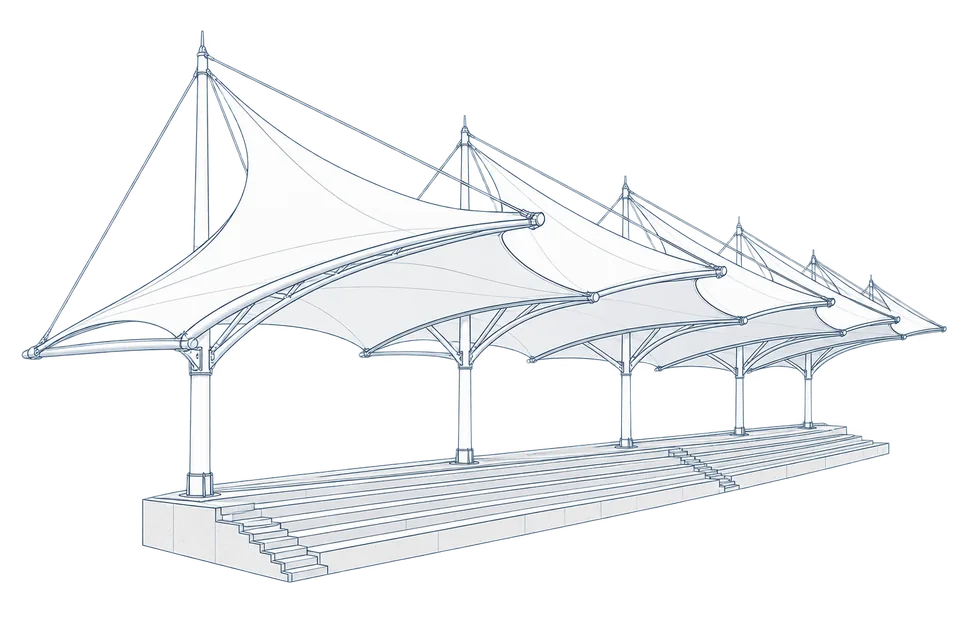 Grandstand canopiesSports venue shelters→
 Inflatable play cloudsFamily play areas→
 Wastewater coversEnvironmental infrastructure→
 Fuel station canopiesStation shelters→
 Entrance canopiesWalkways and entrances→
How to Agree Packaging Requirements for a Tensile Membrane Structure: Confirm Steel, Membrane and Small Parts Separately
Packaging requirements for a tensile membrane structure should be agreed before you place an order, because the three main categories of goods fear different things: steel components risk chipped coatings from impact and abrasion, membrane fabric risks creasing, crushing and puncture, and small hardware risks getting scattered and lost. If packaging problems only surface at shipment, responsibility becomes very hard to allocate. This article explains, component by component, what protection requirements to confirm, and how unloading, packing lists and receiving inspection should be written into the contract.
What Protection Requirements to Confirm for Each Component
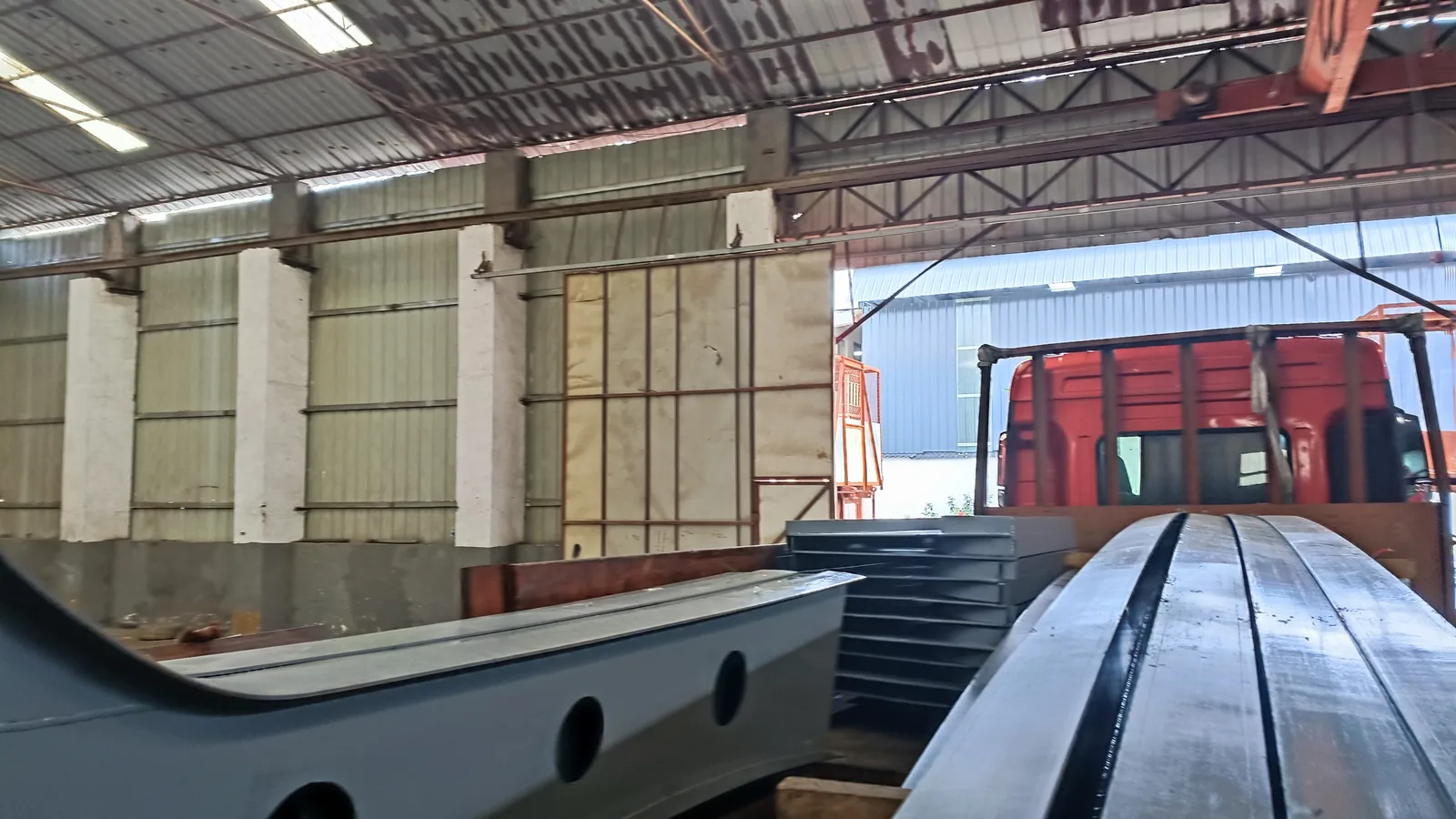
Steel components: Confirm the surface condition and protection method at factory handover. In our process, components leave the factory as finished goods after surface treatment, with no fabrication on site, so the coating must be protected all the way to installation. When discussing packaging, clarify whether lifting points and contact areas have soft padding, whether pipe openings and flange faces are sealed, and whether separators are placed between components to prevent mutual abrasion.
Membrane fabric: Confirm the specifics of roll packaging — roll diameter, core, number of outer packaging layers, whether rolls are packed in individual crates, and whether stacking weight is allowed. Membrane fabric is often stored on site for some time before installation, so also agree on storage requirements for moisture and sunlight protection.
Small parts: For bolts, clamps, rigging and similar loose items, the priorities are packing by specification in separate boxes with itemized lists, so nothing fails to match during installation. You can request packing organized by installation zone to make on-site retrieval easier.
How Handling and Transit Affect the Packaging Agreement
The more times goods are loaded and unloaded, the higher the packaging grade needs to be. For projects where the factory prefabricates and ships directly by logistics, transit handling is limited, and the main risk points are load securing at the factory and unloading at the destination. If your project requires a second transfer before reaching site, each additional handling step should come with a corresponding requirement to check package integrity.
When negotiating packaging, we recommend confirming these points in the contract:
- Permitted handling methods (forklift fork positions, whether dedicated lifting points must be used);
- Prohibited actions (dragging, single-point lifting of membrane crates, hooking directly onto component packaging);
- Who is responsible for each transit leg and how damage liability is divided.
On freight cost: tensile membrane structure components are lightweight, so logistics is a modest share of total project cost. Direct shipment from the factory avoids intermediary markups, so there is no reason to compromise packaging standards to save on freight.
Writing Packing Lists and Markings into the Contract
A packing list is not an incidental slip of paper — it is the handover record. We recommend the contract stipulate:
- Each box carries a packing list stating box number, contents, specifications and quantities;
- External box markings correspond one-to-one with list numbers; membrane crates show front/back orientation and roll numbers, matched to patterning (cutting) drawing numbers;
- Both parties verify boxes against the packing list before dispatch, filed as the factory acceptance record;
- The liability boundary from handover to carrier through to signed receipt is clearly stated.
Warranty terms belong on paper too: itemized warranties for membrane and steel should all be written into the contract, not left as verbal promises. Packaging condition is itself evidence for later warranty assessment — whether packaging arrived intact directly affects responsibility.
How to Define the Receiving Inspection Process for Long-Distance Delivery
Follow a fixed inspection sequence on arrival rather than a quick visual check before signing:
- Count the boxes and reconcile against the dispatch list;
- Inspect outer packaging; photograph any damaged, wet or deformed boxes and record them on the handover document on the spot;
- Open and verify contents against the packing list, focusing on membrane roll numbers versus patterning drawing numbers;
- Note any discrepancies on the handover document before signing — do not raise them afterwards.
On installation quality, one relevant point: because components arrive as finished goods with bolted connections and no on-site welding or fabrication, there is no processing stage at the destination. Responsibility for the delivery stage ends with a clear, documented handover; any local installation is arranged by you with your own project team or contractor. Design responsibility and supply scope should be agreed with you and your project engineer.
If you are preparing a supply or custom fabrication inquiry (RFQ — request for quotation) for a membrane canopy, carport, bicycle shelter or similar project, gather the intended use, dimensions or drawings, and the design, fabrication and supply services you expect, and share them together. Packaging and logistics plans can then be confirmed item by item. You can reach us through our contact page at /en/contact/.