
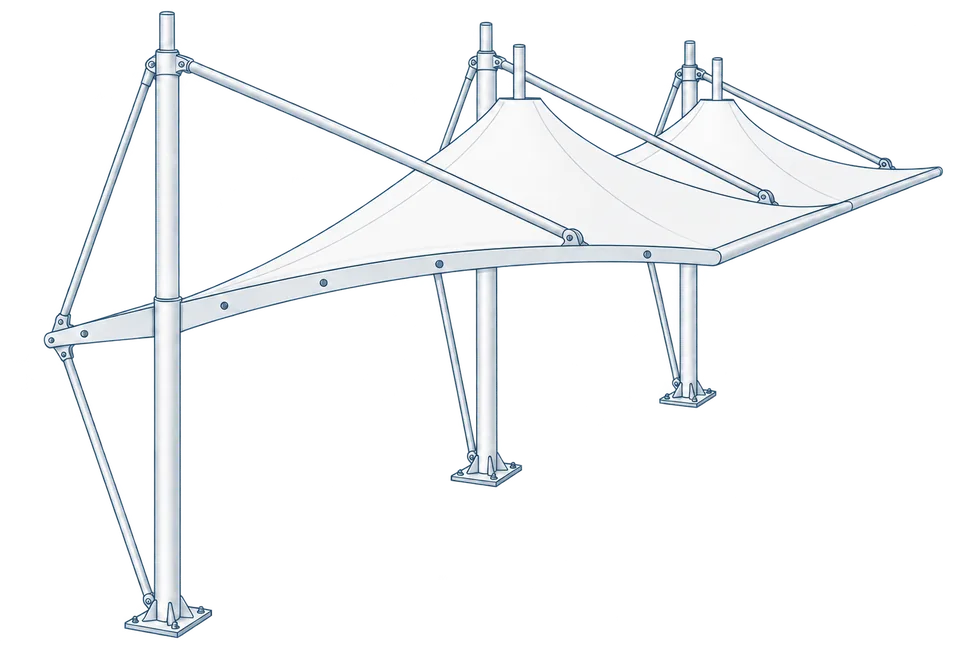
 Membrane carportsClassic membrane shelters→
 Solar carportsParking meets green energy→
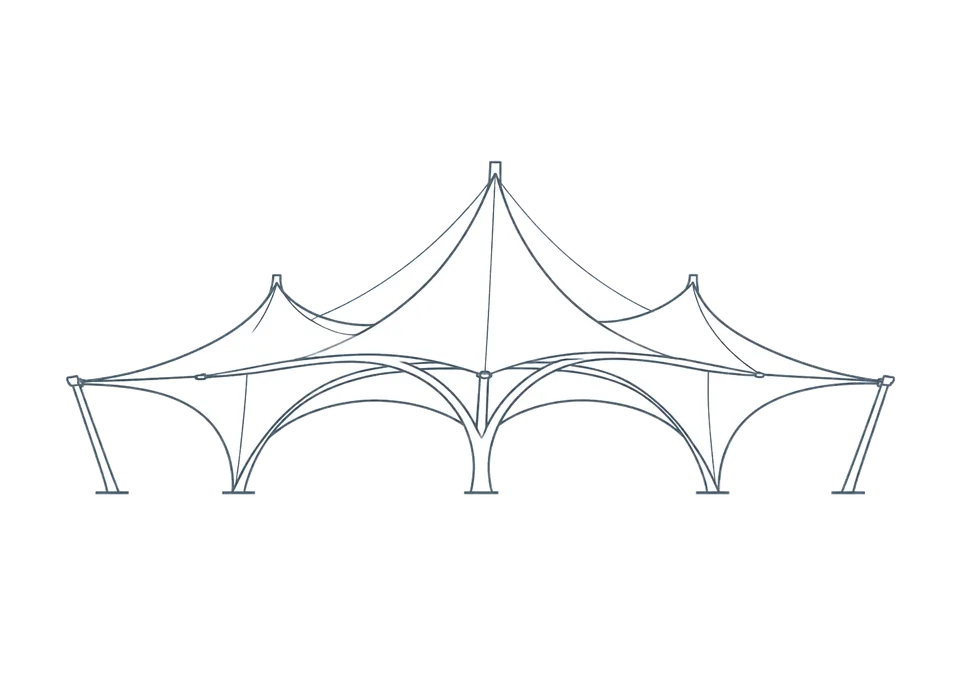 Landscape canopiesParks and leisure spaces→
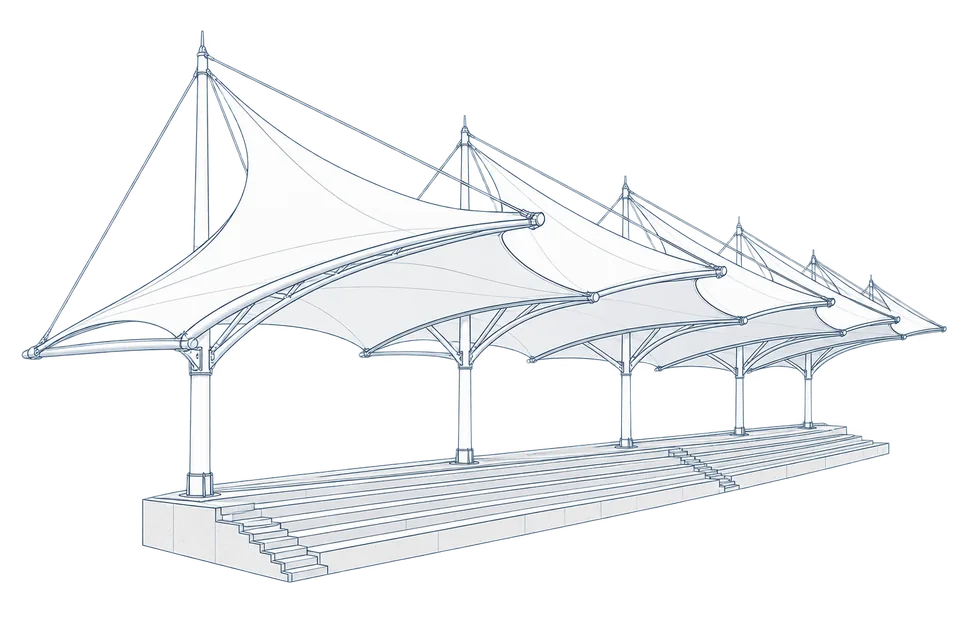 Grandstand canopiesSports venue shelters→
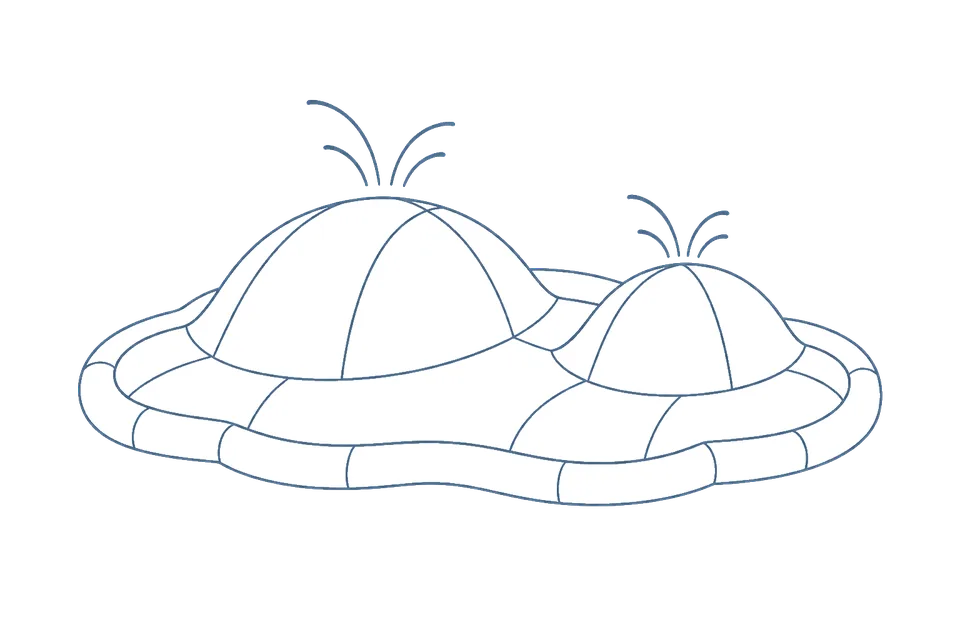 Inflatable play cloudsFamily play areas→
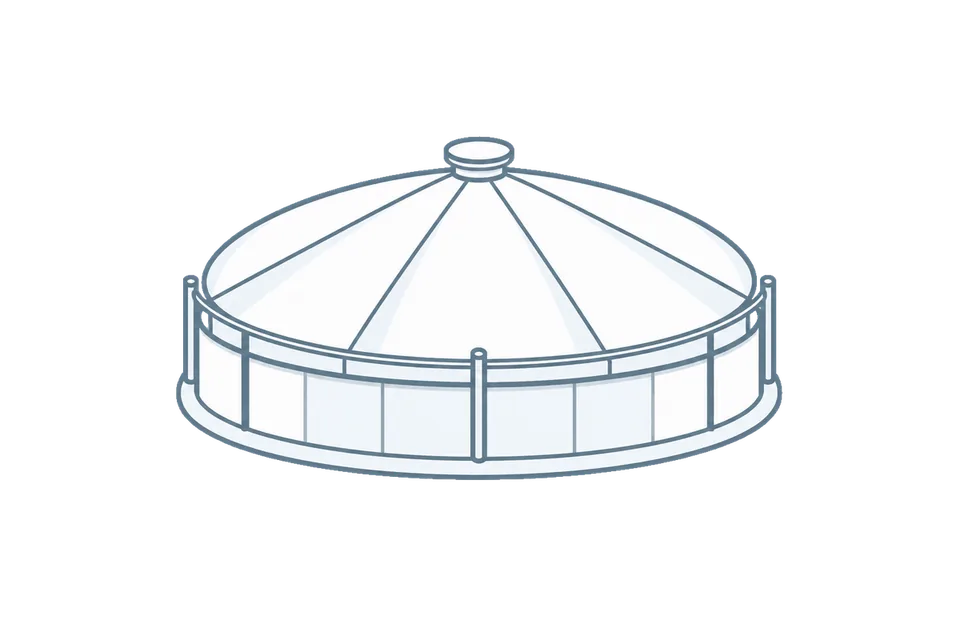 Wastewater coversEnvironmental infrastructure→
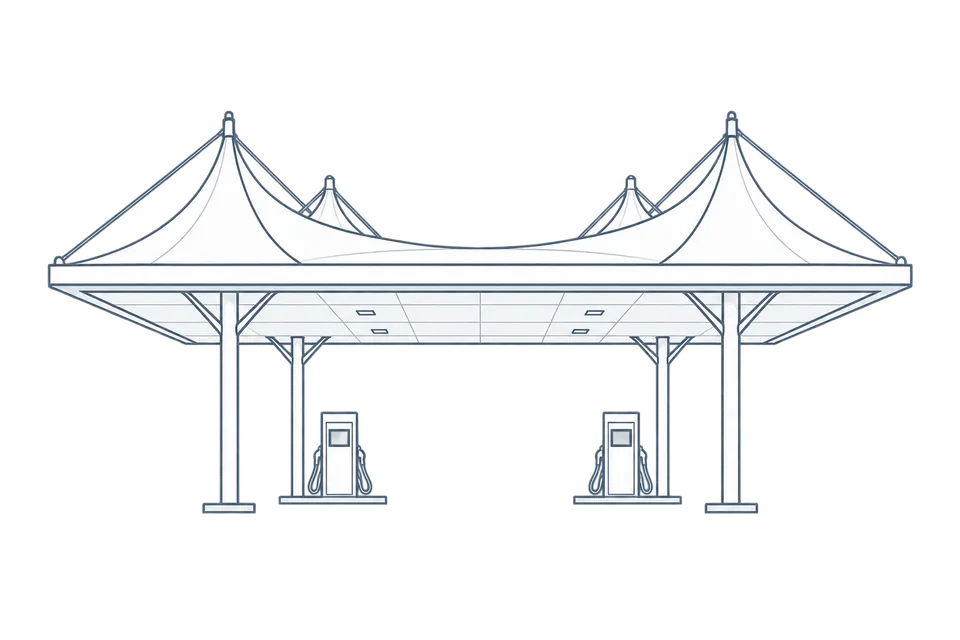 Fuel station canopiesStation shelters→
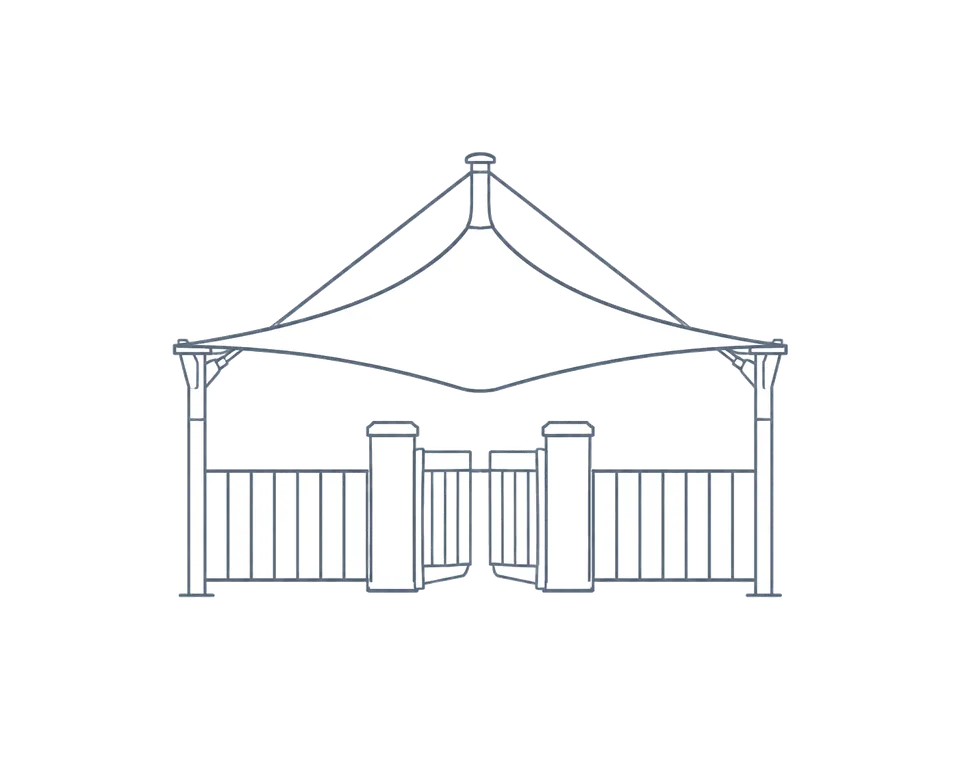 Entrance canopiesWalkways and entrances→
Landscape Membrane Structure: After the Rendering Is Approved, Which Site Conditions Still Need Checking?
An approved rendering confirms only the appearance and general form. It is not a construction drawing. Before a tensile membrane structure can move from rendering to fabrication, a series of site and engineering conditions must be verified one by one: measured site data, membrane flame-retardant requirements, steel corrosion protection, whether hot work is allowed on site, and how warranty terms are written into the contract. This article lists them in order for buyers and project teams who already have an approved rendering.
Site Conditions to Verify After the Rendering Is Approved
A rendering shows shape, scale and overall appearance. Delivery depends on construction drawings, and those drawings depend on confirming the following conditions first:
- Measured site dimensions and level differences: surrounding buildings, landscaping, buried services and existing foundations all affect membrane structure positions and foundation design.
- Wind and snow loads: calculated for the project's own location. Parameters from another site cannot be reused.
- Membrane selection and flame-retardant requirements: determined by the site's use and local fire regulations.
- Steel corrosion protection method: selected for the actual corrosion environment at the site, not a one-size-fits-all approach.
- Site construction restrictions: whether welding or hot work is permitted, and whether equipment can access the site.
- Warranty terms: scope and duration per component, written into the contract.
Each item is explained below, including who normally confirms it.
How to Get Reliable Site Measurements
Landscape membrane canopies are typically irregular curved surfaces that demand accurate positioning. Starting from a rendering or a client-supplied plan alone risks columns landing where actual obstructions are.
For projects we handle, site dimensions, level differences and surrounding obstructions are captured in one survey visit before design drawings are produced. If you only have a rendering, we recommend clarifying the survey step when agreeing the contract scope. Design responsibility and survey scope should be agreed with the buyer and their project engineer.
How Membrane Flame-Retardant Ratings and Corrosion Protection Are Determined
Both depend on site conditions; there is no single standard answer.
Flame-retardant rating: Standard PVC membrane fabric meets the everyday needs of most landscape canopies. If the project has explicit fire requirements — for example near charging facilities or in premises with strict fire rules — B1-grade flame-retardant membrane can be specified as an upgrade. Confirm against local fire regulations at the design stage, not at acceptance.
Corrosion protection: The standard approach is to grind and de-rust each steel component, clean weld slag and oil, inspect, then apply protective coating. In humid or corrosive locations (near water, chemical environments, etc.), hot-dip galvanizing can be specified as an upgrade. The choice follows the site environment first, then the budget.
What If Hot Work Is Not Allowed On Site? Planning Bolted Connections
Some sites prohibit hot work entirely — fuel station canopies, occupied campuses and areas storing flammable materials are common cases. In such cases a site-bolted process can be used: components are fabricated and surface-treated in the workshop, delivered as finished items, and assembled on site with bolted connections only, with no on-site welding.
Bolted assembly is not a default process; it must be agreed in advance. Before signing the contract, clarify:
- Whether the site is genuinely fully fire- and welding-restricted, and who issues that restriction;
- Whether transport dimensions and site access routes allow finished components through (bolted assemblies cannot be modified on site);
- That bolted connection details are fixed at the design stage, not adjusted in the field.
How Warranty Should Be Written, and Who Reviews It
Verbal warranty promises are the biggest risk. The recommendation is to write warranty into the contract item by item: membrane fabric, steelwork and other components each with a defined scope and duration, in writing.
All verification results — survey data, membrane and flame-retardant grade, corrosion protection method, construction process restrictions — should be returned to the designer for overall review before construction drawings are issued and fabrication begins. A landscape membrane structure project typically proceeds through design → fabrication → surface treatment → installation. The buyer's job is to confirm conditions and keep records at each interface between stages.
General Advice vs. Our Own Practice
The advice to "verify each item" and "agree things in advance" is general procurement guidance. Practices specific to our workflow — site survey before design, the staged one-stop process, and itemized warranty written into contracts — can be confirmed with us item by item during discussions.
FAQ
Can work start as soon as the rendering is approved? No. Site survey, load verification, membrane and corrosion-protection decisions and construction-restriction confirmation must all be completed, and the design reviewed and construction drawings issued, before fabrication and installation.
If hot work is prohibited on site, can a membrane structure still be built? Yes — agree in advance on a bolted-connection process where components arrive as finished items and are assembled on site without welding.
Is B1-grade flame-retardant membrane standard? No. Standard PVC membrane meets most landscape canopy needs; B1-grade is an upgrade selected at the design stage according to local fire requirements.
Is a verbal warranty enough? Not recommended. Warranty scope and duration for membrane fabric, steelwork and other components should be written into the contract separately to avoid later disputes.
Next Step
For an RFQ (request for quotation), share your project location, intended use, dimensions and any available drawings, and tell us which design coordination, custom fabrication and supply scope services you need. We will reply with a checklist of the conditions that still need to be verified for your project. Design responsibility and supply boundaries will be agreed with you and your project engineer. Visit our contact page to start the conversation.