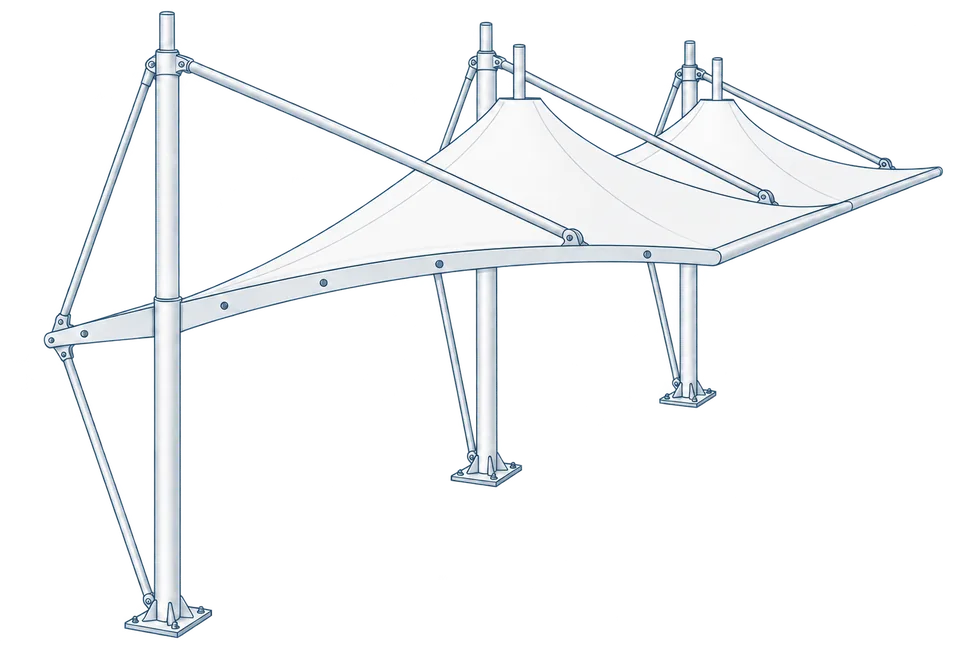
 Membrane carportsClassic membrane shelters→
 Solar carportsParking meets green energy→
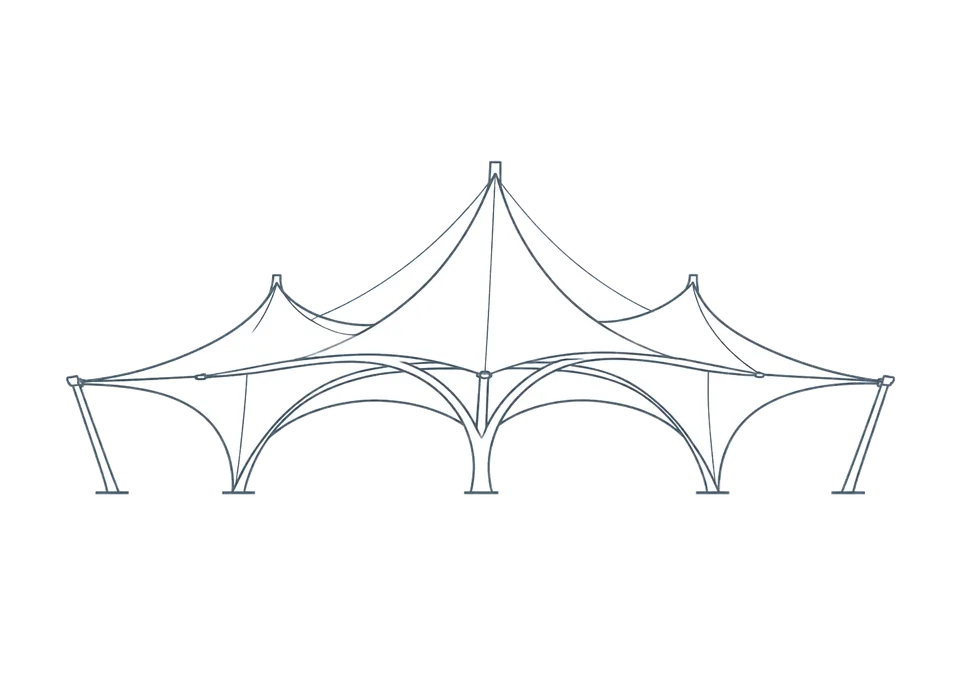 Landscape canopiesParks and leisure spaces→
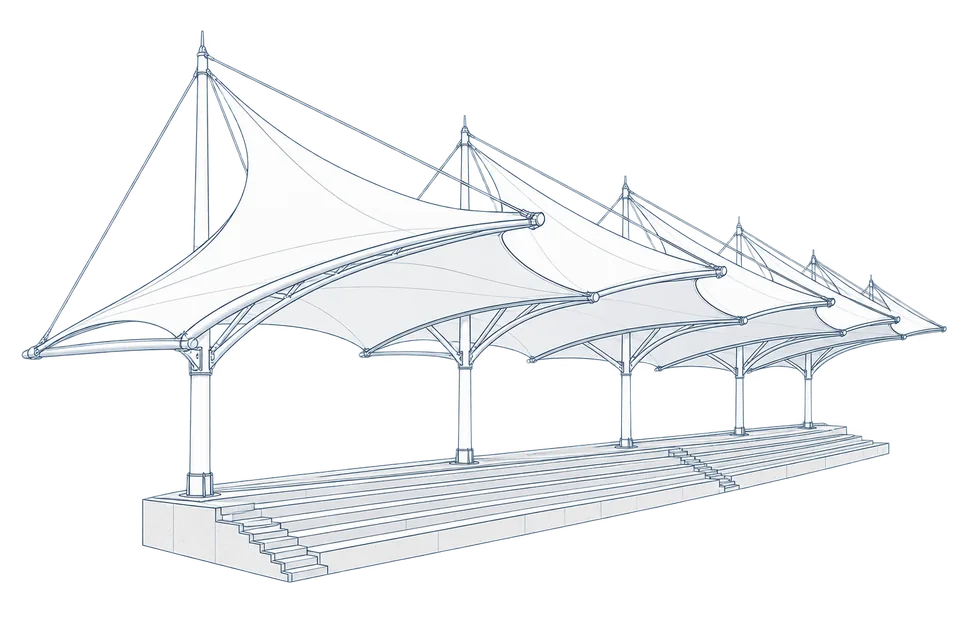 Grandstand canopiesSports venue shelters→
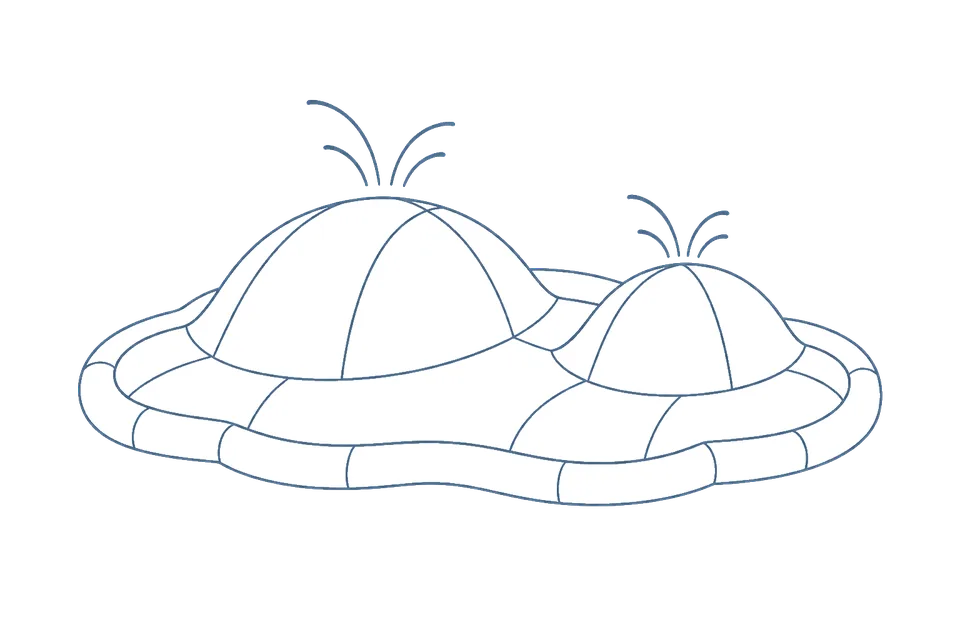 Inflatable play cloudsFamily play areas→
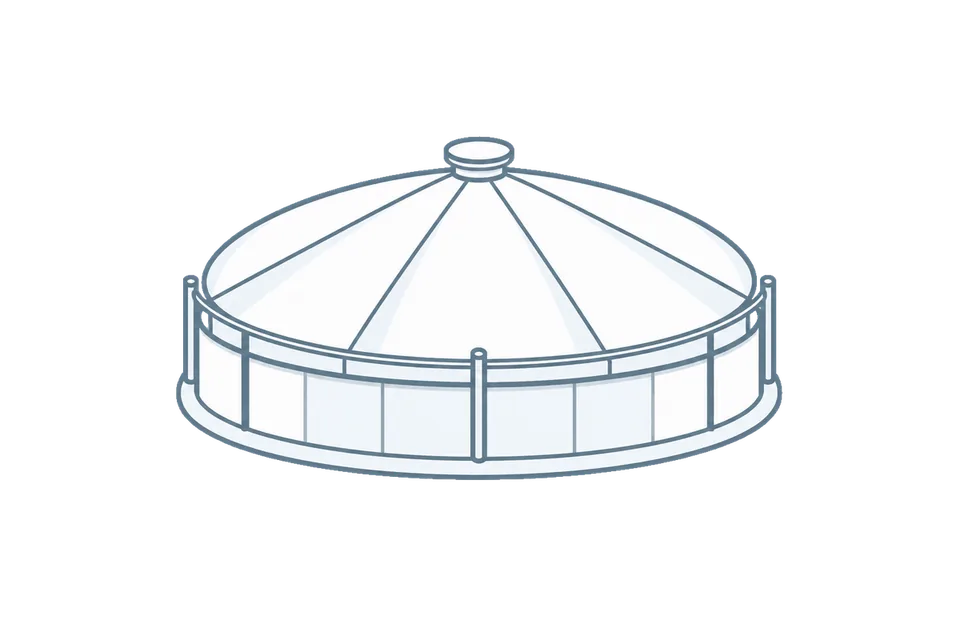 Wastewater coversEnvironmental infrastructure→
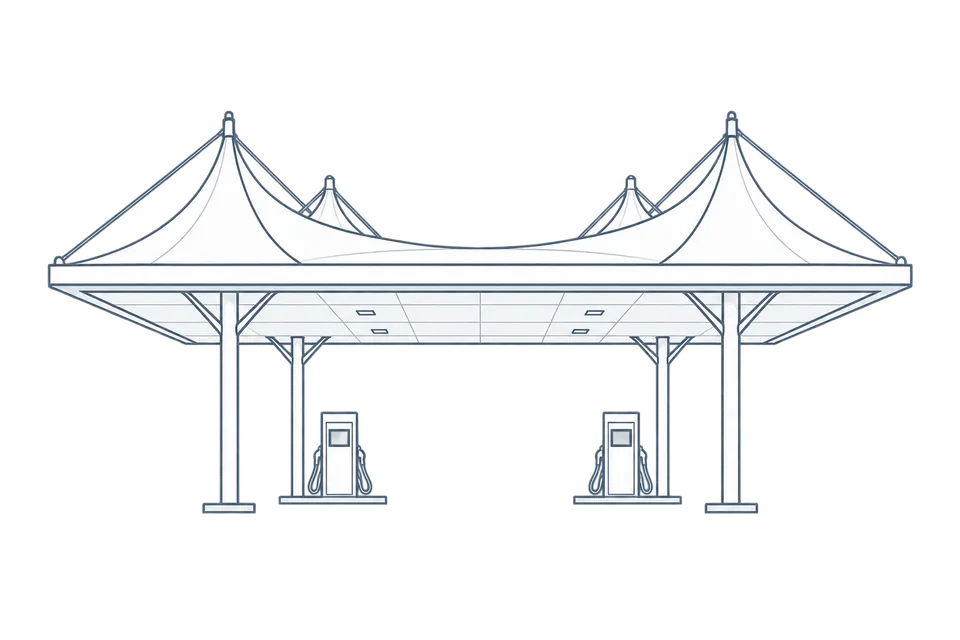 Fuel station canopiesStation shelters→
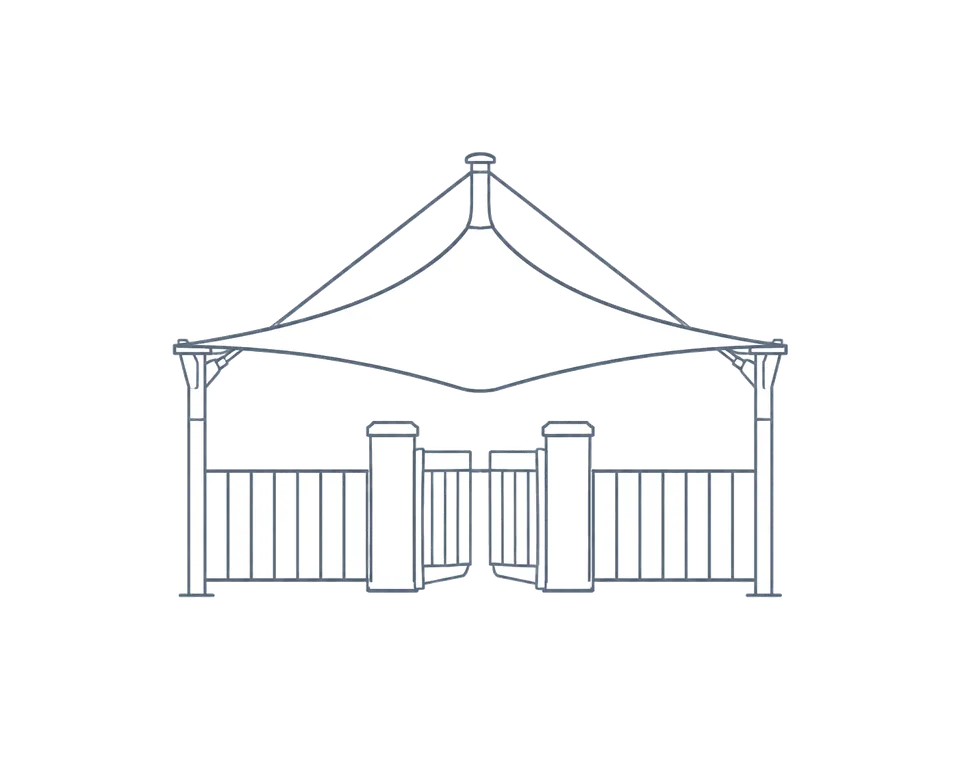 Entrance canopiesWalkways and entrances→
01
Crown section and total height

CARPORT GUIDE
One-sided forms and rods
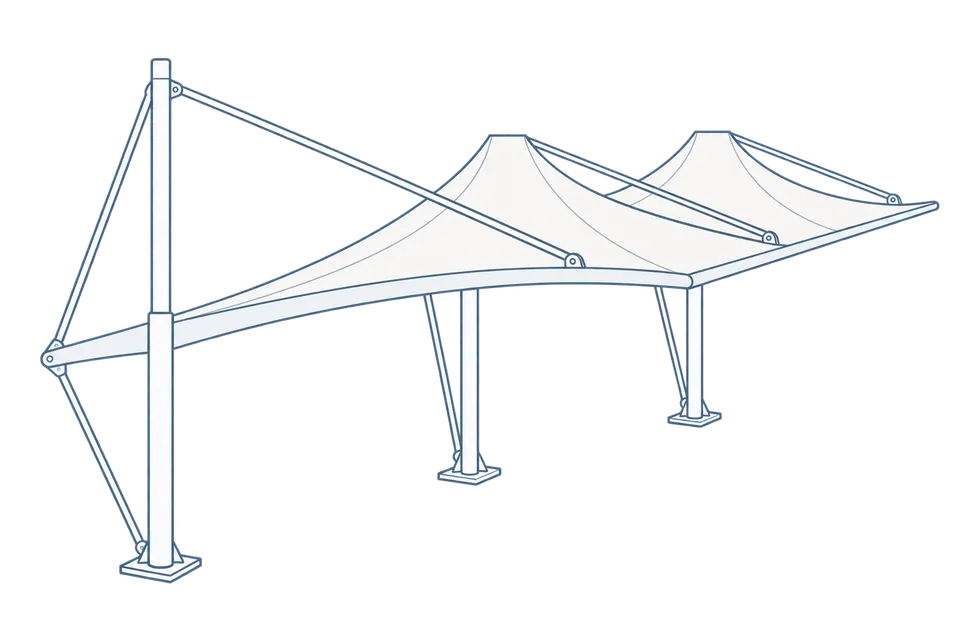
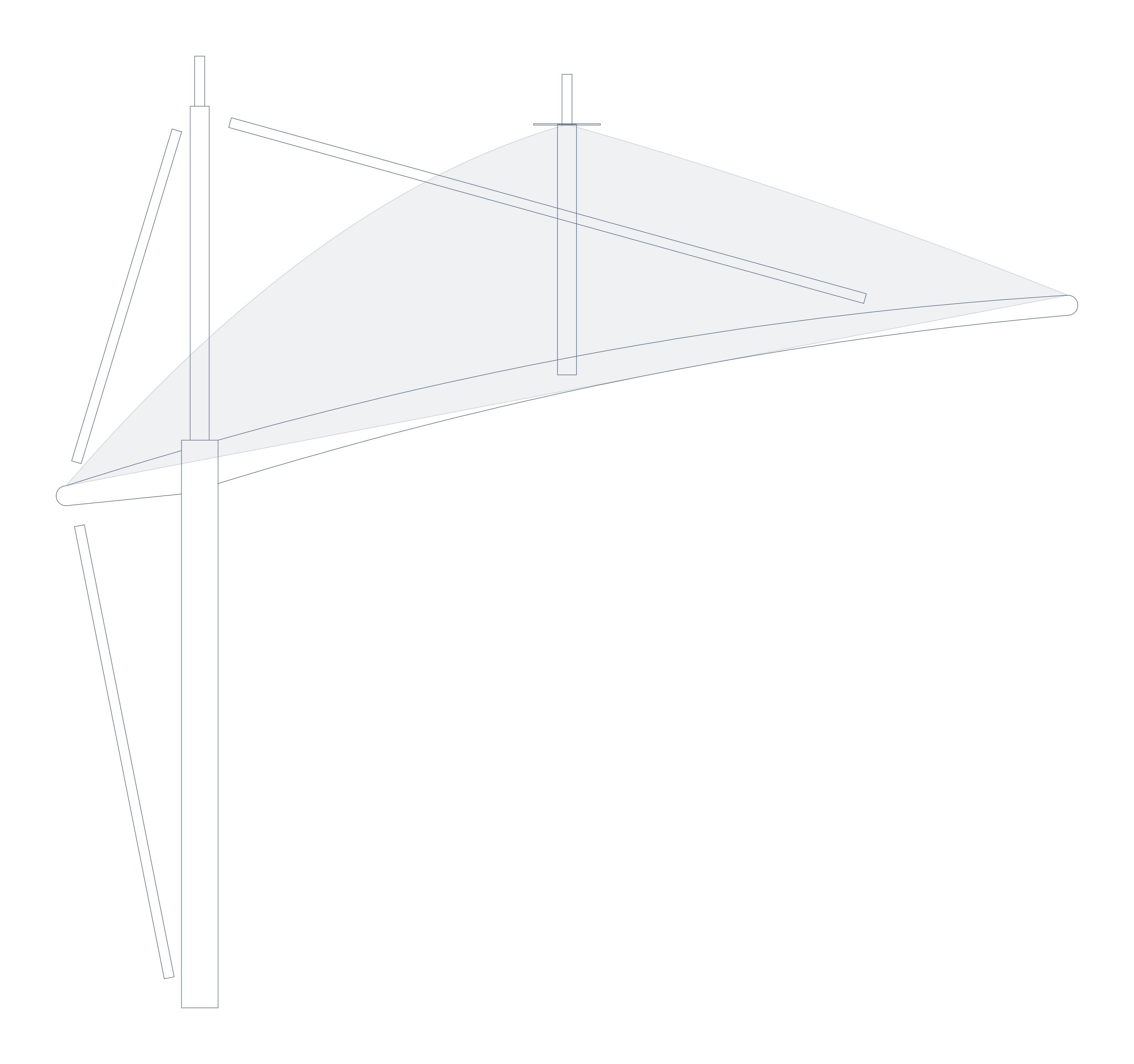
A raised crown adds height variation to the tie-rod cantilever silhouette.
FORM & FUNCTION
“Raised crown” describes a roof surface lifting above the main silhouette; its high point and connections should be defined in section. The stronger profile also calls for a clearer membrane tension and drainage strategy.
Crown section and total height
Rod and high-point connections
Runoff path between high and low points
Single-row parking where a more prominent roof profile and its height fit the surroundings.
Identify crown high points, low edges, rod connections and runoff direction, plus nearby façades, trees and lights.
A basic tie-rod form emphasizes the diagonal and a simpler roof surface; the raised version needs extra detail for the lifted portion and drainage.
QUESTION & ANSWER
No. High and low points, edge collection and discharge must be designed together; a raised portion may add new junctions.
START YOUR PROJECT
Useful first materials for comparing a buildable canopy and an agreed work scope.
CONTINUE EXPLORING