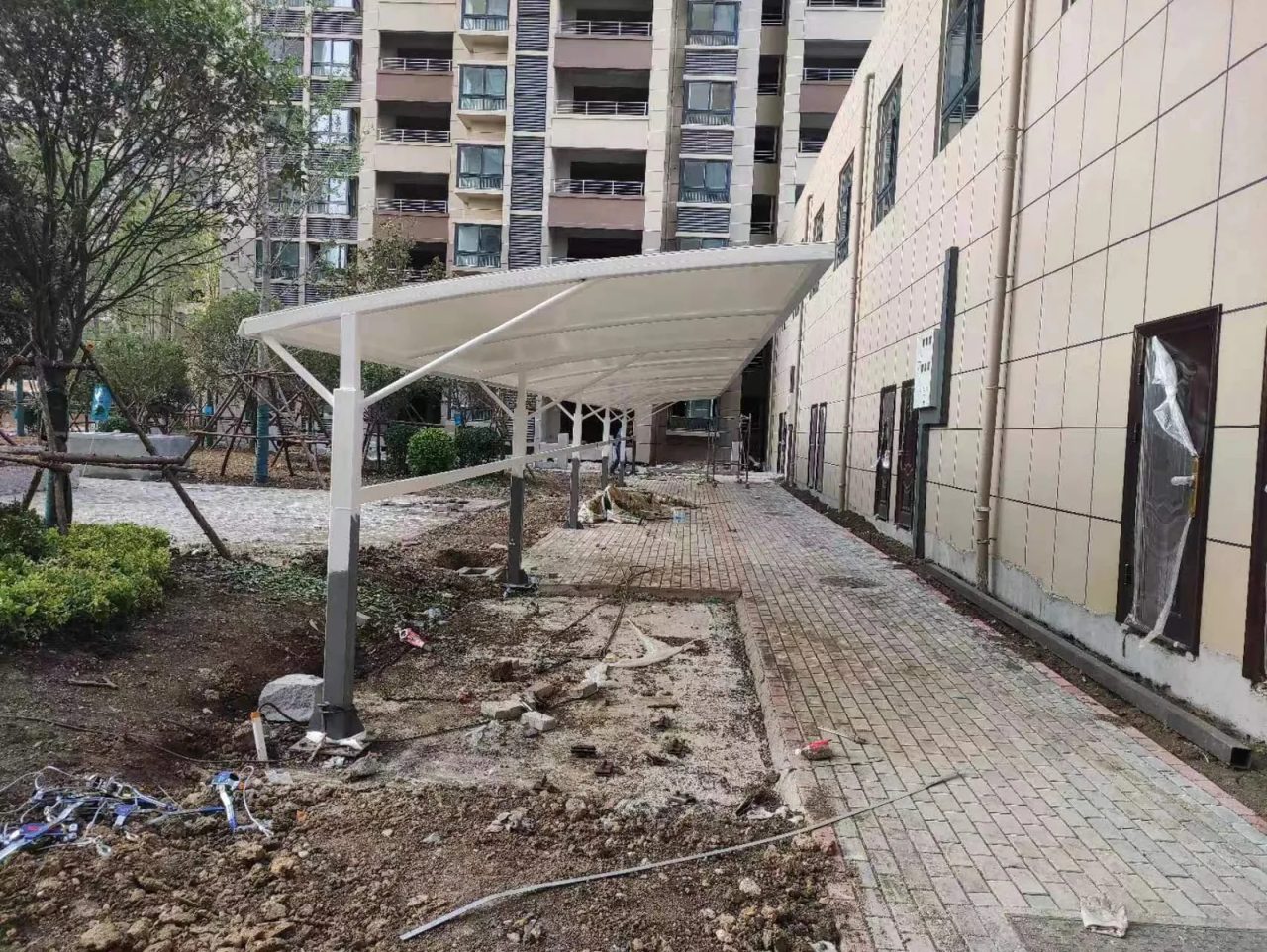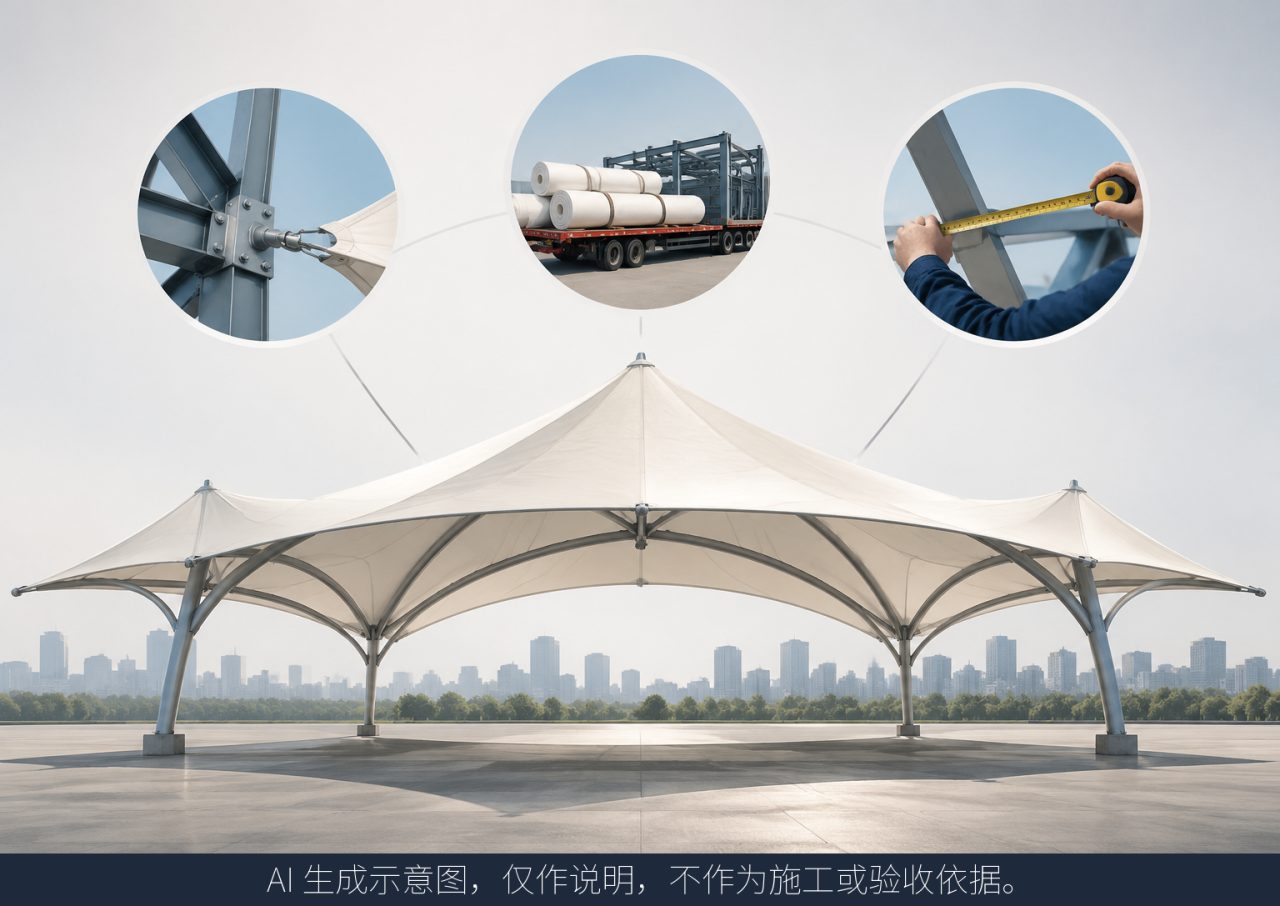
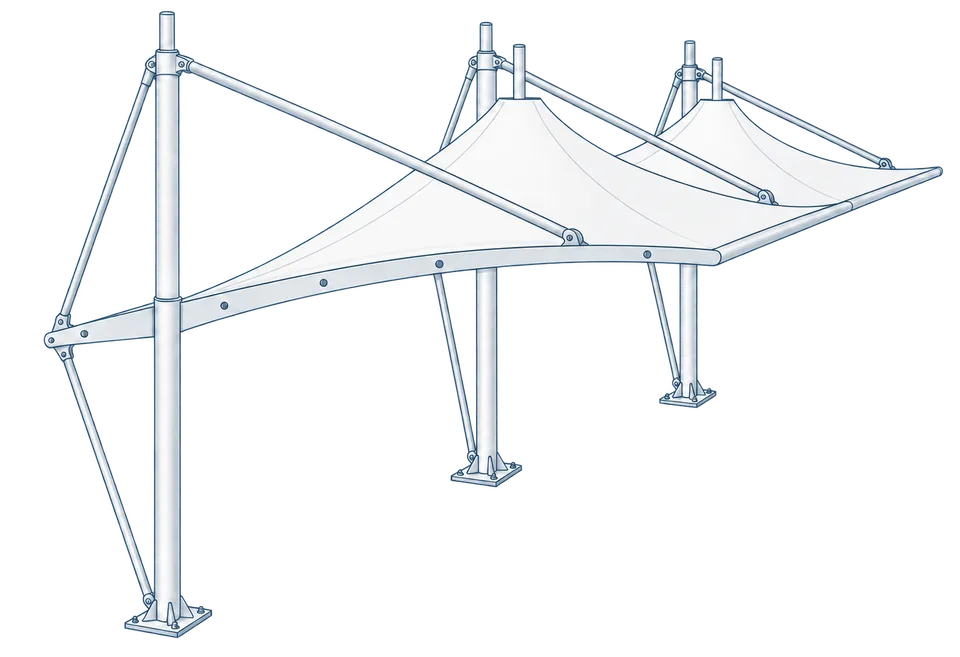
 Membrane carportsClassic membrane shelters→
 Solar carportsParking meets green energy→
 Landscape canopiesParks and leisure spaces→
 Grandstand canopiesSports venue shelters→
 Inflatable play cloudsFamily play areas→
 Wastewater coversEnvironmental infrastructure→
 Fuel station canopiesStation shelters→
 Entrance canopiesWalkways and entrances→
How to Organise Membrane Material Substitution Differences for Joint Design and Procurement Review
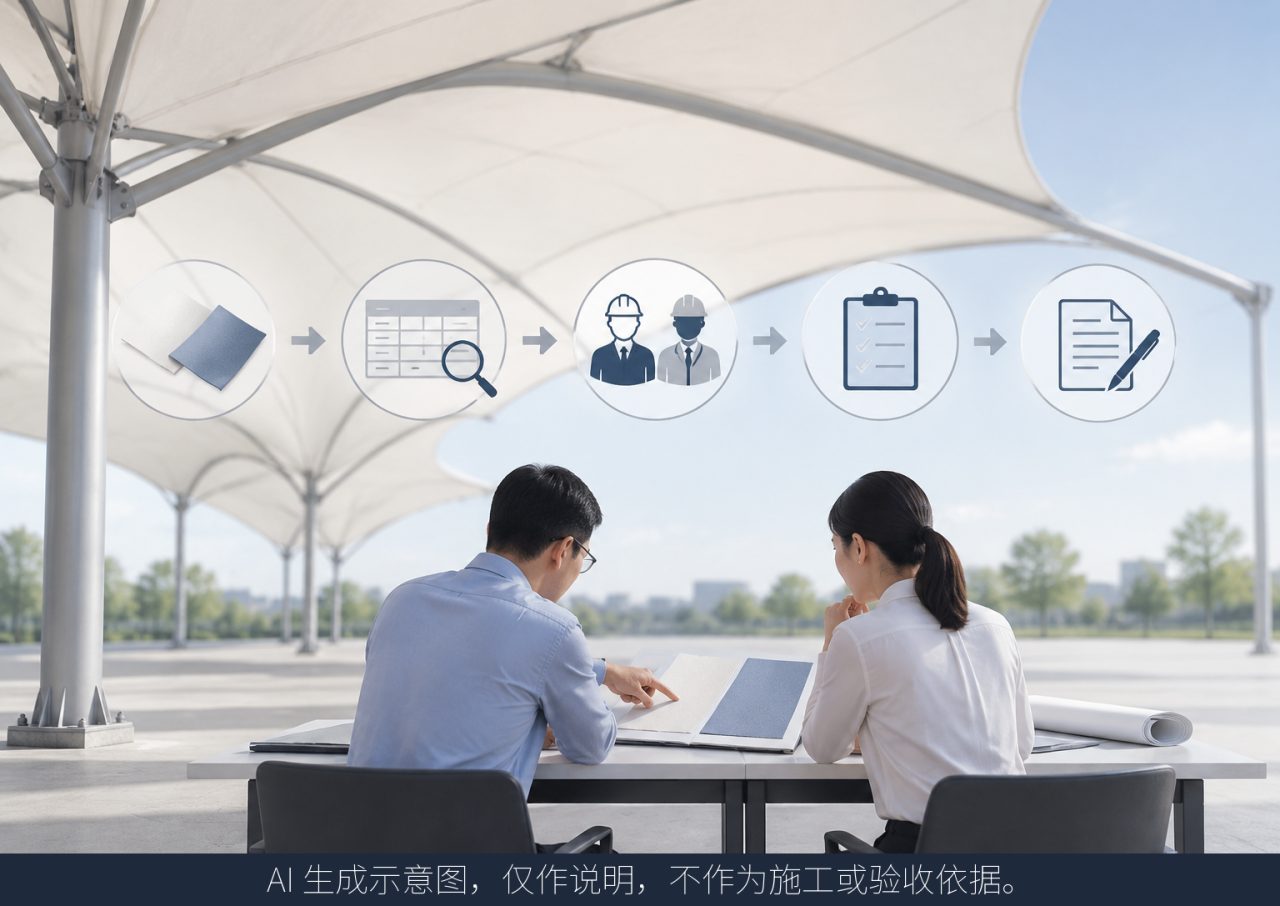
In a tensile membrane structure project, situations arise where the membrane material specified in the original design needs to be changed—say the approved scheme calls for PVDF-coated fabric but procurement wants to switch to PVC, or the reverse, an upgrade. Comparing unit price and appearance alone is not a reliable basis for the decision. The safer approach is to first lay out the parameter differences between the two membrane materials in an item-by-item comparison table, then separate which items the designer must review and which items procurement must clarify with the supplier, and have both parties confirm the selection table before the contract is signed. This article sets out what to collect and who confirms what.
1. What Parameters to Collect When Comparing Substitute Membrane Materials
When organising a membrane substitution proposal, collect the following categories item by item; if any one is missing, judgement later becomes impossible:
- Base fabric and coating structure: Is it PVC-coated fabric, PVDF-surfaced fabric, or PTFE glass-fibre fabric? These three families differ significantly in weight, flexibility and fabrication methods—they are not like-for-like swaps.
- Thickness and weight per unit area: Even within the same family, membrane comes in different thickness grades, affecting cost and structural performance.
- Tensile strength: Record warp and weft directions separately. This is the input the designer needs to re-check load capacity.
- Flame retardancy: Conventional PVC membrane generally does not reach B1 flame-retardant classification. For projects with fire requirements, confirm whether the substitute material carries B1 performance, or determine the fire approach with the designer according to local fire regulations at the design stage.
- Self-cleaning performance and surface finish: A PVDF surface cleans more readily than conventional PVC, and PTFE resists dust accumulation further. This directly affects future cleaning frequency.
- Warranty period: Request written warranty terms from the membrane manufacturer. Conventional PVC membrane fabric warranties are commonly around 5 years; PVDF and PTFE warranty terms differ, so state the starting conditions and coverage of each in writing.
- Welding and fabrication requirements: Different membrane materials require different heat-welding temperatures and lap widths. Original fabrication parameters may not apply after substitution—confirm this with the fabricator.
When collecting this information, request original test reports or scanned copies directly from the membrane supplier. Do not judge from a single line item name on a quotation.
2. Which Differences the Designer Should Review First
Not every difference is procurement's call. The following items affect structural safety and should go to the designer for review before the specification is locked:
- Changes in tensile strength: If the substitute membrane's strength falls below the original design values, cutting patterns and structural verification must be recalculated. Only the designer can do this.
- Changes in membrane weight: Self-weight changes alter load distribution to cables and steelwork; long-span projects especially need re-checking.
- Flame-retardant classification: If the fire strategy fixed at design stage assumed a particular membrane, any substitution must be re-verified against local fire requirements.
- Cross-category substitution (e.g. fabric to ETFE cushions): The support method and edge detailing all change. This is a new selection exercise, not a simple substitution.
3. What Procurement Should Clarify with Suppliers Before Signing
Once the design review is passed, procurement should clarify the following with the membrane supplier and fabricator before confirming:
- Which specific model, thickness and surface finish the quotation covers, with the test report reference number attached.
- Who issues the warranty—the membrane manufacturer, the fabricator, or the overall contractor—and whose name appears on the warranty certificate.
- Whether welding and cutting parameters have been re-adjusted for the substitute material, and whether the fabricator has worked with that material before.
- Supply lead time and re-supply conditions: if membrane panels are damaged later, can the same batch still be sourced?
4. Check Suitability Against the Project's Own Conditions
Whether a substitution is workable also depends on the project itself:
- Use and fire requirements: For EV-charging canopies or projects with public assembly scenarios, B1 flame retardancy is often a condition fixed at design stage. The substitute material must meet it—no downgrading after the fact.
- Intended service life: For a project intended to last more than ten years, substituting conventional PVC for PVDF or PTFE lowers initial cost, but the differences in self-cleaning and lifespan should be weighed openly by the owner—not decided on price alone.
- Local wind and snow conditions: Membrane strength values should be checked against local wind and snow loading. Span and form affect the safety margin required.
- Form and span: Large-span tensioned curved forms demand more from the membrane; smaller structures such as carports have more margin, so substitution room differs accordingly. (For bicycle parking, the same logic applies to a bicycle shelter, scaled to its span and use.)
5. Who Confirms the Completed Selection Table
The recommended practice is to turn the collected parameters into a comparison table listing every difference between the original membrane and the substitute, then:
- Route items involving loads, fire and structural behaviour to the designer for sign-off;
- Route items involving model, warranty, supply and fabrication method to procurement, confirmed after checking with suppliers;
- Once both sides have confirmed, write the selection conclusion and itemised warranties into the contract annex.
We recommend writing warranties into the contract item by item: the membrane fabric warranty period, who issues it, and what it covers, stated separately. This avoids the familiar situation of 「a warranty exists, but no one can find who issued it.」 For the specific parameters involved in membrane selection, see our membrane material selection service page. To discuss a specific project, please prepare the intended use, dimensions or available drawings, and the scope of services you would like to engage us for—design coordination, custom fabrication or component supply—so we can review the scope and give targeted selection input.