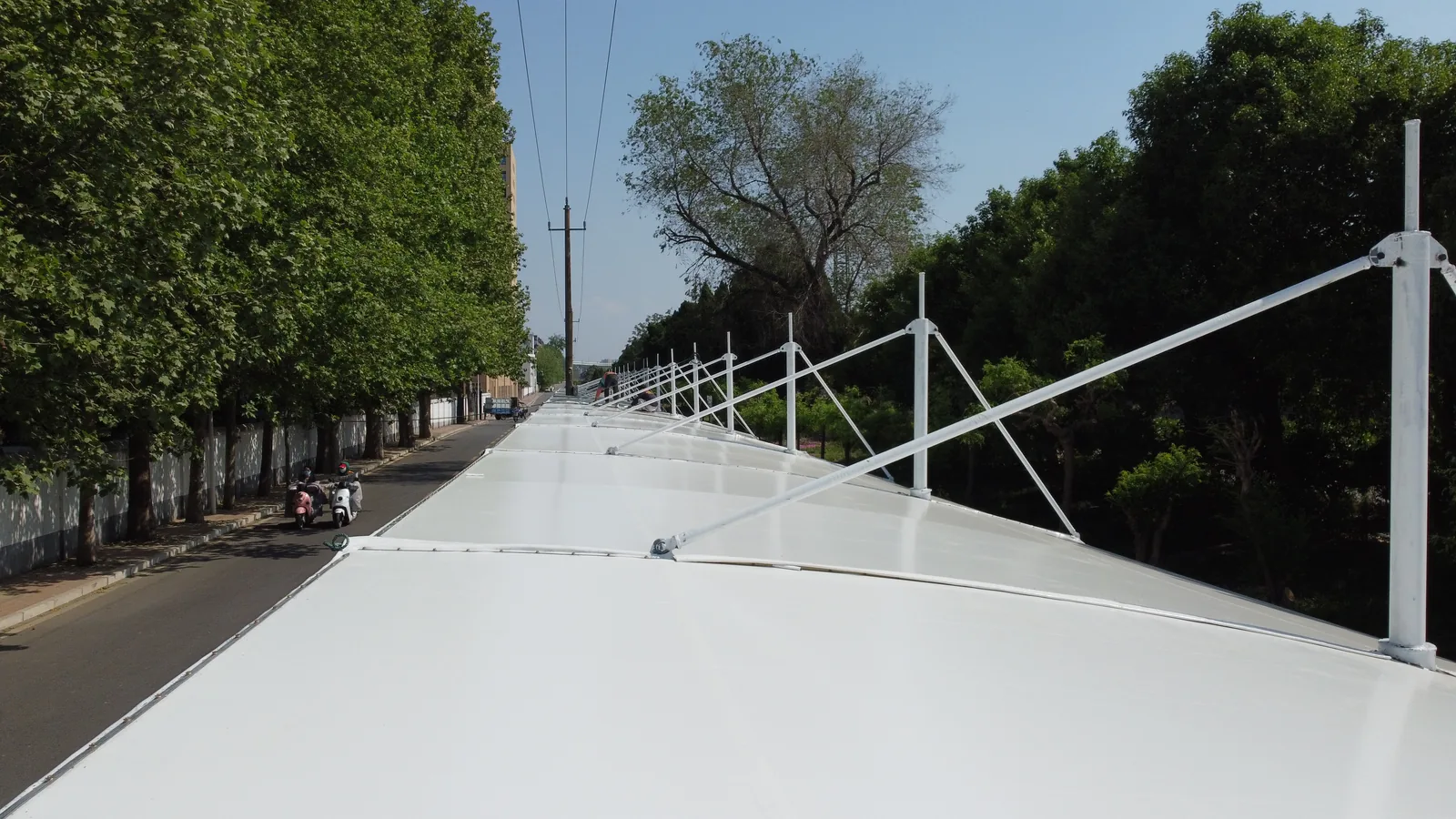
 Membrane carportsClassic membrane shelters→
 Solar carportsParking meets green energy→
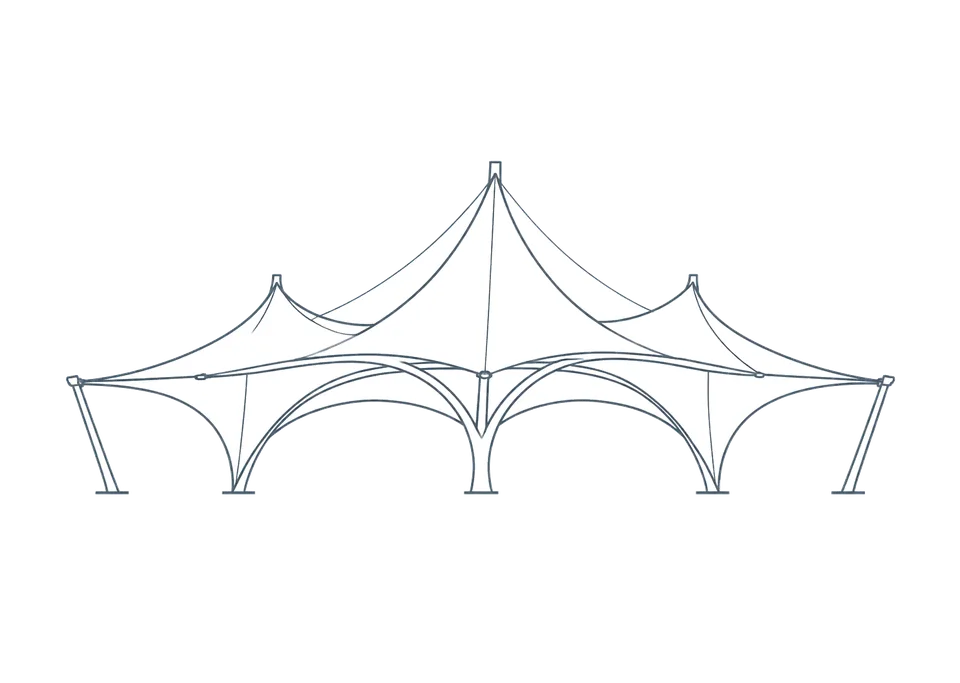 Landscape canopiesParks and leisure spaces→
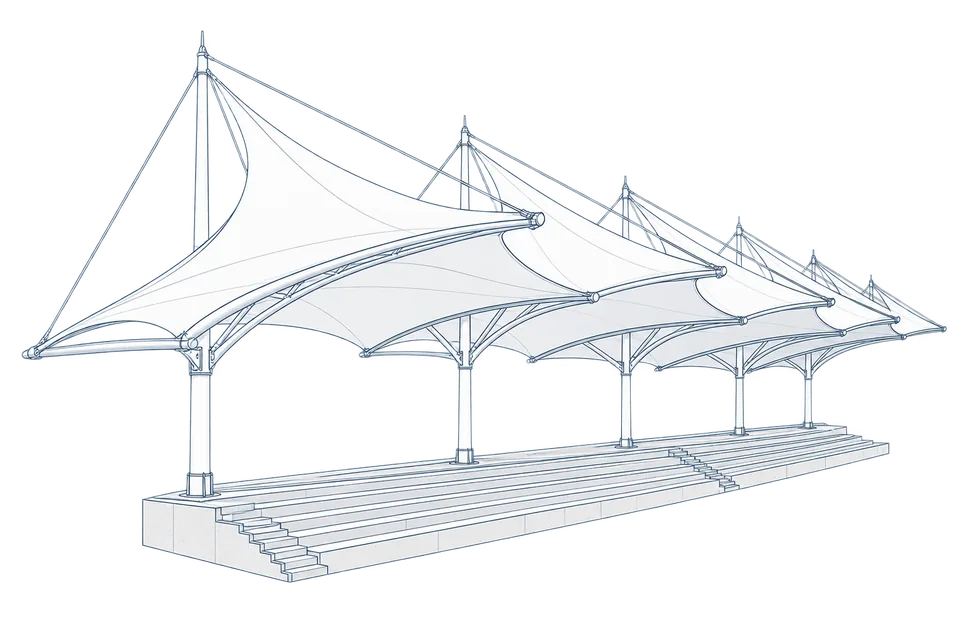 Grandstand canopiesSports venue shelters→
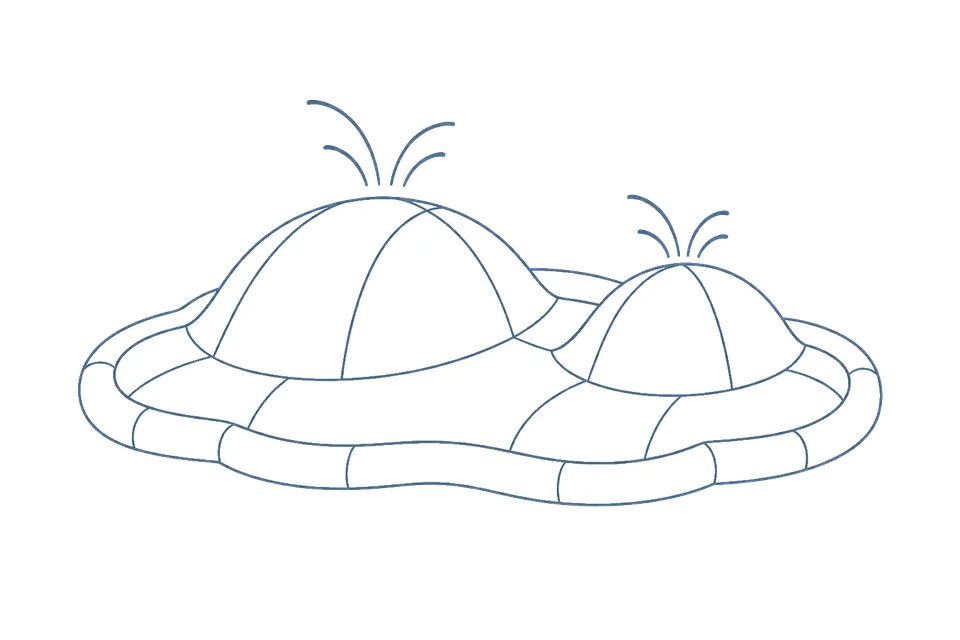 Inflatable play cloudsFamily play areas→
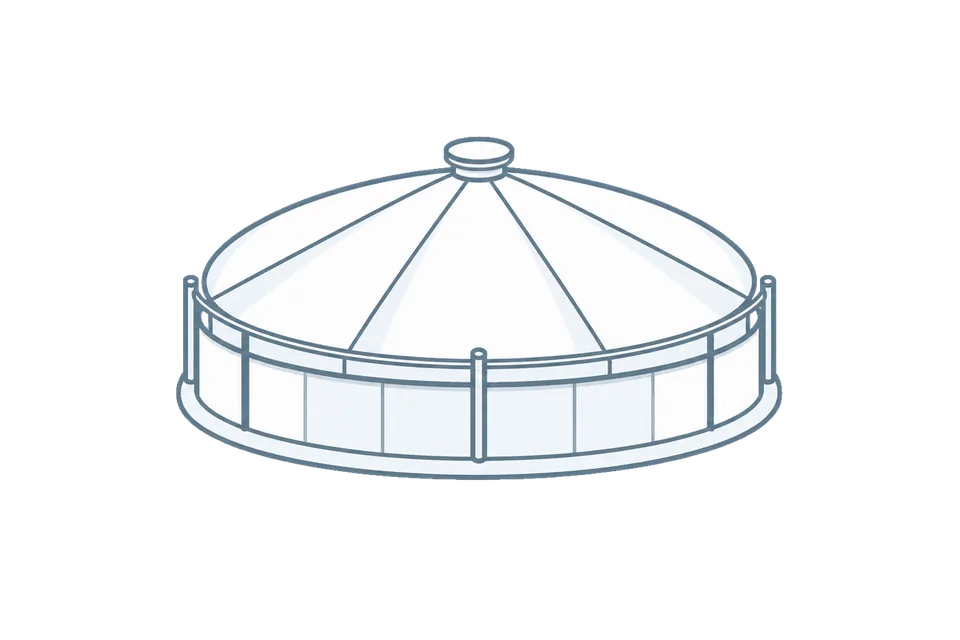 Wastewater coversEnvironmental infrastructure→
 Fuel station canopiesStation shelters→
 Entrance canopiesWalkways and entrances→
Membrane and Steelwork: Separate Procurement or Single-Source Supply? Key Interfaces to Compare First
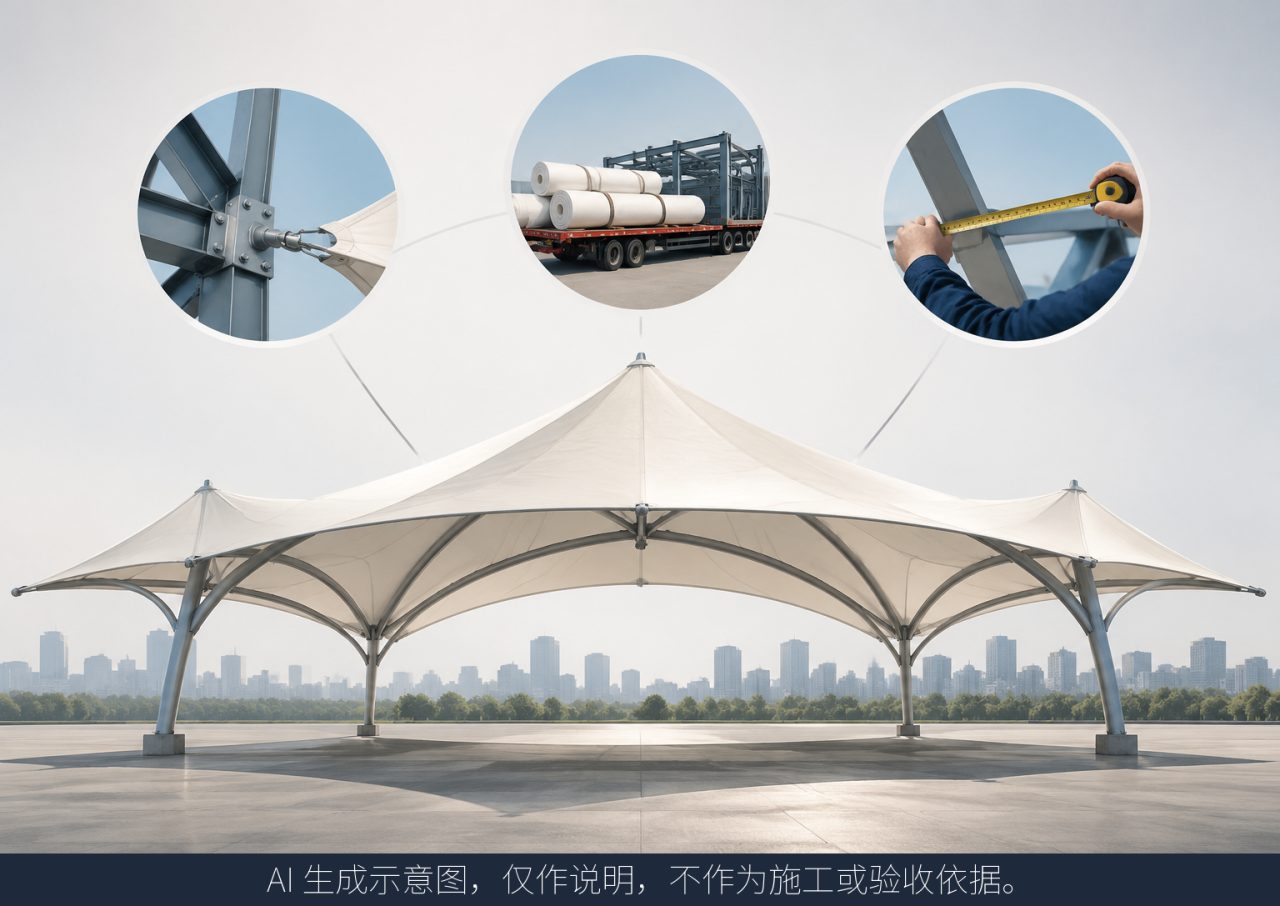
For a tensile membrane structure, buyers can procure membrane fabric and steelwork separately, or place both with one fabricator under a single supply scope. Either route can deliver a successful project — the real difference is not price, but who coordinates the interfaces. Membrane panels and steel frames come from two different fabrication systems: the membrane is tensioned and fixed onto the steel frame, and three interfaces — connection detailing, delivery sequencing, and dimensional verification — will stall the site if nobody takes the lead. This article compares them so buyers, contractors and project managers can decide before committing to a procurement route.
Interface 1: Who coordinates the connection and tensioning interface
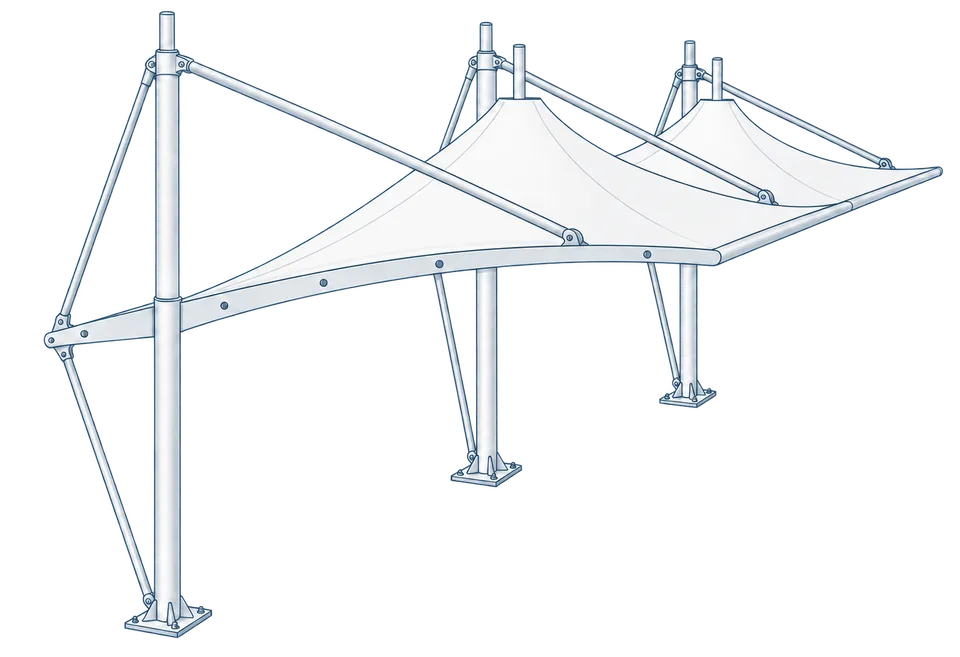
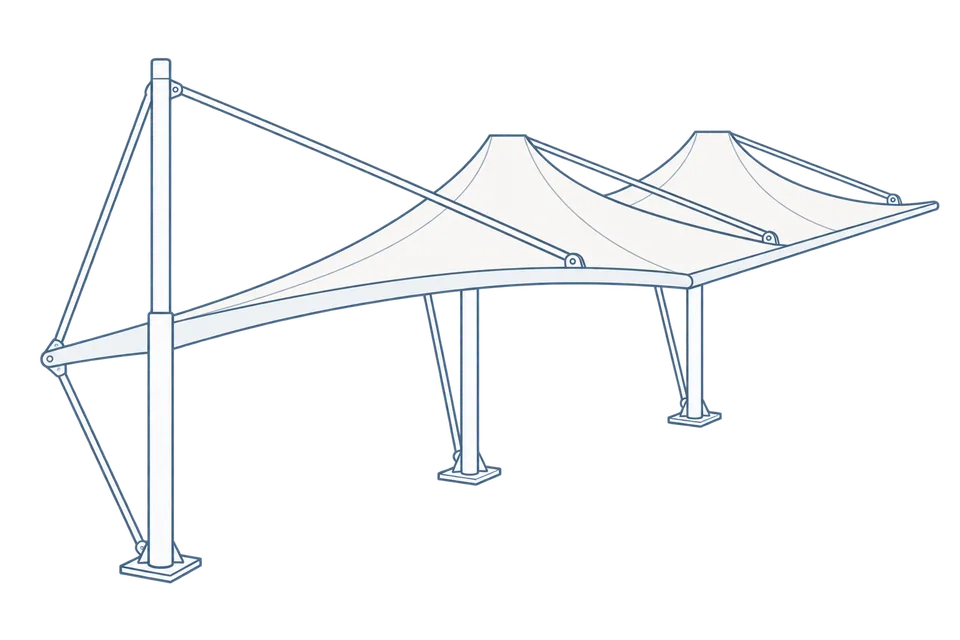
The membrane canopy connects to the steel frame through corner plate details, clamps and tensioning components. Membrane panel cutting patterns are derived from the steel frame's actual fabricated dimensions and the specified pretension. If membrane and steelwork are fabricated by two separate suppliers, one party must own the detailed design: gusset plate positions, bolt holes, membrane corner angles and tensioning travel must all be aligned in one coordinated set of shop drawings.
- Single-source supply: detailed design, membrane panel cutting and steel fabrication run in one workflow. The tensioning interface is closed out at the drawing stage, so panels and frame arrive matched to the same numbering system for installation.
- Separate procurement: the owner or main contractor must designate one party to lead the detailed design, and specify in the contract which drawings the membrane fabricator cuts to and which nodes the steel fabricator drills to. If this is not locked down in the contract, each supplier follows its own conventions — and mismatched components on site are a common outcome.
Interface 2: How delivery sequencing is agreed
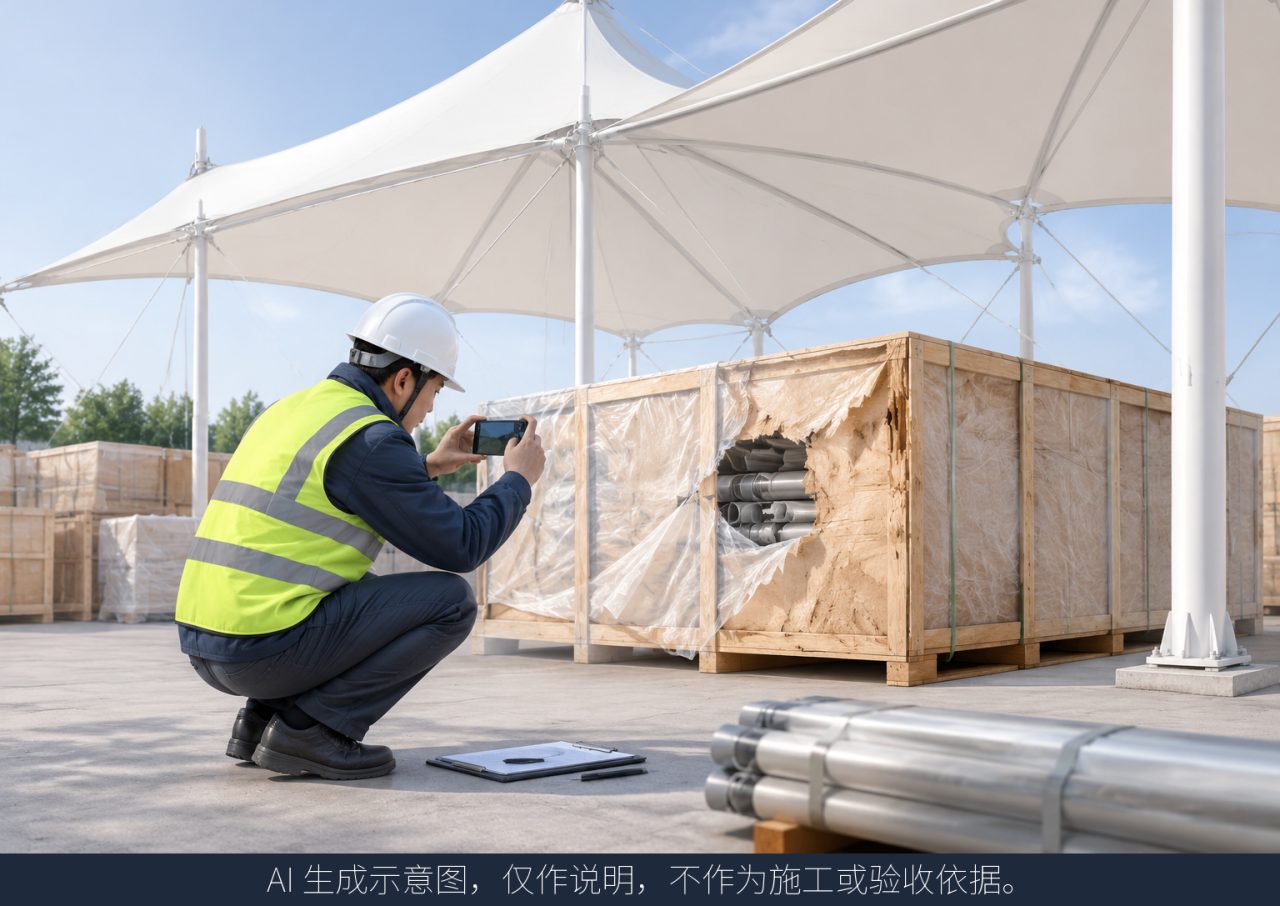
Installation typically means erecting the steel frame first, then fitting the membrane. Steel arriving before membrane is the normal rhythm, but the gap must be planned: after the frame arrives on site there is survey verification, touch-up coating and other work before it is ready. Membrane panels that arrive too early occupy storage space and increase the risk of surface damage.
- With separate procurement, the two suppliers' production schedules are invisible to each other. The owner must specify: how many days after steel acceptance the membrane arrives, and whether the frame will be ready for membrane installation at that point.
- With single-source supply, sequencing is handled by one party's production planning. The buyer only needs to confirm the delivery milestone and the site conditions that must be in place (foundation strength, site access, lifting space).
Interface 3: Who verifies dimensions when things do not fit
This is where separate procurement most often leads to disputes. If a membrane panel does not fit the frame, the cause could be steel fabrication tolerance, panel cutting tolerance, or site installation error — and each party may argue its case.
The safer approach is to agree in advance:
- After the steel frame arrives and before membrane installation, the installing party performs a dimensional check — measuring node spacing, diagonals and embedded plate positions — and records the results;
- When membrane panels arrive, they are checked against the packing list and drawings for panel numbering and dimensions;
- If a discrepancy is found, the recorded measurements identify which stage caused it, and the responsible supplier handles the correction.
Without this verification record, responsibility is very hard to establish afterwards. The same check applies under single-source supply — but since the responsible party is the same company, the resolution path is shorter.
Which route suits which conditions
Single-source supply suits buyers who have no dedicated engineering management team and want detailed design, membrane fabrication, steel fabrication and installation coordinated by one party — typical for smaller projects, tight schedules, or limited site coordination resources. Qingsong Membrane Structures works this way: its own fabrication facility produces both steelwork and membrane panels, and installation is carried out by its own crew, with the tensioning interface unified at the detailed design stage.
Separate procurement suits buyers who have a design institute or engineering consultant leading the detailed design, and site management capacity to monitor delivery and verification — or projects where the steelwork is already procured by the main contractor and only the membrane is separately subcontracted. In this route the owner carries the interface coordination, so the three interface clauses above must be written into both contracts, with consistent technical language across both.
Neither route is inherently better; the choice depends on who bears coordination responsibility and whether they have the capability to do it.
Interface clauses worth writing into the contract
Whichever route you choose, consider covering the following in the contract:
- Which party issues the detailed design, and which drawing revision governs cutting and drilling;
- Delivery milestones for membrane and steelwork respectively, and the site conditions required before membrane installation;
- Who performs on-arrival dimensional verification, the record format, and the correction deadline when discrepancies are found;
- Separate warranty scope and duration for membrane and steelwork, and which material or workmanship issues each covers;
- Whether the installation scope includes tensioning adjustment and membrane tension acceptance, or ends at delivery to site.
Design responsibility and supply boundaries
Design responsibility, code compliance under local building regulations, and the exact supply scope — fabrication only, supply with drawings, or design-build with installation — are matters to be agreed between the buyer, their project engineer and the supplier before contract. If you are sourcing from overseas, also clarify what documentation you will receive (shop drawings, material certificates, packing lists) and how the supply scope hands over to your local installer.
If you are comparing procurement routes for a carport, bicycle shelter or other membrane canopy, share your project's intended use, approximate dimensions or available drawings, and the scope you wish to entrust (fabrication and supply only, or including design and installation). We can advise which arrangement suits your project conditions; pricing is determined by survey and scheme design. See our custom fabrication service page for the scope we offer.