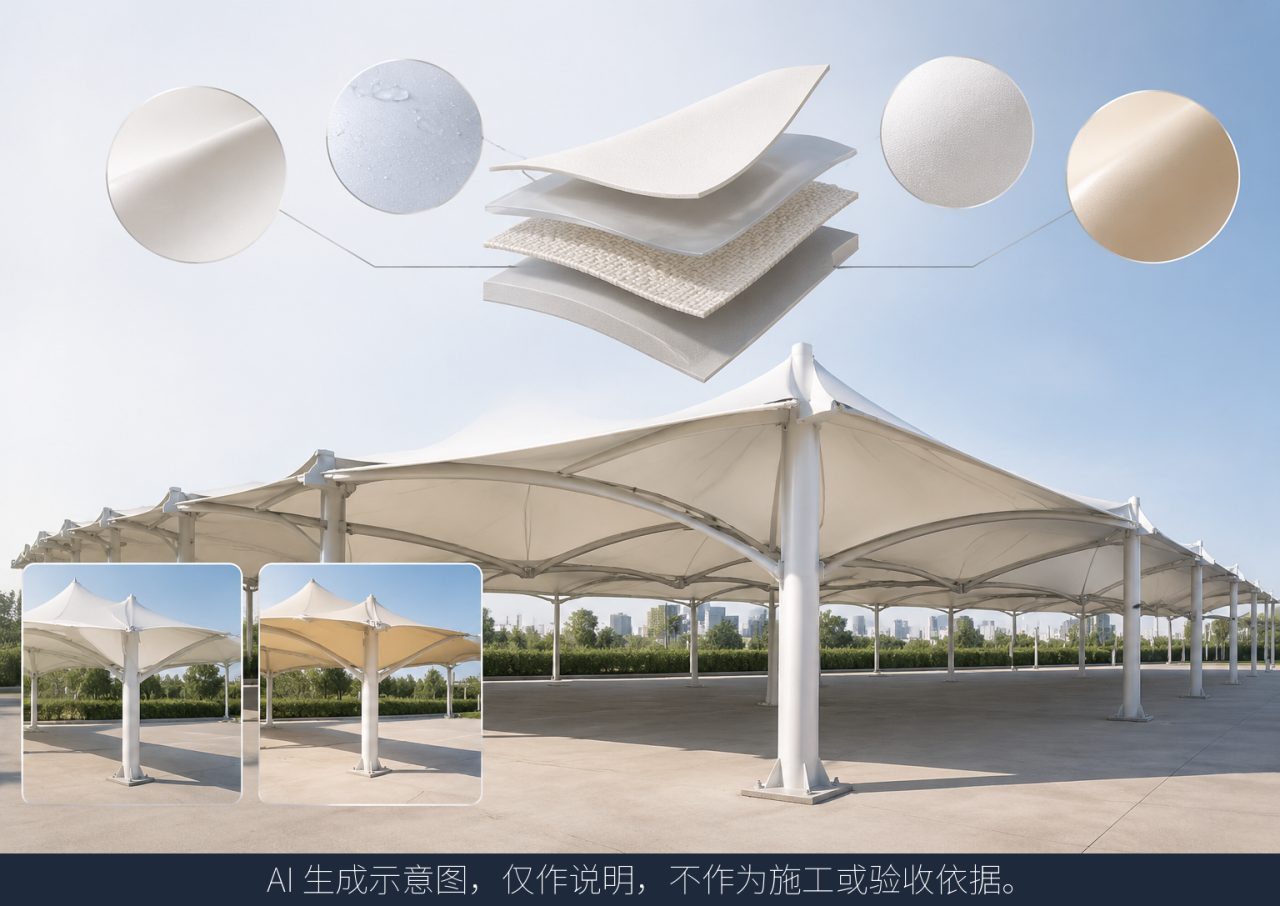
 Membrane carportsClassic membrane shelters→
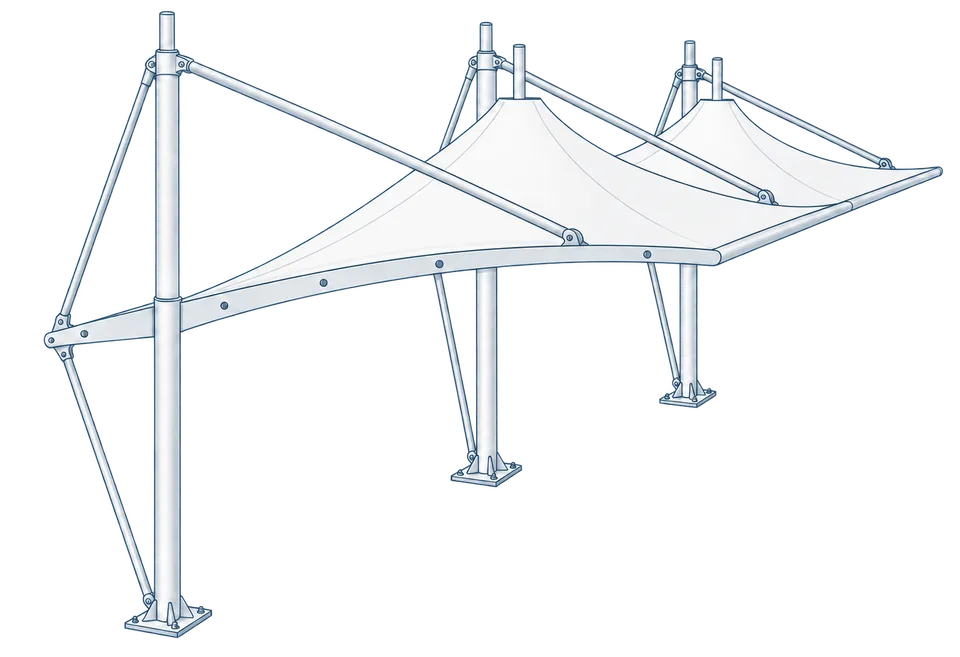
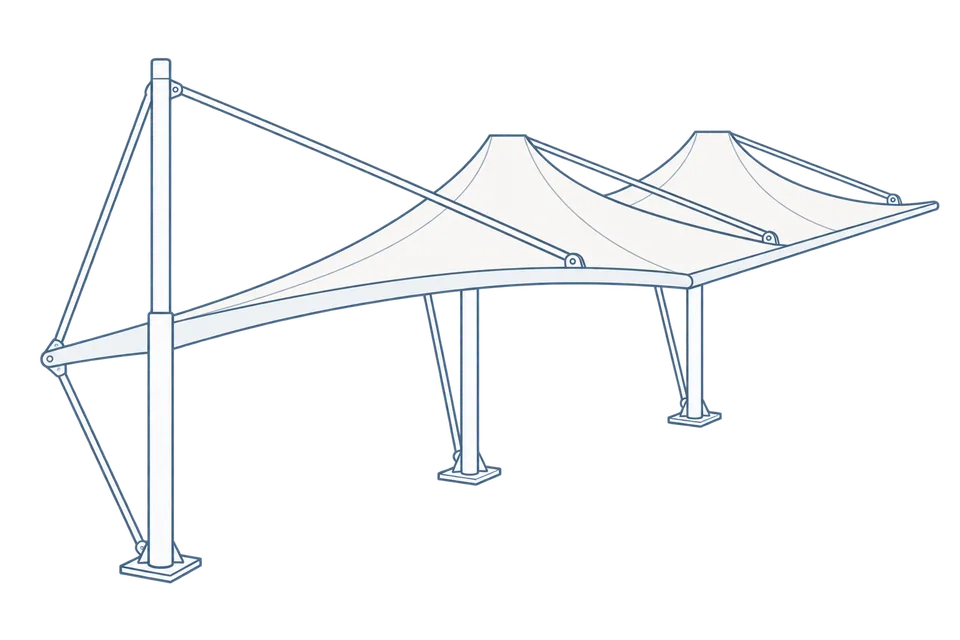 Solar carportsParking meets green energy→
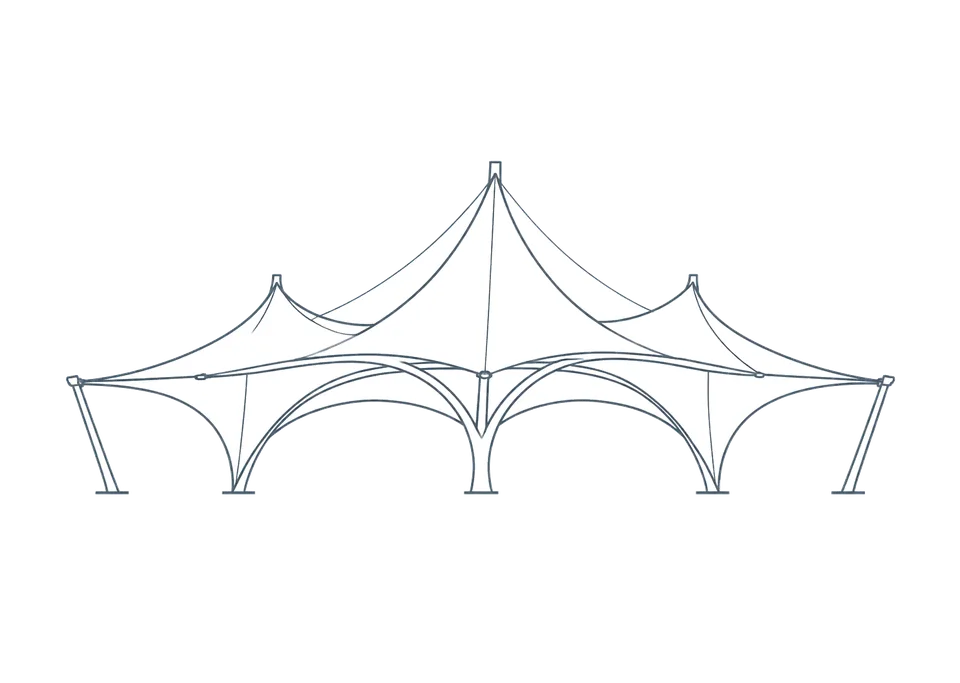 Landscape canopiesParks and leisure spaces→
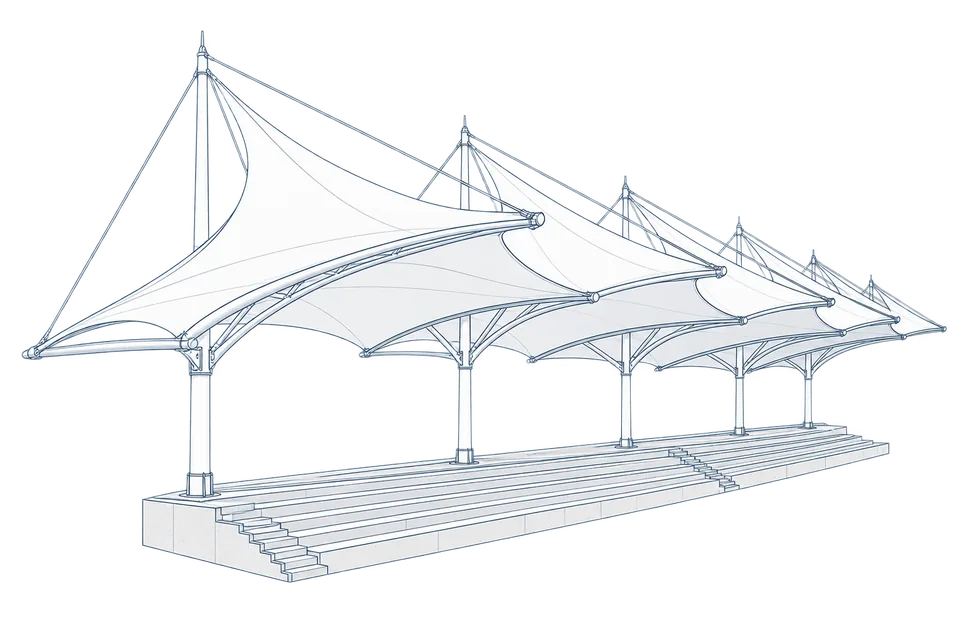 Grandstand canopiesSports venue shelters→
 Inflatable play cloudsFamily play areas→
 Wastewater coversEnvironmental infrastructure→
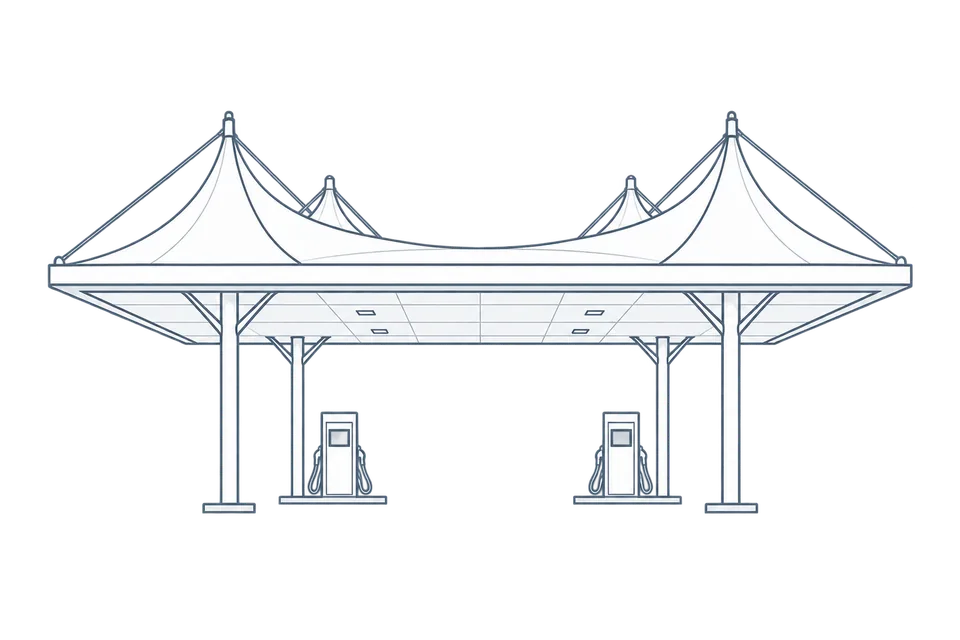 Fuel station canopiesStation shelters→
 Entrance canopiesWalkways and entrances→
Why Plan Membrane Replacement at the Design Stage of a New Tensile Membrane Structure?
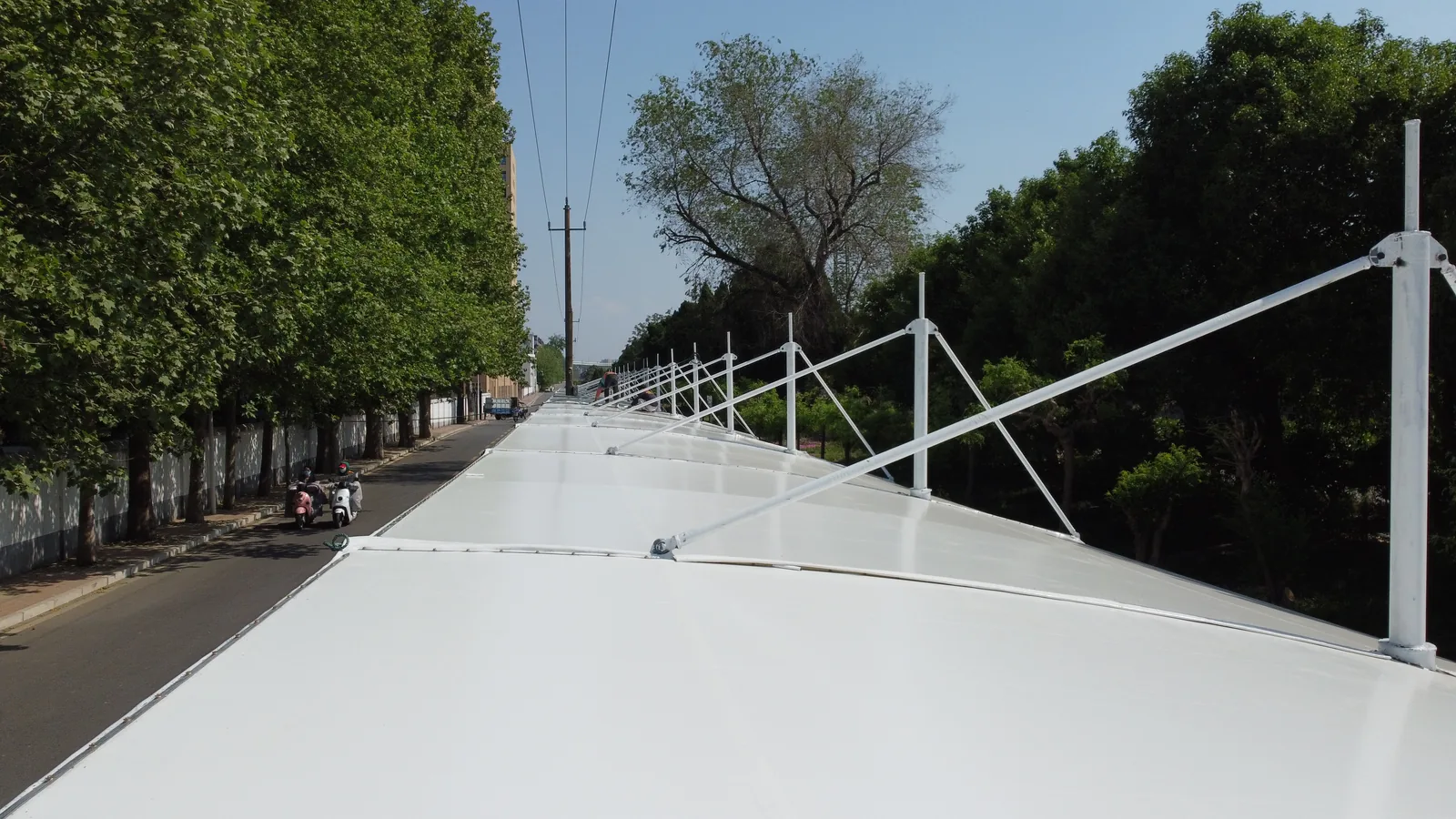
The effective service life of architectural membrane fabric is generally shorter than that of the supporting steel structure. A tensile membrane structure designed as a permanent building will most likely undergo one or more membrane replacements during its lifetime. This is not a sign of poor membrane quality — the two materials simply age at different rates. That is why a new project should treat membrane replacement as a planned stage right from the drawing phase, rather than improvising once the membrane surface has aged.
Why the membrane surface and the steel frame age differently
The membrane surface is continuously exposed to sunlight, rain, temperature cycles and direct wind-induced movement. Its coating and base fabric gradually degrade — a property of the material itself. A steel frame is different: provided corrosion protection is properly applied and connections do not rust, its structural performance can be maintained for many years.
Because the two materials deteriorate on different schedules, the design service life of the membrane surface and that of the supporting structure can be determined separately: the steel frame is considered over the overall service life of the building, while the membrane is assessed individually based on material performance and local environmental conditions. The specific durations are set by the project designer based on membrane test reports and local wind and snow conditions. They vary considerably between membrane types and environments, so no general figure applies.
What to reserve at the design stage for future membrane replacement
Two things matter most:
The supporting structure must be sound independently of the membrane. The membrane provides coverage and form; the steel frame carries structural safety. The frame's strength, stiffness and stability should not depend on the presence of the membrane. If the frame remains in a safe state when the membrane is removed or fails, replacement and maintenance work becomes possible.
Connection details must allow dismantling. The joints between membrane panels and the steel frame should be designed so that panels can be taken off and reinstalled in the future. Overly enclosed details or insufficient working clearance turn membrane replacement into major rework of the original connections, with clearly higher cost and longer schedule.
What the steel frame must satisfy when the membrane fails
During the period when the membrane is damaged, aged or being replaced, the supporting structure should still maintain strength, stiffness and stability. In other words, with the membrane removed, the steel frame itself must carry loads such as wind and self-weight without instability or excessive deformation due to the loss of membrane restraint. This is also why a pre-replacement site inspection should cover the steel frame as well as the membrane — a frame affected by corrosion, deformation or loose connections will not give a new membrane a long service life either.
Handling seam waterproofing during replacement
In the standard lapping approach, upper membrane panels overlap lower ones so that rainwater runs off in the direction of the lap. During replacement, however, a locally replaced panel may not maintain this upper-over-lower direction against the existing membrane. Where a local replacement cannot achieve it, additional seam waterproofing measures are needed at the joint — for example, waterproof clamping bars or dedicated sealing treatment. This detail should be settled at the membrane-replacement scheme stage, not as a remedy after water has already penetrated.
Put replacement responsibility into the contract in advance
When signing the contract for a new project, it is advisable to specify membrane and steel-frame warranties separately: the membrane warranty follows the warranty terms issued by the membrane fabric manufacturer, while steel-frame corrosion protection and the structural portion are defined independently. It is also worth clarifying in advance the scope of services and the basis of cost for any future membrane replacement, so that the parties are not left arguing over responsibility years later.
For overseas procurement teams
If you are procuring a tensile membrane structure, a membrane canopy, a carport or a bicycle shelter from overseas, the same principles apply — but responsibilities and supply scope need to be explicitly agreed. As the buyer, you should verify with your project engineer and with the supplier:
- Who holds design responsibility for the steel frame and for the membrane, and what drawings and calculations each party provides.
- Which revision of the drawings is approved for fabrication, and how revisions are confirmed.
- Interfaces between the membrane, the steel frame and any adjacent civil works, including how connection details accommodate future membrane removal.
- Material documentation to be supplied, such as membrane certificates and steel test reports.
- The exact supply scope — fabrication only, or fabrication with packing lists and handover documentation for your local installer — since installation is typically carried out by a local contractor under your arrangement.
- Warranty terms for membrane and steelwork, and how a future membrane replacement would be quoted and supplied.
If you are planning a new project and want membrane replacement to be considered at the design stage, share your project location, intended use, dimensions and available drawings. Tell us which design coordination, custom fabrication and supply scope services you need, and we can review the scope together. For related supply conditions, see Qingsong membrane replacement services.