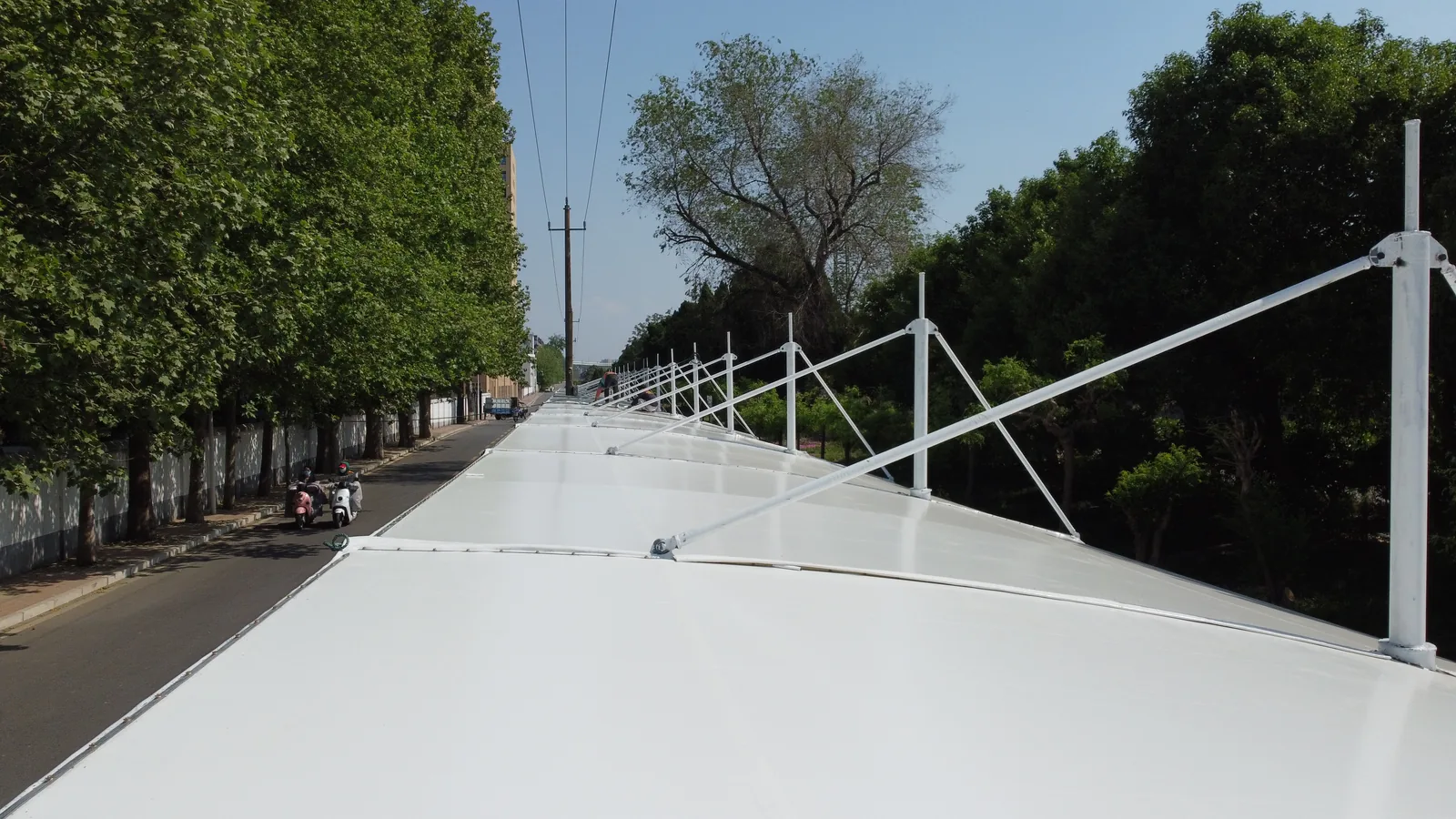
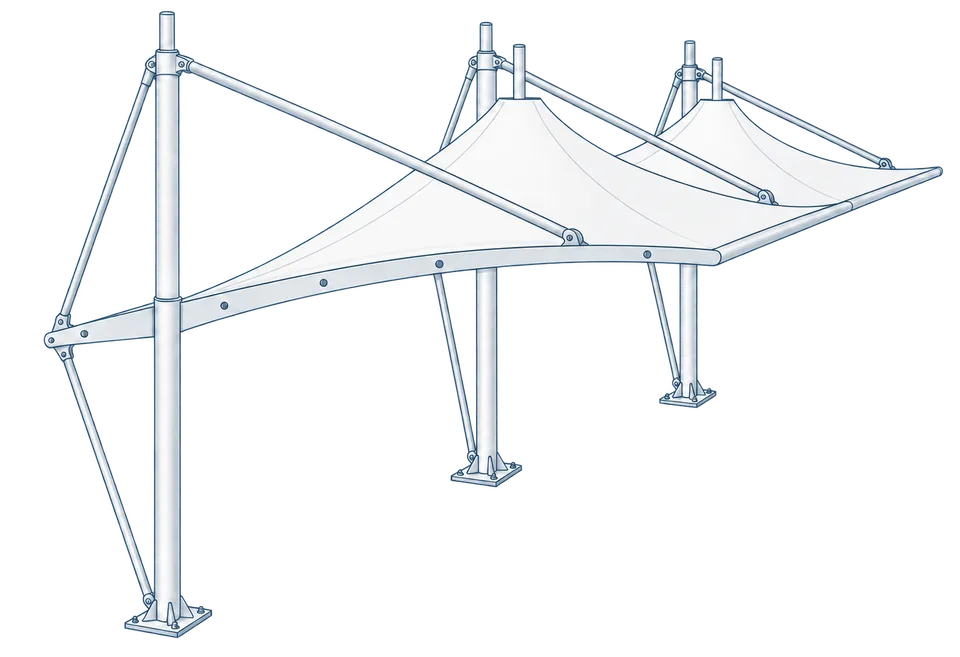
 Membrane carportsClassic membrane shelters→
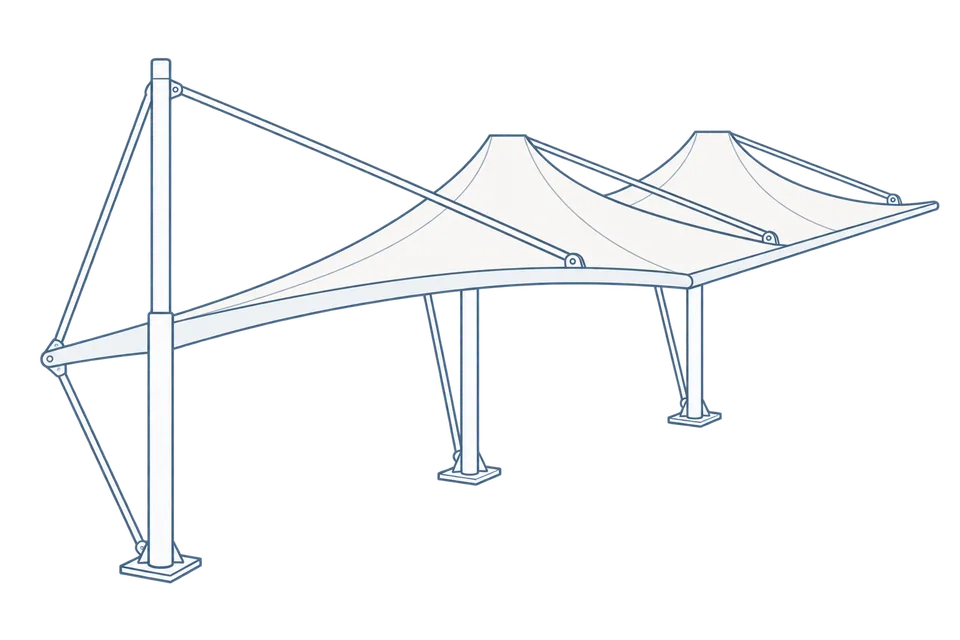 Solar carportsParking meets green energy→
 Landscape canopiesParks and leisure spaces→
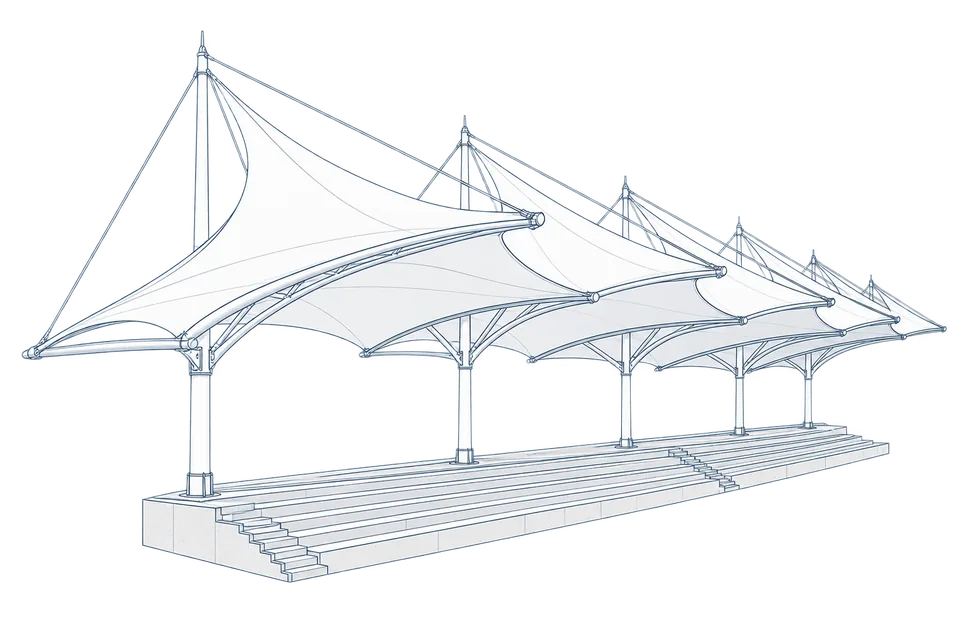 Grandstand canopiesSports venue shelters→
 Inflatable play cloudsFamily play areas→
 Wastewater coversEnvironmental infrastructure→
 Fuel station canopiesStation shelters→
 Entrance canopiesWalkways and entrances→
Changing Dimensions After Drawing Approval: How to Assess Fabricated Components and Delivery Impact
You approved the shop drawings for your tensile membrane structure, and now the dimensions need to change. Before asking the fabricator "how long will a revision take?", establish two things first: which components have already entered cutting or fabrication, and which interface dimensions the change will affect. Once these are clear, cost, documentation and delivery milestones can be re-planned in an orderly way.
Step 1: Take stock of already-fabricated components
The starting point for any change assessment is fabrication status. Ask the fabricator for a fabrication status list, itemized by component number: which items are still at detailed-drawing stage, which are cut, which are welded or coated, and which have shipped. Membrane panels deserve separate attention — membrane panels are cut on a plotter/cutting table along the patterning lines of the detailed drawings. Once cut, the material generally cannot be reclaimed, so the cutting status of membrane panels often affects change cost more than steelwork does.
The basis for this review is the component numbering system. If drawings, packing lists and installation positions have already been cross-referenced by number, the affected scope can be identified quickly. If no numbering system exists yet, put one in place before processing the change — otherwise every subsequent check has to be redone from scratch.
Step 2: Re-verify the affected interfaces
Changing one dimension rarely affects only one component. Interfaces that typically need re-verification include:
- Column bases and foundation embedded plates: if span or column spacing changes, embedded plate positions and anchor bolts must be re-set out; confirm early whether foundation rework is needed;
- Membrane-to-frame connection points: patterning lines, edge cables and clamping plate positions must be re-detailed for the new dimensions;
- Bolted or welded joints between members: the lengths and hole positions of connected beams and struts must be adjusted in step;
- Drainage and tensioning details: with new dimensions, slopes and membrane tension distribution must be re-checked to avoid ponding or insufficient tension.
Re-confirming these interface dimensions is essentially a round of detailed design work. It should be issued as updated detail drawings by the fabricator, not as a number edited on the original drawing.
Step 3: Update cost, documentation and milestones in writing
Cost: how already-fabricated components are charged should be written clearly into the variation/change order — which components are scrapped, which can be reworked, and the associated labor and material — item by item and confirmed by both parties. Avoid relying on verbal agreements. Amounts vary widely by project and scope of change; pricing should be based on the fabricator's calculation of actual fabrication work performed.
Documentation: updated detail drawings should carry a new revision number, with the previous version marked void and dated. The change order and the drawing revision must correspond one-to-one. Subsequent reconciliation and acceptance should reference the new version only, so two drawing versions never circulate on site.
Delivery: uncut items are rescheduled against the new drawings; fabricated-but-usable items are arranged for rework or supplementary fabrication; if membrane must be re-ordered, the membrane supplier's lead time is added. Once rescheduled, the new delivery milestones should be written into the change order and signed together with the cost confirmation.
Coordination with the installation side
If components have already partially shipped or are in transit, the impact of the change is amplified: reworked items require a second shipment, newly fabricated items require fresh logistics arrangements, and the local installer's mobilization date must shift accordingly. Check with the site whether completed work is affected — for example, foundations already poured or columns already positioned. These items should be listed in the change order with a clear statement of who is responsible for each adjustment and to what end state.
Note on responsibilities: design responsibility and supply scope — who holds overall design, who verifies that the revised design suits site conditions, and what the fabricator supplies versus what the buyer arranges — should be agreed between the buyer and their project engineer, and reflected in the change order. A checklist of what to verify locally is not a substitute for confirming these boundaries in writing.
Pre-change checklist: what to confirm with the fabricator
- A fabrication status list of already-fabricated components, itemized by component number;
- The affected interface dimensions and the scope of re-detailing requiring new drawings;
- Disposition of fabricated items (scrap, reuse or rework) and the associated cost;
- The revision number of the updated detail drawings and the format of the change order;
- Rescheduled delivery milestones, including the membrane supply lead time;
- Whether already-completed site work (foundations, embedded plates, etc.) needs adjustment.
To discuss change handling for a specific project, prepare the intended use, dimensions or drawings, and the scope of services you wish to entrust. Share your project location, intended use, dimensions and available drawings, and tell us which design coordination, custom fabrication and supply scope services you need — you can review the scope of our custom fabrication service and reach us through it.