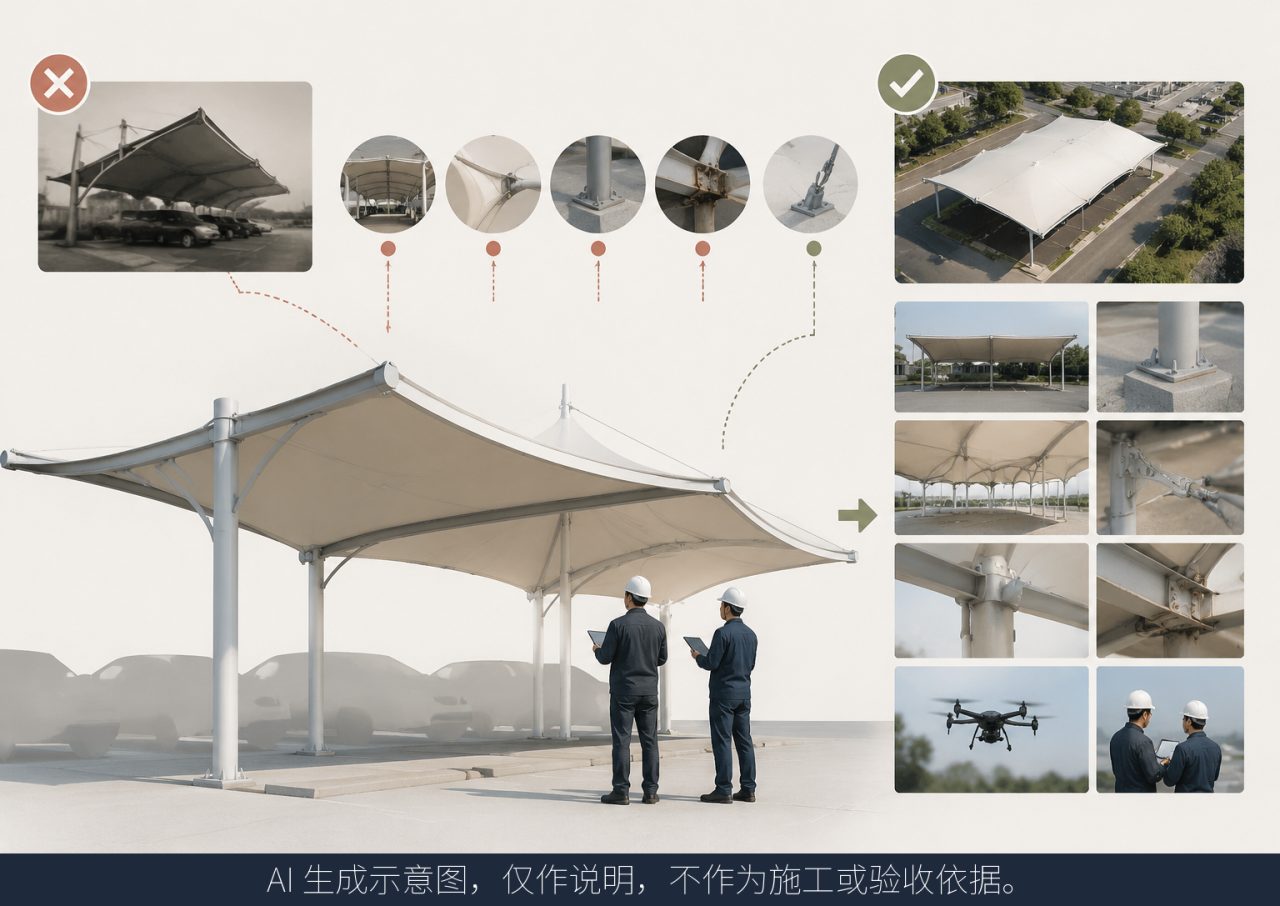
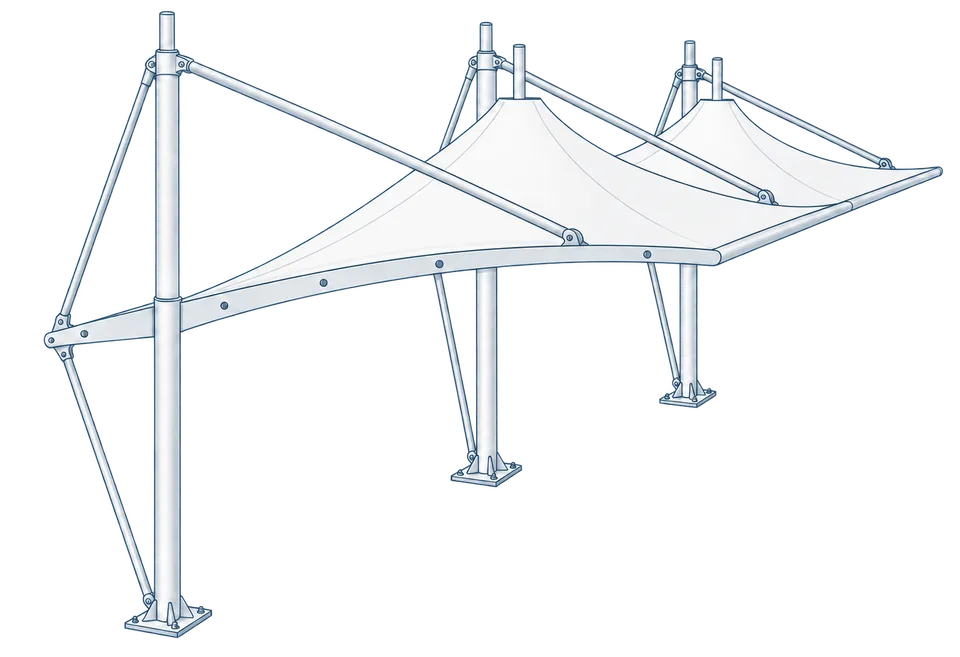
 Membrane carportsClassic membrane shelters→
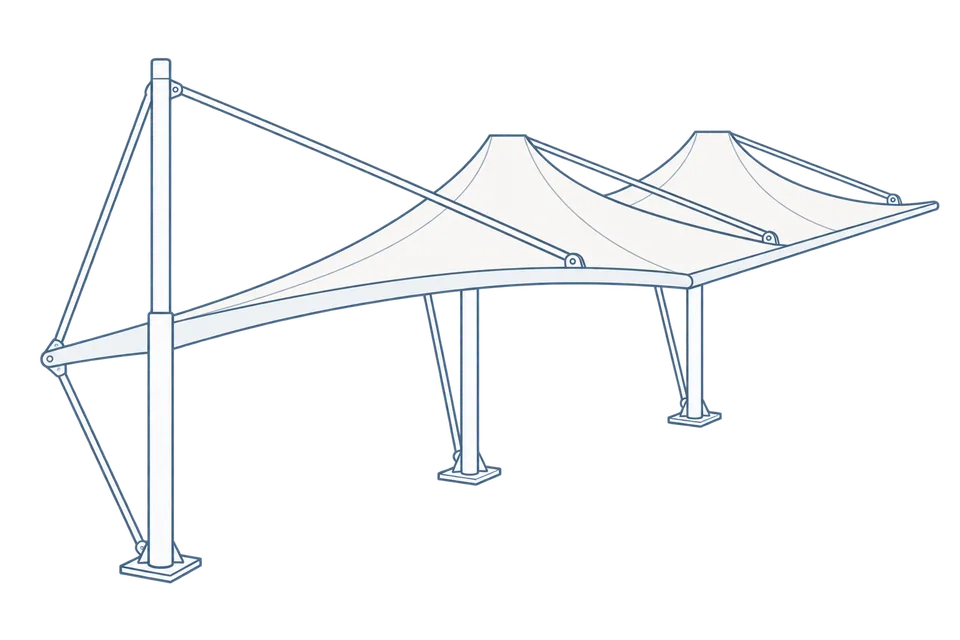 Solar carportsParking meets green energy→
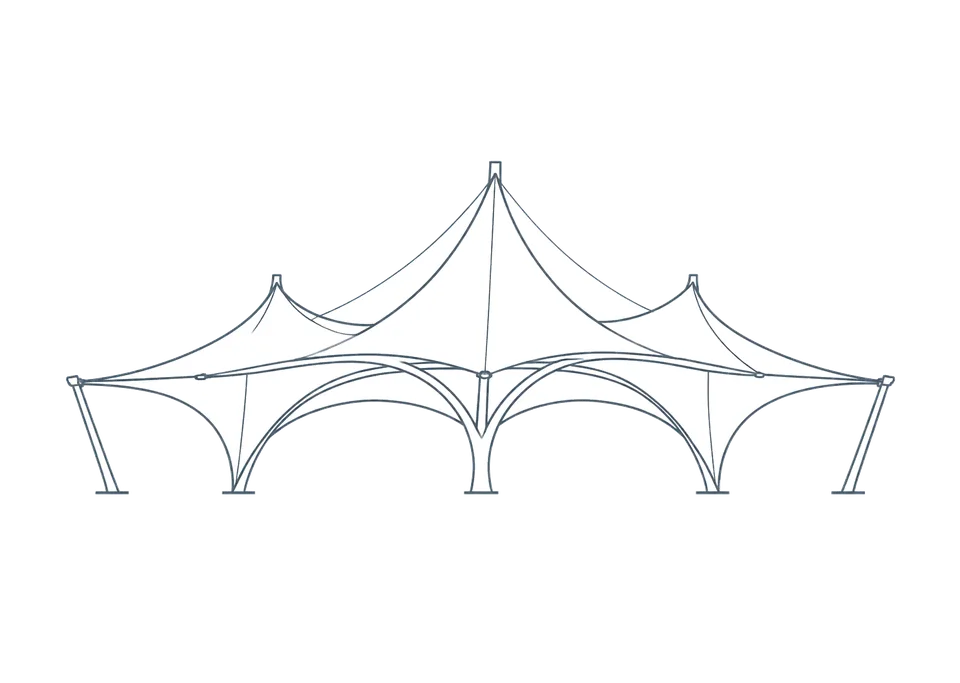 Landscape canopiesParks and leisure spaces→
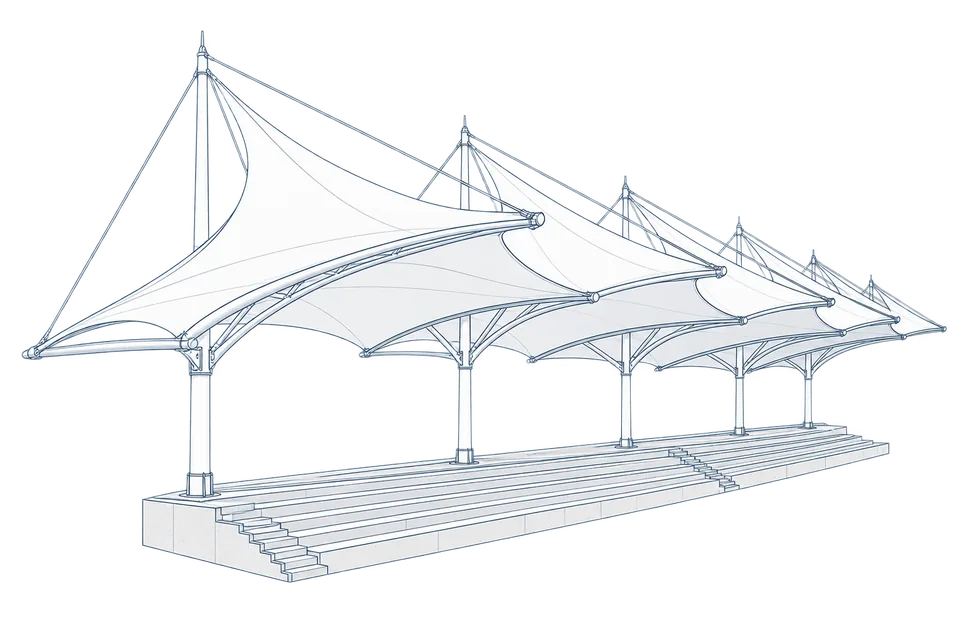 Grandstand canopiesSports venue shelters→
 Inflatable play cloudsFamily play areas→
 Wastewater coversEnvironmental infrastructure→
 Fuel station canopiesStation shelters→
 Entrance canopiesWalkways and entrances→
What Documentation Should You Keep at Supply Acceptance for a Tensile Membrane Structure — and How Do You Hand It Over to Installers and Maintenance Teams?
At the supply acceptance stage of a tensile membrane structure, three categories of documentation should be kept complete: as-built drawings (including design and material information), material quality and warranty certificates, and the factory component list with packing records. On arrival, check components, membrane panels and small parts item by item against the factory list, and obtain the warranty documents on the spot, confirming them in the contract. This documentation set is both your acceptance evidence and the working basis for the local installation team and maintenance personnel — a single missing document can cause rework at handover.
First Checks on Arrival: Match Items to the List, Documents to the Contract
A three-step check when goods arrive:
- Check each item against the factory component list: steel component quantities and identification numbers match the list; membrane panel packaging is intact; fastener and accessory packs are complete.
- Check the warranty documents: the membrane warranty is issued by the membrane manufacturer — typically 5 years on the projects referenced here; warranties for steelwork and other supply scope items should be collected at the same time.
- Confirm documents are written into the contract: item warranties for membrane, steelwork and other components should all be stated in contract clauses, not left as verbal assurances — at acceptance you check against exactly what the contract states.
If items are missing, damaged or numbered inconsistently, photograph and record them on the spot and note it on the delivery receipt before signing — do not sign first and add remarks afterwards.
Three Categories of Documentation: What to Keep and How to Archive
| Category | Contents | Suggested filing |
|---|---|---|
| Drawings | Design drawings, fabrication drawings, installation node/connection details | One set each for buyer, installation team and maintenance party, with revision numbers noted |
| Material documentation | Membrane warranty certificate, material certificates, coating records | Originals retained by the buyer; copies travel with the components |
| Supply records | Factory component list, packing lists, signed delivery receipts | One copy archived by the buyer; one copy passed to the installation team |
When archiving, write the drawing revision number on the first page and match the membrane warranty certificate to the roll numbers of the membrane panels supplied. Qingsong Membrane Structures fabricates at its headquarters factory in Henan, China: components are prefabricated in the factory and shipped directly to site, and item warranties for membrane, steelwork and other components are written into the contract. The company also regularly welcomes customer factory visits and completed-project viewings — the completeness of acceptance documentation is itself one way to audit a supplier.
If Dimensions Change or a Component Is Replaced On Site, How Do You Update the Drawings?
The most common site change is an adjustment at a connection node during installation. For sites where hot work (welding) is not permitted, a site-bolted connection method can be agreed in advance: components leave the factory as finished items with no fabrication on site. This actually helps documentation management — bolted adjustments happen at clearly defined node locations.
When a change occurs, do three things:
- Mark the changed component numbers and node positions on the drawings, noting actual site dimensions;
- For replaced or additionally fabricated components, add records to the factory component list and retain the new material certificates;
- Have the supplier's technical staff confirm the change does not affect structural performance — key nodes are already checked by technical staff during fabrication, and changes should pass through the same step.
Without this, maintenance personnel years later will be looking for components using outdated drawings that no longer match the physical structure.
Supply Acceptance vs Installation Acceptance: What's the Difference?
These are often confused, but they differ in object and timing:
| Item | Supply acceptance | Installation acceptance |
|---|---|---|
| Timing | When components and membrane panels arrive | After installation is complete |
| What is checked | Quantities, appearance, numbering, warranty documents | Installed position, tensioning condition, node connections, overall function |
| Responsibility | After checking, custody transfers to buyer/installer | After confirming installation quality, the maintenance period begins |
| Basis documents | Factory component list, packing lists, warranty certificates | Design drawings, installation plan, change records |
In short: supply acceptance answers "did everything arrive and does it match?"; installation acceptance answers "was it installed correctly and does it work?". Both sign-offs rest on the same set of drawings and lists — which is why the archiving above matters.
Who Receives Which Documents, and How to Hand Them Over
Hand over by recipient, in one clear transfer:
- To the local installation team: installation node details, factory component list, change records, and bolted-connection notes. The installer works to the drawings and checks against delivered items; discrepancies can be raised before work starts.
- To the maintenance party: as-built drawings (including the revised versions), membrane warranty certificate, steelwork and other item warranties, and maintenance guidance. Writing item warranties into the contract also means that if problems arise during the maintenance period, each party's responsibility has a written basis.
For the transfer, both parties should each keep a signed handover list naming every document and its revision, so that supplying replacements later is a matter of record.
Next step: share your project location, intended use (e.g. carport, bicycle shelter, walkway canopy), dimensions or available drawings, and which design coordination, custom fabrication and supply scope services you need. Agree with your project engineer and us in advance where responsibility divides — supply, installation, maintenance — so acceptance and handover have a clear basis. You can reach us via our contact page.