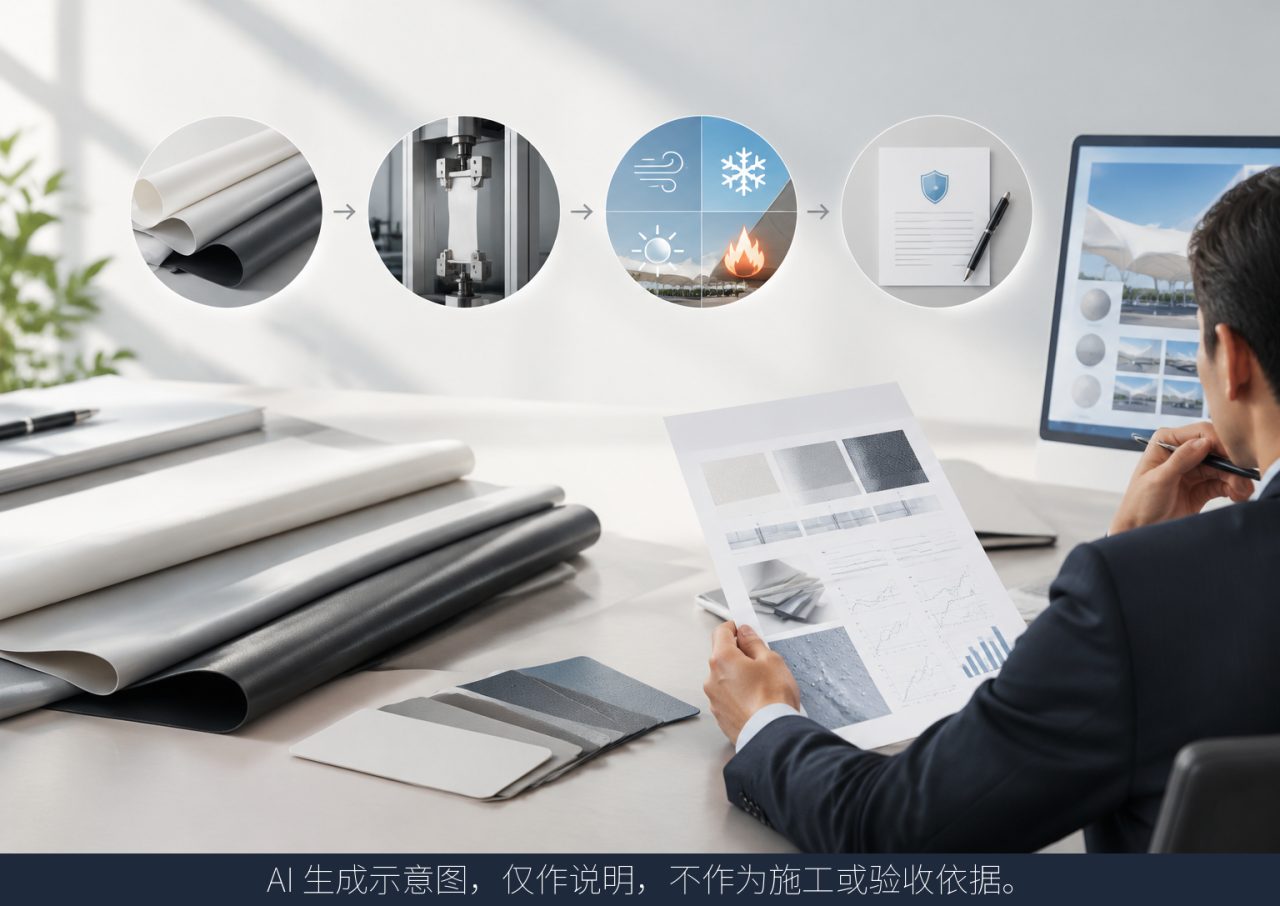
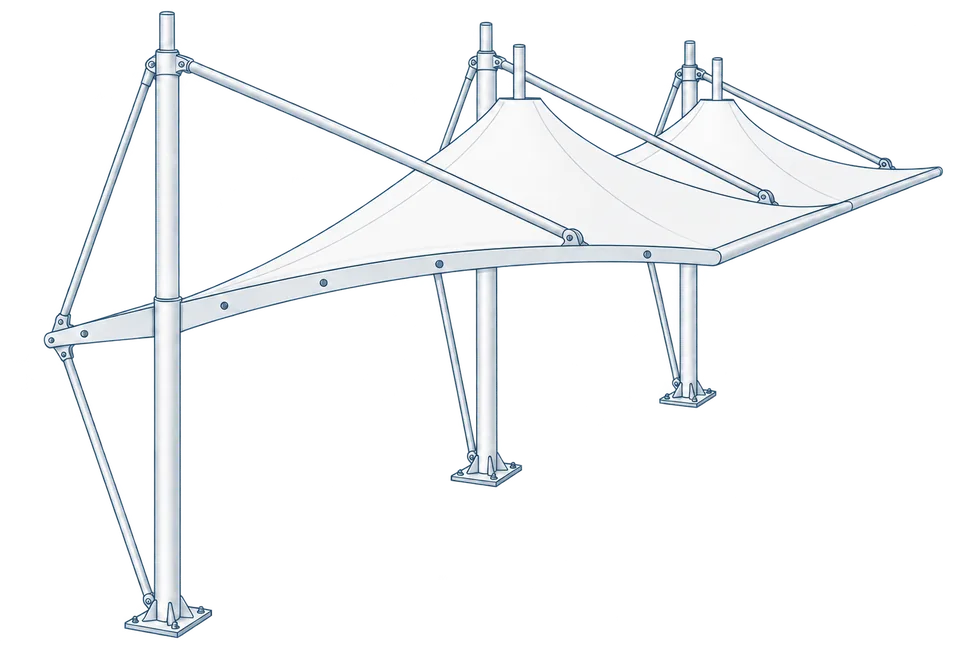
 Membrane carportsClassic membrane shelters→
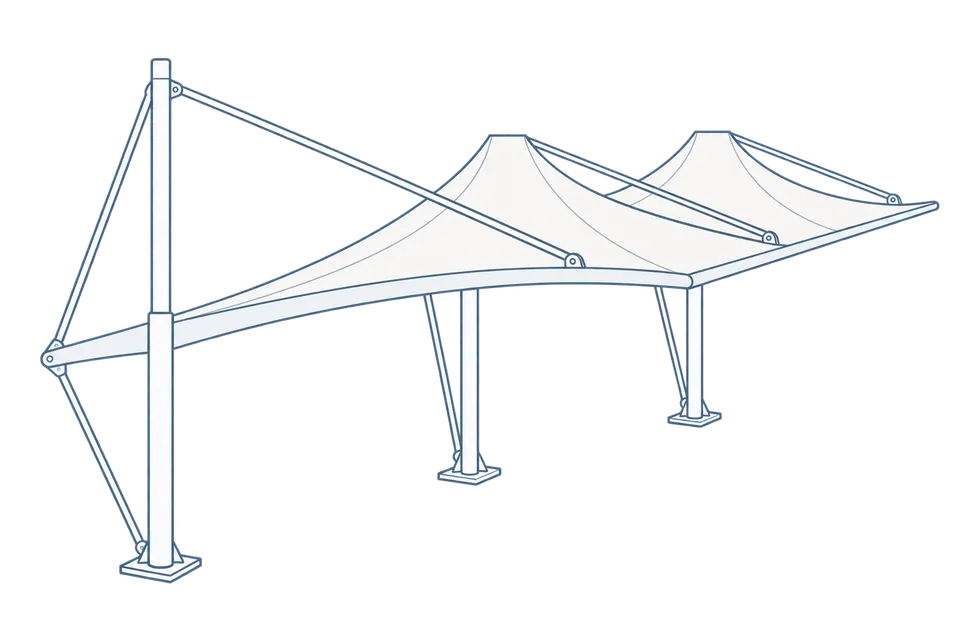 Solar carportsParking meets green energy→
 Landscape canopiesParks and leisure spaces→
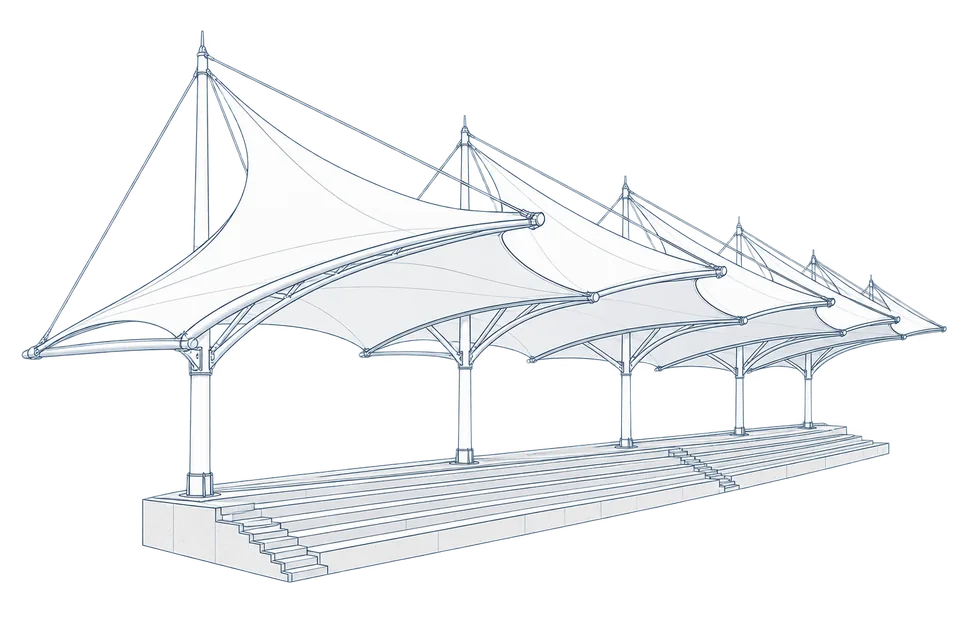 Grandstand canopiesSports venue shelters→
 Inflatable play cloudsFamily play areas→
 Wastewater coversEnvironmental infrastructure→
 Fuel station canopiesStation shelters→
 Entrance canopiesWalkways and entrances→
Replacing Membrane on an Existing Canopy: Why Old Photos Are Not Enough for an Accurate RFQ
When you request a quotation (RFQ — Request for Quotation) for replacing the membrane on an existing carport or membrane canopy, sending only old photos rarely produces a usable price. Photos do not show spans, actual membrane panel dimensions, or the current condition of the steel frame. The supplier can only estimate based on assumed sizes, and the numbers often fail to match reality on site — membrane panels cut to the wrong size, tension that cannot be balanced, and rework on replacement day. Before requesting a quote for a tensile membrane structure re-cover, site measurement data should be completed as far as possible; photos are supporting material only.
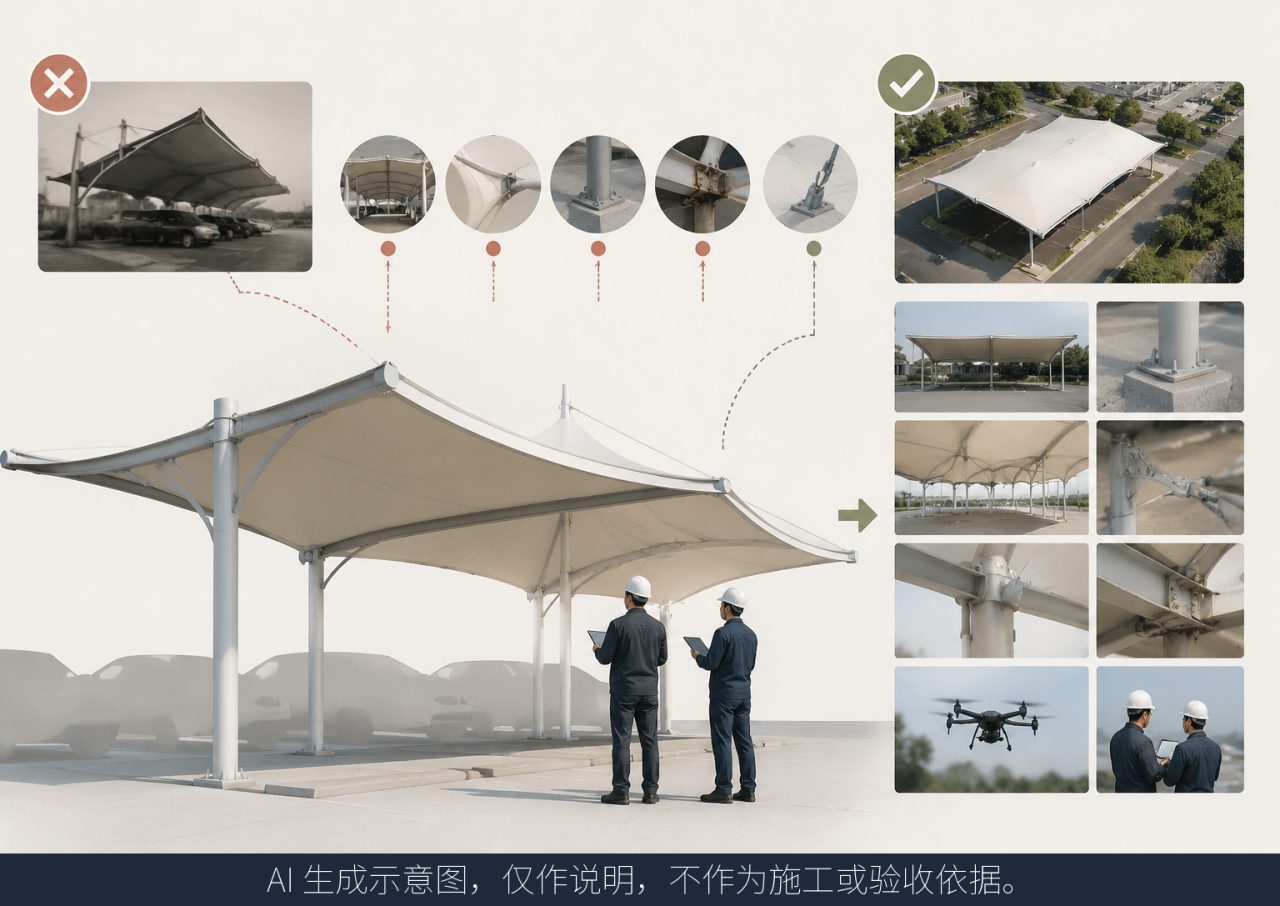
What old photos cannot tell you
A photograph cannot capture the details that determine how new membrane panels are patterned and cut:
- Span: perspective distortion makes it impossible to estimate the actual distance between columns or the height of main beams from photos.
- Membrane panel layout: how many panels the old cover has, where the seams run, and how the tensioned edges are configured are indistinct in photos.
- Membrane heights and clearance: vehicles and pedestrians pass under a carport, so clear height matters and varies across the surface.
- Steel frame condition: corrosion, deformation, or loose foundations are either invisible in photos or shown only in partial views.
- Tensioning details: where the membrane is fixed and what clamps are used determine whether new panels can be aligned to the existing structure.
Site information to collect before a replacement RFQ
Work through this checklist:
- Overall dimensions: span, column spacing, overall length and width, clear height. Measure approximate figures with a tape where you can.
- Original structure type: frame-supported or tensioned membrane; number and layout of columns. If original drawings exist, locate them.
- Steel condition: inspect columns and beams for visible corrosion, weld cracks, and loose bolts, and photograph details clearly.
- Site conditions: whether lifting equipment can access the area, nearby obstructions, and how vehicles will be managed during replacement.
- Membrane specification: how old the existing cover is and whether to replace like-for-like or upgrade. Standard PVC membrane typically carries a 5-year manufacturer warranty; the carport can have an overall service life of roughly 10–15 years under normal use and maintenance. For higher self-cleaning performance and longevity, PVDF or PTFE can be considered.
If you cannot measure accurately, provide approximate dimensions for initial discussion. For larger sites, whether the supplier can carry out on-site surveying (for example by drone) must be confirmed for your project and location — this is a service boundary to agree, not a default.
When on-site verification is essential
Do not finalize a scope from photos alone in these cases:
- The steel frame is aged and you want to assess whether reinforcement is needed alongside membrane replacement. Whether the structure can accept the loads depends on its actual condition and requires structural review; no conclusion should be given in the abstract.
- The membrane surface is irregular or spans multiple bays, where photo-based estimates carry large errors.
- Replacement involves modifying existing tensioning points or foundations — any load-bearing work needs on-site inspection.
- The site has lifting restrictions, pipelines, or adjacent buildings that photos cannot fully document.
Who reviews the measurement data, and how the supply scope is defined
Once site measurement data is collected, it should be reviewed by the supplier's technical staff before membrane selection and a cutting/patterning plan are issued. For installation quality, clarify in advance: whether components are delivered as finished fabrications, whether the local installation team works to a uniform process standard, and whether key nodes will be supervised by technical personnel. For re-covering work on existing structures, supervision at key nodes is especially important — confirm exactly who performs this and under what terms before contracting.
Where data is incomplete, ask the supplier first for a surveying proposal and a scheme based on span, membrane type, and configuration before discussing price.
To start, prepare the project's intended use, dimensions or drawings, and the service scope you want to commission — membrane replacement only, replacement plus steel frame refurbishment, or a full renovation. A clearly stated scope is what makes a quotation match reality.
Share your project's intended use, dimensions or available drawings, and tell us which service scope you need, so we can review the scope: /en/contact/