 Membrane carportsClassic membrane shelters→
 Solar carportsParking meets green energy→
 Landscape canopiesParks and leisure spaces→
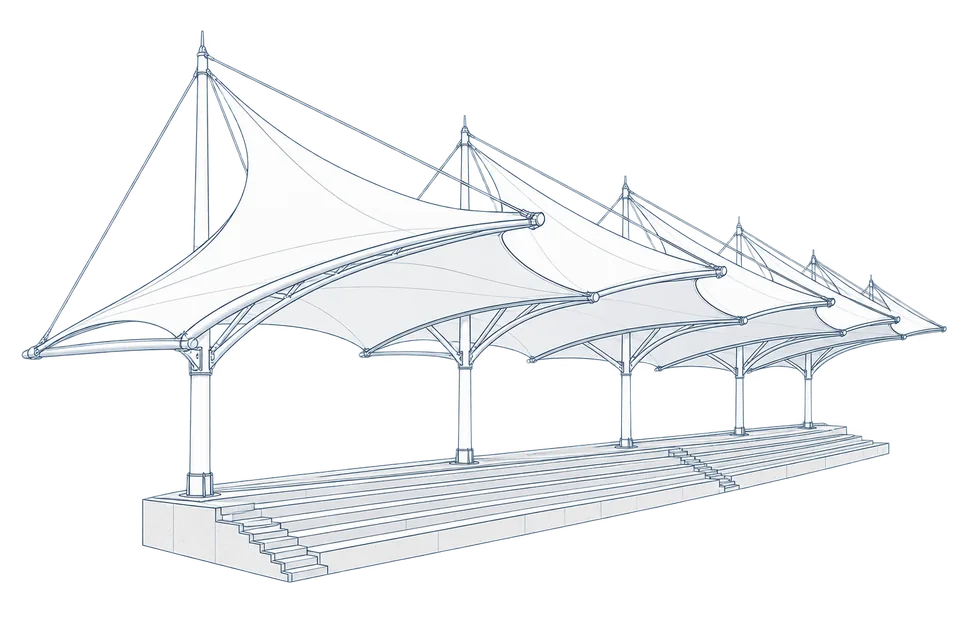 Grandstand canopiesSports venue shelters→
 Inflatable play cloudsFamily play areas→
 Wastewater coversEnvironmental infrastructure→
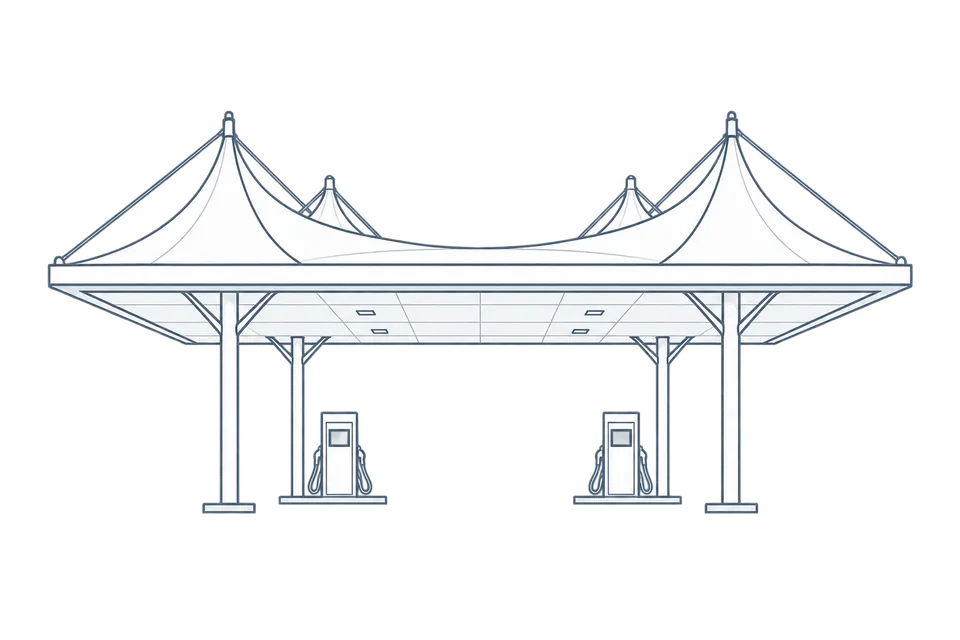 Fuel station canopiesStation shelters→
 Entrance canopiesWalkways and entrances→
How to Check Cleaning Agent Compatibility with Membrane Material Documentation Before Cleaning a Tensile Membrane Structure
Before cleaning the membrane surface of a tensile membrane structure, do one thing first: locate the membrane material documentation or material warranty card, confirm the surface coating type and any prohibited substances, and only then decide which cleaning agent to use. Different projects use different membrane materials and surface treatments. Copying another project's cleaning practice may affect the membrane surface condition and may also affect the membrane fabric manufacturer's warranty.
What to Verify in the Material Documentation Before Cleaning
Once you have the material documentation, confirm the following items one by one:
- Membrane base material type: whether it is standard PVC membrane, or a product with PVDF or PTFE surface treatment.
- Surface coating description: follow the actual material documentation. Check the coating type, maintenance requirements and precautions — this determines which cleaning agents are acceptable.
- Prohibited substances and prohibited practices: if the documentation explicitly prohibits certain solvent categories or high-pressure washing, record each restriction and check the cleaning agent's ingredient list against them before purchasing.
- Warranty terms related to maintenance: damage caused by improper cleaning may not be covered by the manufacturer's warranty, so read this section carefully.
If the documentation is incomplete, contact the original supplier or the membrane fabric manufacturer for a replacement copy of the material documentation before arranging any cleaning.
How Cleaning Agent Requirements Differ: PVDF, PTFE and Standard PVC Membranes
The three membrane types differ in material and surface treatment. Cleaning agent compatibility must always follow the corresponding material documentation:
- Standard PVC membrane: an economical, practical option commonly supplied as the standard configuration for carports, with a 5-year warranty from the membrane fabric manufacturer. Cleaning agents and methods must follow the material documentation — do not apply habits from other projects.
- PVDF-coated membrane: an upgrade option where higher self-cleaning performance is required. Maintenance and cleaning requirements follow the material documentation. When selecting a cleaning agent, confirm it will not affect the surface coating.
- PTFE membrane: an upgrade option where higher self-cleaning performance and service life are required. Maintenance and cleaning requirements likewise follow the material documentation; do not apply the same criteria used for other membrane types.
In short: different membrane materials and surface treatments may have different maintenance requirements. Follow the corresponding material documentation — one cleaning agent does not suit all membranes.
How to Judge Whether a Cleaning Agent Damages the Membrane Coating
Assess in two steps: a small-area test first, then observation and confirmation.
- Small-area test first: choose a spot near the membrane edge or in a visually inconspicuous area, and trial-clean a small section using the intended method. Do not start with full-surface work.
- Observe after cleaning: once the test area is dry, compare it with the surrounding uncleaned surface. Look for whitening, hazing, loss of gloss, coating peeling or color fading.
- Tactile check: lightly touch the test area. If the coating feels sticky, powdery or rough, the cleaning agent is unsuitable — stop using it immediately.
- Keep records: photograph the test location, the cleaning agent information and the condition after cleaning. These records are useful in any later warranty discussion with the membrane fabric manufacturer. If your contract defines separate warranties by scope — for example, membrane issues handled by the membrane fabric supplier and steel structure issues handled by the steel structure provider — the more complete the maintenance records for each scope, the easier it is to allocate responsibility.
Please note: the above is a pre-cleaning self-check method, not a cleaning procedure. Membranes with existing damage, visible ponding, or situations requiring work at height on the membrane are different problems and should be handled by qualified professionals.
Who Should Review Compatibility When You Are Unsure
Self-checking has limits. In the following situations, ask the membrane fabric manufacturer or the original contract supplier to review before proceeding:
- The documentation is missing or the coating type cannot be confirmed;
- Large-area cleaning is planned while the membrane is still under the manufacturer's warranty;
- Technical terms in the cleaning agent's ingredient list cannot be assessed on your own;
- The small-area test has already shown abnormalities.
The more complete the information you provide for the review, the easier the assessment: photos of the material warranty card or material documentation, the cleaning agent's ingredient list or packaging details, and records of the small-area test. If your contract defines warranties by separate scopes, contact each scope directly using the contact details stated in the contract.
If your documentation is incomplete and you are unsure which membrane type your carport or canopy uses, prepare the project use, dimensions or drawings, and the scope of services you wish to engage (materials consultation only, cleaning plan review, or overall maintenance), then send us an inquiry for confirmation before deciding the next step. Share your project details and required scope so we can review how we can help.