 Membrane carportsClassic membrane shelters→
 Solar carportsParking meets green energy→
 Landscape canopiesParks and leisure spaces→
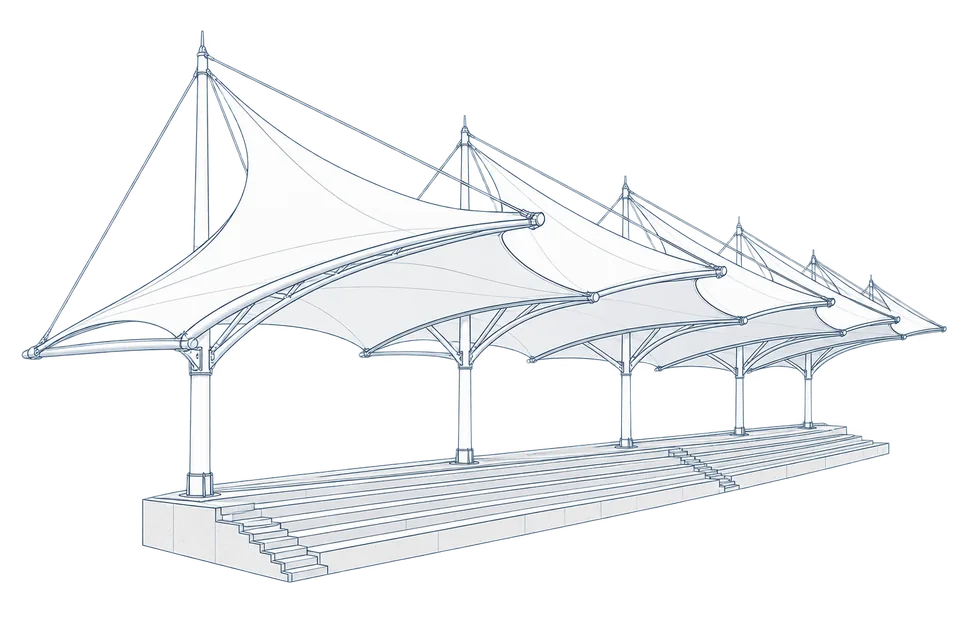 Grandstand canopiesSports venue shelters→
 Inflatable play cloudsFamily play areas→
 Wastewater coversEnvironmental infrastructure→
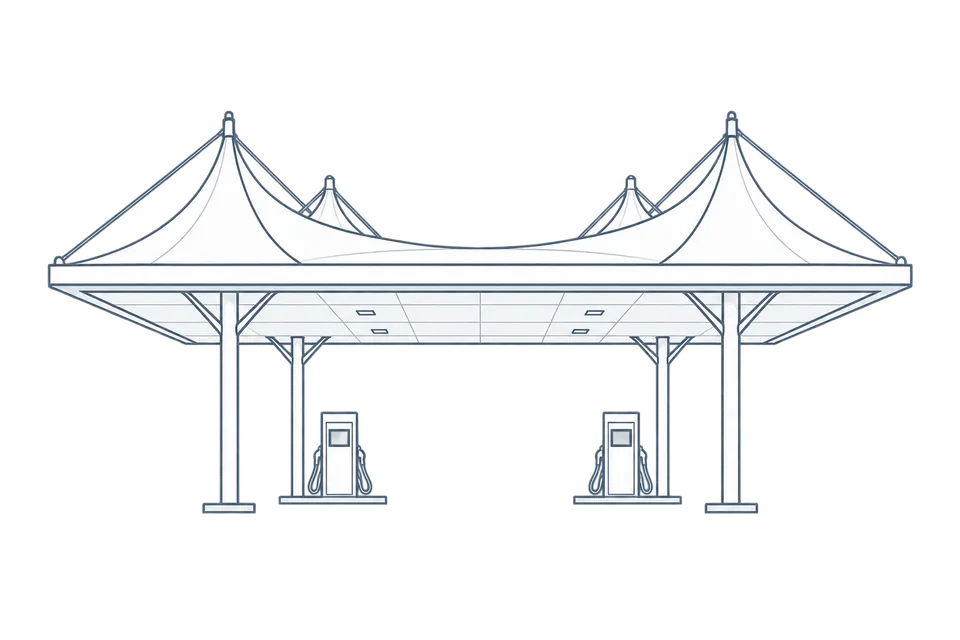 Fuel station canopiesStation shelters→
 Entrance canopiesWalkways and entrances→
When Does the Supply Lead Time for a Tensile Membrane Structure Start? Separating Drawing Confirmation, Material Procurement and Dispatch Milestones
Short answer
The supply lead time for a tensile membrane structure is usually counted from the date the drawings are confirmed in writing by both parties. On the day a contract is signed, the main task is confirming the scope and conditions of cooperation; design, material procurement, fabrication and installation all follow from one finalized drawing set. Until the drawings are settled, the later stages are difficult to schedule accurately. When procuring a membrane canopy or carport, it is advisable to write the drawing confirmation, material procurement, fabrication completion and dispatch milestones into the contract separately, rather than agreeing to a single vague 「delivery in X days」 clause.
Why the clock usually starts at drawing confirmation
A tensile membrane structure follows a one-stop process: design → fabrication → surface treatment → installation. Each stage depends on the output of the previous one. Before the drawings are confirmed, the fabricator cannot accurately determine what membrane and steel materials to purchase, and fabrication dimensions lack a firm basis.
A reliable way to word this is: 「The supply lead time is calculated from the date the drawing version jointly confirmed by both parties is signed or confirmed in writing.」 Time spent before drawing confirmation belongs to the design discussion phase and is not counted within the supply lead time. This removes ambiguity about the starting point and lets the buyer plan the project schedule backwards from it.
Drawing confirmation: the buyer’s feedback obligation should be written in
Drawing confirmation is not the fabricator’s responsibility alone. For small and medium-sized sites, a proposal can generally be prepared from site dimensions provided by the buyer. For larger sites, site surveying arrangements — for example drone survey where offered — and the resulting drawings should be checked and approved by the buyer before they are treated as final.
Two points should be agreed in the contract at this stage:
- After the fabricator submits drawings, the buyer provides written confirmation or revision comments within an agreed period;
- If the buyer’s feedback is delayed, the supply lead time is extended accordingly, by the number of days the feedback exceeds the agreed period.
This is a common sticking point in real projects: drawings are sent, the buyer holds internal meetings and approvals, the process drags on, and the late delivery is then attributed to the fabricator. Agreeing the extension mechanism for delayed buyer approval in advance makes responsibility easy to verify later.
Material procurement and fabrication completion: what counts as the milestone
After the drawings are confirmed, material procurement and fabrication begin. For the buyer, the milestone to clarify and write into the contract is 「fabrication complete」 — not a vague 「it’s done」.
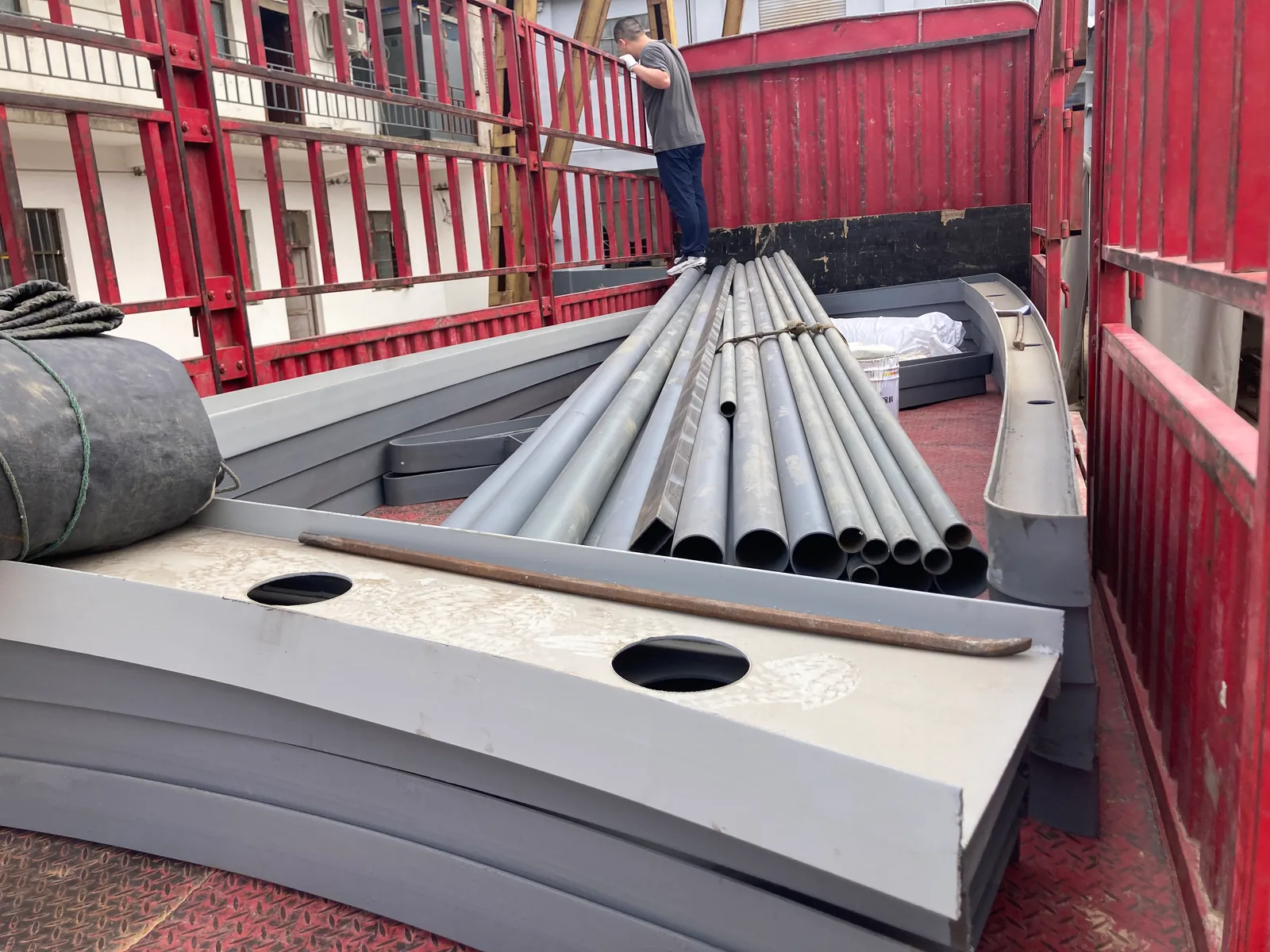
Where components are prefabricated in the factory and delivered as finished products with no fabrication on site, 「fabrication complete」 can be given a clear standard: steel components are fabricated, ground and derusted, weld slag and oil residue cleaned off, inspected, and then coated; membrane panels are fabricated to the confirmed drawings; and both pass inspection.
Defining 「fabrication complete」 as a verifiable milestone — for example, passing factory inspection with notice given to the buyer — makes it easy to check whether the fabrication stage stayed on schedule.
Dispatch date and arrival date are two different things
The contract should distinguish two dates: the dispatch date and the arrival date. Even when prefabricated components are shipped directly from the factory to the site, transit time exists between dispatch and arrival, and longer-distance shipments may be affected by routing, weather and other factors.
A practical wording: the fabricator completes fabrication and dispatches within the agreed period, providing a dispatch notice and logistics information at the time of shipment; the arrival date is subject to actual carrier delivery. If the buyer needs a fixed arrival date, this should be agreed separately in the contract with a reasonable margin allowed.
Buyers procuring for locations far from the fabrication base should estimate transit time separately from local projects and should not demand the same number of days.
Suggested structure for the schedule clause: four segments
Splitting the timeline into four contract milestones is far more reliable than a single blanket 「delivery deadline」:
- Start of the clock: the date the drawings are confirmed in writing by both parties;
- Confirmation deadline: the buyer’s feedback period after drawings are submitted, and the extension mechanism if the buyer responds late;
- Fabrication complete: the verifiable standard for steel components and membrane panels being fabricated and passing inspection;
- Dispatch and arrival: the dispatch-notice obligation and how the arrival date is determined (or an explicit statement that arrival is subject to actual carrier delivery).
Warranty terms should also be itemized in the contract — with separate, clearly stated warranty terms for the membrane fabric, steel structure and other components — all in writing, with no verbal promises. This way, if any stage is later disputed, there is a documented basis for resolution.
Next step
If you are planning the supply schedule for a membrane canopy, carport, bicycle shelter or other tensile membrane structure project, submit your intended use, dimensions or available drawings, and which services you need — design coordination, custom fabrication, supply scope or installation — so the milestones above can be reviewed against your project. Related pricing methods can be found on our project pricing solutions page: /solutions/project-pricing/.