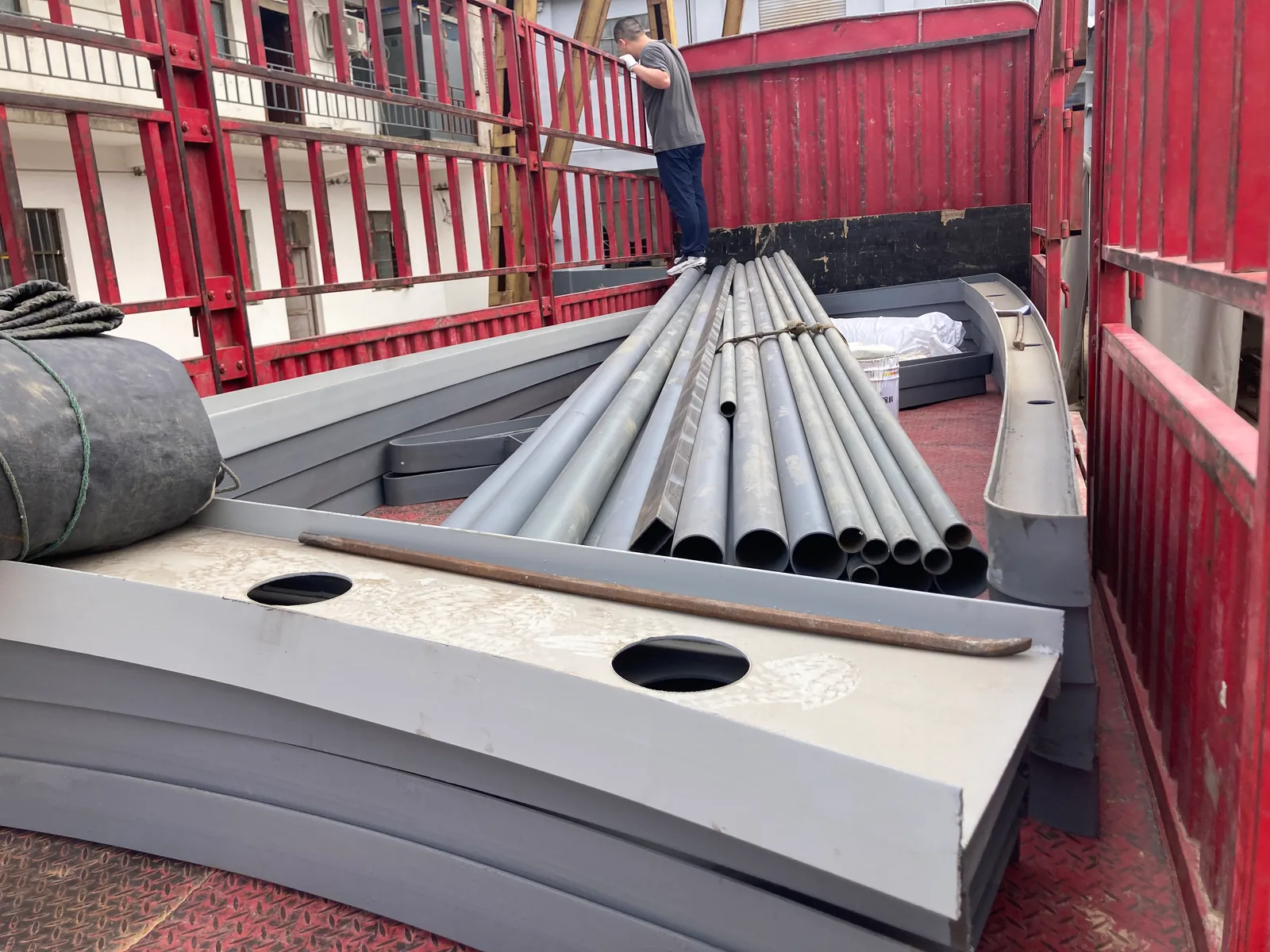
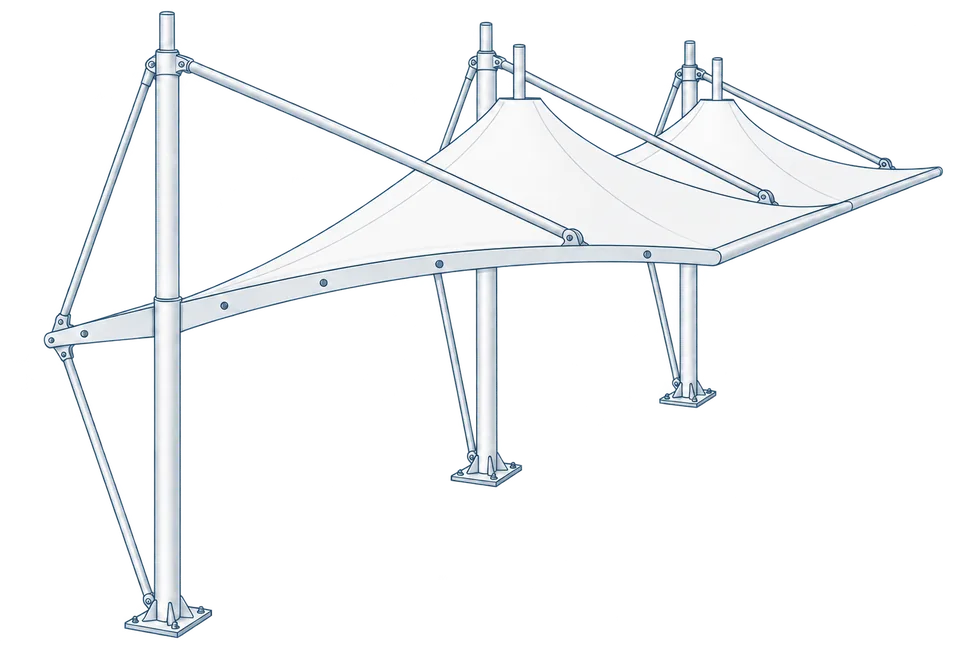
 Membrane carportsClassic membrane shelters→
 Solar carportsParking meets green energy→
 Landscape canopiesParks and leisure spaces→
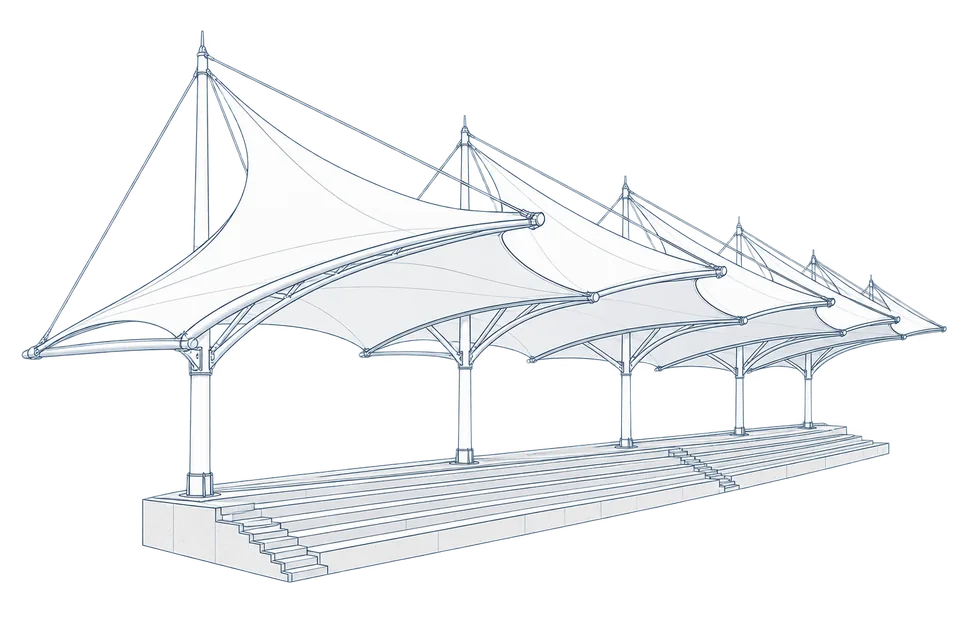 Grandstand canopiesSports venue shelters→
 Inflatable play cloudsFamily play areas→
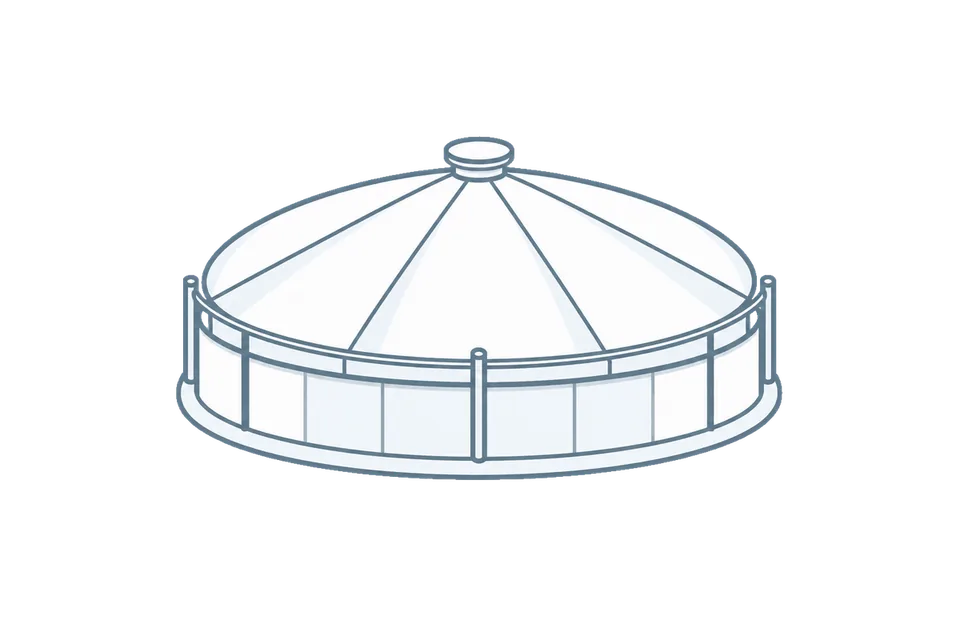 Wastewater coversEnvironmental infrastructure→
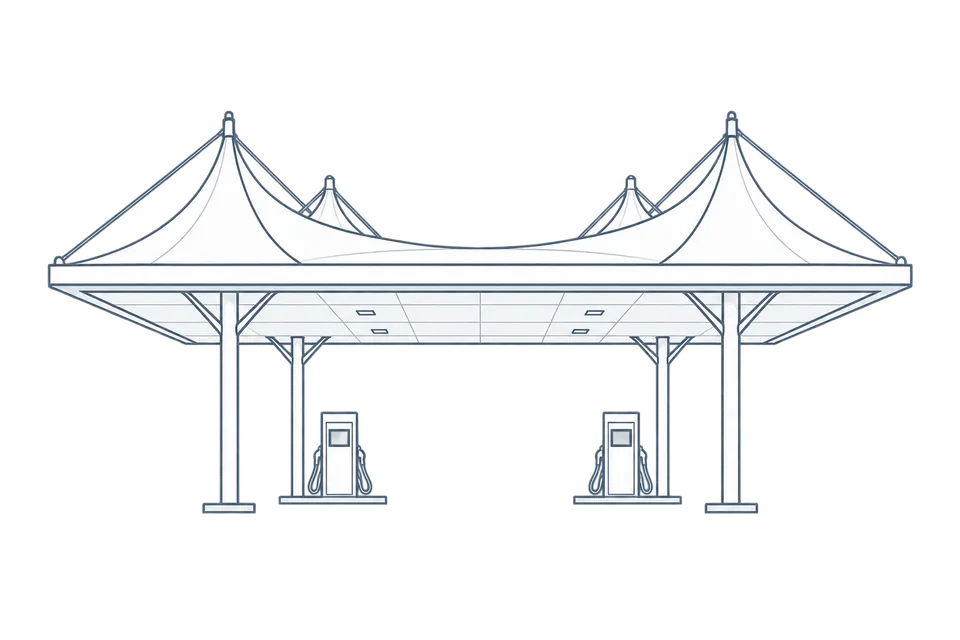 Fuel station canopiesStation shelters→
 Entrance canopiesWalkways and entrances→
Specifying Light Transmission, Shading and Thermal Envelope Requirements for a Tensile Membrane Structure
When sourcing a tensile membrane structure, buyers often compress three very different needs into one sentence: 「we want it bright but not too hot.」 Separating them at the RFQ (request for quotation) stage helps the fabricator propose the right membrane grade and envelope build-up: light transmission depends on the membrane's light-transmission rating, shading depends on that rating plus colour choice, and thermal insulation is not solved by changing membrane type — it must be raised as a separate envelope requirement. This article explains how to describe each of the three to a supplier.
How to describe your daylighting requirement
Two points are usually enough: first, whether the covered area should rely on natural daylight or mainly needs cover; second, whether there are any limits on the space being too bright or too dim. A carport typically only needs to block sun and rain, while a canopy over a walkway or seating area may be expected to keep the space usable by daylight without electric lighting.
Once the use case is clear, membrane grades roughly correspond as follows:
- Standard projects: PVC membrane, economical and suitable for most carports; the membrane supplier's fabric warranty is 5 years as a standard delivery configuration.
- Projects requiring better self-cleaning performance and longer service life: upgrade to PVDF membrane.
- Projects requiring better self-cleaning performance and longer service life: upgrade to PTFE membrane.
Avoid specifying an exact light-transmission percentage at RFQ stage. Describe the intended use, let the supplier propose the corresponding grade from the membrane manufacturer's data sheets, and confirm with physical samples before final selection.
What to look at when shading matters most
Shading and daylighting are two sides of the same specification: a darker interior with less glare calls for lower light transmission and darker colours, while good natural daylight calls for a higher-transmission grade. When describing the requirement, state the activity under the membrane — vehicle parking, pedestrian walkways and rest areas have very different shading needs. Note that shading also depends on the structure's form and envelope detailing; this is a design-stage matter, so state the use first and let the design review settle the specifics.
Raising thermal insulation as an envelope requirement
Insulation and shading are not the same thing. A single-layer tensile membrane has limited thermal performance. If the project has winter interior temperature requirements — for example an enclosed grandstand or a fully enclosed shelter — insulation is an envelope build-up issue and must be raised separately at the requirement stage. The designer, working with the project conditions, then determines whether a double-layer membrane, inner liner or other envelope solution is appropriate.
When approaching a supplier, state clearly:
- Whether the structure is open or enclosed, and to what degree;
- The seasons of use and whether people will stay inside for extended periods;
- Any specific temperature requirements.
With these three points, the supplier and designer can judge whether standard single-layer membrane is sufficient or an insulated envelope solution is needed. Do not demand a specific insulation value in the RFQ — that conclusion requires calculation against the actual project conditions.
Special case: list fire and flame-retardant requirements separately
If the covered area contains EV charging points, switchgear or other fire-sensitive equipment, flame-retardancy requirements should be raised at material selection stage alongside light transmission and shading. Standard PVC membrane generally does not reach Class B1; projects with fire requirements should move directly to a B1 flame-retardant membrane option, confirmed at design stage against local fire regulations — not left until construction approval.
When requirements conflict, decide in this order
A practical sequence: first fix safety and compliance items (flame retardancy, wind and snow resistance calculated per local conditions), then the envelope/insulation build-up, and only then trade off daylighting against shading. Fire performance and structural safety determine whether the project can pass and be used; insulation affects membrane layers and the steel structure; daylighting versus shading can usually be balanced later by choosing a different membrane grade.
For example, an enclosed carport with EV chargers that starts with a light-coloured, high-transmission membrane and later fails fire review will cost far more to rework than starting with a B1 flame-retardant option.
Pre-RFQ checklist
| Requirement | What to state to the supplier |
|---|---|
| Daylighting | Use under the membrane; whether natural daylight is required |
| Shading | Sun sensitivity; activity type under the canopy |
| Thermal envelope | Degree of enclosure; seasons of use; temperature requirements |
| Flame retardancy | EV chargers or other fire-sensitive equipment; local fire conditions |
| Site data | Use, dimensions or available drawings |
For large sites, our team can carry out drone-based site surveying after communication and confirmation. Small sites generally do not require drone-based surveying. The purpose of the survey and communication is to translate each item on the checklist into a specific membrane grade and envelope solution.
To take this forward, prepare your project use, dimensions or drawings, and the design, processing, supply or installation scope you would like to discuss. You can also refer to our membrane materials selection solution, and contact us to confirm each item.