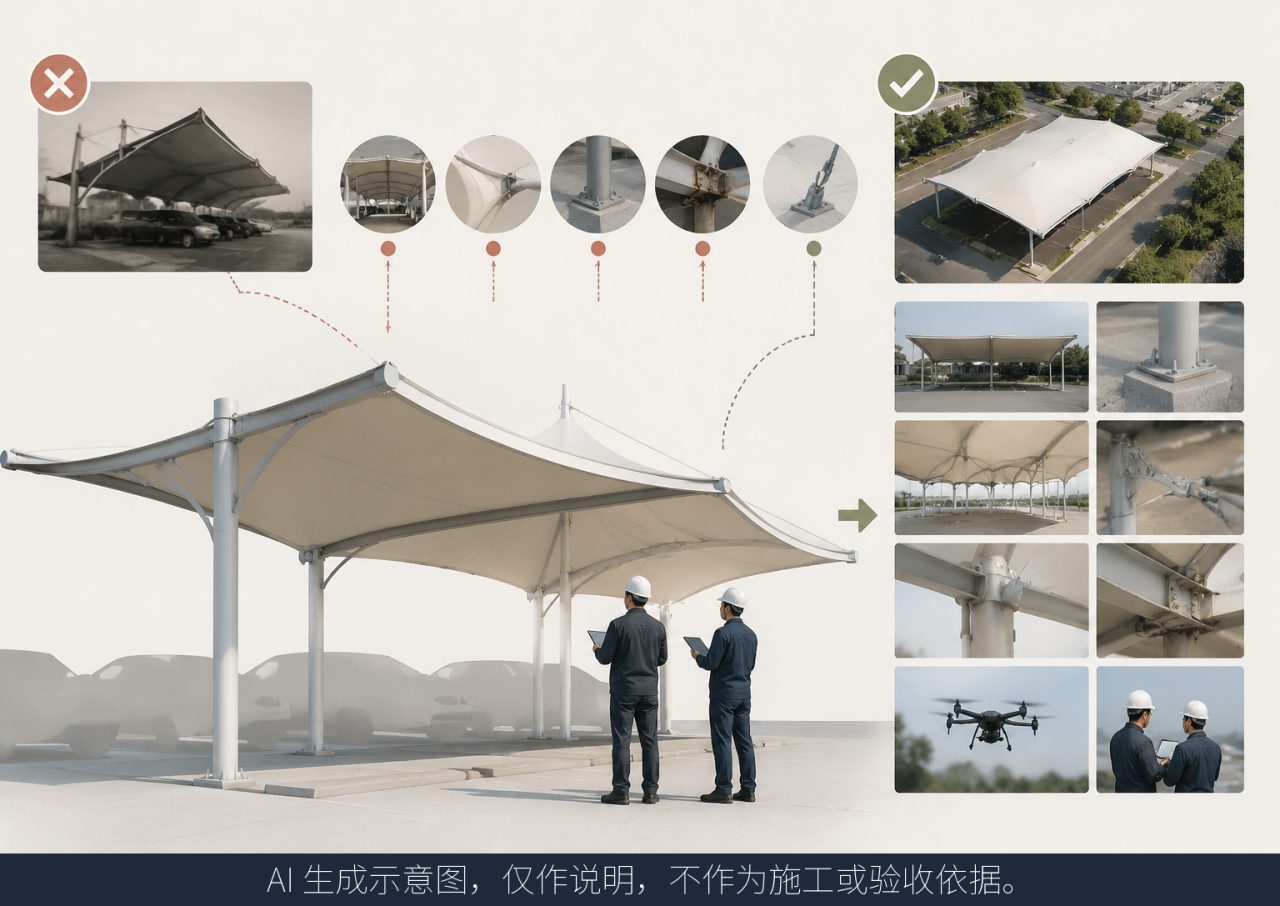
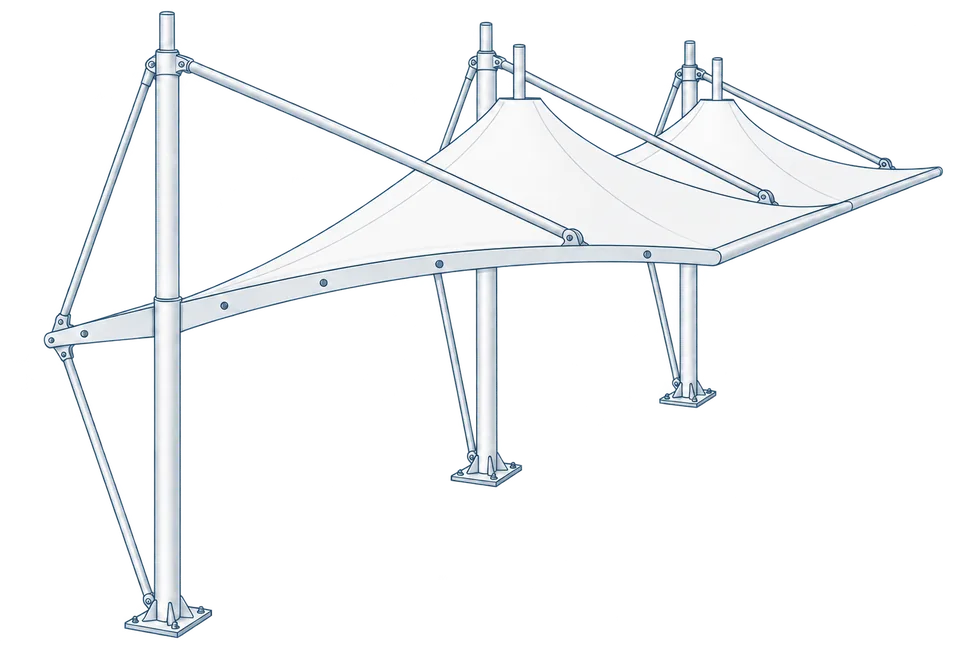
 Membrane carportsClassic membrane shelters→
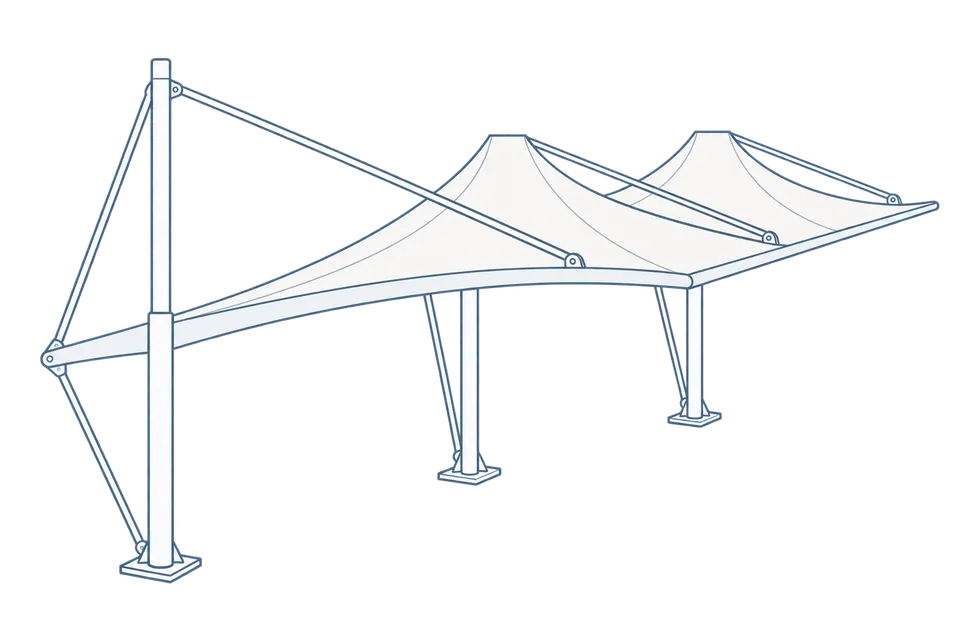 Solar carportsParking meets green energy→
 Landscape canopiesParks and leisure spaces→
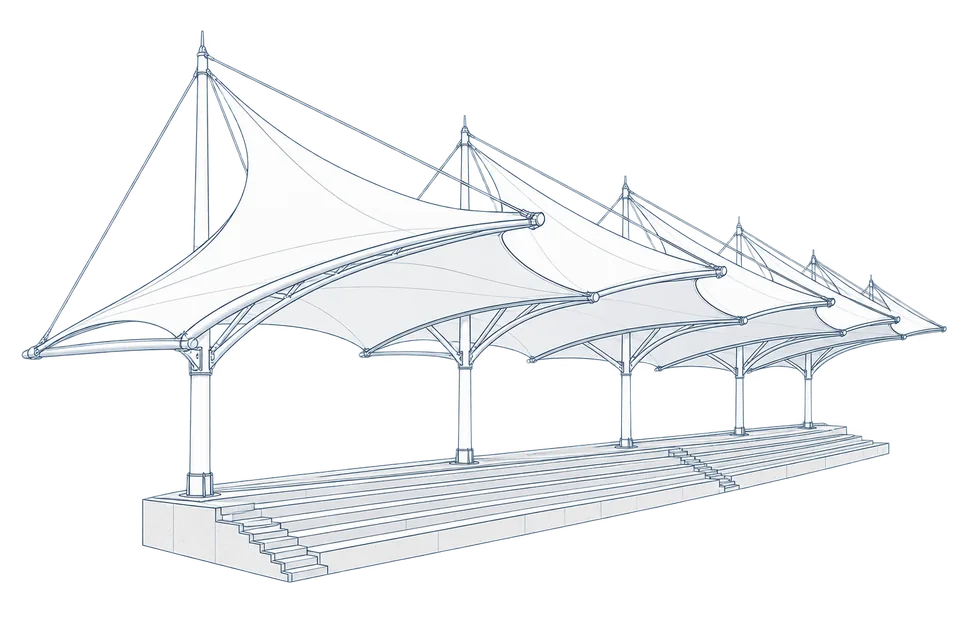 Grandstand canopiesSports venue shelters→
 Inflatable play cloudsFamily play areas→
 Wastewater coversEnvironmental infrastructure→
 Fuel station canopiesStation shelters→
 Entrance canopiesWalkways and entrances→
Membrane Material Procurement: Why Test Conditions Matter More Than Material Names
Membrane Material Procurement: Why Test Conditions Matter More Than Material Names
When sourcing membrane material for a tensile membrane structure, recording just one name — "PVC" or "PVDF" — is not enough. The same class of membrane can produce very different figures on test reports depending on the test conditions used. When reviewing a test report, check each test condition line by line, then match it against the actual environment of your project.
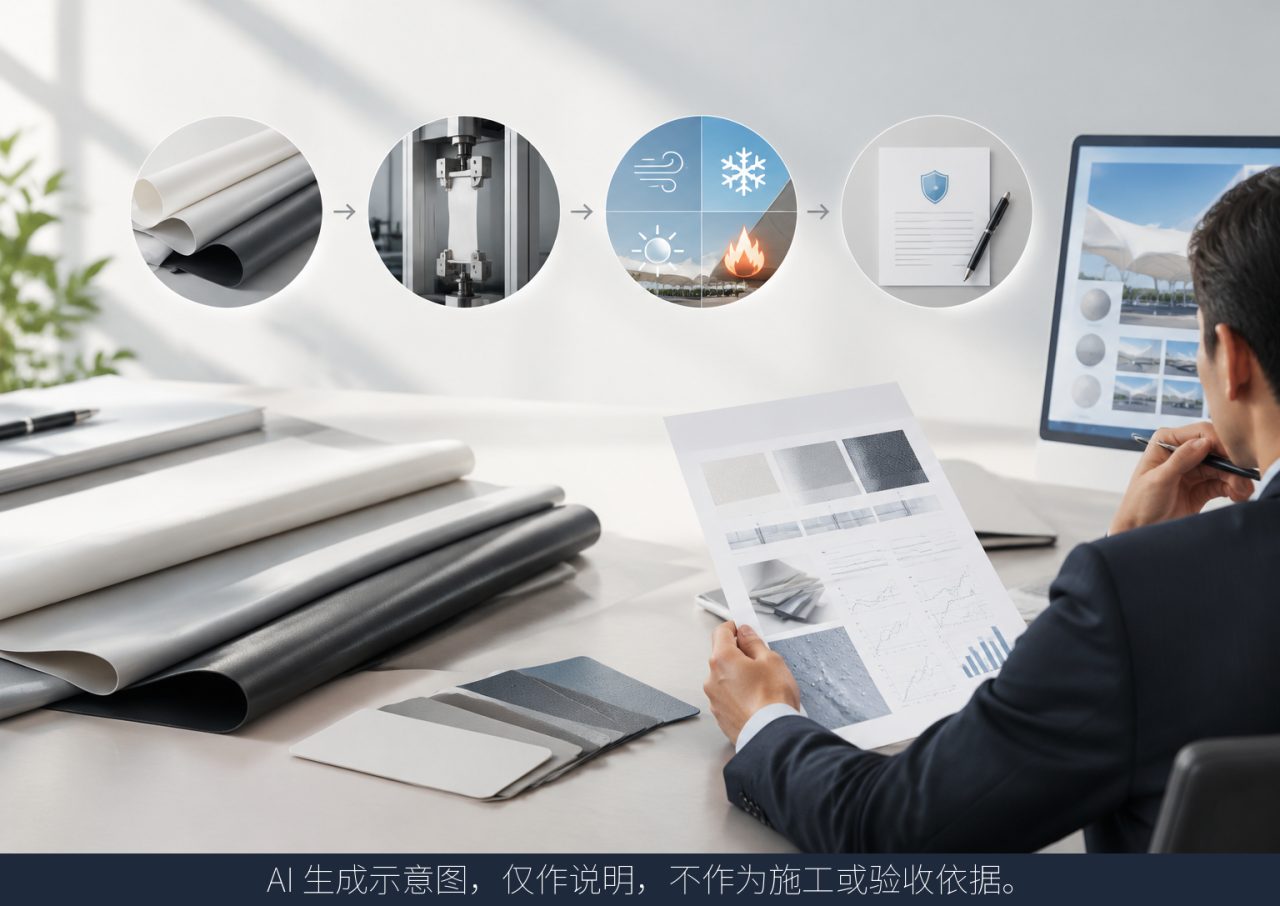
What do "test conditions" in a test report cover?
Test conditions are the specimen specifications, test methods and environmental settings stated in the report — for example, thickness, coating structure, the direction of the tensile test, and how the specimen is prepared before a flame-retardancy test. For the same membrane, tensile data differs between the warp (lengthwise) and weft (crosswise) directions; a flame-retardancy specimen that has or has not been aged can yield a different rating. Do not read only the conclusion figures — read the conditions under which those figures were produced.
Which test conditions relate to actual service conditions?
The main items are:
- Tensile strength and tear strength: these correspond to wind and snow loads on the membrane surface. The test direction must match the actual load direction in the membrane canopy.
- Flame-retardancy rating: conventional PVC membrane generally does not reach a B1 flame-retardancy rating. Projects such as carports for electric-vehicle charging, or any project with fire-safety requirements, may need a B1-rated membrane solution. The required rating should be determined at the design stage according to local fire regulations.
- Self-cleaning performance and weather resistance: these relate to the coating type. PVC is an economical, conventional choice suitable for most carport applications; for projects requiring higher self-cleaning performance or longer service life, PVDF or PTFE can be considered.
- Light transmittance: this corresponds to daylighting requirements under the canopy, and figures vary with the tested thickness.
List your project conditions — wind, snow, fire-safety requirements, intended use — and match each one to a corresponding test item in the report. Where an item is missing, ask the fabricator for it.
How much can results differ under different test conditions?
Tensile data differs by test direction; strength retention before and after ageing, and the preparation method used in flame tests, all change the numbers. If a report presents only one set of data without stating the conditions, the buyer cannot judge whether the data represents actual service conditions. Test results depend on condition settings, and applicability must be judged together with those conditions. The key checks are: does the report state the test conditions in full, and do those conditions correspond to the project's service environment?
How do test results relate to warranty and service life?
Taking conventional PVC carport membrane as an example: under normal use and maintenance, a membrane-structure carport has a service life of 10–15 years, with the membrane fabric covered by a 5-year warranty from the membrane manufacturer. Test reports reflect the material's initial performance and serve as the basis for durability claims; the warranty is the manufacturer's responsibility for how long that performance is maintained. When procuring, confirm that the report data supports the warranty period offered, and that the warranty start date and coverage are documented in writing — rather than ordering based on a glance at sample-stage data.
Should documentation go into the contract, or be confirmed verbally?
It should go into the contract. Warranty terms and durations for each supply item — membrane fabric, steel structure and so on — should be set out in contract clauses, and test reports and sample reference numbers should be tied to the contract. Verbal commitments are hard to trace at acceptance or during later repairs. With itemised warranties written into the contract, everyone knows who is responsible and against what standard.
Who should review the documents when you are unsure?
Judgements involving loads, fire safety and material suitability should be reviewed by your project designer or design engineer — procurement staff do not need to reach these conclusions alone. Materials to submit for review typically include:
- The fabricator's test report (original or copy), including the test-condition statements;
- Wind and snow load conditions and fire-safety requirements at the project location;
- The proposed membrane type (PVC / PVDF / PTFE / B1-rated flame-retardant) together with draft warranty terms.
Once the designer confirms that the membrane type and test data meet the project conditions, record the conclusion in the technical annex of the procurement contract.
Procurement confirmation checklist
- Does the report state complete test conditions (direction, specimen preparation, environmental settings)?
- Does the flame-retardancy rating meet the project's fire requirements, determined at the design stage?
- Are the membrane warranty duration and its start method confirmed in writing?
- Are itemised warranties written into the contract?
- Have any uncertain test data items been sent to the designer for review?
The above is general procurement guidance. Membrane selection for a specific project must be determined by its use, dimensions and local conditions. To discuss design coordination, custom fabrication or supply scope for your project, please prepare the intended use, dimensions or drawings, and the services you would like to engage, and contact us for review.