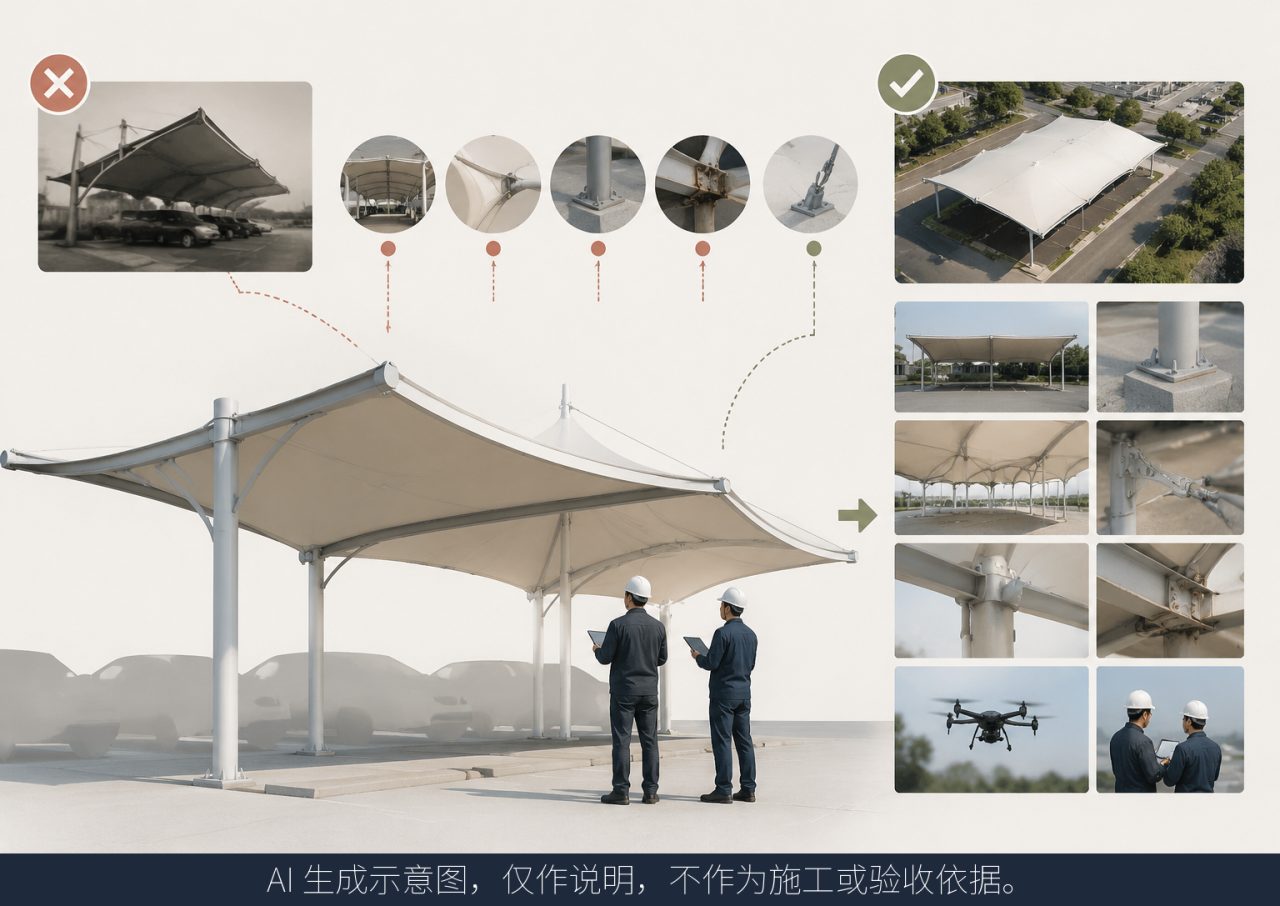
 Membrane carportsClassic membrane shelters→
 Solar carportsParking meets green energy→
 Landscape canopiesParks and leisure spaces→
 Grandstand canopiesSports venue shelters→
 Inflatable play cloudsFamily play areas→
 Wastewater coversEnvironmental infrastructure→
 Fuel station canopiesStation shelters→
 Entrance canopiesWalkways and entrances→
Membrane Colour vs. Sample: How to Agree on a Colour Confirmation Process Before Your Tensile Membrane Structure Is Fabricated
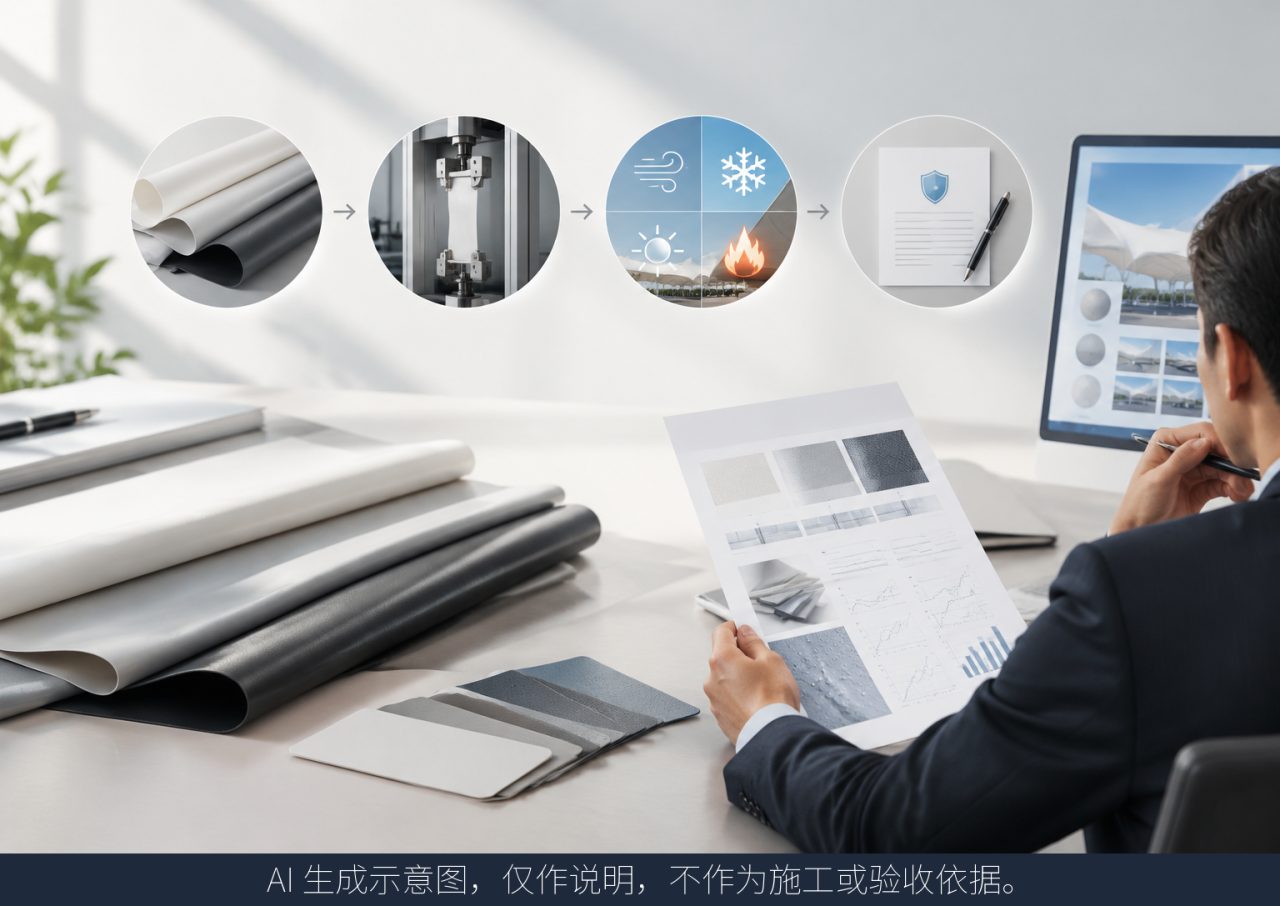
When membrane material arrives and its colour does not appear to match the sample you approved, it is one of the most common disputes in tensile membrane structure projects. Whether the dispute can be resolved smoothly depends less on the day of delivery and more on whether, during material selection, you completed a sealed-sample confirmation and wrote the colour standard into your contract documents. This article explains the sources of colour variation, the confirmation steps to agree before ordering, where the clauses should sit, and what evidence counts if a dispute arises.
Why the sample and the delivered membrane may look different
There are three common sources of colour variation. Identifying which one applies helps both parties judge responsibility:
- Lighting conditions. Membrane samples are usually viewed under indoor lighting, while the installed membrane is seen in natural light — and especially when sunlight passes through it, the appearance changes noticeably. The same panel looks different facing the sun versus backlit.
- Production batch. The base fabric and coating of PVC and PVDF membrane vary slightly between production batches. Your sample may come from one batch and the delivered goods from another.
- Coating and surface finish. Standard PVC membrane is economical and suits most carport applications; PVDF and PTFE are upgrades chosen when higher self-cleaning performance and longer service life are required. Different coatings reflect light differently, so even panels with the same stated colour code can look different to the eye.
Also note that samples provided at the selection stage are usually small swatches — small in area and not under tension. A large membrane panel in tension will not look identical to a small flat swatch. This is not a defect, but buyers should expect it.
How to lock the colour standard before placing an order
The key step is a sealed-sample (retained reference sample) confirmation. We recommend:
- Compare samples in natural light. Ask the supplier for membrane samples in your target colour and view them outdoors in daylight — ideally in conditions resembling your site's orientation and light — rather than deciding under office lighting.
- Seal the samples jointly. Once selected, prepare the sample in two or more identical sets. Both parties sign and date them, and each keeps a set. This sealed sample becomes the comparison benchmark for delivery acceptance and any later dispute.
- Record the material details. At the same time, document the membrane type (PVC, or upgraded PVDF/PTFE), colour code, production batch number, and the membrane fabric manufacturer's warranty period, each matched to the sealed sample.
- Agree the acceptable range. Some colour variation is hard to eliminate entirely. Agree in advance how comparison will be done and what level of difference is acceptable, and record it in writing so both sides are not arguing from different assumptions at delivery.
Which documents the colour acceptance clauses should appear in
A colour standard agreed only verbally is difficult to prove. Put it in three places:
- Contract annex: list the sealed-sample reference number, colour code, membrane type and batch number as a contract annex, stating that delivered membrane is accepted by comparison against the sealed sample.
- Warranty clauses: write the warranty for each supply scope item — membrane fabric, steel structure and so on — into the contract rather than relying on verbal assurance. Include the membrane manufacturer's warranty (for example, a typical 5-year factory warranty on PVC membrane fabric) together with the warranty coverage for colour and coating.
- Delivery acceptance record: on arrival, compare the membrane colour against the sealed sample, check the batch number against the sealed-sample record, and sign for receipt only after confirming.
What evidence counts if a dispute arises
If a colour dispute occurs, the comparison benchmark is the jointly signed sealed sample and the records in the contract annex — not phone photos, renderings or verbal descriptions. The usual order of evidence is:
- The sealed sample (the signed, dated set retained by both parties);
- The colour code and batch records in the contract annex;
- The comparison record made at delivery acceptance.
So keep your retained sealed sample safe — it must be from the same batch and signed at the same time as the supplier's. If comparison confirms the difference exceeds what both parties agreed, handle it under the warranty and replacement clauses in the contract.
Agree the confirmation method at the selection stage
How colour is confirmed is a decision for the material selection stage; leaving it until delivery puts you in a weak position. Before production begins, prepare the project use, dimensions or drawings, and agree in writing with the supplier on the design, fabrication, supply or installation scope you need.
If you are comparing membrane materials, or have questions about how to word colour and warranty clauses, share your project location, intended use (for example, a carport, walkway canopy or bicycle shelter), dimensions and any available drawings. Tell us which design coordination, custom fabrication and supply services you need so we can review the scope. You can refer to our membrane material selection page: /solutions/membrane-materials/.