 Membrane carportsClassic membrane shelters→
 Solar carportsParking meets green energy→
 Landscape canopiesParks and leisure spaces→
 Grandstand canopiesSports venue shelters→
 Inflatable play cloudsFamily play areas→
 Wastewater coversEnvironmental infrastructure→
 Fuel station canopiesStation shelters→
 Entrance canopiesWalkways and entrances→
EV Charging Station Membrane Canopies: How to Separate the Canopy Works from Electrical Equipment Services
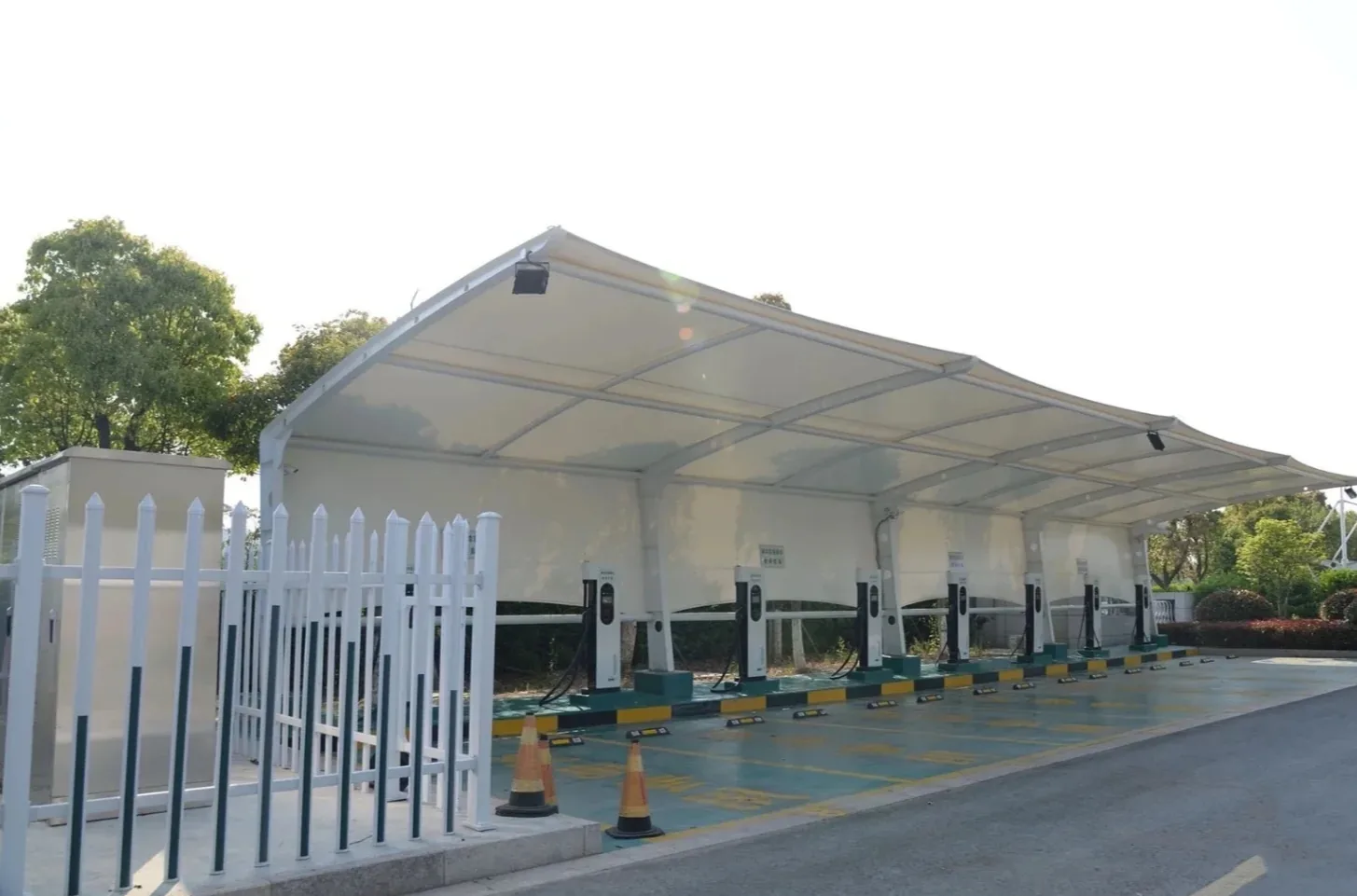
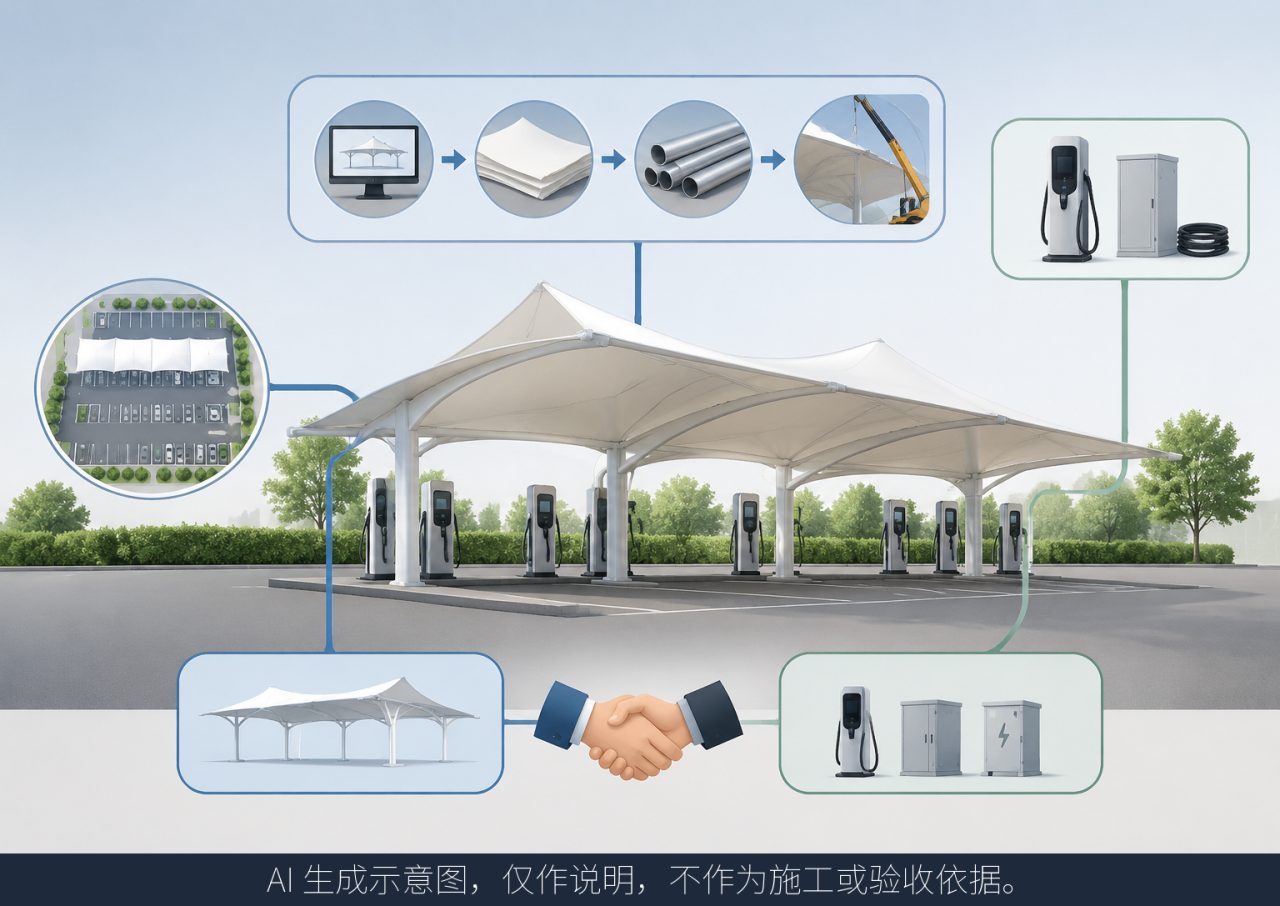
When procuring a canopy for an EV charging station, one point must be clarified at the very start: the membrane canopy works and the charging equipment and electrical works are two separate scopes of engagement. Qingsong Membrane Structures undertakes the design, fabrication and installation of the canopy itself. Who supplies and installs the charging piles, power distribution and cabling — and whether site operation is handled by another party — must be confirmed separately with suitably qualified service providers.
What the canopy works include
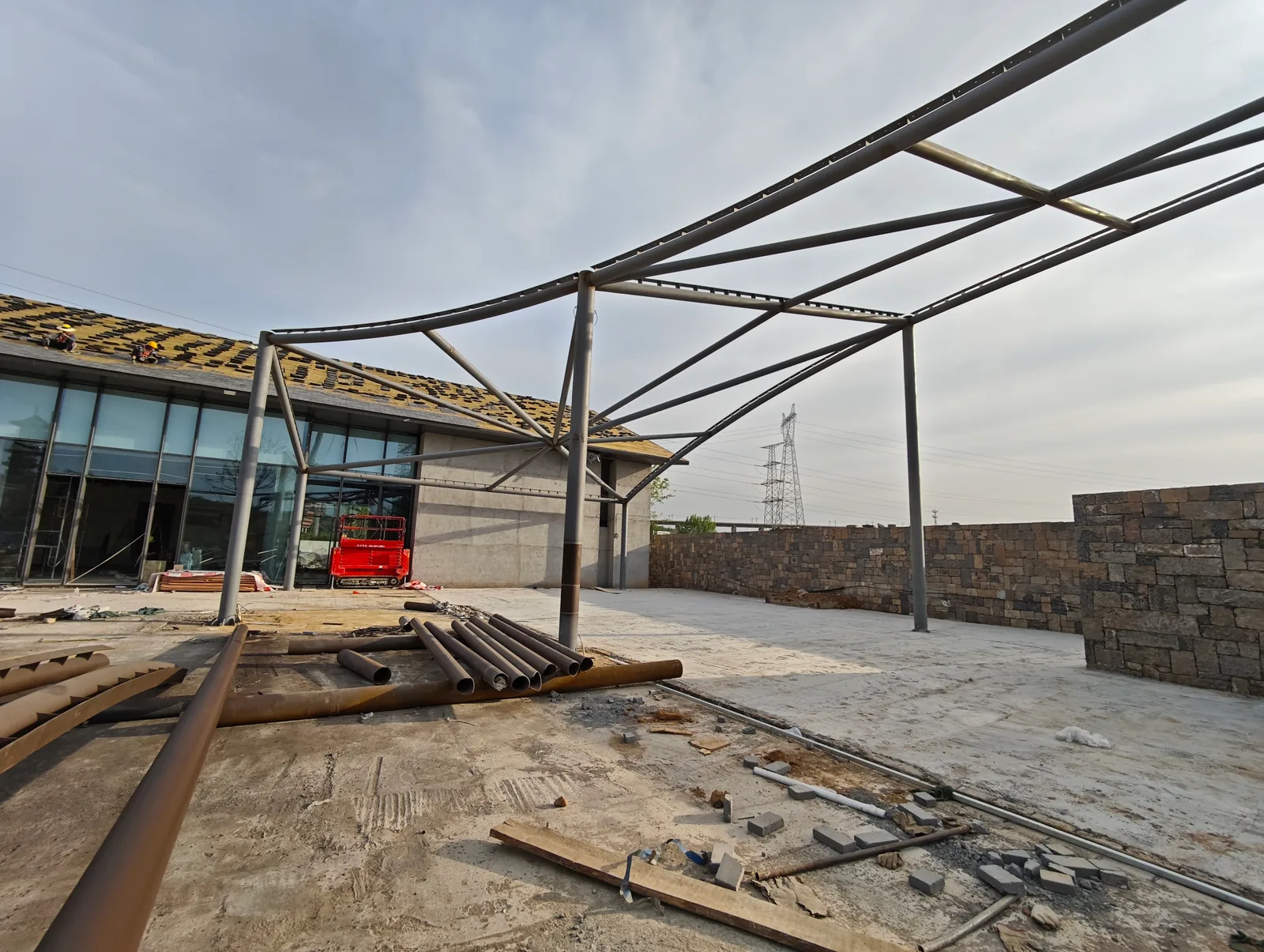
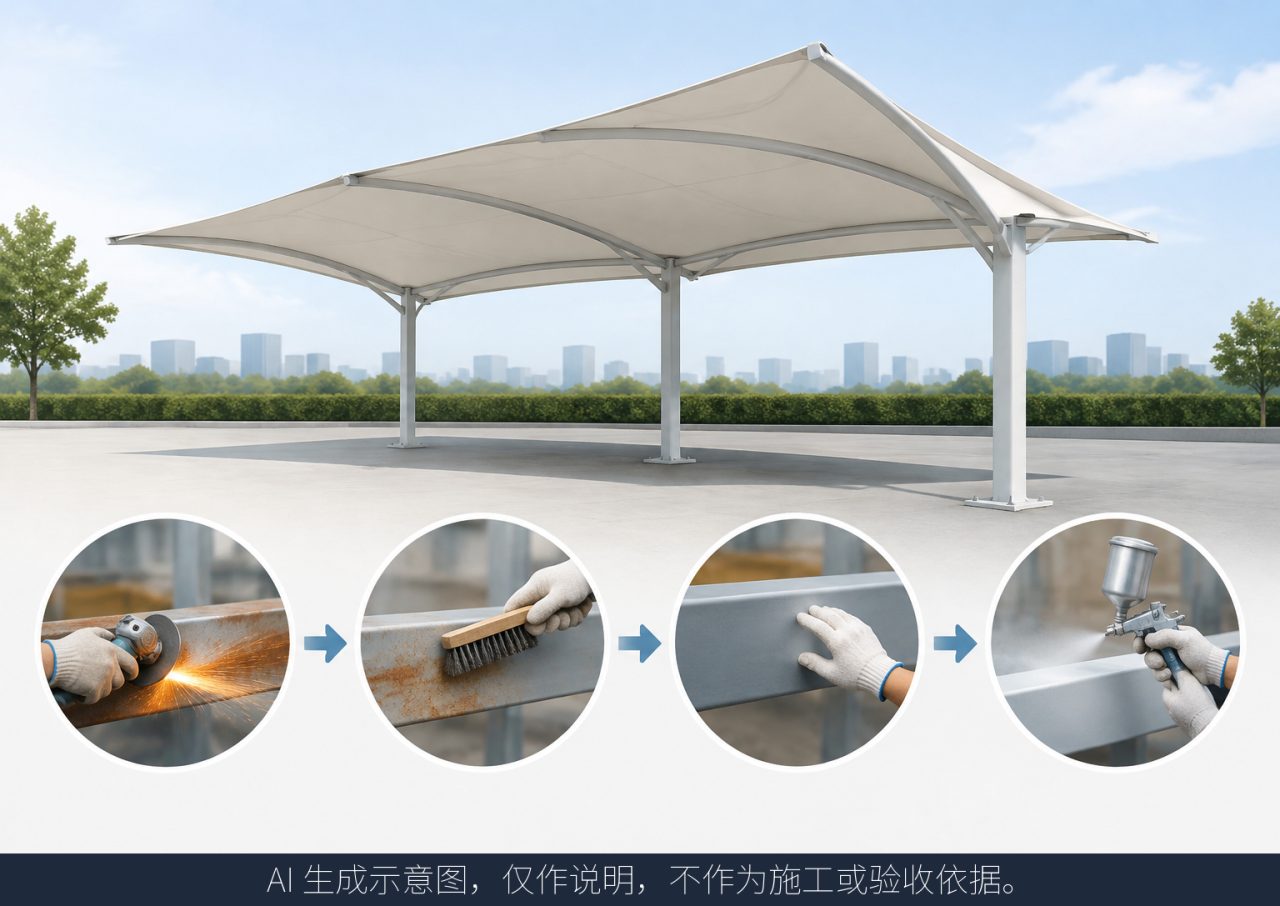
Qingsong follows a single integrated process for charging station canopies: design → fabrication → surface treatment → installation. In other words, scheme design, component fabrication, anti-corrosion surface treatment and on-site installation all fall within one engagement for the canopy structure itself. The exact boundaries — for example, whether foundation works or drainage fittings are included — should be written into the contract item by item.
Who is responsible for the electrical equipment
Charging piles, power distribution and cabling are normally outside the canopy engagement. Which party provides them must be confirmed before the project begins; the site investor typically engages an electrical contractor or equipment supplier separately. To avoid gaps between the two contractors, agree before signing: who prepares the foundation provisions, who handles pipework and cabling penetrations through the canopy, and who coordinates earthing. These are interface questions that both parties should settle at the scheme stage.
Coordinating the canopy layout with charging positions
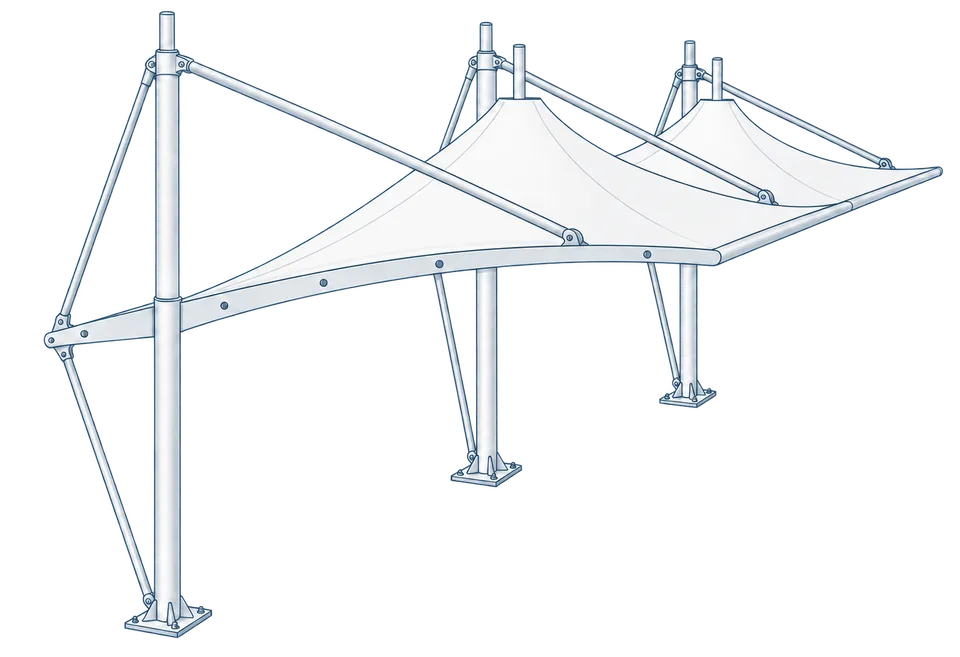
The position of charging bays, the orientation of the charging piles and vehicle circulation routes directly affect the column positions and spans of the membrane canopy. Provide the canopy designer with the charging pile layout plan or intended positions at the design stage, so columns avoid bays and equipment and rework is avoided later. Bolted connections are also worth discussing early: for charging stations that require no on-site welding, a bolted fabrication approach can be agreed to reduce on-site hot work — useful for sites already in operation or with strict hot-work restrictions.
How to divide responsibilities in the contract
When signing the canopy contract, confirm item by item: whether the engagement covers the canopy structure only; whether foundations, electrical works and fire protection are handled by others; how interface coordination between the two contractors is agreed; and what the acceptance milestones and handover conditions are. There is no universal template — these matters must be negotiated with each service provider based on the actual project and written into the contract.
What Qingsong provides, and how to confirm the remaining scope
Qingsong provides design, fabrication, surface treatment and installation of tensile membrane structure canopies for charging stations and similar applications. Whether charging equipment, power distribution and site operation are included in any engagement must be confirmed separately with the relevant providers before signing, along with the interfaces between them.
Charging stations are one of the applicable scenarios for Qingsong membrane canopies, alongside residential communities, business parks, commercial plazas, schools and factory premises. If you would like to discuss a canopy scheme, prepare the intended use, dimensions or drawings, and the scope of services you wish to engage, so both sides can clarify the service interfaces before work begins.
When preparing your RFQ (request for quotation — your formal enquiry for pricing and supply scope), include the site layout, approximate span and coverage, membrane and frame expectations where known, and your delivery or installation requirements. Share your project location, intended use, dimensions and available drawings, and tell us which design coordination, custom fabrication and supply services you need so we can review the scope with you.