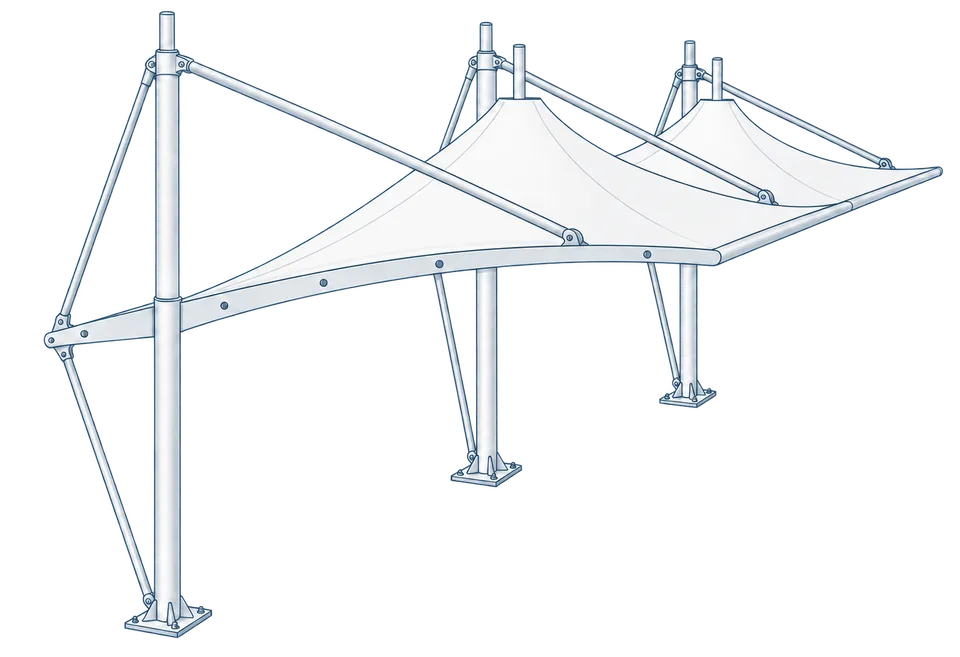
 Membrane carportsClassic membrane shelters→
 Solar carportsParking meets green energy→
 Landscape canopiesParks and leisure spaces→
 Grandstand canopiesSports venue shelters→
 Inflatable play cloudsFamily play areas→
 Wastewater coversEnvironmental infrastructure→
 Fuel station canopiesStation shelters→
 Entrance canopiesWalkways and entrances→
Anti-Corrosion Treatment for Tensile Membrane Structure Carports: What to Confirm Across Four Work Stages Before You Order
When sourcing a tensile membrane structure carport, corrosion protection of the steel frame is one of the areas where scope most often gets left vague. A useful approach is to break the work into four stages — rust removal, cleaning of weld slag and oil, pre-coating inspection, and protective coating — and confirm with the fabricator, stage by stage, who does what and to what standard. Only then can you compare quotations on a like-for-like basis.
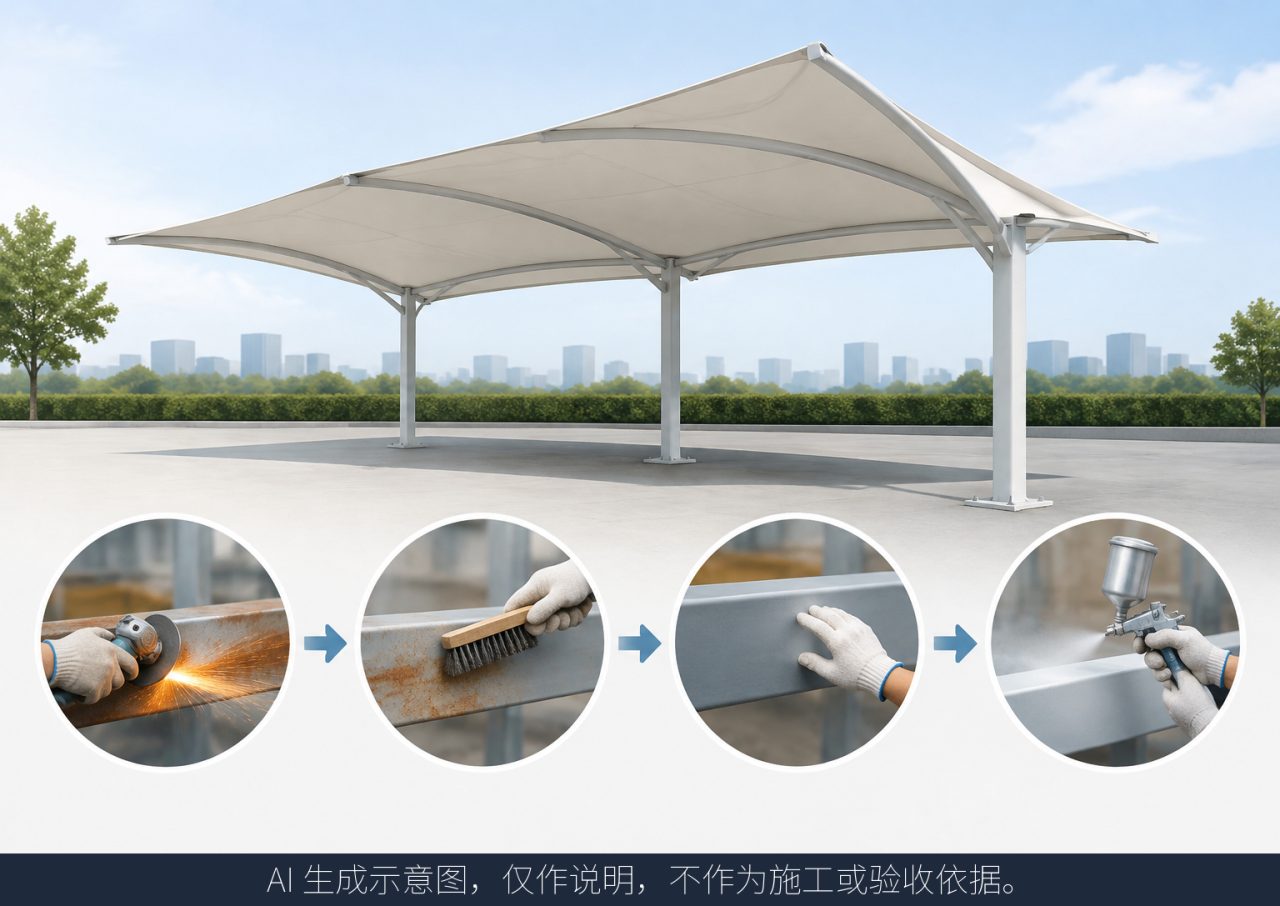
What the Standard Anti-Corrosion Scope Covers
Qingsong Membrane Structures' standard corrosion treatment is done piece by piece: each steel member is individually ground and de-rusted rather than processed in batches with a rough pass. Weld slag and oil residues are then cleaned off — if these are left in place, coating adhesion suffers. After the surface has passed inspection, the protective coating is applied. In other words, surface preparation is verified first, and painting only follows once it is confirmed adequate.
When enquiring, ask item by item: Is rust removal done member by member? Which areas are covered by weld slag and oil cleaning? How is the pre-coating inspection arranged? Simply asking "do you do anti-corrosion treatment?" will not surface this information.
When Hot-Dip Galvanizing or Powder Coating Makes Sense
Standard grinding, de-rusting and protective coating is suitable for typical carport projects. Two optional upgrades should be selected based on site conditions:
- Hot-dip galvanizing: suited to humid or corrosive environments — for example, sites with poor drainage, locations near water, or consistently high humidity. It is not a standard inclusion, is priced differently, and requires a separate quotation.
- Powder coating: suited to custom projects where colour retention and weathering performance of the finish matter. Confirm case by case for your project.
Who Performs the Upgrade Treatments
Hot-dip galvanizing is not carried out on Qingsong's own production line; it is performed by a partner processor. When enquiring, confirm directly: which party is responsible for the galvanizing stage, how transport between the facilities is arranged, and how the delivery schedule is affected. Record the arrangement in the contract.
Checklist for Your RFQ (Request for Quotation)
Before sending an RFQ, prepare to confirm the following with the supplier and, where relevant, your project engineer:
- Scope of corrosion protection: all steel members or only part of the structure;
- Rust removal and cleaning method: whether member-by-member grinding and weld slag/oil cleaning are included;
- Inspection stage: how the pre-coating check is arranged and documented;
- Whether upgrades such as hot-dip galvanizing or powder coating are needed, based on your site environment;
- For upgrades: who performs the work and how handover between parties is managed;
- Supply scope: which of design coordination, custom fabrication, surface treatment and installation are included in your engagement, and which are handled separately.
All of the above are matters to be agreed; the final contract governs. Please note that site installation and on-site servicing arrangements should be discussed explicitly — confirm with us what the supply scope covers before relying on any assumption about installation support.
How to Start
Share your project location, intended use, dimensions or available drawings, and tell us which design coordination, fabrication and supply services you need so we can review the scope. You can reach us through our contact page.