 Membrane carportsClassic membrane shelters→
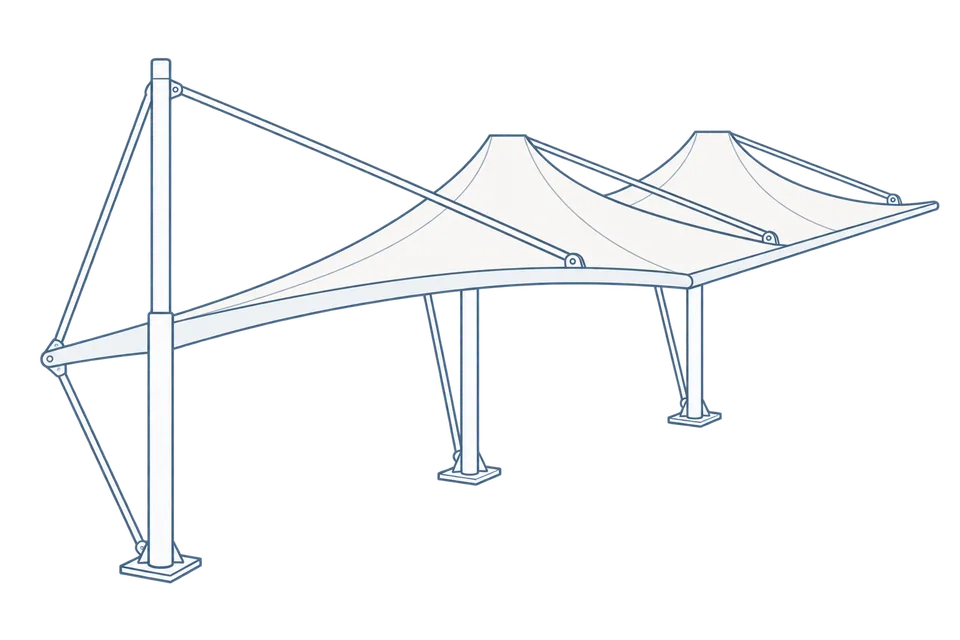 Solar carportsParking meets green energy→
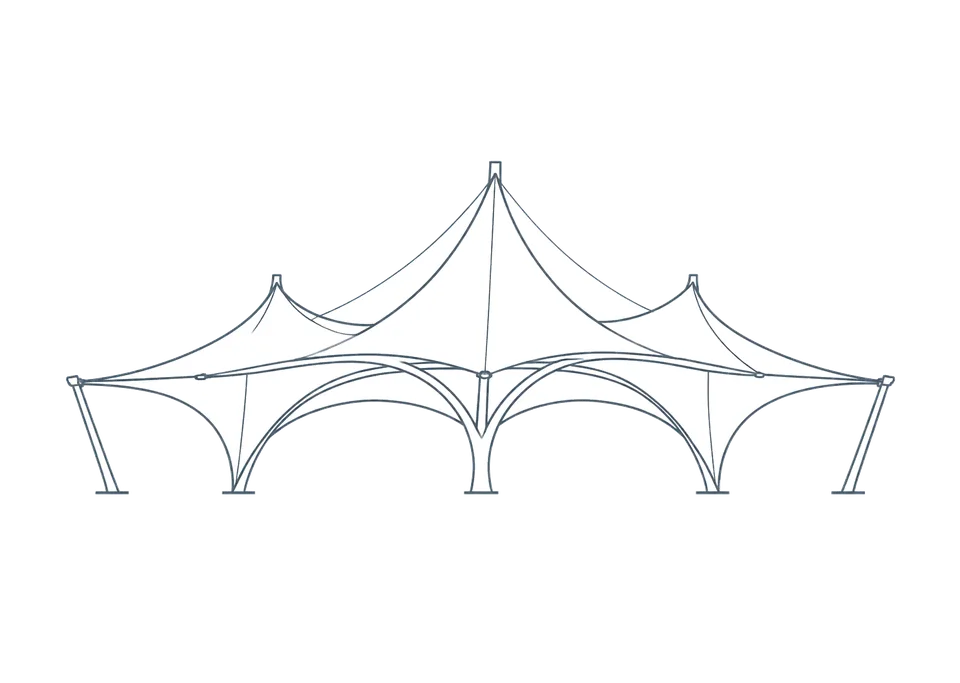 Landscape canopiesParks and leisure spaces→
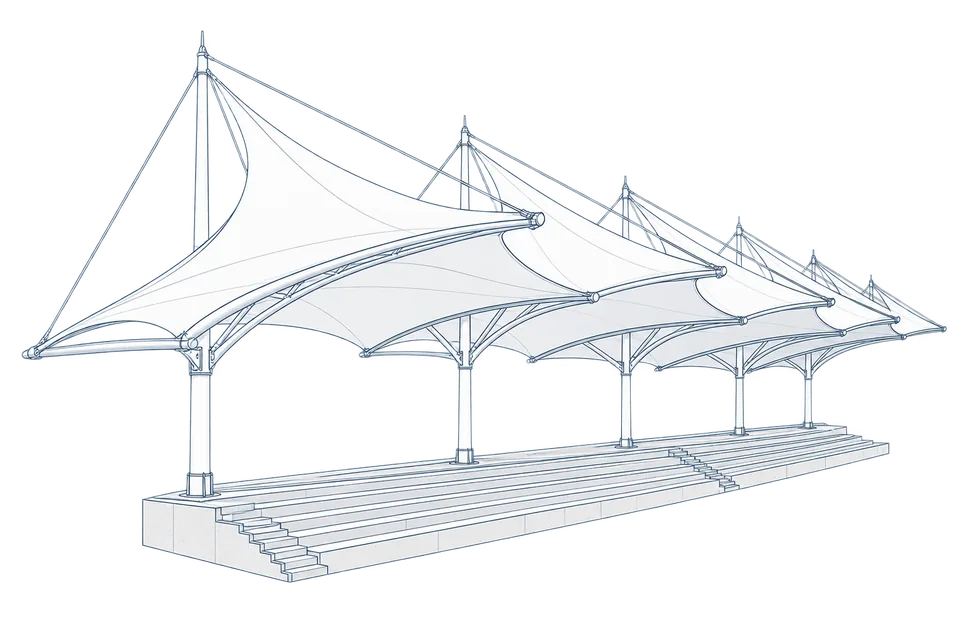 Grandstand canopiesSports venue shelters→
 Inflatable play cloudsFamily play areas→
 Wastewater coversEnvironmental infrastructure→
 Fuel station canopiesStation shelters→
 Entrance canopiesWalkways and entrances→
Can a Membrane Structure Carport Be Installed on a Site Where Hot Work Is Prohibited? Key Points for Discussing a Bolted Assembly Approach
Yes — when a property or site manager prohibits hot work, a tensile membrane structure carport can often still be installed. The solution is to agree in advance on a bolted assembly approach: components are fabricated in the workshop, delivered to site, and assembled with bolted connections instead of welding. However, bolted assembly is not the default fabrication method for every project. Whether it can be used must be confirmed with the fabricator during the design coordination stage, before work begins.
Conditions for Using Bolted Assembly
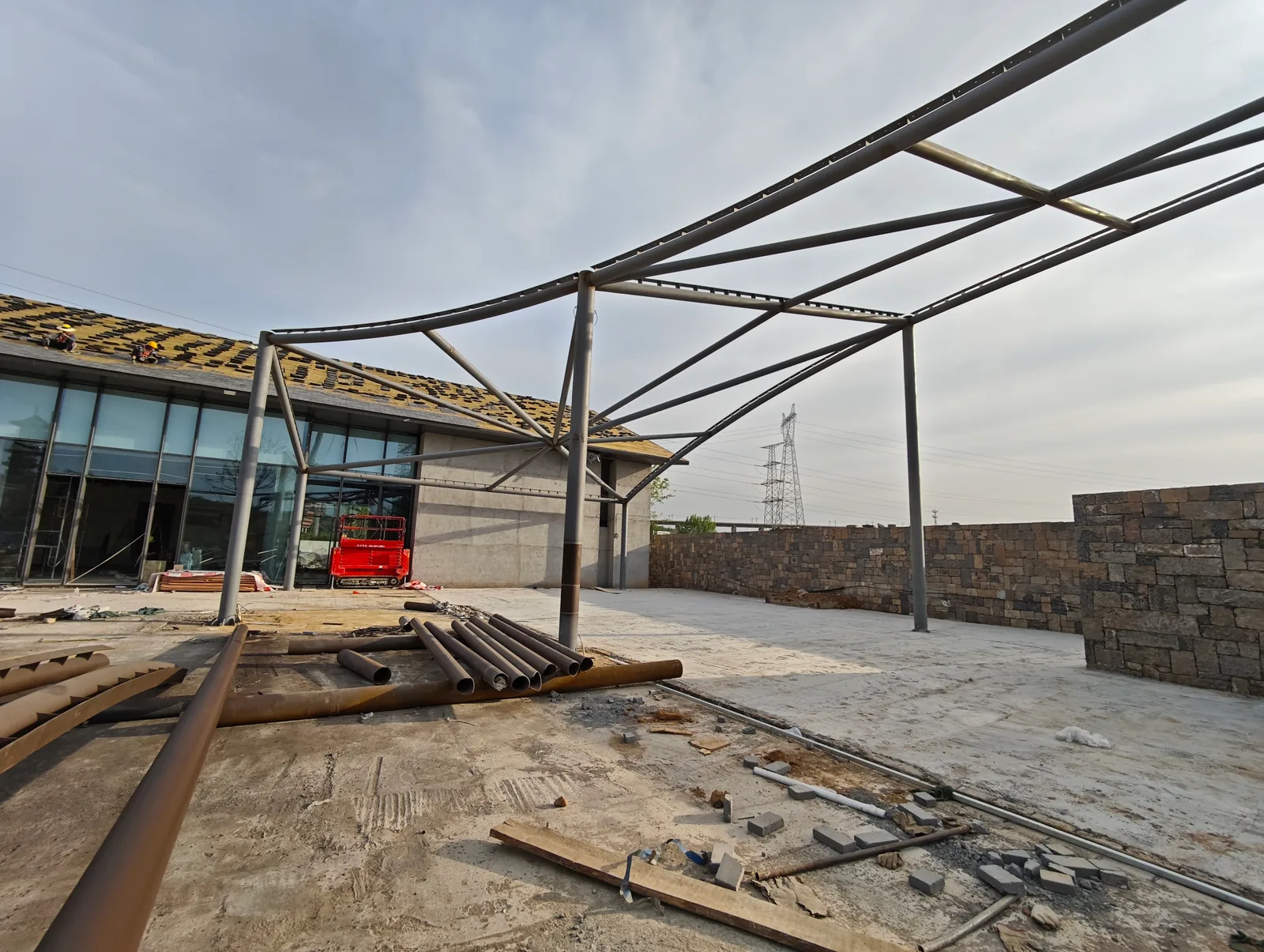
Bolted assembly requires prior agreement. For sites where hot work is prohibited or where the buyer requests bolted connections, the fabricator can confirm at the design stage whether this fabrication and assembly method is feasible. Along with this, the delivery condition of the components — for example, whether they arrive fully finished and ready to bolt together, or whether any on-site modification is needed — must also be settled at the design stage.
In other words, a no-weld installation depends on fixing the component condition and the site assembly method before fabrication starts, not adjusting them after the team arrives on site.
One important qualification: this does not mean every project can be installed without welding. Conventionally fabricated projects and bolted projects differ in component design and connection details. Feasibility must be confirmed item by item against actual site conditions, together with the buyer's project engineer where one is appointed.
What to Confirm During Design Coordination
When requesting a quotation (RFQ — Request for Quotation) or discussing the supply scope, clarify the following points early:
- Site restrictions: State the hot-work prohibition clearly, and mention any other on-site constraints such as permitted working hours or nearby facilities that limit access.
- Dimensional survey method: For large sites, drone surveying may be possible after discussion and confirmation; small sites generally do not require it. Survey arrangements can be agreed with the fabricator during coordination.
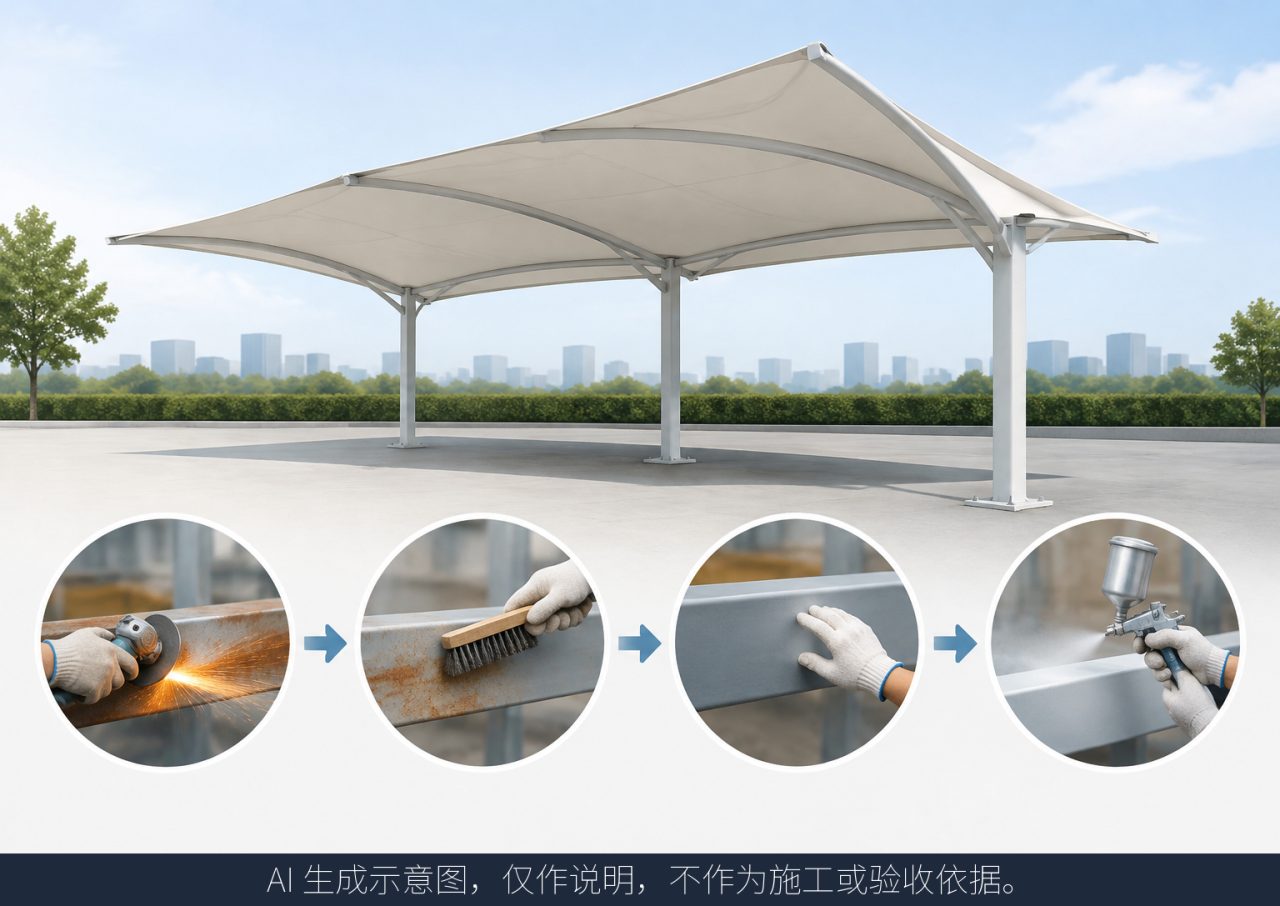
- Scope of engagement: Clarify who is responsible for each part of the work — design, custom fabrication, surface treatment, and installation. Confirm each party's scope in writing.
Installation Quality and Boundaries of Responsibility
Based on the fabricator's current service description, installation quality is supported by three factors: components are predominantly prefabricated in the workshop (any on-site fabrication needs must be confirmed in advance), the cooperative installation team works to a unified process standard, and key connection nodes are overseen by the fabricator's technical personnel.
Regarding responsibility, the following items should be confirmed one by one in the contract rather than left as verbal agreements at the design stage:
- Design and detail engineering of the bolted connections
- Division of work during on-site installation
- Acceptance criteria for the completed membrane canopy
Design responsibility and supply boundaries are matters to agree between the buyer, the buyer's project engineer, and the fabricator. Nothing in this article constitutes confirmation of approval under local building regulations — buyers should verify compliance requirements for their own jurisdiction.
Communication Checklist Before Contacting the Fabricator
Before reaching out, prepare the following so the design coordination discussion can proceed smoothly:
- Intended use of the structure (e.g., vehicle carport, bicycle shelter, walkway canopy — confirm the exact application terminology against your drawings and material documents)
- Site dimensions or available drawings, including any revision status of the drawings
- Site restrictions, especially the hot-work prohibition, plus working-hour or access limits
- The services you wish to commission: design coordination, custom fabrication, surface treatment, supply of components, and installation arrangements
Sharing these details in one message saves several rounds of back-and-forth. If you have a project with hot-work restrictions, share your project location, intended use, dimensions and available drawings via our contact page, and tell us which design coordination, fabrication and supply services you need so we can review the scope.