 Membrane carportsClassic membrane shelters→
 Solar carportsParking meets green energy→
 Landscape canopiesParks and leisure spaces→
 Grandstand canopiesSports venue shelters→
 Inflatable play cloudsFamily play areas→
 Wastewater coversEnvironmental infrastructure→
 Fuel station canopiesStation shelters→
 Entrance canopiesWalkways and entrances→
Restarting a Paused Tensile Membrane Structure Project: Four Conditions Buyers Should Verify First
When a tensile membrane structure project is resumed after a pause, buyers and project coordinators should verify four things before moving forward: first, which stage the work had reached when it stopped; second, whether the original design and quotation still apply under their original conditions; third, whether site conditions have changed and dimensions need to be reconfirmed; and fourth, whether itemized warranty terms are written back into the contract line by line. All four involve possible changes to the scope and conditions of service, so it is advisable to confirm each one during detailed communication—not by verbal agreement alone.
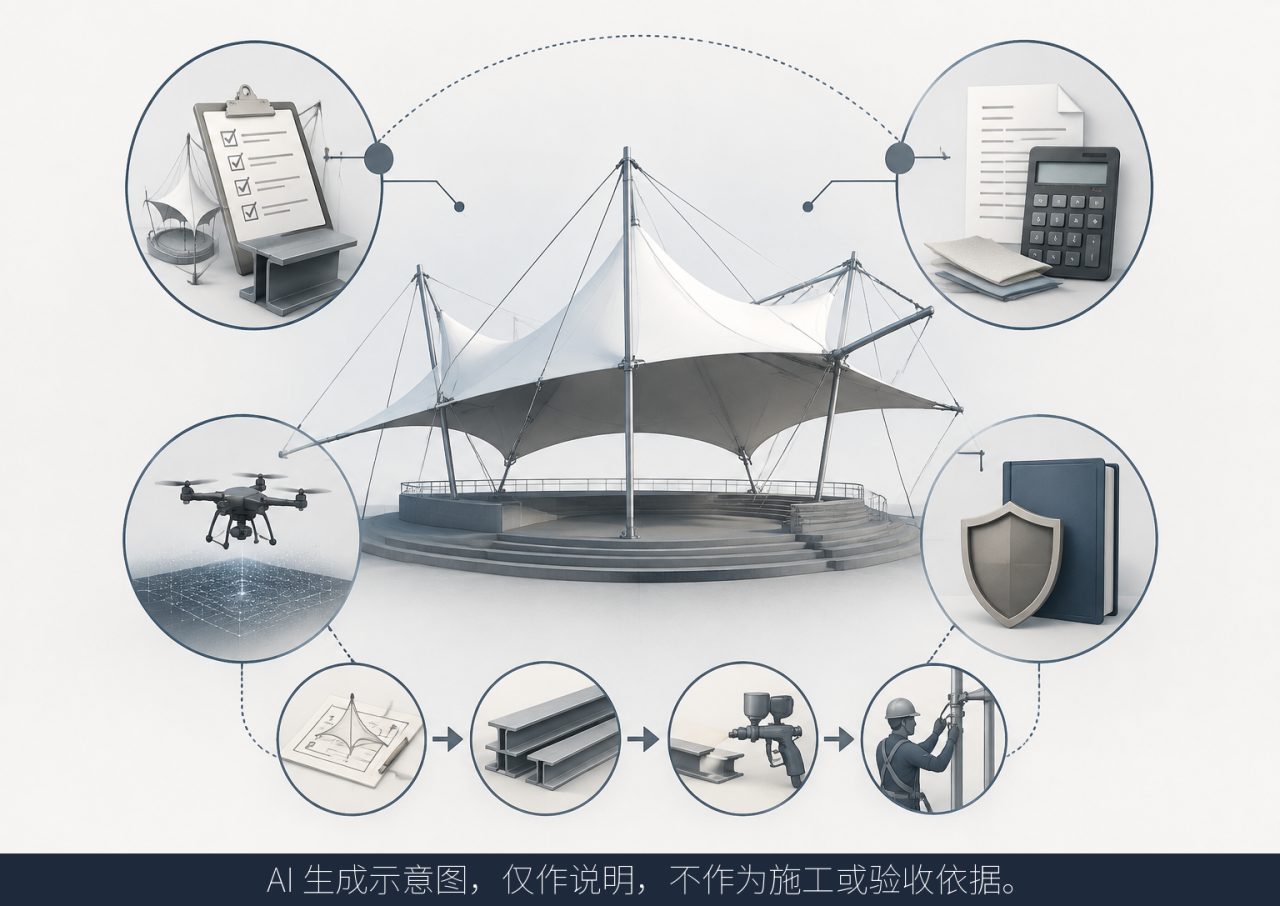
1. Identify Which Stage the Project Stopped At
A membrane canopy project typically progresses through design → fabrication → surface treatment → installation. A paused project may have stopped at any of these stages, so before restarting, confirm with the fabricator: are the drawings finalized? Have components been fabricated or surface-treated? Is the site ready for installation? The restart tasks differ by stage—if drawings were not finalized, design coordination must resume; if components are complete, their dimensions must be checked against current site conditions.
2. The Original Design and Quotation Are Not Automatically Valid
A design and an RFQ (Request for Quotation, the formal inquiry used to obtain pricing for a defined supply scope) are normally tied to the dimensions, membrane material configuration and service scope confirmed at that time. If site conditions, material selections or the commissioned scope changed during the pause, the basis of the original quotation has changed. When restarting, go through the original scope item by item and confirm what continues as before and what needs to be re-quoted. This article does not promise that the original design, pricing or production schedule remains valid; everything is subject to reconfirmation.
3. Reconfirming Dimensions After Site Changes
For projects paused for a long time, or where the site has been occupied by other trades, current dimensions and boundaries may differ from the original survey. For large sites, drone-based site surveying can be used to recapture measurements after communication and agreement; for smaller sites, on-site confirmation is usually sufficient. Either way, dimensions must be rechecked on restart—do not assume pre-pause measurements still hold.
4. Put Warranty Terms Back into the Contract
Warranty for a tensile membrane structure project is typically itemized—membrane fabric, steel structure and other components, each with its own warranty method and period. All of these should be written into the contract, not promised verbally. Restarted projects need particular attention: if the scope has changed, the warranty clauses in the contract must be updated accordingly, so that old and new commitments are not mixed and become unclear later.
5. Pre-Installation Condition Checks
Before entering the installation stage, also confirm: whether components leave the factory as finished products or whether on-site fabrication needs coordination; whether the installation team works to a unified process standard; and whether the fabricator's technicians will oversee key connection details. Reconfirming these at restart helps reduce interface problems on site.
To restart your project, prepare the intended use, dimensions or available drawings, and the service scope you wish to commission, so each of the above conditions can be verified one by one. Share your project location, intended use, dimensions and drawings with us, and tell us which design coordination, custom fabrication and supply services you need so we can review the scope together. Visit our contact page to start the discussion.