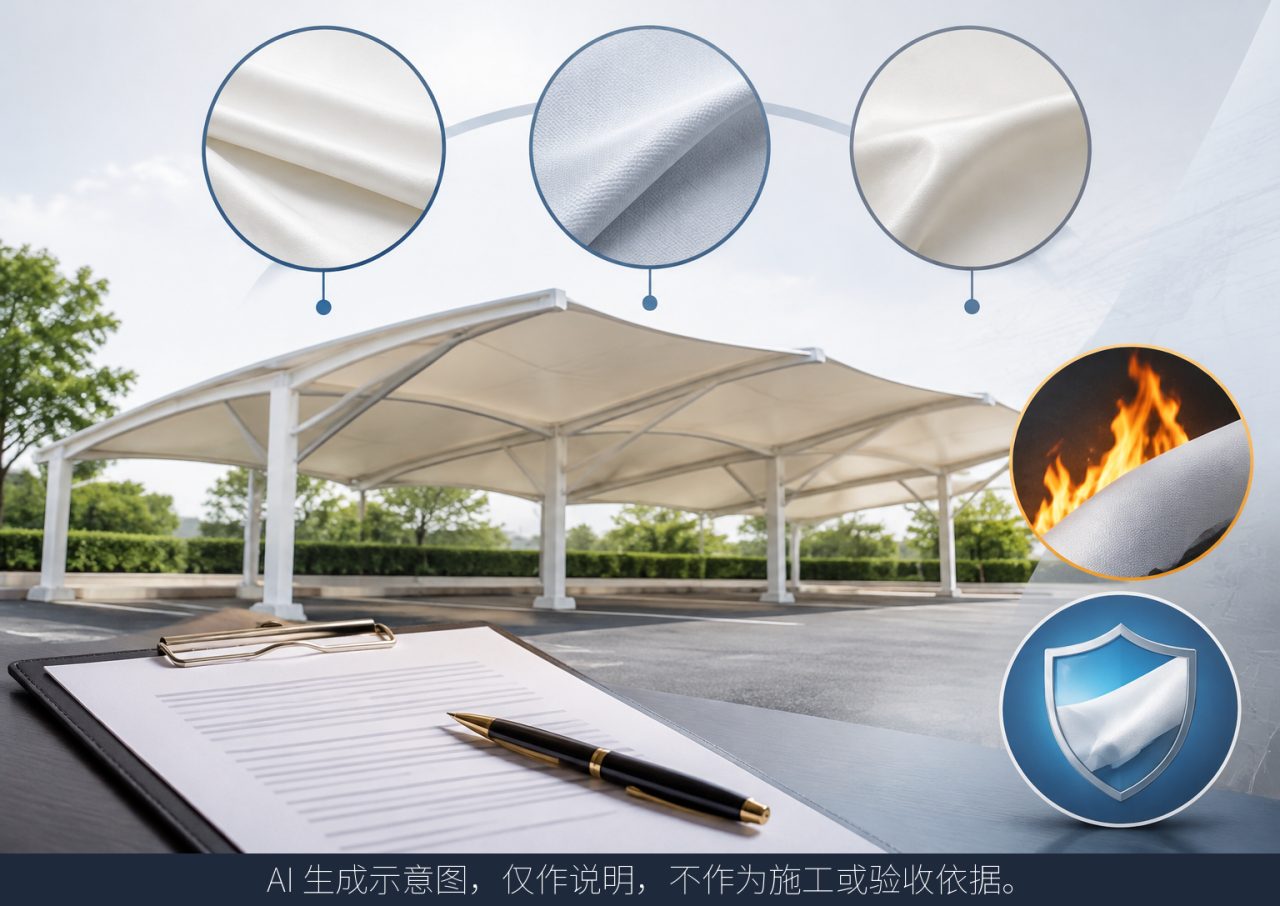
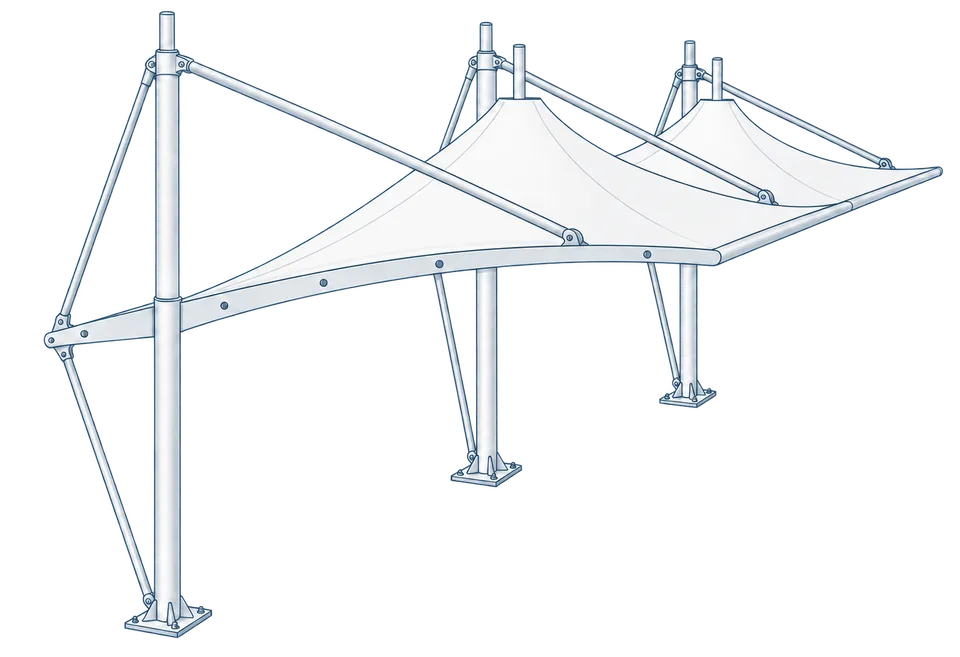
 Membrane carportsClassic membrane shelters→
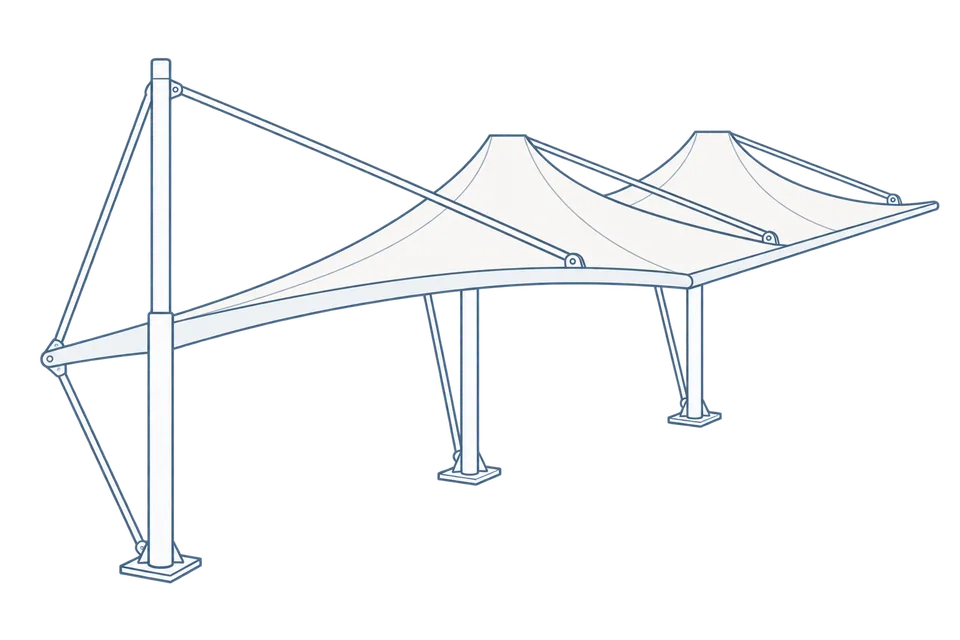 Solar carportsParking meets green energy→
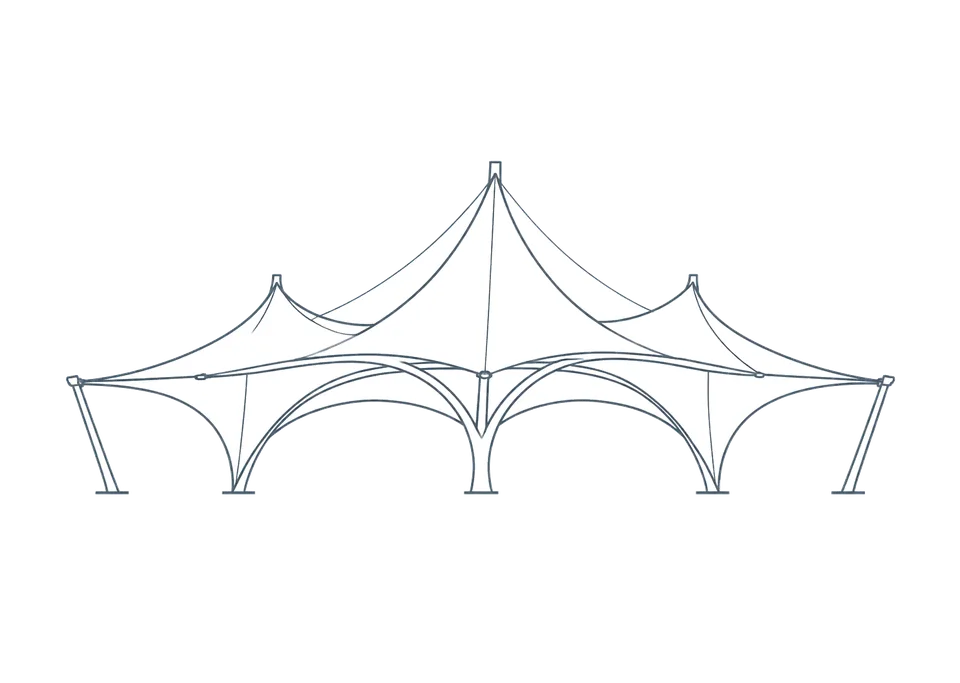 Landscape canopiesParks and leisure spaces→
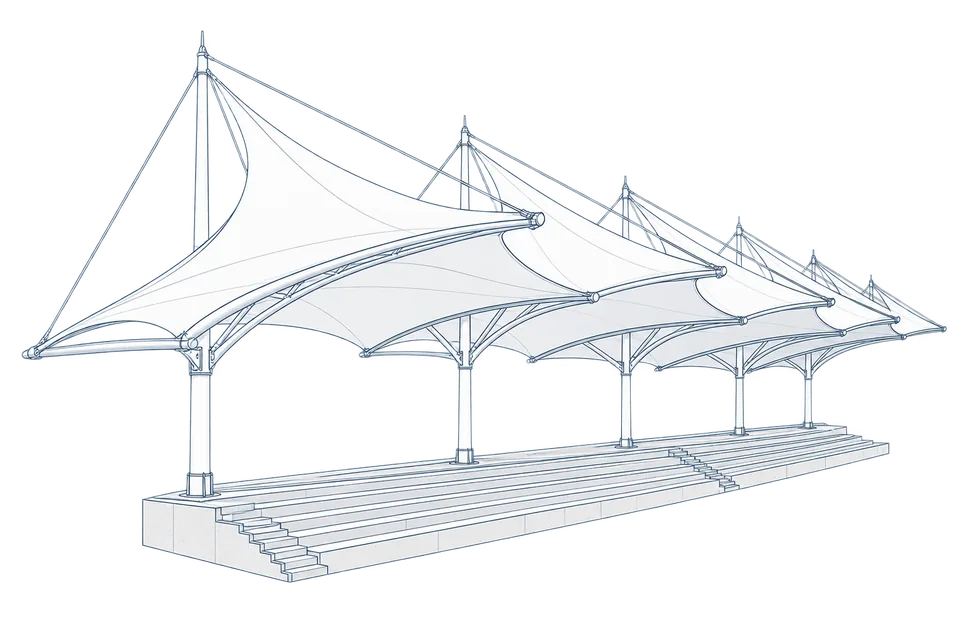 Grandstand canopiesSports venue shelters→
 Inflatable play cloudsFamily play areas→
 Wastewater coversEnvironmental infrastructure→
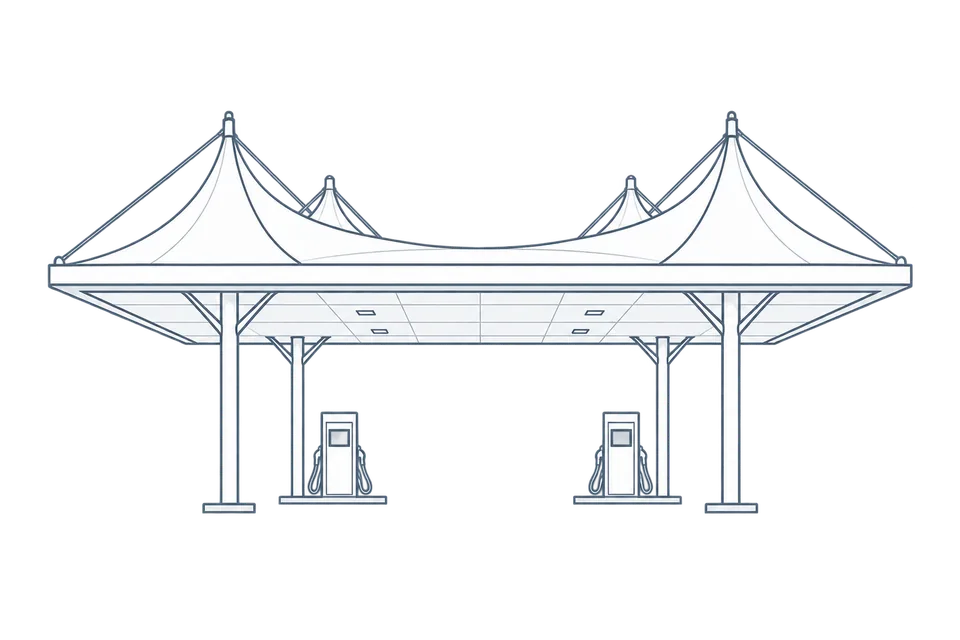 Fuel station canopiesStation shelters→
 Entrance canopiesWalkways and entrances→
Tensile Membrane Structure Component Fabrication from Your Drawings: How to Divide Design and Installation Responsibility
In a build-to-print (fabrication-from-your-drawings) arrangement, design responsibility must be clearly allocated between the buyer and the fabricator in the contract, with the fabricator producing strictly to the approved drawings. Whether fabrication, surface treatment and installation fall inside the supply scope must be written out item by item before signing — it cannot rest on verbal assumptions or industry custom. This article is written for overseas contractors, fabricators and purchasing teams planning to outsource fabrication of tensile membrane structure or membrane canopy components, and explains how to divide responsibility when commissioning fabrication-only work.
Fabrication-only mode: who owns the drawings?
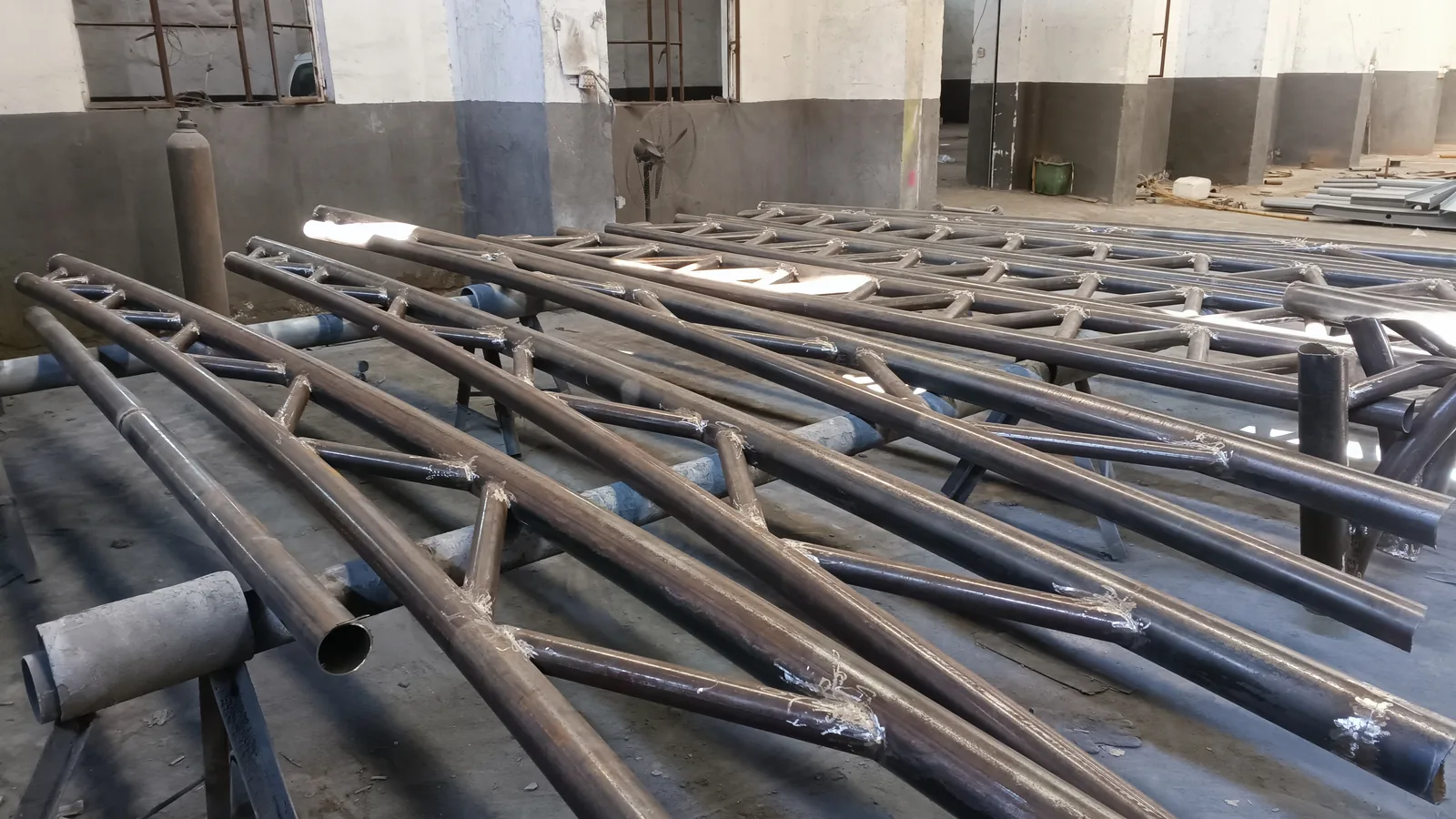
Choosing fabrication from your drawings usually means the buyer already holds design drawings and the fabricator produces components to those drawings. Qingsong Membrane Structures operates its own fabrication workshop with laser cutting, beam-wrapping equipment and a powder-coating line, and can fabricate and finish components according to the drawings the buyer supplies.
Under this mode, several common responsibility boundaries should be made explicit:
- Drawing accuracy and completeness. Agree in the contract who is responsible for the correctness of the drawings, so that a design error in the original documents does not leave liability unclear.
- Fabricator feedback on obvious issues. The fabricator works to the drawings; if an obvious problem affecting fabrication is found, it is safer to raise it for confirmation before proceeding than to keep cutting to a flawed drawing.
- Pre-assembly and delivery acceptance. Where bolted, shop-prefabricated solutions are used, components leave the workshop as finished assemblies; agree in advance how goods are inspected and accepted on arrival.
If your drawings are still at concept stage and lack the detailed design needed for direct cutting, state in the contract who completes the detailed design and who approves revisions — avoid discovering a missing drawing halfway through fabrication.
The fabrication–installation interface: what to spell out in the supply scope
The most common trouble spot in a fabrication-only commission is the handover between fabrication and installation. Confirm each of the following in the contract:
- Packing list and supply scope: how component quantities and specifications correspond to the drawings;
- Surface treatment: whether powder coating or other finishes are included, and against which standard acceptance is judged;
- Transport and on-arrival handover: who arranges freight and how goods are counted and checked on delivery;
- Installation responsibility: when the buyer uses its own local installation team, whether the fabricator provides installation guidance, and how the scope and cost of that support are calculated;
- Quality dispute handling: the process and liability if components delivered do not match the drawings.
Putting these points into the contractual supply scope is far easier than resolving each party's differing assumptions after the fact.
No hot work on site: agree bolted connections early
Some sites — for example operating parking areas or locations near fuel stations — do not permit on-site welding. For such requirements, discuss a bolted connection scheme with the fabricator before signing: components are fully fabricated in the workshop and assembled on site with bolted joints.
Points to confirm in advance include: whether connection nodes in the drawings are already designed as bolted; whether component segmentation and transport dimensions match the bolted scheme; and whether site conditions (space, lifting method) can support the assembly. A bolted scheme involves design-side adjustments, so under a fabrication-only commission these confirmations must be completed jointly by the buyer and the fabricator.
When full-scope commissioning makes more sense
If the buyer has no in-house design capability and no installation team of its own, a fabrication-only arrangement can split detailed design, fabrication and site installation across multiple parties, and the coordination cost at the interfaces may exceed the savings on fabrication. Qingsong can provide an integrated process covering design, fabrication, surface treatment and installation. Under full-scope commissioning, design and fabrication sit within one contract framework, so design changes and fabrication adjustments have a more concentrated point of contact — though the specific division of responsibility still needs to be written into the contract.
In short: fabrication-only suits buyers who can cover design and installation at both ends themselves; full-scope commissioning suits buyers who want fewer interfaces and one party coordinating the whole.
How to start an RFQ
Whatever mode you choose, prepare the following before signing so responsibility division can be written clearly into the contract:
- Project location and intended use (for example, a carport for vehicle parking or a bicycle shelter — confirm the terminology against your drawings and material documents);
- Dimensions, or drawings at concept or detailed-design stage;
- The services you want commissioned: design coordination, custom fabrication, surface treatment, packing lists and supply scope, and any installation guidance for your local crew;
- Any site constraints such as no-hot-work requirements.
Share your project location, intended use, dimensions and available drawings, and tell us which design coordination, fabrication and supply services you need so we can review the scope together. You can reach us through our contact page.