 Membrane carportsClassic membrane shelters→
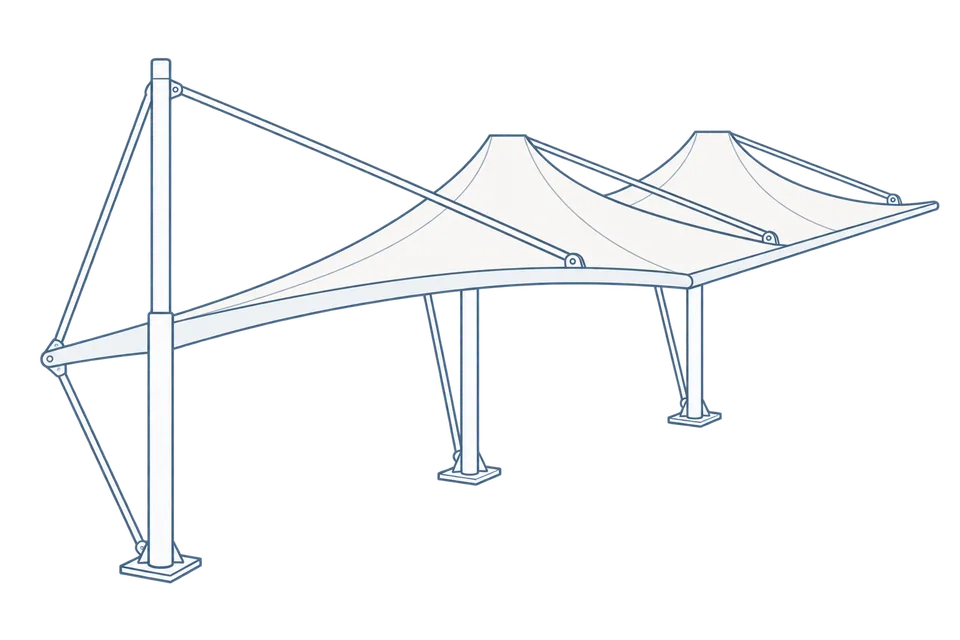 Solar carportsParking meets green energy→
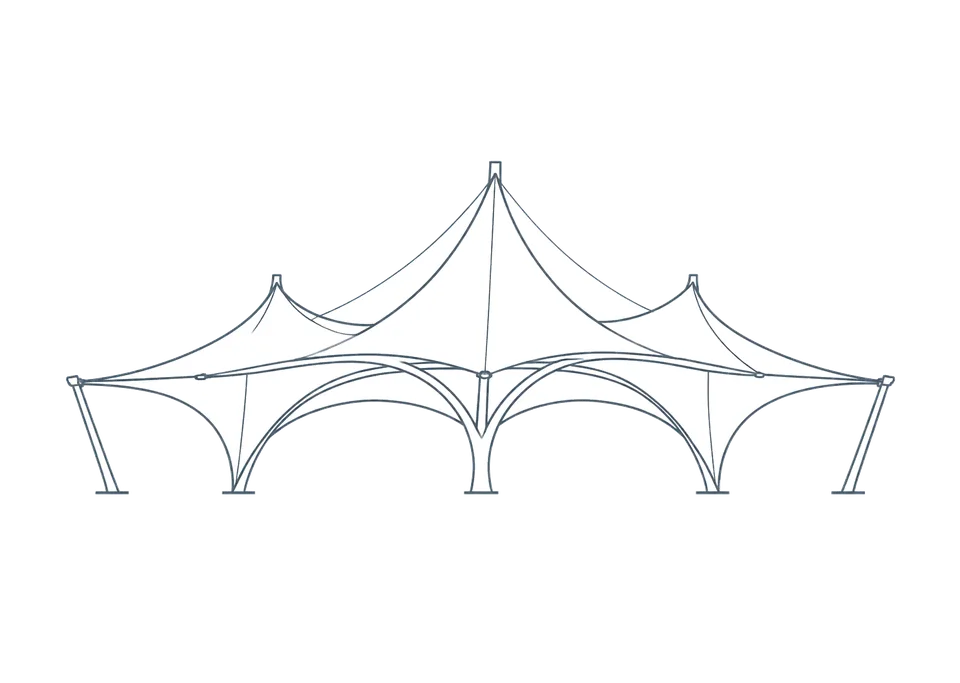 Landscape canopiesParks and leisure spaces→
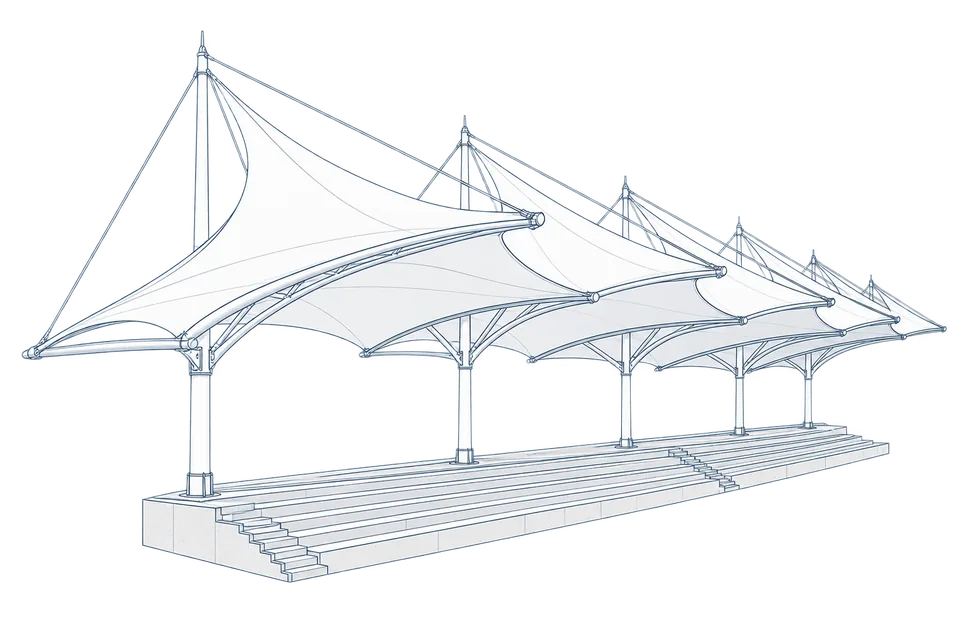 Grandstand canopiesSports venue shelters→
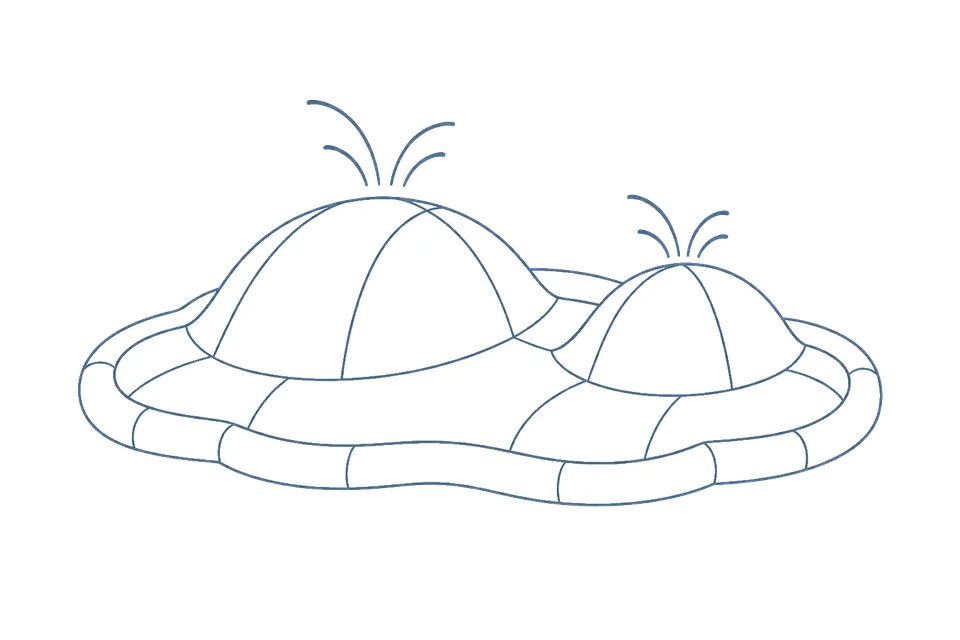 Inflatable play cloudsFamily play areas→
 Wastewater coversEnvironmental infrastructure→
 Fuel station canopiesStation shelters→
 Entrance canopiesWalkways and entrances→
Procuring Custom-Fabricated Tensile Membrane Components When You Have Your Own Installation Crew: Handover, Site Conditions and Warranty Boundaries
If your company already has its own installation crew, you can absolutely work with a tensile membrane structure fabricator on a fabrication-and-supply-only basis: the factory prefabricates and ships the components, and your team handles installation. The key is to define the handover scope, installation standards and warranty responsibilities item by item before the contract is signed — not negotiate them verbally after the goods arrive. Below are the practical issues to work through.

What is handed over when components leave the factory
The normal arrangement is that components are fully prefabricated in the factory and shipped directly to the project site. In other words, what arrives should be finished, installation-ready components — no on-site re-fabrication should be needed. At handover, check:
- Whether the component list matches the packing list and shipping documents;
- Whether membrane panels and all fittings are complete;
- Whether any deformation or coating damage occurred in transit.
Before shipment, agree with the fabricator on packing methods, the site receiving and counting procedure, and how replacement parts will be handled if transit damage is found. These points belong in the supply contract.
Note: 「finished components ex-factory, no on-site fabrication」 is the standard delivery mode described for Qingsong Membrane Structures. For any individual project, whether unloading, storage assistance or other site-side items are included is still a matter to be agreed between the parties.
What site conditions your crew must prepare
Before your installation team mobilises, the site should offer basic conditions: crane or lifting equipment access and standing positions, level ground for component staging, and sufficient working area for cable tensioning and membrane unfolding. These are not things the fabricator can arrange unilaterally. Prepare them according to the installation requirements the fabricator provides, and treat site-condition confirmation as a formal pre-start step.
How installation quality is controlled when a third-party crew installs
Tensile membrane installation has specific technical requirements: tensioning sequence, membrane unfolding direction and node fixing methods all directly affect the finished result. Under a 「factory fabrication + client's own crew installation」 split, quality is typically managed through two mechanisms working together:
- The fabricator provides a unified installation standard and technical briefing for the crew;
- The fabricator's technicians attend site for critical nodes.
Which nodes require attendance, how many visits, and who bears the associated cost — these are items to negotiate case by case; there is no fixed answer.
As a reference point, Qingsong Membrane Structures' described practice for its own projects is factory prefabrication, direct shipping, installation by partner crews under a unified technical standard, technician control of key nodes, and separate warranties for membrane and steelwork written into the contract. If you switch to your own crew, the depth of fabricator involvement and the responsibility boundaries must be renegotiated — do not assume the same model transfers automatically.
How to divide warranty responsibilities in the contract
This is the most dispute-prone area of a split arrangement. A sound approach is to itemise warranties:
- Membrane: warranty from the membrane supplier;
- Steelwork and coating: as agreed in the supply contract;
- Installation workmanship: the responsibility of whichever party actually performs the installation.
If installation is done by your own crew, the fabricator will normally only warrant its supply scope — it cannot stand behind a third party's workmanship. Conversely, if improper installation damages membrane or components, the contract should state how such liability is determined. Put all warranty items in writing; avoid verbal commitments.
Transport and site coordination for distant projects
For projects far from the fabrication facility, the usual solution is factory prefabrication plus direct shipping, with installation by local forces. Your side's coordination tasks: confirm arrival dates, arrange unloading labour and space, and have the site installation-ready on schedule. Agree shipping lead times and delivery batches in the contract so that components do not arrive before the site is ready, causing double-handling or damage.
Checklist to confirm before committing
- Scope: components only, or including technical briefing and technician attendance at critical nodes?
- Ex-factory condition: finished components, and who owns packing and transport responsibilities?
- Installation standard: how will technical requirements be briefed, and which nodes need fabricator attendance?
- Warranty split: membrane, steelwork and installation warranty periods and responsible parties — all in the written contract.
- Site conditions: who prepares lifting access, staging area and working space?
Finally, whether a fabricator will accept installation by a client's own crew is itself a matter for discussion — the answer may differ by project and by your crew's experience with membrane work. When you enquire, prepare the intended use, dimensions or drawings, and the service scope you want, so both sides can judge whether the split arrangement is workable. Contact us with your project details, drawings and required supply scope, and tell us which design coordination, custom fabrication and supply services you need so we can review the scope together.