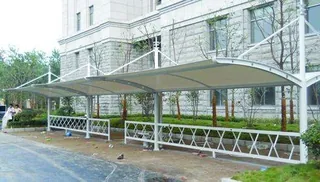
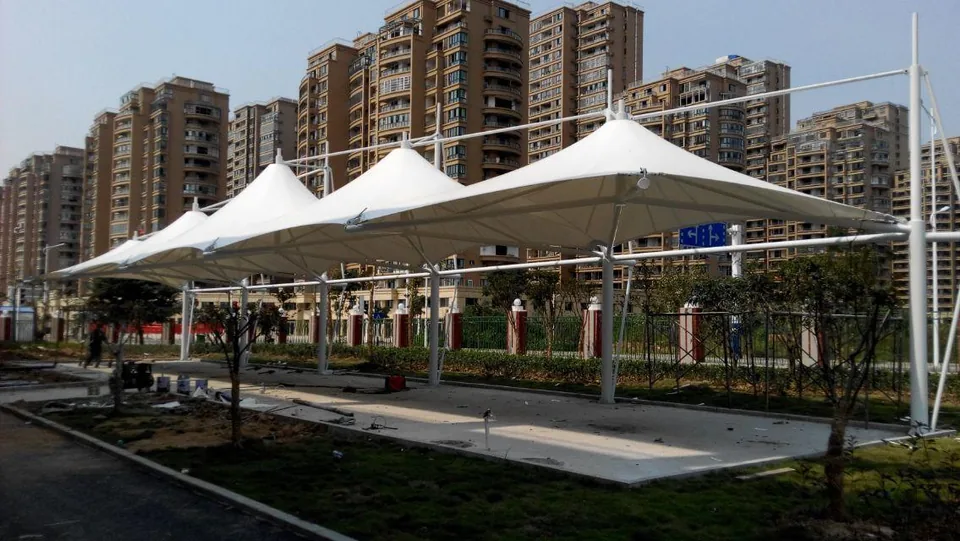
 Membrane carportsClassic membrane shelters→
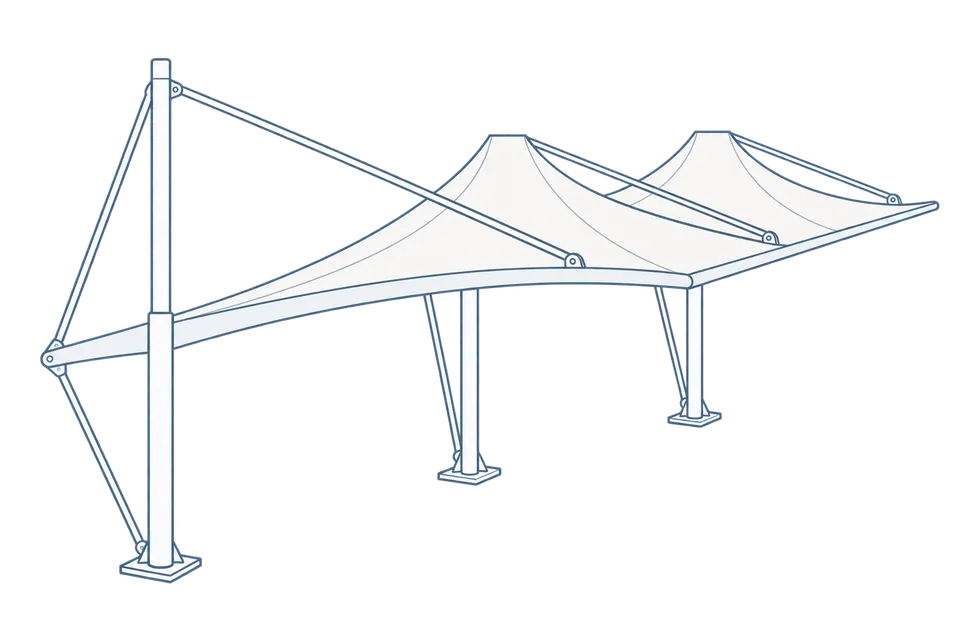 Solar carportsParking meets green energy→
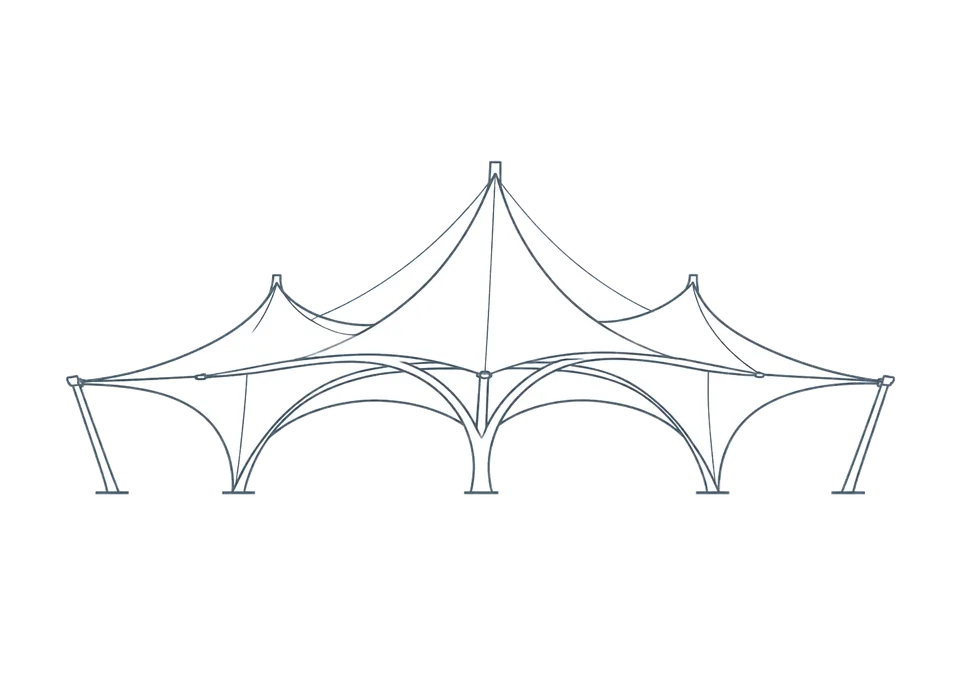 Landscape canopiesParks and leisure spaces→
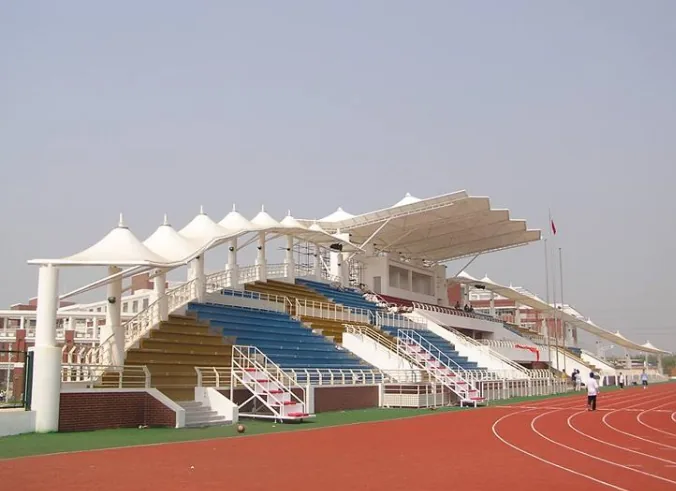
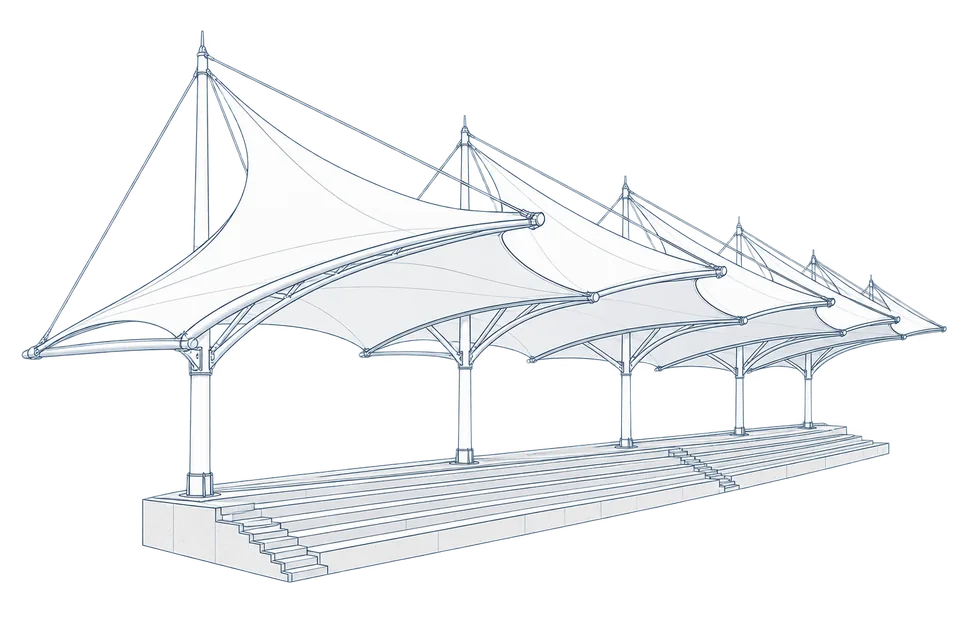 Grandstand canopiesSports venue shelters→
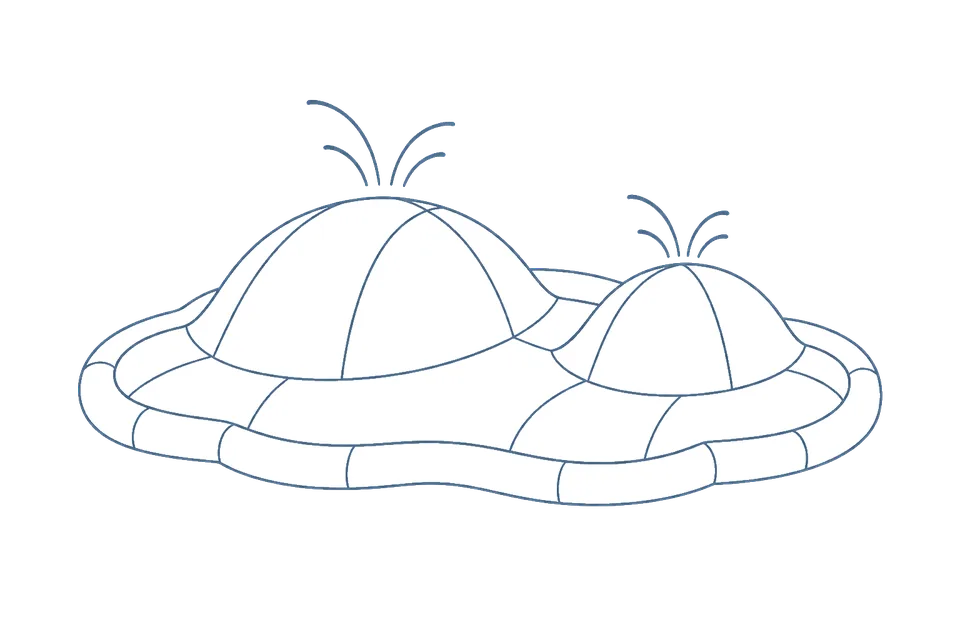 Inflatable play cloudsFamily play areas→
 Wastewater coversEnvironmental infrastructure→
 Fuel station canopiesStation shelters→
 Entrance canopiesWalkways and entrances→
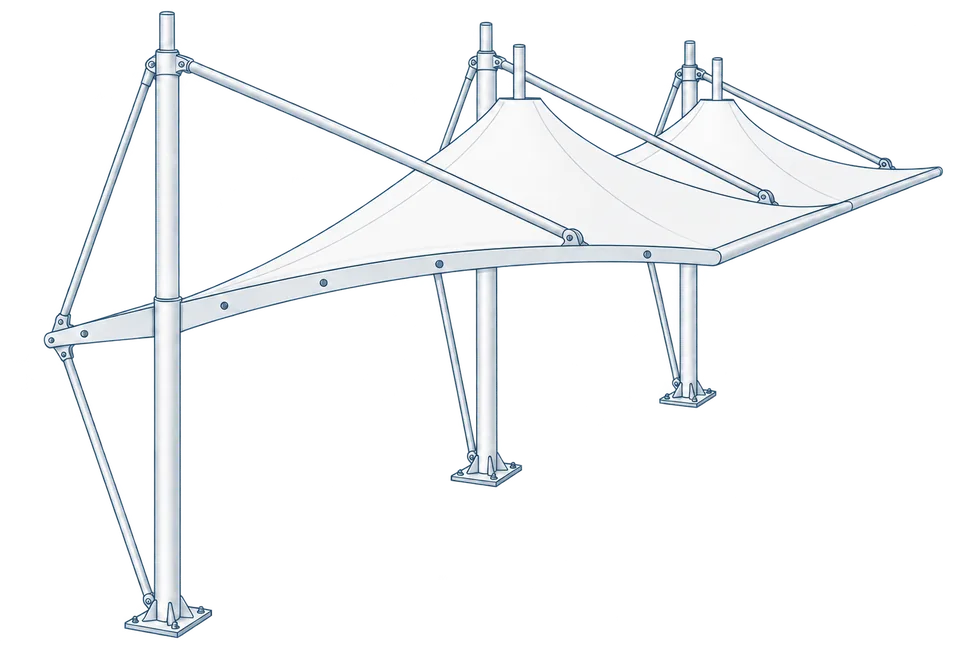
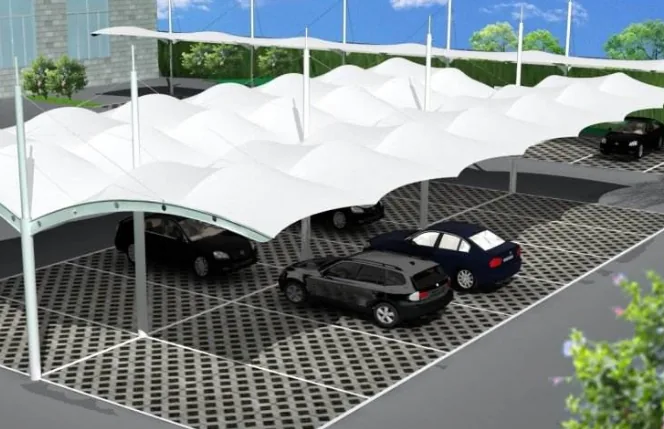
Tensioning a carport membrane into its designed form
Tensioning brings the membrane, boundaries and supports into the form and force state required by the design. It is not a matter of pulling the fabric as tight as possible. Excess tension, a poor sequence or boundary deviations can create unintended local forces.
Check membrane units and boundaries first
Verify panel numbers, orientation, supports, connectors and adjustment allowance against construction documents. Plan deployment and temporary fixing so membranes that have not formed a complete system are not exposed to uncontrolled wind effects.
Control the process rather than pulling into place in one step
Follow the project tensioning method, record specified control quantities and adjustments, and observe neighbouring panels, cables and supports. Consider the entire system when adjusting one edge; removing one visible wrinkle is not a complete assessment.
Check the final form and records
Inspect membrane form, fixed connections, local rubbing points and drainage, and compare tensioning records with design and construction documents. Use an approved procedure for retensioning. Sound, hand pressure or photographs can support observation but cannot replace engineering assessment.
More images