
 Membrane carportsClassic membrane shelters→
 Solar carportsParking meets green energy→
 Landscape canopiesParks and leisure spaces→
 Grandstand canopiesSports venue shelters→
 Inflatable play cloudsFamily play areas→
 Wastewater coversEnvironmental infrastructure→
 Fuel station canopiesStation shelters→
 Entrance canopiesWalkways and entrances→
RFQ for a Two-Wheeler Charging Shelter: How to Separate the Canopy Scope from the Charging Equipment Scope
The cleanest way to avoid scope confusion is to split your RFQ (Request for Quotation) into two lists from the start: a canopy list covering the tensile membrane structure, and an equipment list covering charging devices and electrical works. Each list states who supplies, who installs and who commissions each item. Each quotation replies item by item with "included / not included", and warranties are written per scope item into the contract. Once you do this, the boundary between vehicle shelter and charging infrastructure sits on paper — not in verbal understanding.
Why charging shelter quotations get mixed up
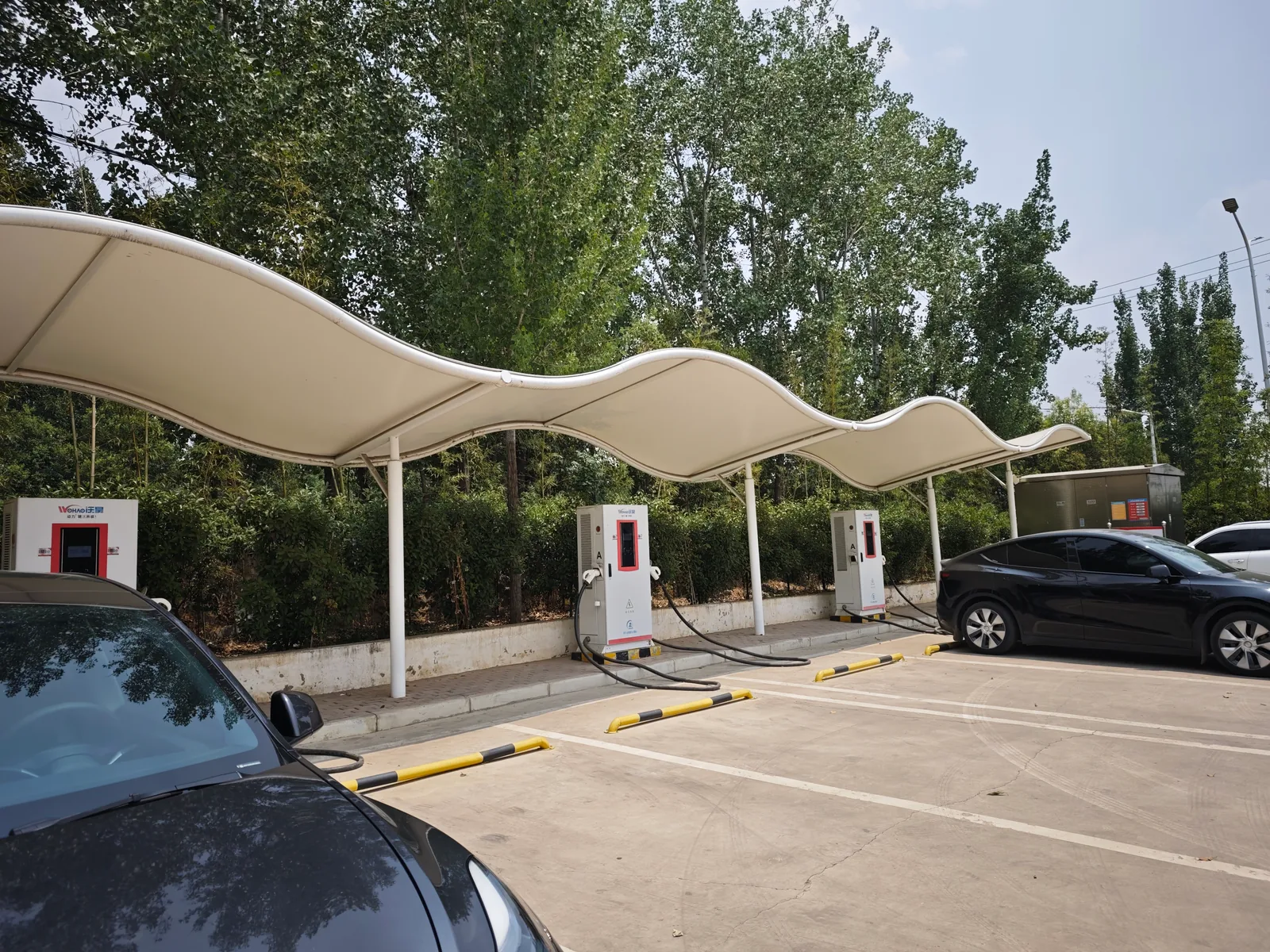
A two-wheeler charging shelter for a residential compound, campus or workplace has to solve two problems at once: protection from sun and rain for parked vehicles, and safe charging power. The trouble appears at the quotation stage: some fabricators quote only the canopy, some bundle in charging sockets and distribution works, and foundations or lifting may be priced separately again. Three quotations can show similar totals while covering very different scopes. The reason is that a charging shelter is essentially a tensile membrane canopy plus electrical fit-out. The canopy is supplied by a membrane structure fabricator; the charging equipment and electrical installation usually belong to a different supplier or contractor. If the boundary is not drawn at the RFQ stage, price adjustments and disputes over responsibility tend to appear after the contract is signed.
How to split and confirm the two scopes
Structure your RFQ checklist like this:
| List | Items to list and check | Points to confirm per item |
|---|---|---|
| Canopy list | Steel frame, membrane fabric and tensioning/fixing hardware, embedded connections, drainage arrangement | Who builds the foundations, who handles lifting, membrane grade and colour |
| Equipment list | Charging piles or charging sockets and quantities, distribution box and cable tray/conduit, metering and payment system, fire-safety provisions | Power supply entry point, who installs and commissions, acceptance criteria |
Then confirm in order:
- Prepare a one-page data sheet used by both lists: number of parking bays, canopy dimensions, number of charging positions;
- Send the canopy list to the membrane structure fabricator for quotation, and the equipment list to the charging equipment supplier or the electrical contractor designated by the owner/facility manager;
- Require every quotation to state "included / not included" item by item, with special attention to four items: foundation civil works, lifting, transport, and power supply runs;
- Have both parties reconcile the interfaces once at the design stage: embedded plate positions, power entry point, and routing of lighting or conduits through the canopy.
If one party takes both scopes under a single contract, design, fabrication, surface treatment and installation are handled internally and interface issues are absorbed inside that contract. If the two scopes are split between two suppliers, step 4 must be written into the contract — it cannot be skipped.
Where does the membrane grade and flame-retardancy requirement go?
In the canopy list — and stated as a specific grade, not just "membrane fabric". Because a charging shelter involves live charging electricals, standard PVC membrane generally does not reach B1 flame-retardant classification. When issuing the RFQ, it is advisable to specify a B1-grade flame-retardant membrane option and note that the final grade is to be confirmed at the design stage according to local fire requirements. Once confirmed, the membrane grade, colour and warranty terms sit in the technical requirements column of the canopy list, kept separate from the equipment list, so the two suppliers cannot argue over the same item.
When the fabricator supplies only the canopy: agreeing the installation interface
If the fabricator supplies only the canopy, the interfaces concentrate at four points. Name the responsible party for each in writing:
- Foundations and embedded parts: who executes the civil works, who supplies the embedded plates, who issues the positioning drawings;
- Power entry: where the charging supply enters the canopy, and who routes the conduit;
- Site and lifting: who coordinates site access and working space;
- Sequence: whether canopy erection or equipment installation comes first, so equipment on site is not blocked by canopy works.
To check canopy delivery quality, verify three things: whether steel members are factory-prefabricated and delivered finished (no on-site fabrication); whether the erection crew works to a single documented process standard; and whether key nodes are supervised by the fabricator's own technical personnel. If these three check out, the canopy handover interface is basically clean.
After warranties are split by item, who do you call when something fails?
Per-item warranties for membrane, steelwork and other components should all be written into the contract — no verbal promises. Then failures map to the responsible party: membrane tearing, ponding or loss of tension goes to the canopy supplier under the membrane clause; steel corrosion, weld or coating defects go to the canopy supplier under the steel clause; charging sockets not powering up, tripping breakers or metering faults go to the charging equipment supplier or the designated electrical contractor. If ownership is unclear at first — for example, roof leakage versus water ingress into equipment — photograph and record the condition, have both parties inspect together, then assign responsibility under the relevant contract clause.
Items often missing from quotations that cause later price additions
Ask about each of these line by line at the RFQ stage:
| Commonly missing item | Consequence if not stated |
|---|---|
| Foundation civil works and embedded parts | A separate crew found on site; cost and schedule outside the original quote |
| Lifting and secondary handling | Charged separately when site access is restricted |
| Transport/freight | Priced separately for distant sites |
| Membrane tensioning, commissioning and acceptance documentation | Billed as a supplement at handover |
| Power supply runs and distribution modifications | Electrical works not covered in the canopy quote |
| Drainage arrangement | Downpipes or drainage channels missing, discovered in the rainy season |
Who reviews the finished checklists?
Once the two RFQ lists are prepared, we recommend review by three parties: the facility engineering lead checks parking and charging bay counts against site conditions; flame-retardancy grade and fire-safety layout are determined at the design stage by the designer against local fire requirements; and distribution capacity and the power entry scheme are checked by the utility or electrical contractor. Before signing, verify two more points: per-item warranties are written clause by clause into the contract with no verbal commitments, and the "included / not included" lists are attached to the contract consistent with the quotations.
If you are procuring a two-wheeler charging shelter for a residential compound, campus or workplace, share your project location, intended use, dimensions or available drawings, and the supply scope you want to engage (canopy only, or canopy plus coordination of equipment interfaces) via our contact page, so we can review the RFQ scope with you. Any project-specific terminology — canopy, carport, bicycle shelter, supply scope — should be confirmed against your drawings and material documents.