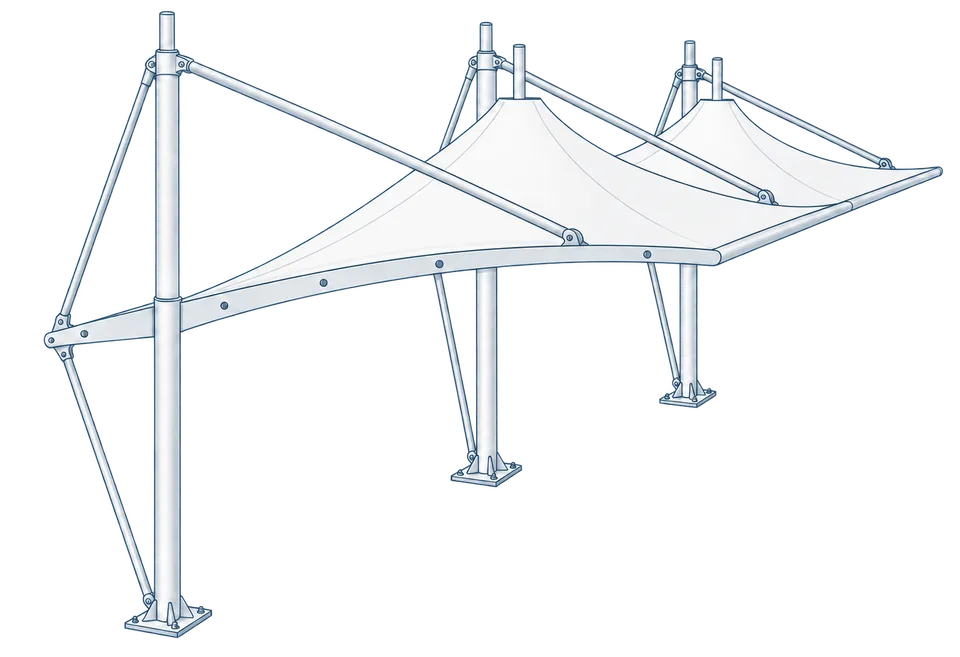
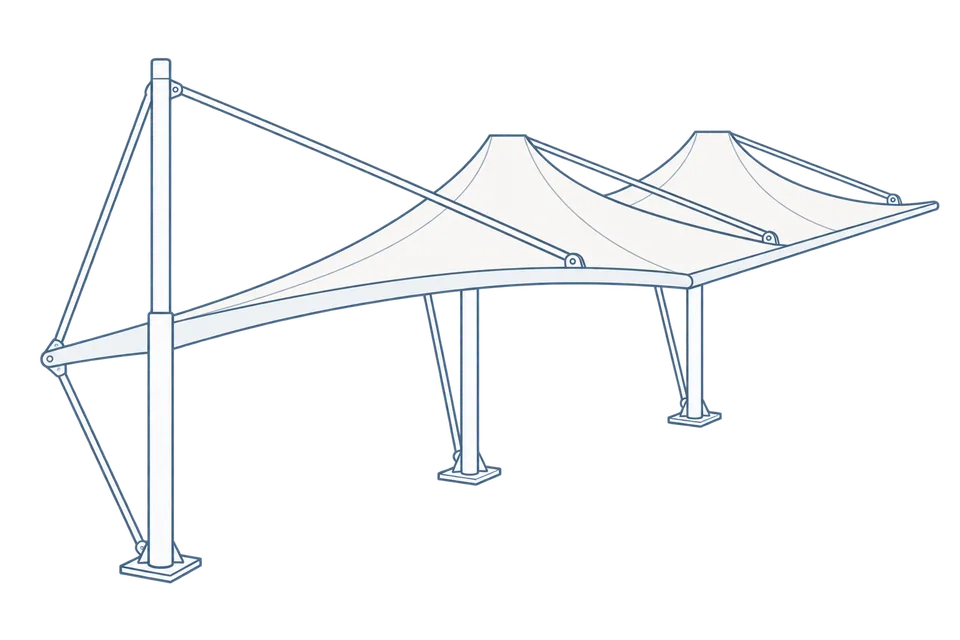
 Membrane carportsClassic membrane shelters→
 Solar carportsParking meets green energy→
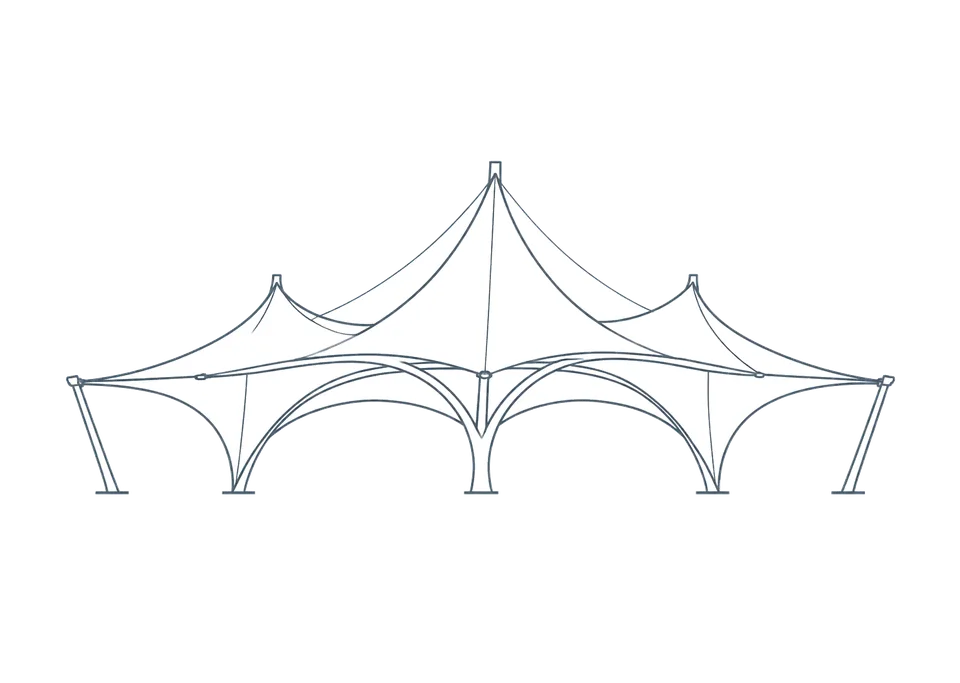 Landscape canopiesParks and leisure spaces→
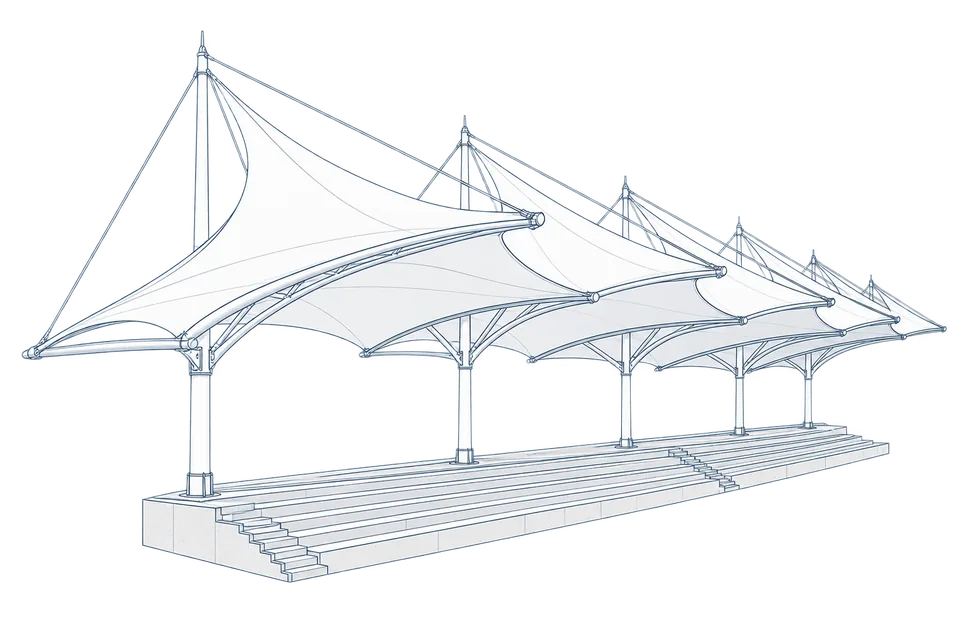 Grandstand canopiesSports venue shelters→
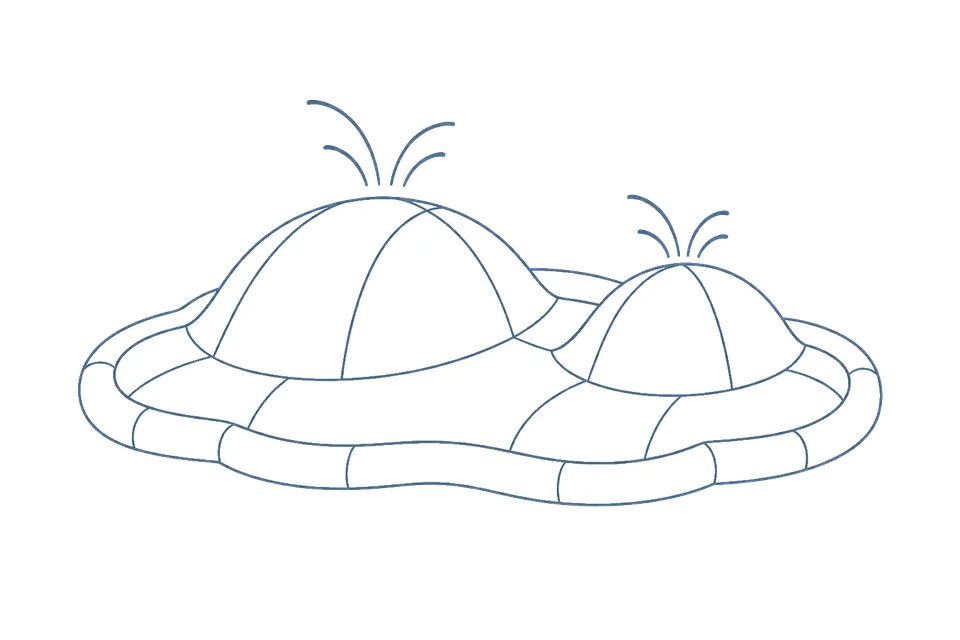 Inflatable play cloudsFamily play areas→
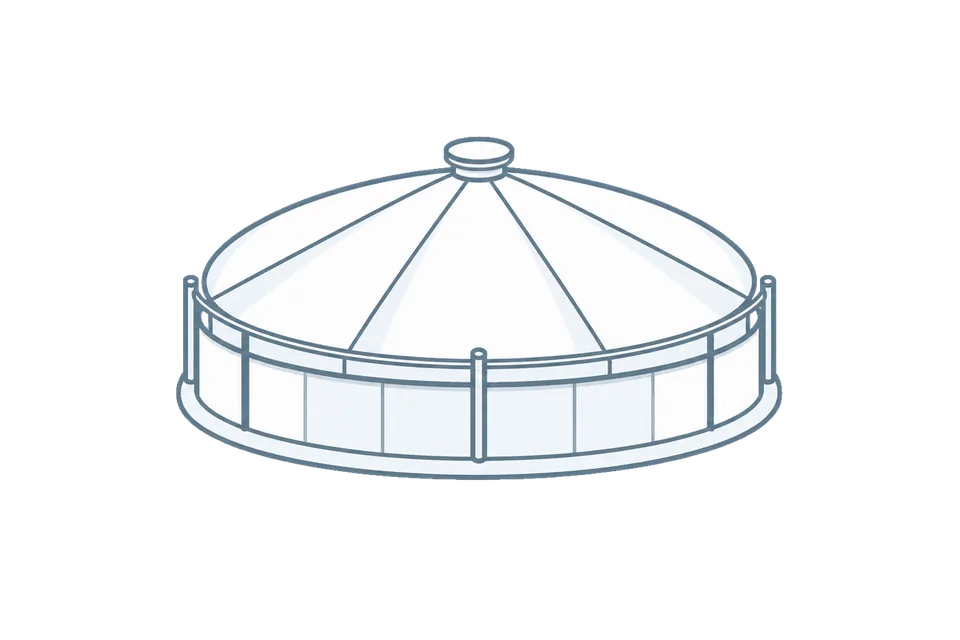 Wastewater coversEnvironmental infrastructure→
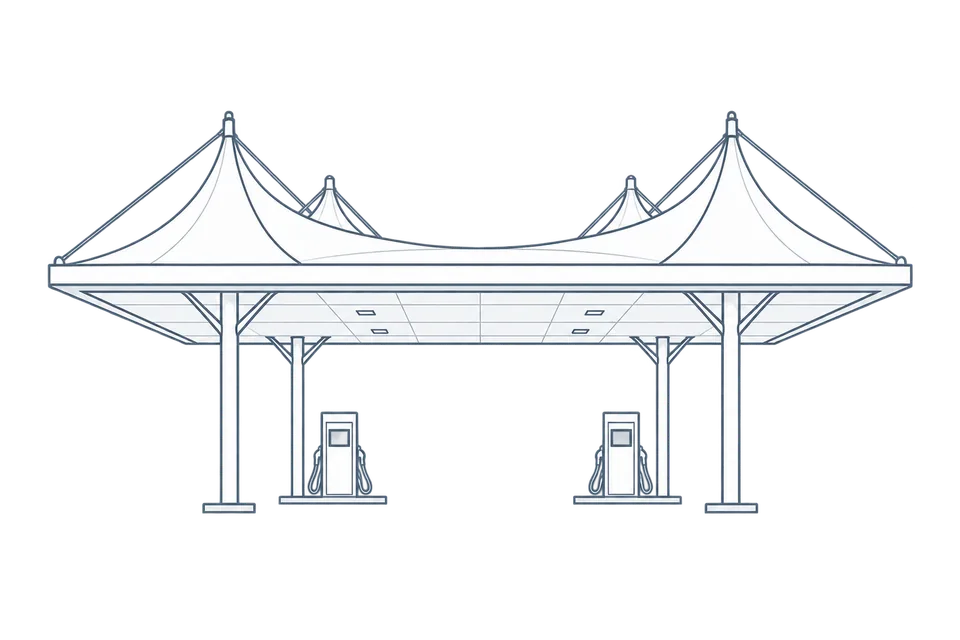 Fuel station canopiesStation shelters→
 Entrance canopiesWalkways and entrances→
Cable Selection for Tensile Membrane Structures: Wire Rope vs. Steel Strand, and Which Ropes Should Not Carry Main Loads
In a tensile membrane structure, it is the cables — wire rope and steel strand — that tension the membrane and carry loads to the supports. Choosing the wrong cable type can lead to a slack, ponding membrane at best, or premature failure of a load-bearing component at worst. Two mistakes come up repeatedly in procurement: treating ordinary fiber-core lifting wire rope as a structural cable, and substituting fiber rope for steel cables in tensioned positions. This article covers the differences, corrosion protection, positions to avoid, and protection at cable-to-membrane interfaces.
Wire rope vs. steel strand: what is the difference
The core differences are flexibility and load capacity:
| Aspect | Wire rope | Steel strand |
|---|---|---|
| Flexibility | Flexible; can bend around smaller radii | Relatively stiff; poorer bending performance |
| Load capacity (same diameter) | Relatively lower | Higher breaking load at the same diameter |
| Typical use | Locations with strong curvature where a flexible cable is needed | Main load-bearing tension cables |
In short: wire rope suits curved runs that need flexibility; steel strand is more commonly used where the main tensile forces act. Which cable type and diameter goes at which position is determined by the project design based on structural calculations — it should not be substituted at the procurement stage.
Corrosion protection requirements for wire rope in membrane structures
Membrane structures are outdoor works and cables are exposed year-round, so corrosion protection cannot be skipped. The general requirement for wire rope in tensile membrane structures is: galvanized, oil-free, and sheathed.
- Galvanizing protects the steel wires themselves from rust.
- Oil-free: ordinary lifting wire rope ships from the factory with lubricating oil. On a membrane structure that oil can stain the membrane, is difficult to clean, and may affect the membrane material.
- Sheathing reduces direct contact between the cable body and the environment.
These requirements should be written explicitly into the purchase contract as a separate scope item, alongside the warranty terms — not left as verbal assurances. Confirm with your supplier how material and corrosion-protection requirements for cables are documented in the supply scope.
Which ropes should not be used as main load-bearing elements
Two types deserve particular caution:
-
Fiber-core (hemp-core) wire rope should be avoided in main load-bearing positions. Fiber-core rope stretches significantly under load. As the cable elongates, the tension relaxes and the membrane goes slack. Once the membrane sags, the drainage gradient is lost, rainwater ponds on the membrane, the ponding deepens the sag, and the cycle can end in membrane tearing. Main cables should therefore generally be wire-core rope or steel strand; if fiber-core rope is used at all, it should be limited to secondary positions with very small loads.
-
Nylon, polyester and other fiber ropes should generally not carry loads. Fiber rope is not comparable to steel cable in strength or aging resistance. It is generally limited to light-duty uses such as cover strips and inner membranes, or temporary structures. Using it in tensioned positions creates a hidden risk for the whole membrane surface.
Protecting cable-to-membrane contact points
Steel cable and membrane differ greatly in hardness. Where they touch directly, repeated wind loading causes wear against each other, and the membrane being abrasion-damaged from the inside is a common cause of failure. The solution is a wear-resistant padding between cable and membrane to separate the flexible membrane from the hard cable body.
The padding material, thickness and placement are design matters, to be fixed at the design stage together with your project engineer — not improvised on site during installation.
How buyers can lock cable requirements into the project
A practical checklist:
- Design stage: confirm for each position the cable type (wire rope or steel strand), the corrosion-protection form, and padding placement — these are reviewed and fixed by the project design;
- Procurement stage: write galvanized / oil-free / sheathed and core-type requirements into the contract as a distinct supply-scope item, together with warranty terms;
- Fabrication and installation: confirm whether cables are supplied as finished components fabricated together with the steelwork, with no secondary rework on site, and clarify who is responsible for protecting the anti-corrosion layer and padding during installation and handover to your local installer.
The boundaries of design responsibility, fabrication and supply should be agreed with you and your project engineer before ordering.
Request a project review
To discuss a specific project, please prepare the intended use, dimensions or available drawings, and the design coordination, custom fabrication, supply or other services you wish to engage. We will review the scope against your project conditions — share your project details via our contact page.
Scope note: This article covers cable selection principles only; it does not cover cable diameter or breaking-load calculations. Specific specifications are governed by the project design documents and material test reports.