 Membrane carportsClassic membrane shelters→
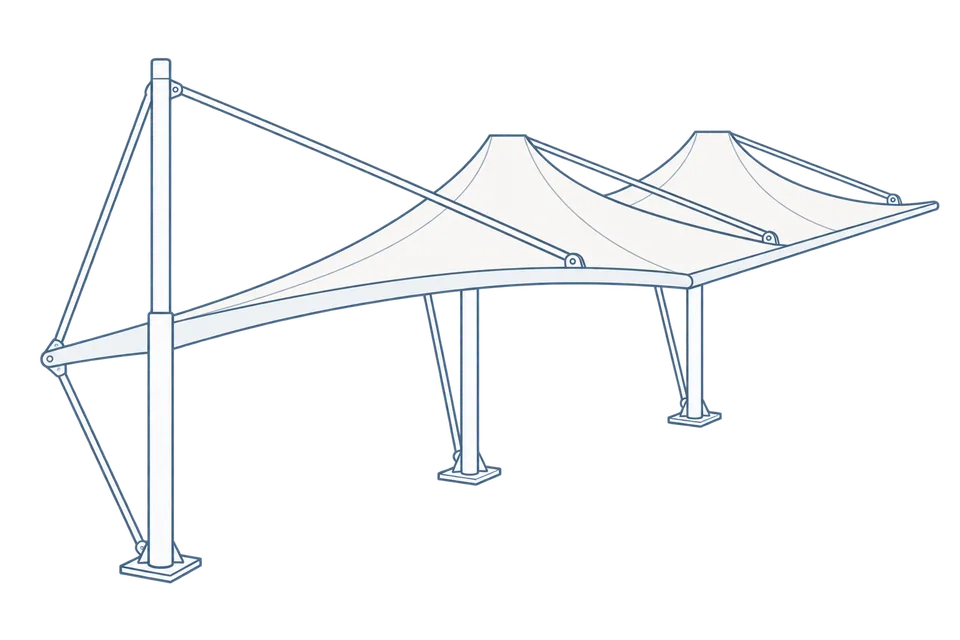 Solar carportsParking meets green energy→
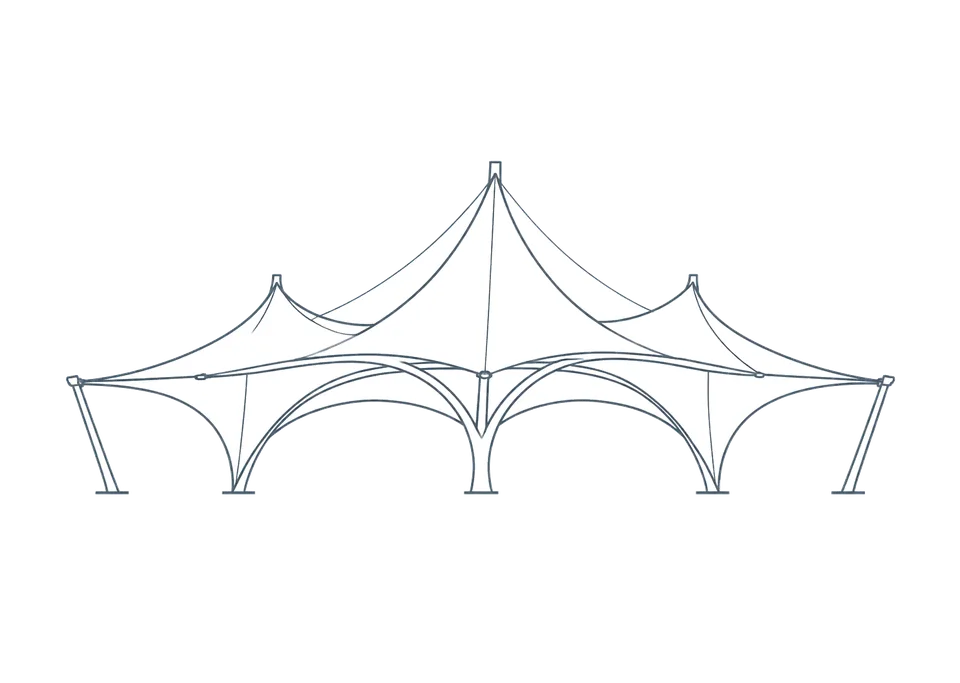 Landscape canopiesParks and leisure spaces→
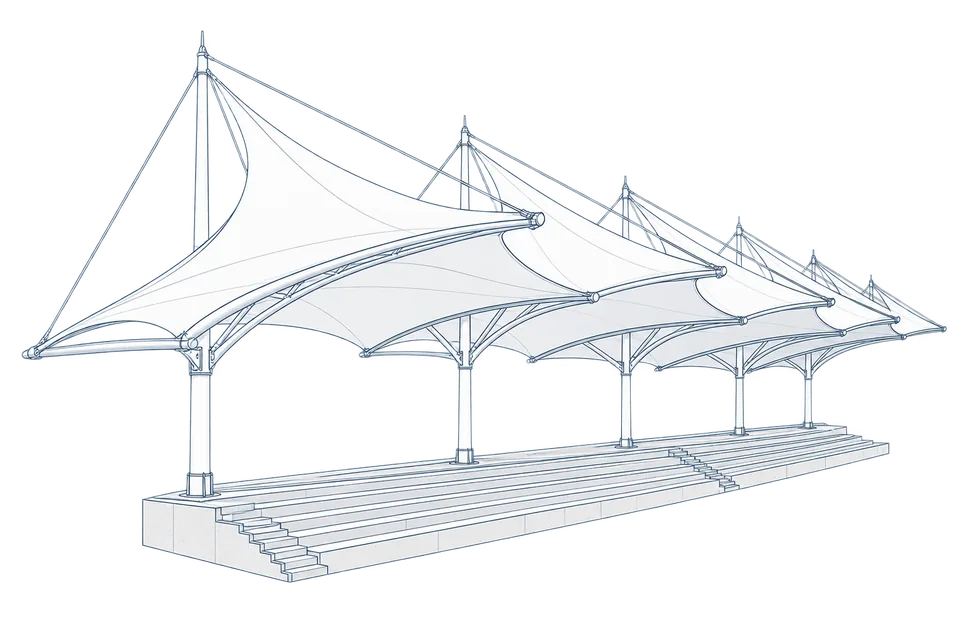 Grandstand canopiesSports venue shelters→
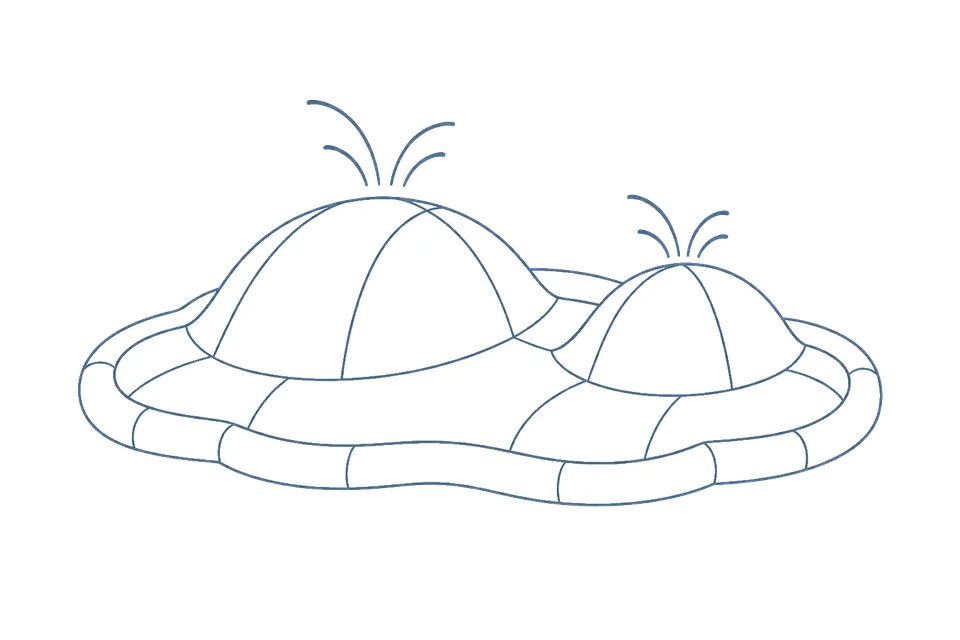 Inflatable play cloudsFamily play areas→
 Wastewater coversEnvironmental infrastructure→
 Fuel station canopiesStation shelters→
 Entrance canopiesWalkways and entrances→
Building a Carport on a Damp or Corrosive Site: How to Specify Hot-Dip Galvanizing in Your Inquiry
When you are procuring a tensile membrane structure carport for a damp or corrosive site, the right time to raise hot-dip galvanizing is at the inquiry stage — not after the contract is signed. Galvanized corrosion protection is an upgrade, not the standard configuration. Suppliers generally do not include hot-dip galvanizing in their standard pricing, so it needs to be raised as a separate item and quoted separately.
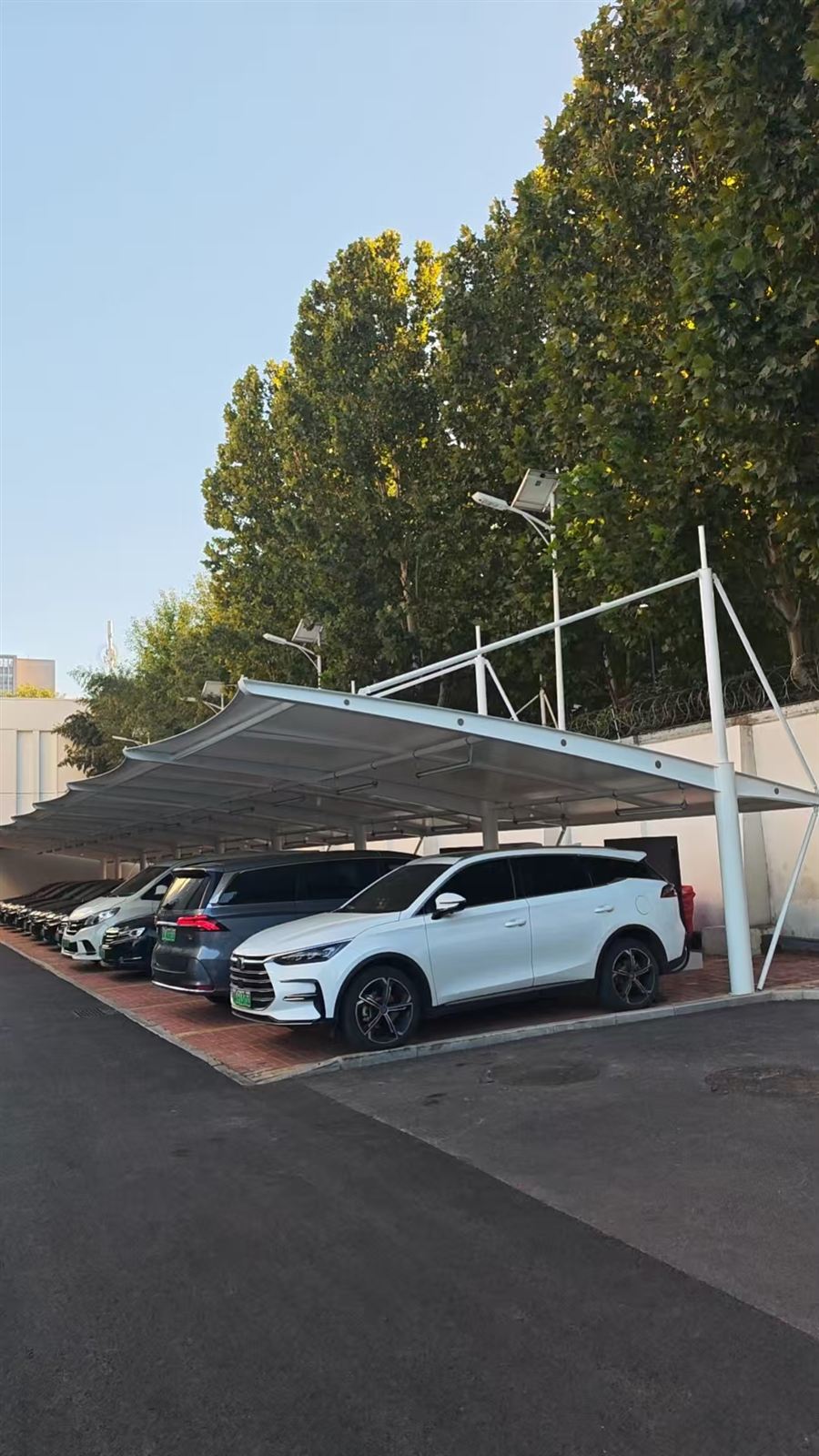
How standard anti-corrosion work differs from hot-dip galvanizing
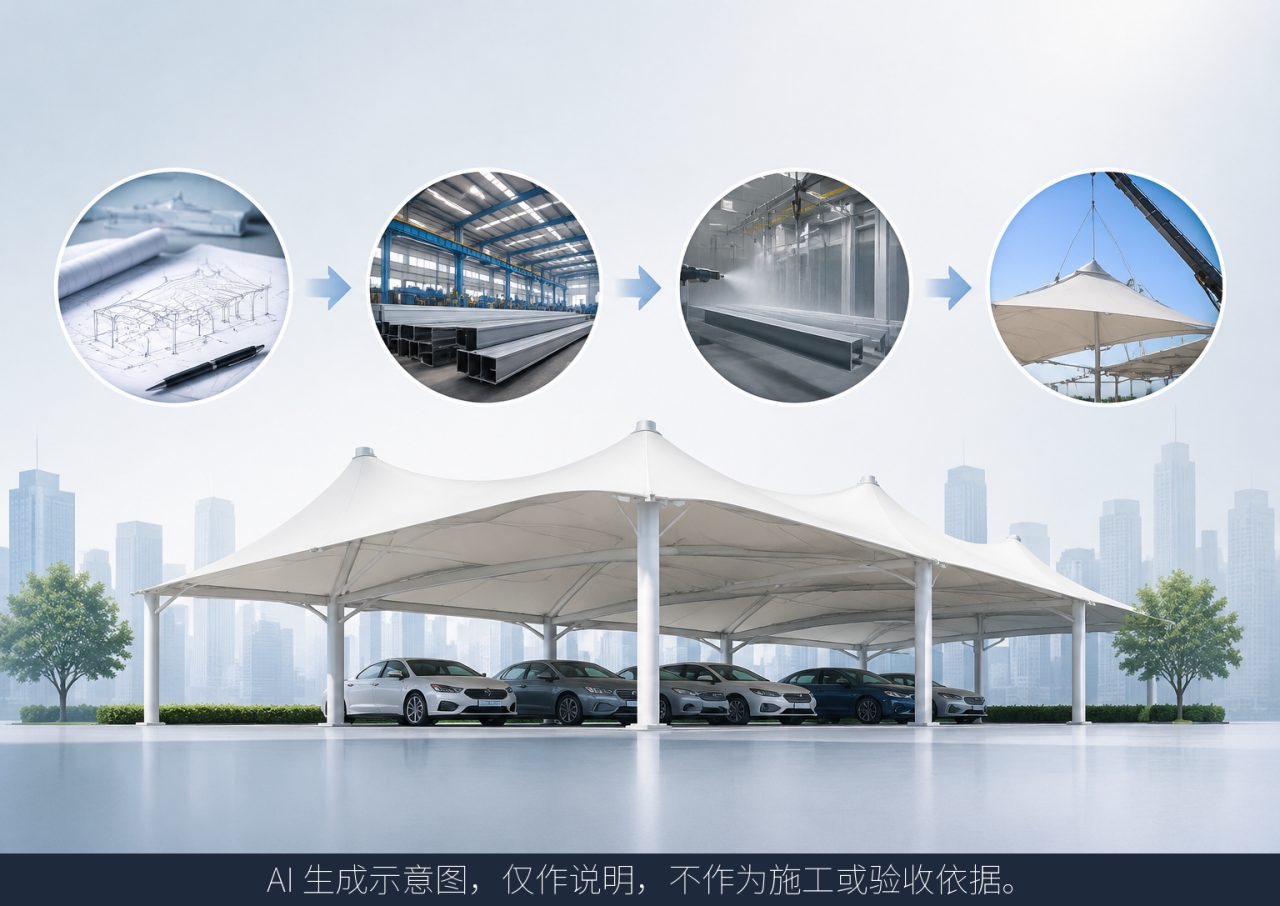
The standard treatment is a shop process: each component is ground and derusted, welding slag and oil are cleaned off, the surface is inspected, and only then is the protective coating applied. For most sites, this process meets the service requirements, and it is the normal configuration for a delivered carport.
Hot-dip galvanizing is different: the steel surface is protected by a zinc layer, which suits sites that are permanently damp or relatively corrosive — for example, locations close to open water, with poor drainage, or regularly in high-humidity conditions. If your site falls into this category, list hot-dip galvanizing as a requirement when you first discuss the scheme, so the supplier can allow for it during design coordination. Changing the treatment after fabrication is difficult; the request needs to go in before the steelwork is produced.
What to state when you request it
For the supplier to judge whether hot-dip galvanizing is appropriate for your carport and to price it, include the following in your request for quotation (RFQ):
- The site's humidity, drainage and surrounding conditions, so the type of damp or corrosive environment is clear;
- The intended use of the carport, together with dimensions or available drawings;
- The supply scope you want to contract — a complete package including corrosion protection, or fabrication of components with galvanizing arranged for those parts only.
Because galvanizing adds cost, require the quotation to list it as a distinct line item, separate from standard derusting and coating. A general phrase such as 「including anti-corrosion treatment」 can hide which method is actually being applied, so the specified treatment should be written out explicitly.
What to confirm about who performs the galvanizing
Hot-dip galvanizing is carried out by a partner processor, not on the fabricator's own production line. That does not prevent you from requesting it, but it does mean the coordination should be confirmed in writing in the contract, including:
- Which party is responsible for the galvanizing step;
- The schedule for components travelling to and from the galvanizing plant, and how that affects the overall timeline;
- How galvanized components connect to any subsequent coating work and to installation.
Where several parties are involved, rely on written confirmation for each point rather than verbal assurances.
Points for your quotation discussion
Custom anti-corrosion treatments such as hot-dip galvanizing or powder coating are not standard configurations. Costs vary considerably depending on span, component specifications and galvanizing requirements. A practical approach is to share your site conditions with the supplier, have a scheme prepared for your actual situation, then check the contract so every upgraded item is written in separately from the standard process scope. Before signing, also verify with your own project engineer how the specified treatment aligns with your local drawings, material documentation and any applicable building requirements — responsibility for design compliance is a matter to agree explicitly with the supplier and your engineer.
Next step
Share your project location, intended use, carport dimensions and any available drawings. Tell us whether your site needs upgraded corrosion protection and which design coordination, custom fabrication and supply services you require, so we can review the scope with you through our contact page.